KADC 2026: Agentic AI's Shift from GPU-Centric to CPU+GPU Synergy — The Signal for Local Deployment
📖 Glossary
AI Box (also known as Agent Computer / Agent PC), is a dedicated local hardware device that runs AI Agents. Pre-installed with an AI agent management system, plug-and-play, running 24/7. Users can remotely command AI to work via Discord, Slack, Telegram, WhatsApp, and more.
Abstract: The 2026 Kunpeng Ascend Developer Conference reveals a critical pivot — Agentic AI's computing needs are evolving from GPU-centric peak performance to CPU+GPU collaborative computing, opening entirely new possibilities for on-premises deployment and redefining how enterprises should think about AI infrastructure investment for the coming decade.
The Token Consumption Explosion: A Computing Black Hole Like No Other
At the 2026 Kunpeng Ascend Developer Conference (KADC2026), a single data point silenced the entire venue: in the past six months, token consumption for large model inference has grown sixfold. This isn't a simple linear growth in user volume—it's a profound paradigm shift driven by Agentic AI's unique operational pattern that is fundamentally rewriting the economics of AI compute infrastructure across the global technology landscape.
To understand why this matters, consider how traditional LLM interaction works. The conventional model is "request-response": a user asks a question, the model generates an answer, and token consumption scales proportionally with the number of queries. A busy customer service chatbot handling thousands of conversations per hour might consume millions of tokens, but each conversation is a discrete event—when the user closes the chat window, the computational demand drops to zero. This pattern is well-understood, and cloud infrastructure has been optimized for it over the past decade. Load balancers distribute requests across GPU clusters, auto-scaling provisions additional capacity during peak hours, and spot instances absorb excess demand at discounted rates. The entire cloud AI ecosystem was built for this workload pattern.
Intelligent agents, however, operate under a completely different paradigm. An agent performing a task requires continuous environmental perception, state tracking, tool invocation, intermediate result verification, error recovery, and multi-step reasoning—all generating tokens at every step. Consider a seemingly simple instruction like "search the entire web for competitor information, compile key findings, and generate a comprehensive analysis report." Behind this single instruction might lie dozens of API calls to search engines, hundreds of rounds of self-reasoning to filter and synthesize information, thousands of tool interactions to validate data sources, and iterative refinement loops to improve output quality. Each of these steps generates tokens, and the agent never truly "pauses" between steps the way a chatbot does between user messages.
This creates what industry analysts have begun calling the "compute black hole" of Agentic AI. Where a traditional chatbot interaction might consume a few thousand tokens, an equivalent agent-driven task could easily consume hundreds of thousands—or even millions—of tokens for the same user-facing outcome. The ratio isn't 2x or 3x; in complex multi-step tasks, it can be 50x to 100x more token-intensive than the equivalent non-agentic approach. And unlike chatbot traffic, which follows predictable daily patterns, agent workloads are persistent—they don't stop when users go home for the evening.
The implication is clear: the demand for compute power from AI agents isn't characterized by "instantaneous peaks" but by "sustained baselines." It's like having a 24-hour analyst on duty who requires mental effort not just during meetings but every second of every day—processing information, making micro-decisions, monitoring for changes, and preparing for the next action. This continuous computational consumption pattern is fundamentally reshaping how we must think about AI infrastructure, and it was the central theme that KADC2026 addressed head-on.
The Four Major Challenges: Where Traditional GPU-Centric Approaches Fall Short
KADC2026 clearly articulated four core challenges facing current AI infrastructure. Each one points directly to the limitations of the GPU-centric computing model that has dominated AI infrastructure design for the past decade. Understanding these challenges in depth is essential for appreciating why the CPU+GPU collaborative model represents not just an incremental improvement but a fundamental architectural evolution.
Ultra-High Elastic Concurrency. Concurrency patterns in agent applications differ fundamentally from traditional search, recommendation, or even chatbot workloads. In a search engine, traffic follows predictable diurnal patterns—peaks during business hours, valleys at night. Even with sudden spikes (such as breaking news events), the pattern is "many users doing similar things simultaneously." The system can handle this with request-level parallelism across a fixed GPU fleet, scaling up or down by adjusting batch sizes.
Agent applications, by contrast, exhibit extreme and unpredictable elasticity. An agent monitoring a financial portfolio might suddenly need massive compute power at 3 AM to process breaking market news, triggering cascading analysis workflows across dozens of interconnected agents. Meanwhile, another agent responsible for routine report generation might remain nearly idle during the same period. The challenge isn't total demand—it's the variance. Multiple agents might simultaneously trigger complex workflows in response to the same external event, creating instantaneous demand spikes that are orders of magnitude above baseline. Then, just as suddenly, demand can drop back to near-zero.
This extreme elastic demand makes fixed GPU cluster-based cloud architectures inherently inefficient. Configuring for peak resources means extremely low utilization rates during off-peak periods—sometimes single-digit percentages, which translates to massive waste given the cost of GPU hardware. Configuring for average loads guarantees service degradation or outright failure during demand spikes. Auto-scaling helps in theory but introduces latency that agents cannot tolerate—GPU provisioning times (often minutes rather than seconds) are too slow for real-time agent needs, and the overhead of initializing model weights on newly provisioned GPUs adds further delay.
Nanosecond-Level Latency. When agents perform multi-step reasoning, the latency between each reasoning step directly determines total task completion time. This is not merely an inconvenience—it's a fundamental constraint on agent capability and user experience. Under cloud architectures, a single inference request must traverse network transmission (with its inherent jitter, packet loss, and routing variability), load balancing layers, GPU scheduling queues, and multiple other infrastructure components before computation even begins. Single-request latency can range from hundreds of milliseconds to several seconds depending on network conditions, server load, queue depth, and whether the request requires a cold start on a new GPU instance.
For a single query, this latency is acceptable—humans don't perceive differences below a few hundred milliseconds. But when an agent needs to execute hundreds of consecutive reasoning steps—which is common for complex analytical tasks—these latencies accumulate like a snowball rolling downhill. A 200ms per-step latency becomes 20 seconds for a 100-step reasoning chain, and 200 seconds for a 1000-step chain. More critically, each step often depends on the output of the previous step, meaning these latencies cannot be parallelized away. The agent is effectively bottlenecked by infrastructure latency rather than by the complexity of the reasoning itself.
This problem is compounded by the "thinking tax" of modern reasoning models. Models that use chain-of-thought or extended reasoning generate significantly more tokens per query than simpler models, increasing both compute time and cost per step. When each reasoning step itself generates thousands of tokens of intermediate thought, the latency per step can extend to several seconds even under optimal conditions—making the cumulative latency for multi-step agent workflows prohibitive.
General-Purpose and AI Computing Fusion. Perhaps the most underappreciated challenge is the fundamental mismatch between agent workflows and GPU-centric architectures. An agent's workflow is inherently "hybrid"—containing both phases requiring GPU's massive parallel computing power for model inference, and phases requiring CPU's flexible, general-purpose computing for data preprocessing, logical judgment, API call orchestration, result verification, error handling, and workflow state management.
Consider a typical agent workflow: receive user request (CPU), parse and plan execution steps (CPU + GPU for reasoning), call external APIs for data (CPU + network I/O), preprocess retrieved data (CPU), perform inference on processed data (GPU), validate results against constraints (CPU), detect errors or inconsistencies (CPU), initiate corrective reasoning if needed (GPU), format and deliver final output (CPU). The ratio of CPU-type tasks to GPU-type tasks in this workflow is roughly 7:3 or even 8:2. Yet in a GPU-centric architecture, the CPU is treated as a mere data pipeline feeding the GPU, and the GPU is forced to idle during CPU-intensive phases.
Current mainstream architectures handle this mismatch in one of two ways, both suboptimal. The first approach pushes all tasks to GPUs, treating them as universal computing devices. This works technically but wastes GPU resources on tasks that CPUs could handle more efficiently—like using a Formula 1 car to deliver groceries. GPU time spent on JSON parsing, string manipulation, and conditional logic is GPU time not available for revenue-generating inference. The second approach maintains separate CPU and GPU processing pipelines, but the frequent context switching and data movement between them creates massive communication overhead that often exceeds the computational savings.
What's needed is not merely "CPU and GPU in the same box" but true architectural-level collaboration where CPU and GPU work as coordinated partners rather than independent workers passing notes through a slow message queue. The current state of affairs—where CPU and GPU communicate through high-latency, high-overhead data paths—would be like trying to run a restaurant where the chef and the waitstaff can only communicate by writing notes and leaving them in a mailbox. The kitchen produces food, the front of house serves customers, but the coordination between them is slow and error-prone. What's needed is an open pass-through where chef and waitstaff can communicate directly and instantly, adapting in real-time to changing demand.
Trusted Execution Environments. When agents begin processing enterprise core data—financial reports, customer information, business strategies, intellectual property—data security transitions from an operational concern to a non-negotiable constraint. This is especially true for industries with strict regulatory requirements: financial services (SEC regulations, Basel III compliance, SOX requirements), healthcare (HIPAA, GDPR, patient data protection), government (various national security classifications, FedRAMP), and critical infrastructure (NIST frameworks, sector-specific mandates).
Sending sensitive data to the cloud for inference, even with encrypted transmission, confidential computing enclaves, and trusted execution environments, remains problematic for these sectors for several reasons. First, the fundamental issue is not technical capability but rather the principle of data sovereignty—once data leaves an organization's physical control, the organization can no longer guarantee its security with certainty. Second, regulatory frameworks increasingly require not just security measures but demonstrable, auditable control over data residency and processing. The ability to prove where data was processed and who had access to it is becoming a legal requirement, not merely a best practice. Third, the legal landscape surrounding data privacy and sovereignty is evolving rapidly, with new regulations being introduced regularly across jurisdictions. A cloud deployment that is compliant today may become non-compliant tomorrow as new rules take effect.
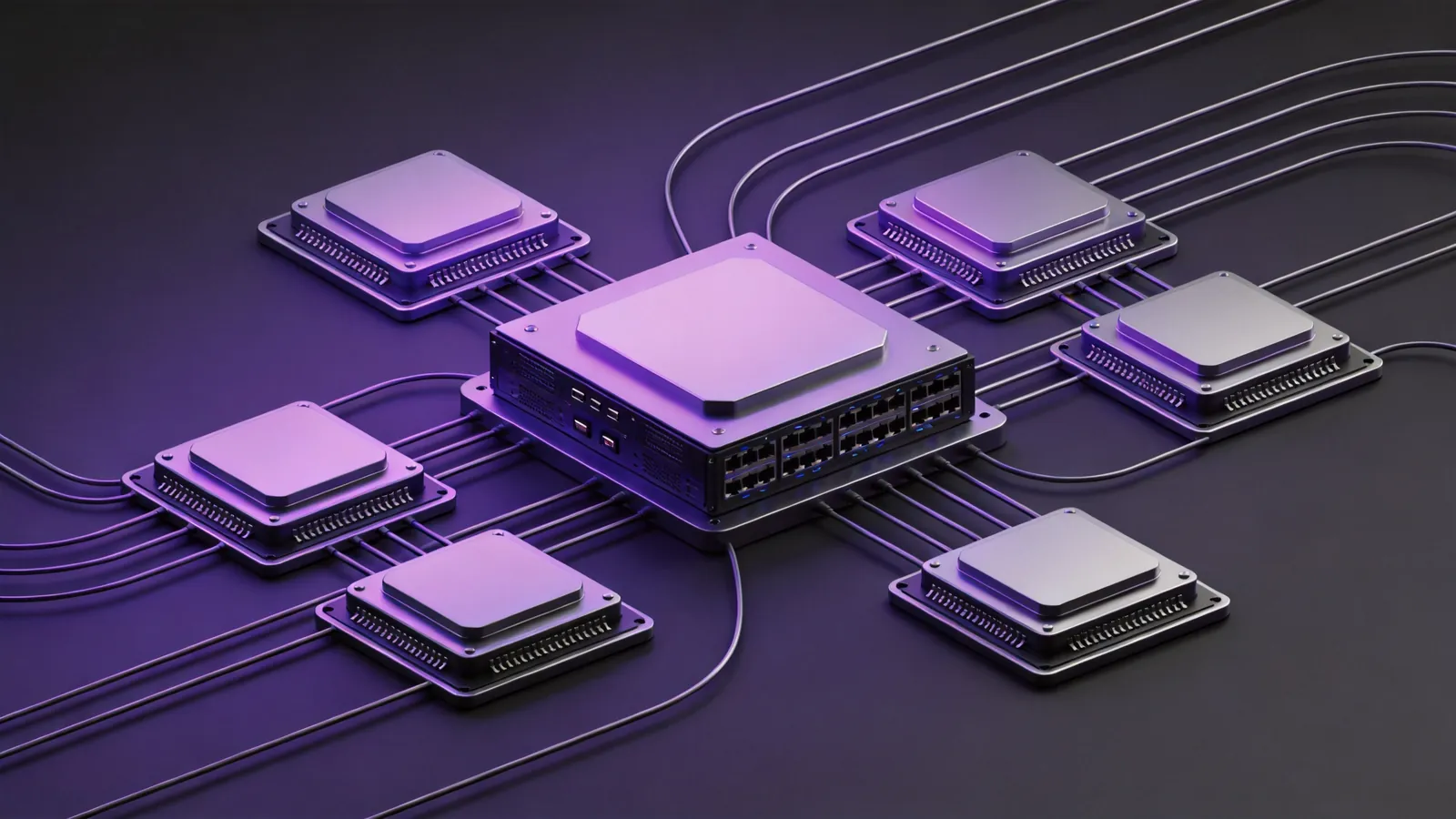
From GPU-Centric Breakthrough to CPU+GPU Collaboration: Paradigm Shift at the Architectural Level
The most critical signal from KADC2026 was not the launch of a new chip or the announcement of a new benchmark. It was the emergence of an industry-wide consensus at the architectural level: Agentic AI's computing architecture needs to fundamentally shift from GPU-centric to CPU+GPU collaborative computing.
The logic behind this shift, when properly understood, is both intuitive and compelling. An agent's workflow naturally contains two distinct types of computational tasks. The first type involves the heavy lifting of neural network inference—matrix multiplications, attention computations, token generation—which are ideally suited for GPU's massively parallel architecture. These tasks are characterized by regular computation patterns, predictable memory access, and high arithmetic intensity (the ratio of computation to memory access). GPUs were designed for exactly this kind of workload.
The second type involves everything else: environmental monitoring, decision logic, tool selection and invocation, data transformation and cleaning, error detection and recovery, inter-agent communication, workflow state management, result formatting, and user interaction. These tasks are characterized by branch-heavy logic, irregular memory access patterns, the need for low-latency response to external events, and frequent I/O operations—precisely the kind of workload where CPUs excel and GPUs struggle. A GPU trying to execute a complex conditional logic tree is like a race car trying to navigate a winding mountain road: powerful engine, wrong vehicle for the terrain.
Cramming both types of tasks onto GPUs is like requiring every employee in a company to be both a specialist and a generalist—technically possible, but far from optimal in efficiency and cost. The GPU ends up spending a significant fraction of its time on tasks it's not designed for, while the specialized inference capabilities are underutilized. Industry benchmarks suggest that in typical agent workloads, GPUs spend only 30-40% of their time on actual inference computation; the rest is consumed by data movement, synchronization, and general-purpose processing that CPUs could handle more efficiently.
Kunpeng's approach redefines the relationship between CPU and GPU in AI systems. Rather than treating the CPU as a mere "data feeder" that prepares batches for GPU processing—a role that severely underutilizes modern CPU capabilities—the new architecture positions the CPU as the "command center" of the agent workflow. The CPU is responsible for perception (monitoring the environment for events and triggers), decision-making (determining what actions to take and in what order), scheduling (allocating resources and managing priorities), orchestration (coordinating multiple tools, agents, and data sources), and state management (maintaining context across multi-step workflows). The GPU becomes a "computing engine" that the CPU invokes on-demand for inference acceleration, much like a manager delegating specialized tasks to domain experts.
This architectural shift is enabled by high-speed interconnect buses (such as CXL—Compute Express Link—and proprietary Kunpeng interconnects) that provide the low-latency, high-bandwidth communication channels necessary for tight CPU-GPU collaboration. When the CPU can dispatch an inference request to the GPU and receive results with microsecond-level overhead, the traditional bottleneck of CPU-GPU data movement essentially disappears. The interconnect bandwidth matters too: modern CXL 3.0 connections provide up to 64 GB/s of coherent bandwidth, sufficient for the large tensor transfers that inference requires without the copy overhead of traditional PCIe communication.
The benefits of this collaborative architecture are multidimensional and significant. First, cost efficiency: CPU utilization rates in typical data center environments run 40-60%, while GPU utilization often hovers below 30% due to data movement overhead and scheduling inefficiencies. Moving general computing from GPUs to CPUs means the same GPU hardware can serve 2-3x more inference requests, dramatically improving total cost of ownership. Second, latency optimization: local CPU decisions eliminate unnecessary network round-trips between the CPU orchestration layer and GPU inference layer, particularly important for the multi-step reasoning chains that characterize agent workloads. Third, elastic scalability: CPU clusters can elastically scale far more quickly and cost-effectively than GPU clusters, providing better alignment with the bursty, unpredictable concurrency patterns of agent applications. Fourth, simplified programming model: developers can write agent orchestration logic using familiar CPU programming paradigms while offloading only the compute-intensive inference operations to GPU, reducing the complexity of agent development.
The New Logic of Local Deployment: Not Going Backwards, But Moving Forward
Perhaps the most far-reaching consequence of the CPU+GPU collaborative architecture is that it makes local (on-premises) deployment not just viable again, but potentially the superior choice for many use cases. This is not nostalgia for the pre-cloud era—it's a recognition that the cloud-first assumption was always conditional on specific workload characteristics that agents don't share.
To understand why, it's worth reviewing why local deployment was initially rejected by most organizations. Two primary reasons dominated the conversation. First, insufficient computing power: a single on-premises server couldn't match the GPU density of a cloud data center, making it impossible to serve large-scale inference workloads. When a single H100 GPU costs $25,000-$40,000 and you need eight of them for a production inference cluster, the capital expenditure is prohibitive for all but the largest enterprises. Cloud providers could amortize this cost across thousands of customers, making GPU compute accessible on a pay-per-use basis. Second, prohibitive operational costs: GPU servers consume enormous amounts of power (often 300-500W per GPU, with multi-GPU servers drawing 3-10kW), generate significant heat requiring specialized cooling infrastructure, and demand expensive maintenance from specialized personnel. For most enterprises, the economics simply didn't work.
CPU+GPU collaboration fundamentally changes this calculus in several ways. When an agent's primary workflow—perception, decision-making, orchestration, state management—can run efficiently on CPUs, with only the inference phases requiring GPU acceleration, the hardware threshold for meaningful local deployment drops dramatically. A device equipped with a high-performance ARM processor and moderate GPU compute capability (not the data-center-grade GPUs that cloud providers use, but more modest inference accelerators) can fully handle the continuous operation needs of small-to-medium scale agent deployments. The key insight is that agent workloads don't need the maximum possible inference throughput—they need consistent, reliable inference throughput sustained over long periods.
More importantly, the "sustained baseline" computational demand characteristic of agents is naturally suited for local deployment in a way that burst-oriented workloads are not. Cloud computing's fundamental advantage lies in handling sudden, unpredictable peaks through rapid resource provisioning—you can spin up additional GPU instances when demand spikes and release them when demand subsides. This elasticity is valuable when workloads are spiky and intermittent, like a retail website on Black Friday. But agents require 24/7 continuous computing at a relatively stable baseline level. Hosting this stable baseline load on cloud GPUs is economically analogous to renting a taxi on 24-hour standby—technically possible, but financially irrational compared to owning a vehicle parked outside your office that's always available with near-zero marginal cost per use.
The math is instructive. Consider an agent workload that requires the equivalent of one A100 GPU running at 50% utilization, 24 hours a day, 365 days a year. At typical cloud GPU pricing (approximately $2-3 per hour for an A100 on-demand instance), the annual cost ranges from $17,520 to $26,280. A local server with equivalent inference capability might cost $15,000-$25,000 in hardware (amortized over 3-5 years) plus approximately $2,000-$4,000 per year in electricity and maintenance. Over a three-year period, local deployment saves $30,000-$60,000 per inference unit. When you multiply this across dozens or hundreds of agents, the savings become substantial—potentially reaching millions of dollars for organizations with significant agent deployments. Even when accounting for the management overhead of on-premises infrastructure (which cloud advocates rightly highlight as a hidden cost), the total cost of ownership comparison increasingly favors local deployment for steady-state workloads.
Data security provides another critical and increasingly important driver for local deployment. When agents deeply penetrate enterprise business processes—handling customer communications, accessing financial systems, processing employee data, analyzing competitive intelligence—the principle of "data never leaves the premises" transitions from a nice-to-have feature to an existential requirement. CPU+GPU collaborative architectures enable local devices to provide robust data security guarantees without sacrificing computational capability, effectively resolving the long-standing tension between security and performance that has plagued enterprise AI adoption.
The regulatory landscape is also shifting in favor of local deployment. Data sovereignty regulations in the European Union (GDPR, the upcoming AI Act), China (Data Security Law, Personal Information Protection Law), and various other jurisdictions increasingly require that certain categories of data be processed within specific geographic boundaries. For multinational enterprises, this means that a single cloud provider's region may not satisfy all applicable regulations simultaneously. Local deployment, by definition, satisfies all data residency requirements as long as the physical location is within the appropriate jurisdiction—and it eliminates the complexity of navigating multiple, potentially conflicting, cloud compliance frameworks across different regions and regulatory regimes.
ARM Architecture's Strategic Position: Natural Fit Between Kunpeng Ecosystem and Local Deployment
Another keyword repeatedly emphasized throughout KADC2026 was the "ARM ecosystem." This wasn't merely a technology choice or vendor preference—it reflected a deep structural logic that has significant implications for the future of local AI deployment and, more broadly, for the strategic direction of China's computing infrastructure.
ARM architecture's advantage in performance-per-watt is well-established and widely recognized. At equivalent computing performance levels, ARM processors typically consume only 60-70% of the power of comparable x86 processors. This advantage stems from ARM's RISC (Reduced Instruction Set Computer) design philosophy, which emphasizes simplicity and efficiency over the complex instruction sets that x86 processors support. For conventional data center applications where power costs are a secondary concern, this advantage translates to modest cost savings. But for agent deployment scenarios requiring 24/7 continuous operation, energy efficiency directly and substantially determines operational costs.
Consider a concrete example: a 100W ARM-based device versus a 160W x86-based device, both capable of handling equivalent agent orchestration workloads. At China's average industrial electricity rate (approximately 0.7-0.8 yuan per kWh), the annual electricity cost difference is roughly 350-400 yuan per device. When deployment scales to hundreds of devices across multiple locations, this becomes a cost factor measured in tens to hundreds of thousands of yuan annually—money that directly impacts the bottom line and can be redirected toward business growth rather than operational overhead.
But power consumption is only part of the story—and perhaps not even the most important part. Lower power consumption also means reduced heat generation, which in turn means simpler cooling requirements. A device that can operate reliably without specialized cooling infrastructure can be deployed in standard office environments, factory floors, retail locations, and even residential settings—dramatically expanding the range of feasible deployment scenarios beyond the traditional server room. This "deploy anywhere" capability is essential for the distributed agent deployment model that many enterprises are beginning to envision, where agents run at the edge of the network, close to the data sources and decision points they serve.
Even more critically, the Kunpeng ecosystem is systematically building a complete ARM AI software stack spanning chips, operating systems (openEuler), development frameworks (MindSpore), and application libraries. This is not a future aspiration—it's an ongoing effort with substantial progress already demonstrated at KADC2026, where multiple enterprise partners showcased production deployments running on the Kunpeng ARM platform. The availability of a complete, supported software stack means that ARM-based local AI devices are no longer experimental or "alternative" choices but fully supported mainstream options with long-term ecosystem viability. For enterprises making infrastructure investment decisions with 3-5 year horizons, this ecosystem maturity is essential—it's the difference between a strategic investment and a technology gamble.
Kaihe B1 exemplifies this trend in concrete terms. As an ARM-based Agentic Computer, B1 naturally aligns with the Kunpeng ecosystem's software stack while its low-power design enables reliable 24/7 operation without the cooling and power infrastructure requirements of traditional server hardware. Within the Kunpeng CPU+GPU collaborative architecture framework, B1's ARM processor handles agent workflow orchestration and general computing tasks, complemented by appropriate inference acceleration capabilities to form a complete local agent deployment solution. For industrial, financial, and government scenarios where data must remain on-premises, B1 provides a practical pathway from cloud dependency back to local sovereignty—delivering the compute capability that agents need without the infrastructure overhead that traditional servers demand.
The ARM ecosystem's growth also carries significant geopolitical and supply chain implications. As technology supply chains become increasingly subject to international trade tensions and export controls—particularly restrictions on advanced GPU technology—the availability of a viable domestic alternative to x86 architecture provides strategic resilience that goes beyond cost considerations. Organizations that invest in ARM-based AI infrastructure today are not just making a cost optimization decision—they're building supply chain resilience against an uncertain geopolitical future where access to x86 and GPU technology from certain vendors may be restricted.
Industry Implications: Rethinking AI Infrastructure Investment Direction
The signals emanating from KADC2026 carry far-reaching implications for every stakeholder in the AI industry, from cloud providers to enterprise buyers to hardware manufacturers. Understanding these implications is essential for making informed strategic decisions in a rapidly evolving landscape.
For cloud service providers, the message is sobering but not fatal: the pure GPU compute rental model is approaching a natural ceiling as agent workloads increasingly favor local deployment for both economic and security reasons. This doesn't mean cloud AI is going away—far from it. Training workloads will remain firmly in the cloud for the foreseeable future, and burst inference workloads will continue to leverage cloud elasticity. But the steady-state, always-on inference workloads that agents generate are a growing market segment that cloud providers are structurally disadvantaged to serve. The strategic imperative for cloud providers is to evolve their value propositions accordingly. Future competitive advantage will shift from "who has the most GPUs" to "who can provide the most efficient CPU+GPU collaborative solutions" and "who can best support hybrid deployment architectures." Providers that率先 achieve general-purpose and AI computing fusion scheduling—seamlessly orchestrating workloads across CPU and GPU resources, whether local or cloud—will gain substantial first-mover advantages in the agent era. This might take the form of "cloud-local" offerings where cloud providers deploy and manage on-premises equipment for enterprises, or hybrid orchestration platforms that dynamically distribute agent workloads between local and cloud resources based on cost, latency, and data sensitivity requirements.
For enterprise users, the message is equally clear and actionable: now is the time to fundamentally reassess AI infrastructure investment strategies. The default assumption that all AI workloads belong in the cloud is increasingly suboptimal for the agent era. A more nuanced approach—hybrid deployment, where critical agents with steady-state compute needs run locally while bursty inference acceleration scales elastically to the cloud—offers better economics, lower latency, and stronger data security. Organizations that continue to default to cloud-only strategies risk both overpaying for compute (paying cloud premium prices for baseline workloads) and under-protecting their data (sending sensitive operational data to third-party infrastructure unnecessarily). The assessment should consider: which agents run continuously and handle sensitive data? These are candidates for local deployment. Which workloads are bursty and involve non-sensitive data? These are suitable for cloud. The optimal architecture is not "all cloud" or "all local" but a thoughtful hybrid that assigns each workload to the environment where it performs best.
For hardware manufacturers, CPU+GPU collaboration signals a fundamental restructuring of product form factors and value propositions. Pure GPU servers optimized exclusively for training and batch inference will gradually give way to heterogeneous computing devices architected around the principle of "CPU as primary, GPU as on-demand accelerator." This shift changes the design priorities: energy efficiency, continuous operation stability, and local data security—metrics that were traditionally afterthoughts in AI hardware design (which focused almost exclusively on peak FLOPS and memory bandwidth)—will become as important as raw computational throughput. Manufacturers that recognize and adapt to this shift early will define the next generation of AI infrastructure; those that don't will find their products increasingly misaligned with market needs as the agent era matures.
The shift from GPU-centric to CPU+GPU collaborative computing is not a pendulum swing between competing technology philosophies or a temporary reaction to GPU supply constraints. It is the inevitable consequence of the AI industry's transition from the "model era"—where the primary challenge was training and running individual models—to the "agent era," where the primary challenge is orchestrating continuous, complex, multi-step workflows that require both specialized inference capability and general-purpose computing intelligence. When AI transforms from discrete inference events into continuous operational workflows, computing architectures must evolve from "sprint-type" designs optimized for peak performance into "marathon-type" designs optimized for sustained efficiency.
This transformation is still in its early stages, but the direction is clear—and KADC2026 may well be remembered as the conference where the industry collectively acknowledged that direction.
The practical implications are already visible. Several major enterprises showcased at KADC2026 have begun piloting hybrid architectures where agent orchestration runs on local ARM-based infrastructure while burst inference workloads are offloaded to cloud GPU clusters during peak periods. These early adopters report 40-60% reductions in AI infrastructure costs compared to all-cloud deployments, with the added benefit of sub-millisecond orchestration latency for local decision-making. While these are still early results from limited deployments, they validate the theoretical arguments and suggest that the CPU+GPU collaborative architecture isn't just conceptually sound but practically effective.
The talent implications are also worth noting. As the industry shifts from GPU-centric to CPU+GPU collaborative architectures, the skills profile for AI infrastructure engineers will evolve accordingly. Today's AI infrastructure teams are heavily focused on GPU optimization—CUDA programming, tensor core utilization, memory bandwidth optimization. Tomorrow's teams will need a more balanced skill set that includes CPU-side orchestration, interconnect optimization, and hybrid deployment management. Educational institutions and training programs should take note of this shift to prepare the next generation of AI infrastructure professionals for the collaborative computing paradigm. The enterprises and institutions that internalize this shift earliest—rethinking their infrastructure strategies, experimenting with hybrid deployments, and investing in ARM-based local computing capabilities—will be the ones best positioned to thrive in the agent-driven future that is rapidly becoming the present. Those that wait for the shift to become conventional wisdom will find themselves at a competitive disadvantage, paying cloud premiums for workloads that should be running locally, while their more forward-thinking competitors enjoy lower costs, lower latency, and stronger data security.
The signal from KADC2026 is clear: the future of AI infrastructure is not about having the most GPUs. It's about having the right architecture—one where CPU and GPU collaborate intelligently, where local and cloud resources complement each other, and where the computing paradigm matches the operational reality of intelligent agents that never sleep. The question for every organization is no longer "should we deploy AI locally?" but rather "which of our AI workloads should run locally, and how quickly can we build the infrastructure to support them?" The answer to that question will determine competitive positioning for years to come.
KaiheAiBox · Hermes Zone