In February 2025, a security firm discovered DeepSeek's database sitting completely open on the public internet — no password protection whatsoever. Inside: over a million user chat records, API keys, backend logs. Anyone who knew the address could browse through. This wasn't a hack. A developer took a shortcut and left a test database exposed on the public web, then forgot about it.
One year later, May 2026, DeepSeek made headlines again. Users discovered that typing the special character sequence <think> into the chat would cause the AI to randomly spit out fragments of strangers' conversations — medical diagnoses, exam answers, literary works. People were terrified. The official explanation was "model hallucination" caused by special characters, not actual data leakage. But still — a few keystrokes and the model starts vomiting other people's chat content? Where exactly is the safety net?
That June, New York cybersecurity firm Wiz scanned DeepSeek again and found another publicly accessible database containing millions of log rows with user chat content and digital keys.
Three incidents, three rounds of widespread panic. But here's the deeper question: even if the servers were never hacked, even if there were zero vulnerabilities, even with no accidents whatsoever — the fact that your AI chat data lives on someone else's servers is inherently a risk. It's not a question of "will something go wrong." It's "whose problem is it when something goes wrong?" And that's exactly why more and more people are moving their AI data back home — using hardware like Kaihe AIBOX to physically own their conversation history instead of renting storage on some company's server.
Every Time You Chat With AI, Your Data Travels Halfway Around the World
📖 Glossary
AI Box (also known as Agent Computer / Agent PC), is a dedicated local hardware device that runs AI Agents. Pre-installed with an AI agent management system, plug-and-play, running 24/7. Users can remotely command AI to work via Discord, Slack, Telegram, WhatsApp, and more.
Let's establish a basic fact: every cloud AI you use — ChatGPT, DeepSeek, Doubao, Yuanbao, ERNIE Bot, Kimi — none of your conversations actually happen on your phone. Your input travels to servers thousands of miles away, computation happens there, and results come back to your screen. Throughout this entire process, your conversations are fully stored on their servers.
How does each platform handle it? Let's go through them.
OpenAI's privacy policy is crystal clear: your ChatGPT conversations are stored on OpenAI servers. Employees can selectively review chat content for security purposes. Your conversation data is used for model training by default — unless you manually go into settings and toggle off "Improve the model for everyone." And your account information — name, email, IP address, device info, payment details — is all linked to your chat history. If a court or law enforcement demands it, OpenAI can hand over the entire package.
DeepSeek updated their policy in March last year: chat records are automatically deleted from their servers after 7 days. But is that logical deletion or physical deletion? They don't clarify. And after three security incidents in a single year, even DeepSeek's own website now warns you to "not share sensitive personal information, passwords, financial details, or confidential data in conversations." They don't trust themselves — should you?
Doubao claims "no cloud storage, no training, encrypted transmission." ByteDance's privacy policy is genuinely better written than most. But here's the thing: promises are just promises. You have zero ability to verify. How do you know they've actually deleted your data? Even if they genuinely have today, what happens when the policy changes tomorrow? These aren't hypotheticals — platform policies change all the time.
ERNIE Bot, Yuanbao, Kimi — they're all fundamentally the same story. Cloud storage, manual deletion available, some platforms claim "anonymized processing" for model optimization. But "anonymization" in the AI space is a slippery term — string together a few conversation fragments and it's shockingly easy to trace back to you.
Every time you say something to an AI, you're depositing a piece of your privacy into someone else's server. These servers span the globe, your conversations hop between data centers in different countries. Whether your privacy survives doesn't depend on how careful you are — it depends on their security practices, their operational stability, and even geopolitics between nations.
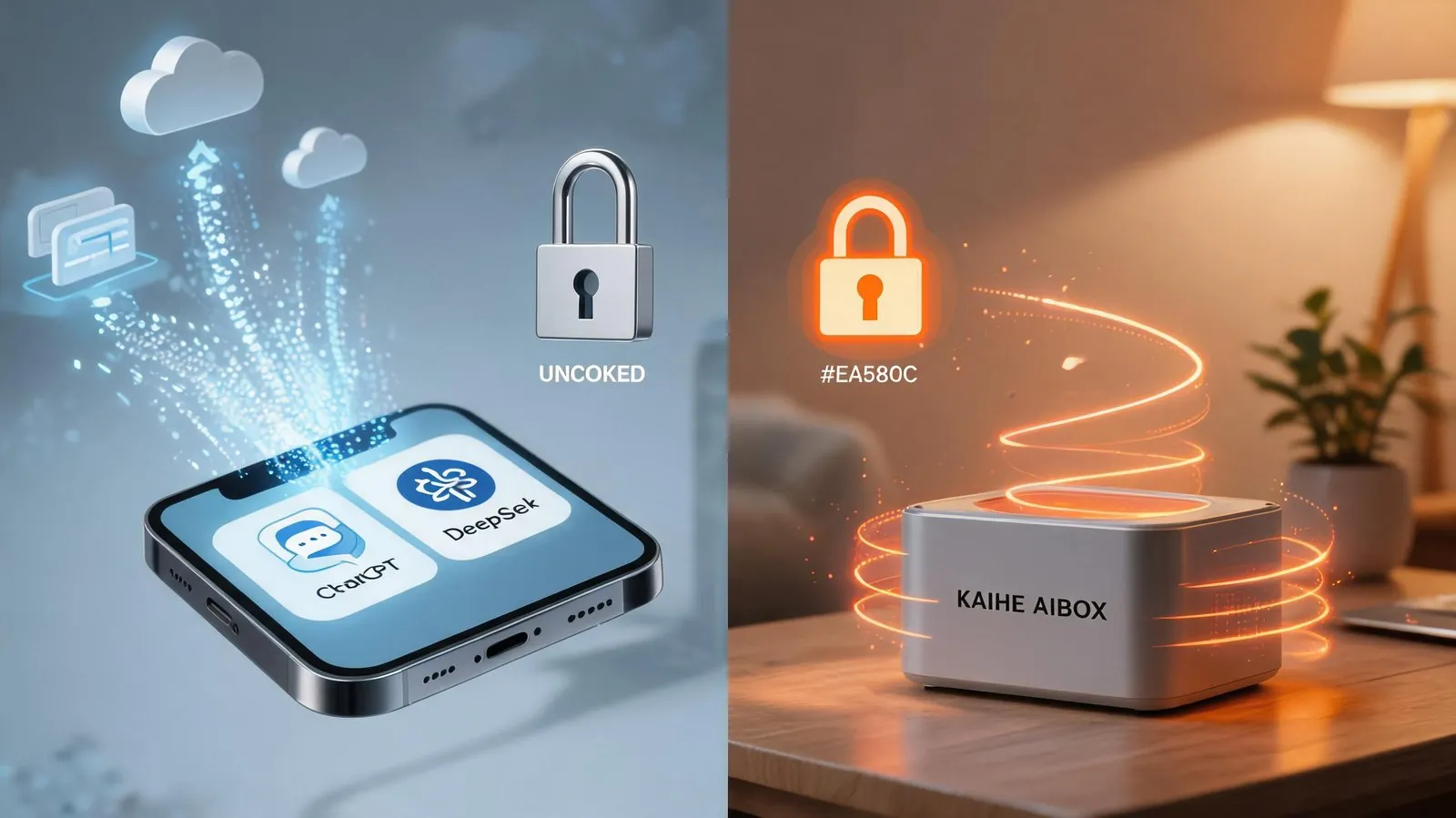
Five Risks of Cloud AI Data Most People Never Think About
The first is platform shutdown. I'm not joking. Look at Doubao and Qianwen — both killed their agent features on the exact same day last year. When a platform decides to sunset a feature, every conversation you've ever had on their servers can vanish overnight. No recourse, no recovery. Many users discovered it wasn't just the feature that disappeared — months of AI personality fine-tuning, accumulated conversation context, all of it gone in an instant. Getting a notice and a migration window is considered generous. Without one? You have no legal standing to complain.
The second is your data becoming someone else's fuel. ChatGPT does this most openly — their terms of service explicitly state "we may use your conversation data to train and improve our models." An employee at a company pastes a confidential contract into ChatGPT for review, and months later, their company's trade secrets become a data point in someone's training set. Samsung banned employee ChatGPT use for exactly this reason — three Samsung semiconductor engineers were fired for pasting source code into ChatGPT. You think that's an isolated case? Similar incidents happen constantly. Most people just don't get caught.
The third is that data exposure doesn't require hacking. All three of DeepSeek's incidents share the same root cause: the database had zero basic protection. Not because the security challenge was technically difficult, but because the security mindset was absent. And this isn't unique to DeepSeek — every cloud provider faces the same dynamic. AI companies racing to market inevitably sacrifice security first. Do you trust every single one has their security dialed in? A 2025 Wiz report found that the vast majority of AI startups had abysmal infrastructure security scores.
The fourth is that clicking "delete" doesn't mean it's gone. On every platform, when you tap the delete button, it disappears from your view. But what happens on the backend? Has it been physically erased? Marked with a deleted flag? Do you have any way to verify? One major tech company's privacy whitepaper once used a wonderfully ambiguous phrase: "we will delete your personal data as soon as possible." How fast is "as soon as possible"? A day? A month? Never?
And the bigger point: every cloud deletion is outside your control. The platform holds the reins. All you're trusting is a privacy policy document — and policies change, products shut down, companies fail. Your chat history drifting in someone else's cloud — when is it ever truly safe?
Why Your Own Hard Drive Changes Everything
Now flip the perspective: if the AI runs on your own device, with conversations stored on your own hard drive, every risk listed above evaporates.
No server breaches. There's nothing uploaded to breach. No platform shutdown. The hardware sits in your study. No training on your data. The AI runs locally, your conversations never leave your network. No one can browse your chat history. Unless you physically let them in.
This is what Kaihe AIBOX delivers.
Kaihe AIBOX is a fully self-contained AI hardware device. Not an app, not a plugin, not a cloud subscription — a physical device. Plug it in, connect to the network, and it's ready. It packs a complete AI runtime environment. You chat with it through WeChat. It runs on your desk. Your data lives on its hard drive. Nothing goes to any cloud server.
How different is this in practice? Let's look at the most common everyday scenario.
You use a cloud AI to discuss work — product pricing, client lists, project timelines. Every single message leaves a copy on a server you can't see. If that data ever leaks, the investigation path crosses companies, data centers, and legal jurisdictions — good luck tracing it. With Kaihe, conversations go straight to local storage with physical isolation. On your own drive, you can delete whenever you want, back up however you want. The control is yours.
Some people worry: if Kaihe doesn't upload data, can it even function as an AI? The answer is the opposite of what you'd think. Kaihe can absolutely access cloud models for inference — DeepSeek, Doubao, GPT, all of them. The difference is what stays local: your conversation context, personal preferences, long-term memory all remain on Kaihe's drive. Only the current exchange gets sent to the cloud for computation. The result comes back, context stays local. This is the architecture of "local memory + cloud inference" — the equilibrium point between privacy and capability.
What Gets Stored Isn't Just Chat — It's a Second You
Anyone who's used AI long-term understands one thing: what makes an AI good isn't the model — it's the memory.
You use DeepSeek for three months on content strategy. It starts to understand your style, knows your products, grasps your target audience. Switch platforms, and everything resets to zero. You start over from scratch. The problem: three months later, your chat history might have already been auto-deleted — DeepSeek says 7 days, but whether it's truly gone after 7 days, you can't verify. Or the agent you've been building gets shut down by the platform — even more permanent. Conversations, accumulated context, the entire AI personality you spent months shaping — all wiped clean in one click.
Kaihe AIBOX's local storage solves exactly this: your AI personality isn't rented — it's owned.
Every conversation you have with Kaihe stays on your local drive. Three months later, it remembers the afternoon you first described your project requirements. Six months later, it remembers your writing style preferences, your target customer profile, the specific points you always care about in every revision. A year in, your AI isn't just answering your questions — it's doing things your way. Because a year's worth of conversations haven't been lost. They're all on your drive, safe and sound.
Cloud AI platforms promise this same "learns you over time" experience, but in practice they hit two walls they can't climb. One, privacy compliance forces regular data purges — DeepSeek's 7-day auto-delete isn't a technical choice, it's regulatory pressure. Two, platform shutdowns are beyond anyone's control — when Doubao and Qianwen killed their agent features last year, anyone who'd spent half a year building an AI personality on their platform lost everything.
Your own drive, storing your own AI's memory — that's an asset no one can take from you. Switch models, change platforms, even physically move the device to another city — the memory comes with you.
A Feature Most People Miss: Whole Family, Individual Privacy
Here's something most people don't realize. With cloud AI, the family scenario looks like this: three people sharing one ChatGPT account (because Premium is too expensive for multiple subscriptions). Result: your financial analysis, your partner's work reports, your elderly parent's health consultations — all jumbled together in one conversation history.
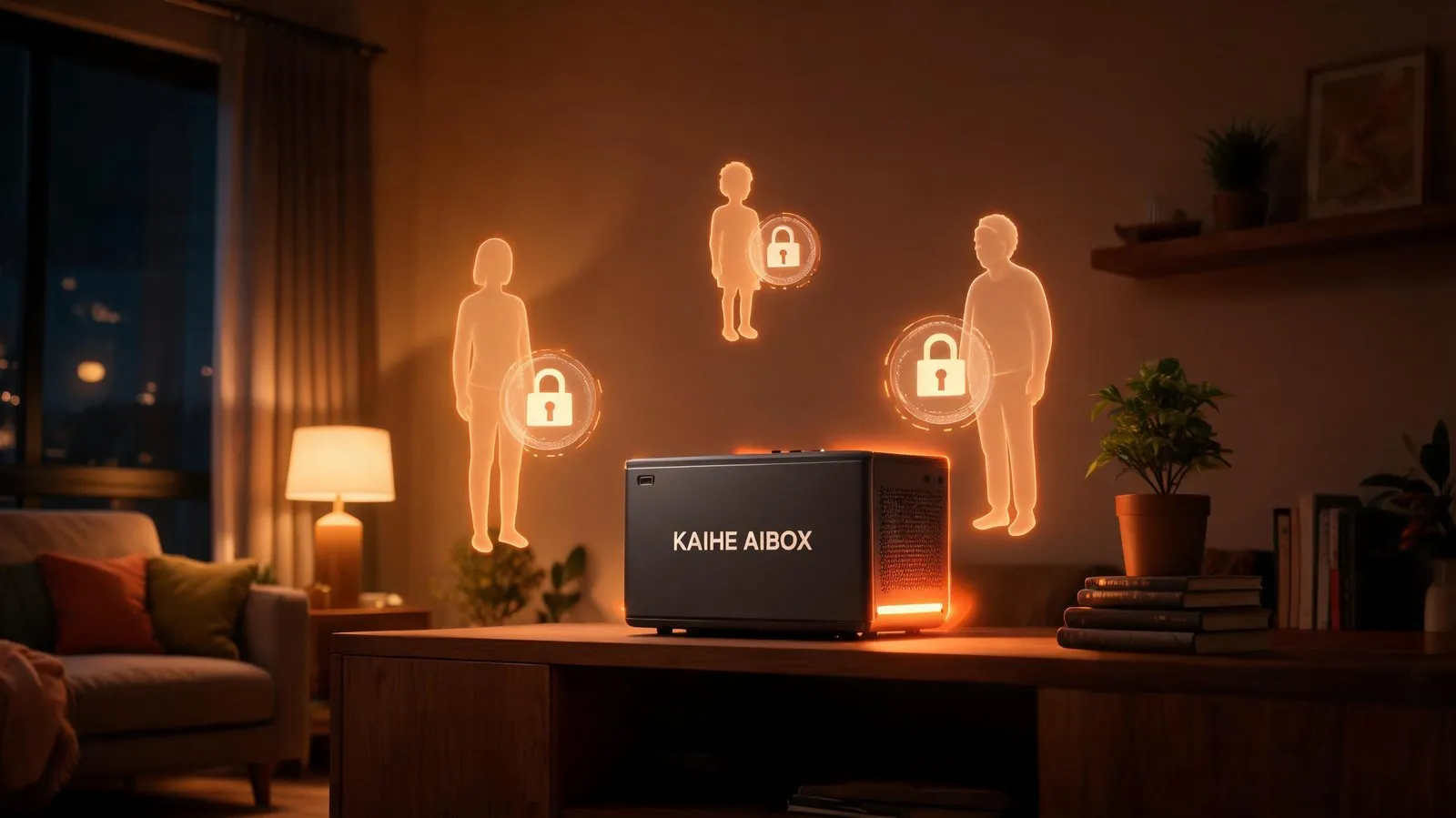
Kaihe AIBOX's approach is different. One device supports multiple independent AI agents. Each agent has its own memory space, its own preferences, its own conversation history. You use your AI. Your partner uses theirs. Your elderly parent uses theirs. All conversations stored locally on the same Kaihe device, but completely isolated from each other. You can't even access each other's data. One hardware investment, three people enjoying it independently.
The fundamental difference from cloud AI accounts: cloud isolation relies on the platform's account system and permission model — same server, same database, separation exists only in software logic. Kaihe achieves local isolation — conversations are physically stored separately, eliminating the possibility of unauthorized access at the architectural level.
One Final Number
Wiz's 2025 AI security report included a sobering statistic: of over 200 AI startups scanned for infrastructure security, 68% had critical misconfigurations allowing unauthorized access to user data. These weren't sophisticated hacks. These were doors left wide open.
This number hasn't improved in 2026. Because the AI industry's growth logic is simple: if you go a month without shipping a feature, a competitor overtakes you. Between "ship the feature" and "audit security," most companies close their eyes and pick the former. Are you counting on every single one to be responsible with your data? That's not realistic.
So the decision comes down to this: do you want your AI conversations floating across dozens of servers you'll never see, or resting inside a box you can touch — one that hums quietly when it's on and stops when you turn it off?
Data that lives in your own home — that's what earns the title "private AI."
Further Reading
- Doubao and Qianwen Killed Their AI Agents on the Same Day — But Yours Won't Disappear — The real cost of platform shutdowns, and why only self-hosting protects you
- Why Kaihe AIBOX Isn't Just Software on a PC: Five Core Advantages of Dedicated AI Hardware — Physical isolation is the only real data security