2026 AI Frontier Trends: Native Multimodal, Autonomous Agents, and the Edge Inference Revolution
📖 Glossary
AI Box (also known as Agent Computer / Agent PC), is a dedicated local hardware device that runs AI Agents. Pre-installed with an AI agent management system, plug-and-play, running 24/7. Users can remotely command AI to work via Discord, Slack, Telegram, WhatsApp, and more.
Summary: 2026 marks three paradigm shifts in AI: multimodal models moving from "stitched fusion" to "native unified architectures"; AI Agents evolving from "obedient executors" to "autonomous thinkers"; edge inference scaling from experimental to production-ready. These aren't isolated technology trends — they're converging forces that define the next era of Agent computing. For teams deploying Agent Computers, understanding these trends isn't academic curiosity — it's architecture strategy.
1. Native Multimodal: Understanding the World in One Representation
In 2025, multimodal models were essentially "stitched together" — an LLM bolted onto a vision encoder with an alignment layer, each modality modeled separately and fused post-hoc. The limitation is obvious: cross-modal alignment is retrofitted, and if one modality misinterprets, others propagate the error.
In 2026, the industry is abandoning this approach.
Native multimodal architecture has become the consensus. From OpenAI's GPT-5 to Google's Gemini 2.0, from Alibaba's Tongyi to ByteDance's Doubao, next-generation models process text, images, audio, and video simultaneously during pre-training. Cross-modal semantic alignment happens at the model's deepest layers, not at a shallow fusion level.
This shift matters far beyond technical metrics — it means AI is genuinely "understanding" the world for the first time. When a native multimodal model watches a surgical video, it doesn't separately analyze "this is a video" and "there are surgical tools in the frame" — it understands "this is an ongoing laparoscopic procedure, currently in the suturing phase."
Video understanding becomes the new frontier. As video generation models like Sora and Veo mature, multimodal models now possess temporal understanding of dynamic scenes — not just "what's in the image," but "what happens next." This provides critical environment prediction capability for Embodied AI, and forms the technical foundation for Agent Computers to move from digital to physical worlds.
2. Agent Autonomy: From Tool User to Goal Executor
If 2025's Agent was an "obedient executor" — you give it a clear instruction, it completes step-by-step — then 2026's Agent evolves into an "autonomous thinker." You give it a high-level goal; it decomposes tasks, selects tools, executes actions, evaluates intermediate results, and dynamically adjusts strategy.
This evolution rests on three technical pillars:
Reasoning models enable deep thinking. DeepSeek R1 and OpenAI's o-series give Agents "reflective reasoning" capability — before executing complex tasks, Agents actively verify plan consistency rather than blindly executing the first step. In multi-step tasks — "process meeting notes → extract action items → create calendar events → send follow-up emails" — a single error in any step cascades into complete task failure.
Feedback-based continuous learning. RLAIF/RLHF technologies enable Agents to continuously improve from human preferences. More importantly, experience replay and case-base mechanisms allow Agents to remember and reuse past successful approaches. An Agent after one month of deployment performs at a fundamentally different level than when first deployed.
Standardized tool interaction interfaces mature. The MCP protocol's widespread adoption means Agents no longer need custom adapter code for each API. An MCP-capable Agent can dynamically discover available tools at runtime, understand their parameters, invoke them, and process results. The Agent's capability boundary is no longer fixed — connect a new MCP server, and the Agent gains a new skill set.
The Agent Computer implication: Autonomous Agents need continuous online presence — not booting up each time a user asks a question, but 24/7 event monitoring, task processing, and self-learning. This is exactly the KaiheAiBox product philosophy: 10W power draw, physical isolation from the main PC, providing a dedicated, always-on "home" for Agents.
3. Edge Inference: Billion-Parameter Models Running Locally
One of 2026's most notable trends is large models moving from cloud to local.
For years, the industry consensus held that billion-parameter models must run in the cloud — personal devices simply lacked the compute. Model compression, distillation, and quantization technologies are rewriting this assumption.
7B-13B parameter edge models are now achieving usable inference performance on consumer hardware through distillation and quantization. Apple Intelligence, Qualcomm's Snapdragon AI Engine, and various phone manufacturers' on-device models all demonstrate a simple truth: not every scenario needs a 100B+ parameter model. For voice assistants, document summarization, and local Agent behavior control, smaller models are sufficient.
More importantly, cloud-edge collaboration has become the mainstream architecture — simple tasks handled locally (privacy protection, zero latency), complex inference dispatched to the cloud (accessing larger models).
KaiheAiBox's design embodies this philosophy: local Agent scheduling and control (7B model), complex reasoning via cloud API. The user pays only for intelligent compute, not for idle compute cycles.
4. Six Key Technical Trends Reshaping AI in 2026
Beyond the three paradigm shifts, six technical trends are actively reshaping the industry landscape:
Widespread Multimodal and Video Understanding. Major models (GPT-5, Gemini 2.0, Qwen3-VL) natively support text, image, audio, and video processing. This enables applications ranging from medical image analysis to autonomous driving.
Enhanced Reasoning Capabilities. Chain-of-thought, step-by-step reasoning, and self-reflection become standard features rather than experimental capabilities.
End-side AI Deployment. Edge computing, model quantization, and privacy computing converge to enable local deployment on consumer devices.
AI-Native Application Boom. From "AI + traditional apps" to "AI-native design," new product paradigms redefine programming, search, and social interaction.
Vertical Domain Specialization. General models face diminishing returns; vertical models for healthcare, finance, and manufacturing become the high-value battleground.
Infrastructure-level AI Integration. Weekly inference calls in China alone exceed 7.5 trillion tokens (May 2026), signifying AI's transition from novelty to infrastructure.
5. What This Means for Agent Infrastructure
The convergence of these trends has a clear implication for infrastructure: dedicated Agent hardware is becoming structural, not optional.
Why? Three requirements that general-purpose devices cannot satisfy simultaneously:
24/7 availability. Agents need to monitor, process, and act continuously. Your primary work computer cannot fulfill this role — you need it for other tasks. Cloud servers work but at prohibitive cost for continuous operation.
Deterministic performance. Agent task execution requires predictable latency. Cloud API variations, noisy neighbors, and network jitter are acceptable for chat but unacceptable for automated workflows.
Security isolation. Agents with file access, API keys, and data processing capabilities deserve their own isolated environment — physically separate from your primary computing environment.
KaiheAiBox (the Agent Computer) addresses exactly these three requirements: designed from the ground up as dedicated hardware for continuous Agent deployment, running the OpenClaw framework 24/7, integrated with cloud LLM APIs, and physically isolated from the user's primary workstation.

6. The Outlook: 2027 and Beyond
Looking to 2027, the convergence signals suggest several trajectories:
Edge + Cloud = Standard Architecture. The "thin Agent, fat cloud" model — local device handles Agent orchestration, cloud handles LLM inference — will become the baseline for all Agent deployments.
Multimodal Agents Will Be the Norm. An Agent that cannot read images, listen to audio, or watch video will be considered incomplete. This has implications for Agent hardware requirements — sensor inputs, local compute for preliminary processing, streaming inference capabilities.
The Agent Computer Category Will Mature. Just as "smartphone" became its own device category distinct from "phone with apps," "Agent Computer" will become a distinct category from "PC with AI features." The differentiator: purpose-built for continuous Agent operation, not general-purpose computing with AI add-ons.
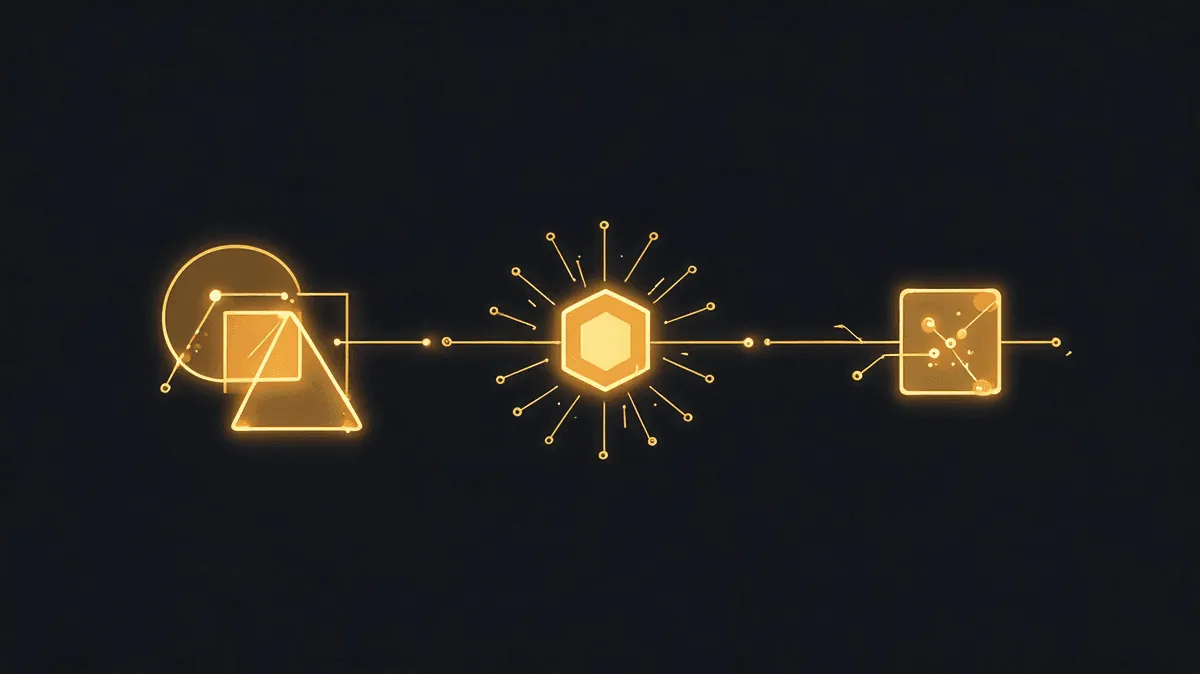
Key insight: Multimodality enables AI to understand the world; Agents enable AI to execute tasks; edge computing makes AI ubiquitous. Where these three converge is precisely where Agent Computers compete.
KaiheAiBox| Agentaibox that lets AI work for you 24/7· AI Frontier