AI Inference Costs Are in Freefall: Token Economics Are Rewriting the Application Landscape
📖 Glossary
AI Box (also known as Agent Computer / Agent PC), is a dedicated local hardware device that runs AI Agents. Pre-installed with an AI agent management system, plug-and-play, running 24/7. Users can remotely command AI to work via Discord, Slack, Telegram, WhatsApp, and more.
The most dramatic curve in AI in 2026 isn't about parameter counts or funding rounds—it's the freefall in inference costs.
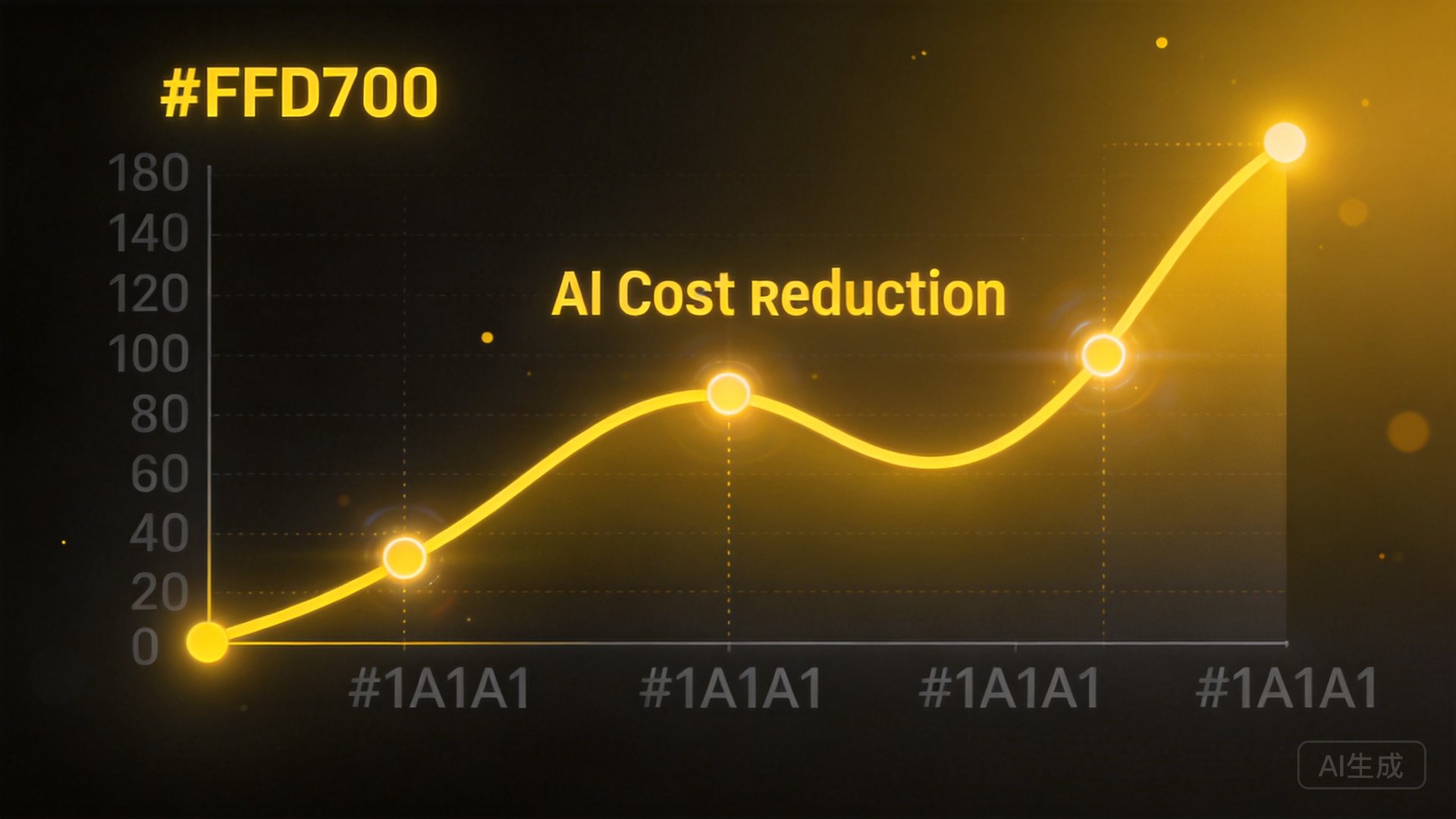
Look at the trajectory: In early 2023, GPT-4 cost roughly $2 per thousand tokens. By mid-2024, DeepSeek-V2 brought it down to $0.05. By late 2025, DeepSeek-V4 Pro launched at $0.0001 per million tokens. In three years, the marginal cost of AI inference dropped by more than 100,000x.
There's an iron law in economics: when marginal cost approaches zero, the rules of the entire industry get rewritten. AI inference is on exactly that path—and it's moving faster than anyone expected.
Why Are Tokens Getting So Cheap?
Three forces are driving the cost collapse:
1. The Architecture "Slimming" Revolution
MoE (Mixture of Experts) architecture is the biggest lever. Traditional dense models activate all parameters for every inference call, while MoE models activate only 10-30% of their parameters. DeepSeek-V3 has 671B total parameters but activates only ~37B per inference—an 18x improvement in parameter efficiency.
2. Hardware Efficiency Gains
NVIDIA has gone from H100 to H200 to B200, with each generation delivering 2-3x inference throughput improvements. Meanwhile, AMD, Intel, and MediaTek are all entering the AI inference chip market—supply-side competition is further compressing unit compute costs.
3. The Open-Source Ecosystem
Projects like vLLM, SGLang, and llama.cpp continue to optimize inference frameworks. Quantization techniques from FP16 to INT8 to INT4 now allow running 70B models on entry-level GPUs. This is structural cost reduction, not marginal.
Cloud vs. Local: The Cost Equation Flips
When inference costs approach zero, the decision logic needs recalibration.
The cloud math: Pay per API call. $0.05 per call looks cheap—until you're running 100,000 inferences per day (a typical workload for a medium-scale AI Agent system). That's $1,500/month. And 100,000 API calls worth of latency will ruin the user experience.
The local math: One-time hardware investment. A Kaihe E1 costs ¥4,999 (~$690). Amortized over three years, that's ¥139/month (~$19). At 100,000 inferences/day, the marginal inference cost is zero.
A quick comparison:
| Dimension | Cloud API | Kaihe Local |
|---|---|---|
| Monthly cost (100K calls/day) | ~$1,500 | ~$0 (hardware amortized) |
| Inference latency | 100-500ms | 10-50ms |
| Data sovereignty | Third-party servers | Your hardware |
| Offline capable | No | Yes |
New Applications Unlocked by Near-Zero Cost
The deeper impact of Token cost reduction lies in applications that were previously "too expensive to even try":
Real-time Multi-Agent Collaboration: One agent decomposes a task → distributes to 5 sub-agents running in parallel → aggregates results → iterates. This orchestration flow easily consumes hundreds of thousands of tokens. With local inference, it's practically free.
Extended Chain-of-Thought: When "thinking" costs nothing, AI can be allowed to think deeper and longer. DeepSeek-R1 proved that longer reasoning chains produce linearly better results—the only constraint was cost.
Personal-scale RAG Systems: Ingest all your documents, emails, and notes into a local vector database, then summarize with a local LLM. This high-frequency use case would be painful on cloud API billing—but locally, you never have to "ration" your queries.
The Token Economy's New Normal
At the 2026 Mobile Cloud Conference, China Mobile announced a key metric: national daily Token consumption has reached 140 trillion, up 1,000x from early 2024.
The trend is unmistakable: Tokens are transitioning from scarce to abundant. When a resource shifts from scarcity to abundance, the right bet is on the "consumption side"—applications that thrive on cheap, plentiful Tokens.
Local deployment maximizes this trend: you own a 24/7 AI machine that computes as much as you want, with no meter running.
The bottom line: The freefall in AI inference costs isn't a temporary technical win—it's a structural industry reset. What's getting cheap isn't inference itself; it's the barrier to "AI participating everywhere in decision-making" being permanently lowered. For individuals and businesses, the smartest move right now is to get your own compute foundation in place before costs hit zero.
What Kaihe does is simple: transform the Token fees others charge you into the electricity bill you're already paying.