6 AI Models Dropped in One Day Last Week: Picking a Model Is Now Manual Labor — What You Need Is an AI Scheduler
📖 Glossary
AI Box (also known as Agent Computer / Agent PC), is a dedicated local hardware device that runs AI Agents. Pre-installed with an AI agent management system, plug-and-play, running 24/7. Users can remotely command AI to work via Discord, Slack, Telegram, WhatsApp, and more.
Abstract: From Kimi K3 to DeepSeek V4-Flash, from MiniMax H3 to Claude Opus 5 — over 10 major AI models launched in the last week of July alone. The more models there are, the more exhausting the choice becomes. What you really need isn't yet another stronger model — it's a local AI butler that picks the right model and dispatches your tasks 7x24.
There is exactly one word to describe the AI industry in the last week of July: manic.
Let us walk through the timeline. July 24 — Anthropic releases Claude Opus 5, scoring 61 on the Artificial Analysis Intelligence Index to claim the global #1 spot, with programming and agent task capabilities leaping forward, all at half the API price of flagship Fable 5 ($5/$25 per million tokens input/output). Three days later, on the night of July 27, Moonshot AI drops the full 2.8-trillion-parameter weights of Kimi K3 onto HuggingFace — the world's largest open-weight model, MoE architecture, million-token context window, ranking #3 globally on the Intelligence Index, with API pricing just one-third of Fable 5.
July 30 — Google releases Gemini 3.5 Pro with significantly enhanced multimodal reasoning, and simultaneously drops Gemini Robotics 2 for embodied intelligence, bridging from text understanding to robot control in a single bound.
But the real "explosion day" was July 31. Three major launches in a single day. MiniMax H3 multimodal generation model announced with open-source commitment — unified understanding and generation across text, image, audio, and video, up to 2K resolution and 15-second audiovisual output, with video editing capabilities ranked #1 globally by Artificial Analysis. Same day, DeepSeek V4-Flash officially entered public beta, with agent capabilities surging 7x over the preview version on the DeepSWE code repair benchmark, while cache-hit pricing dropped to 0.02 RMB per million tokens — practically free. Also same day, ByteDance's Seedance 2.5 video model officially launched, capable of generating 30-second videos from up to 50 mixed input sources, with partial refinement and video-to-video motion transfer.
Add in the GPT-5.6 trio (Sol/Terra/Luna) that went fully live in early July, and Zhipu GLM-5.2's long-context coding agent, and we are looking at over 10 noteworthy new models released globally in the past three weeks alone. From general-purpose flagships to specialized video models, from 2.8-trillion-parameter open-source behemoths to closed-source scalpels — the variety is unprecedented. One developer group chat put it perfectly: "We used to wait for models to drop. Now we dread it — miss one Monday headline and your entire workflow is obsolete by Tuesday."
But once the excitement settles, a much grittier problem emerges for anyone actually building things.
Picking the right model has become manual labor.
Let us do the honest math. Kimi K3 has the most parameters, the cheapest pricing, and the best Chinese-language performance — but programming and technical reasoning are not its strengths. Claude Opus 5 has the strongest code generation and the highest intelligence score, but its API costs three times more than Kimi and locks you into the Anthropic ecosystem. DeepSeek V4-Flash is the cheapest of all with surging agent capabilities, but falls short of GPT-5.6 Sol on complex multi-step reasoning. MiniMax H3 tops the charts for video editing but is not built for text generation or logical reasoning. Seedance 2.5 delivers the most complete video narrative capabilities, but only reaches its full potential inside ByteDance's ecosystem. Gemini 3.5 Pro excels at multimodality, but often falls short of domestic Chinese models on real-world Chinese-language scenarios.
This is not a failure of any single model. It is the reality that the industry has irreversibly moved from "one super-model does everything" to "every task requires its best-fit model."
Here is what that looks like in practice. A video creator's day might go like this. Morning: need to write a topic script. Kimi is free and best at Chinese, but the logic isn't deep enough. Switch to Claude Opus 5 — output quality is excellent, but the monthly bill is already looking painful. Afternoon: rough-cut video using MiniMax H3 — the video output is great, but you need a new account and a new payment method. Evening: batch watermark removal and subtitling with Seedance 2.5 — yet another platform, yet another API key. By the end of the day, actual video work accounted for under two hours. Figuring out "which model should handle this task" ate up an hour and a half. And that does not even count the time spent copy-pasting text between platforms, downloading and uploading assets, and manually cross-checking results.
This is not you being inefficient. Human brains are not built to be routers. Ten models, ten pricing schemes, ten accounts — just remembering all of this consumes your decision bandwidth.
Now imagine a freelance designer who simultaneously handles client design outsourcing and content creation. Their daily tasks: write an industry analysis post, produce a product promo video every two weeks, run competitive sentiment analysis weekly, and occasionally batch-process hundreds of product images for resizing and background swaps.
Without a dispatch layer, the day is a mess of context-switching: open Kimi for drafting, realize Kimi is slow on mobile so switch to desktop, finish the draft and copy to Claude for polishing, receive a client revision request and jump to MiniMax H3, find certain shots need touch-up during rendering and switch to Seedance 2.5, realize at night that the competitive analysis hasn't been started yet and fire up DeepSeek. Five or six platform switches in a single day. The repeating cycle of login-paste-wait-download-import gets mind-numbing fast. You are not exhausted by the work — you are exhausted by the context switching.
Academics call this "decision cost." Every extra option adds another layer. Ten models means ten decision matrices. The human brain can juggle three to five parallel decisions at most. Beyond that, you are not making smart choices — you are burning precious attention on busywork.
So the conclusion is clear: what you're missing isn't another stronger model. It's something that dispatches all of them for you.
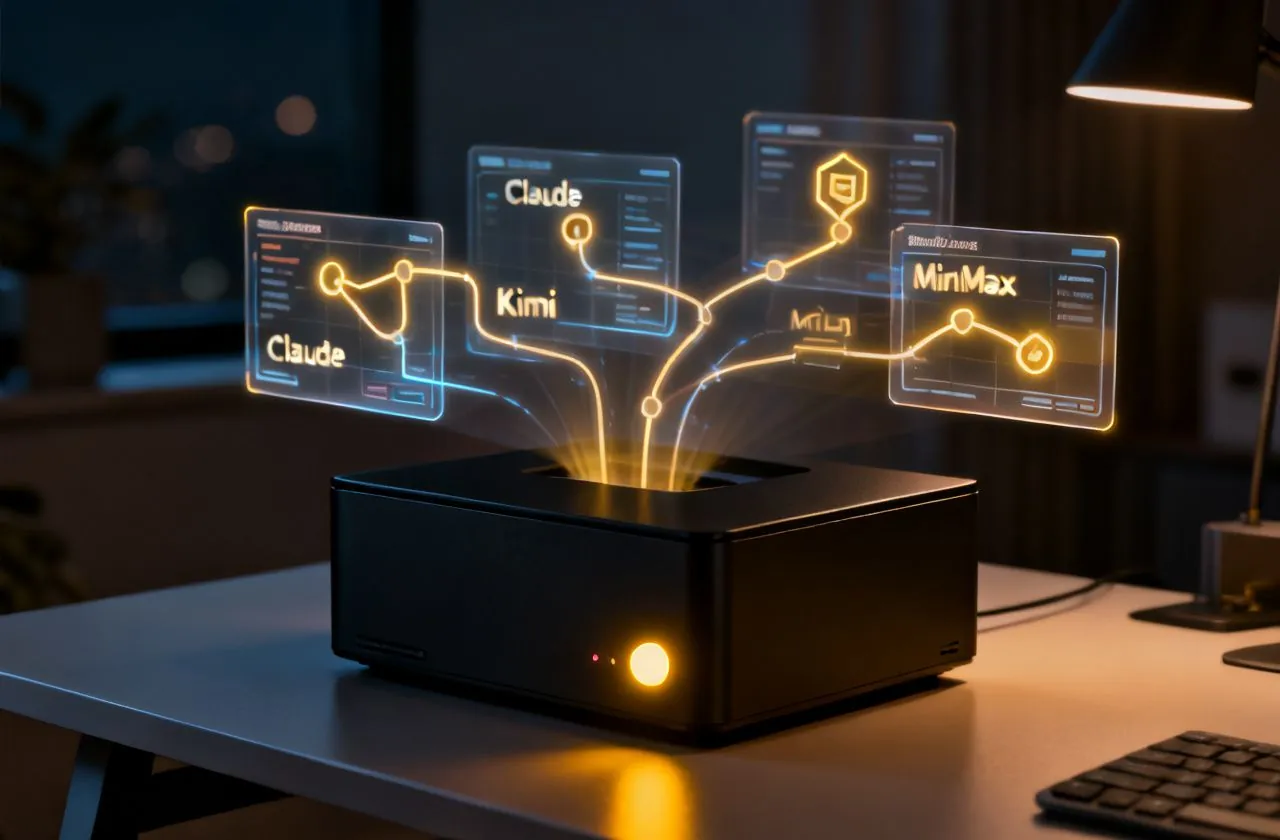
Kaihe AIBOX was designed precisely for this. It does not produce models — it is the dispatch hub for all of them. You only tell it what the task is: "turn last week's three topic pitches into scripts," "run sentiment analysis on 100 user reviews," "generate a showcase video from this batch of product photos using MiniMax H3." It automatically routes each task according to preset rules: complex reasoning goes to Claude Opus 5 or GPT-5.6 Sol APIs, daily copywriting takes Kimi K3's cheap express lane, video generation switches to MiniMax H3, bulk data processing runs on DeepSeek V4-Flash during off-peak hours. No need to register accounts on six different platforms. No need to manually swap API keys. No need to scan headlines every morning asking "which new model can save me a few cents today."
Even more valuable is data sovereignty. You use Kimi to draft proposals, Claude to write code, MiniMax to make videos — your creative ideas, design drafts, and business data are scattered across five or six different cloud platforms. If any one of them gets breached, shuts down, or suddenly changes its terms, there is nothing you can do about it. Kaihe AIBOX takes a different approach: all results land on your local drive. The cloud models are only called remotely to "run the computation" — the computed results return to your own hard drive, retrievable two years later if you ever need them.
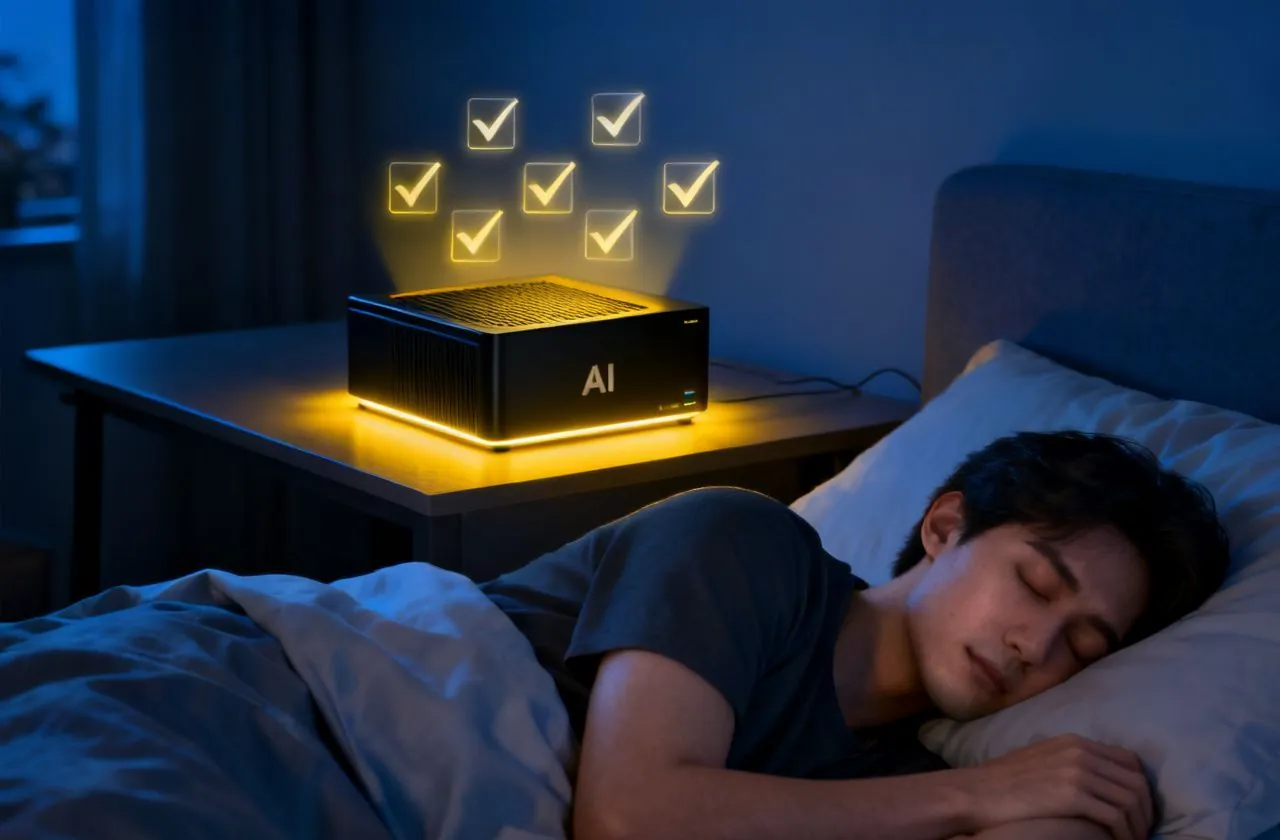
The core differentiator comes down to two things: AI keeps working after you shut down your computer — no impact on your work laptop or personal notebook; all data lives permanently on your local drive — nothing ever touches a cloud server.
The model explosion is fantastic news. The more models, the better. But the more models there are, the more valuable the "who dispatches them all for you" layer becomes. It is like having a dozen delivery companies at your doorstep — without someone to receive and organize packages for you, you end up running around more, not less. Kaihe AIBOX is your AI package-receiving dispatcher, on duty 7x24, indifferent to who cut prices today, focused only on routing every task to the best model — while you just say one thing before bed and sit down to the results in the morning.
Kaihe AIBOX | The Agent Computer That Works 7x24 for You · AI Agent