📖 Glossary
AI Box (also known as Agent Computer / Agent PC), is a dedicated local hardware device that runs AI Agents. Pre-installed with an AI agent management system, plug-and-play, running 24/7. Users can remotely command AI to work via Discord, Slack, Telegram, WhatsApp, and more.
Summary: At COMPUTEX 2026, Jensen Huang made a striking declaration: the personal computer is evolving from a tool humans operate into an agent collaboration platform. When AI becomes the system foundation rather than an add-on feature, the entire logic of how we use computers will be rewritten. This article breaks down the core architecture, industry signals, and implementation path of the Agent Computer—mapping the paradigm shift from PC to AC.
I. COMPUTEX 2026: A Signal That Deserves More Attention
In June 2026, at COMPUTEX in Taipei, Jensen Huang stood on stage and delivered a line that split the room—some dismissed it as marketing hyperbole, others recognized an industry inflection point: "The next computer you buy will be an agent computer."
He wasn't announcing a product. He was defining a new species. The logic of the traditional Personal Computer (PC) is human-issues-command, machine-executes. The logic of the Agent Computer (AC) is fundamentally different: you describe intent, and AI decomposes the task, calls tools, executes autonomously, and returns results. The human's role shifts from "operator" to "reviewer."
This isn't science fiction. NVIDIA demonstrated a three-layer architecture: a multimodal large model at the top for understanding and planning, a tool orchestration engine in the middle for API coordination, and a local compute cluster at the bottom for real-time inference. The core of this chain isn't "helping you type faster"—it's "completing end-to-end workflows for you."
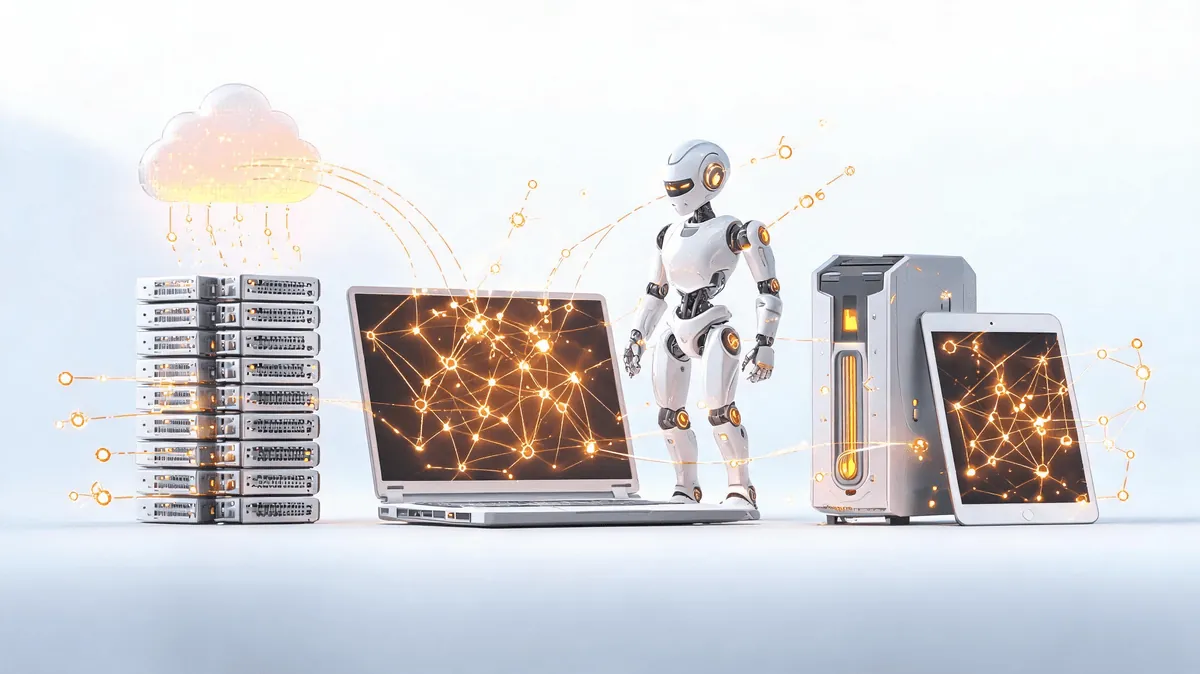
II. PC → AC: More Than an Acronym Change
The foundational assumption of the PC (Personal Computer) is: humans are the sole intelligent agents, and the computer is a tool. Every interaction requires human initiation—launching software, clicking buttons, typing commands. Efficiency gains come from tool optimization: faster CPUs, more RAM, smoother UIs.
The AC (Agent Computer) flips this assumption: the machine itself is an intelligent agent, and humans are collaborators. You don't need to tell it "how"—just "what." It plans the steps, selects tools, handles exceptions, and delivers results on its own.
The essential difference is autonomy:
| Dimension | Traditional PC | Agent Computer |
|---|---|---|
| Interaction | Human command → Machine execute | Human intent → AI autonomous execute |
| Workflow | Linear, single-task | Parallel, multi-task |
| Error handling | Human intervenes | AI self-corrects + escalates |
| Compute priority | General computing | Inference-first |
| System core | Operating system | Agent orchestration layer |
This isn't "a computer with AI features added on." It's a compute architecture redesigned with AI as the foundation—just as a smartphone wasn't "a PDA that makes calls," but a fundamentally new device category built on touchscreens and app ecosystems.
III. Why Now? Three Conditions Converging
The concept of an Agent Computer isn't new, but 2026 marks the first year it can genuinely ship—because three conditions are simultaneously maturing for the first time:
1. On-Device Inference Crosses the Critical Threshold
NVIDIA's GB10 Grace Blackwell super chip enables desktop-class devices to run 70-billion-parameter models for the first time. Enterprise-grade AI inference no longer requires the cloud—sensitive data can be processed entirely on-premises. For finance, healthcare, and legal industries with strict compliance requirements, this is the leap from "usable" to "deployable."
2. Multimodal Understanding Becomes Standard
Models like GPT-4o, Gemini 2.5, and Claude Opus 4 now process text, images, code, and audio simultaneously. Agents are no longer limited to reading text—they can interpret error messages in screenshots, extract decisions from meeting recordings, and understand visual intent in design mockups. Multimodality is the prerequisite for agents to evolve from "chat tools" to "work partners."
3. Tool-Calling Ecosystem Reaches Critical Mass
Open protocols like MCP (Model Context Protocol) have transformed AI tool integration from "custom development" to "plug-and-play." A single agent can simultaneously operate browsers, databases, design software, and code repositories without per-tool adaptation. Just as USB unified peripheral interfaces, MCP is unifying the connection between AI and the software world.
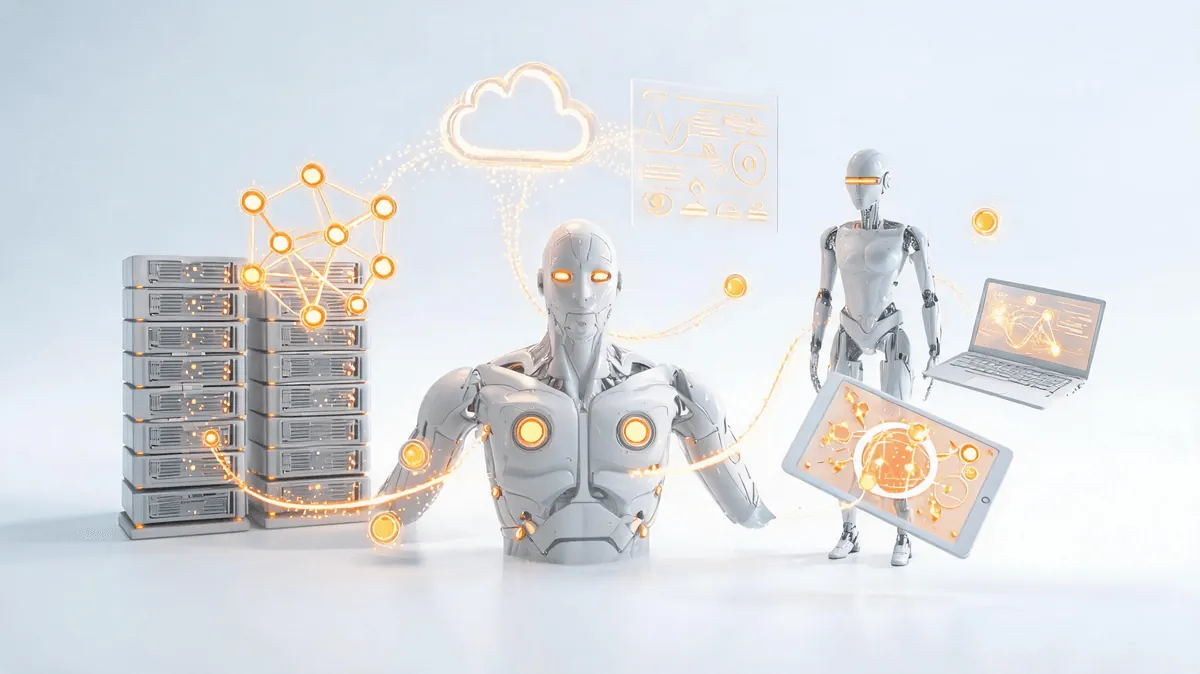
IV. What Does an Agent Computer Look Like? Three-Layer Architecture
Understanding the Agent Computer requires understanding its three-layer architecture:
Layer 1: Perception & Understanding
This is the agent's "eyes and ears." It receives your natural language instructions, screenshots, files, voice, even real-time screen activity, and converts them into structured task descriptions. Driven by multimodal large models, its core capability is "understanding what you mean."
Layer 2: Planning & Orchestration
This is the agent's "brain." It decomposes tasks into sub-steps, determines which tools to call, in what order, and how to process intermediate results. The key here isn't single-pass accuracy—it's reliability across long task chains. In a 10-step workflow, what happens when step 7 fails? Roll back, retry, or switch approach? This determines whether an agent is "occasionally useful" or "genuinely trustworthy."
Layer 3: Execution & Feedback
This is the agent's "hands." It operates real tools—writing code, sending emails, generating reports, calling APIs—and returns results to the user. The biggest challenge here is safety: agents must have clear permission boundaries. They can't "take initiative" to delete data or send sensitive information. A well-designed Agent Computer establishes strict approval mechanisms and sandbox environments between these three layers.
KaiheAiBox AIBOX-A1 is a product built on this three-layer architecture: a locally deployed multimodal model handles perception and understanding, a built-in agent orchestration engine manages task planning and tool coordination, and on-device compute ensures the entire workflow completes locally—data never leaves the device.
V. Who Needs an Agent Computer First?
Agent Computers aren't a universal necessity—at least not yet. But three categories of use cases are already generating real value:
1. Teams Burdened by Repetitive Knowledge Work
Daily report generation, data cleaning, report formatting, contract review—these tasks have clear procedures, mature rules, and high repetition. An Agent Computer can handle them 24/7 without interruption; humans only need to review final outputs.
2. On-Premises AI Needs in Highly Regulated Industries
Finance, healthcare, and legal sectors face strict data privacy regulations. Cloud AI, while powerful, poses compliance risks when data leaves organizational boundaries. On-device Agent Computers eliminate the trade-off between AI capability and data security.
3. Complex Multi-Tool Workflows
Product managers simultaneously juggle project management tools, design software, document platforms, and communication apps—each with its own interface and logic. An Agent Computer can cross these tool boundaries, completing cross-platform operations with a single natural language instruction.
VI. The Transition from PC to AC: Not Overnight
The direction is clear, but the transition from PC to AC won't be a hard cutover—it's a gradual process:
Phase 1 (2025–2026): AI-Enhanced PCs
This is where we are today. Computers still use traditional architectures with AI layered on as assistive features—Copilot helps write emails, plugins summarize webpages. The core interaction remains human-driven; AI is an accelerator.
Phase 2 (2027–2028): Hybrid Agent Computers
AI becomes the system's core orchestration layer, but human review remains a critical checkpoint. Agents can autonomously complete 80% of routine tasks, but key decisions still require human confirmation. Products in this phase resemble the direction KaiheAiBox AIBOX-A1 represents today—AI isn't an add-on; it's the operating system's foundation.
Phase 3 (2029+): Native Agent Computers
Compute architectures designed AI-first. Traditional desktop UIs recede to a secondary interaction mode; natural language becomes the primary input. Agents collaborate autonomously, forming multi-agent work networks. Humans increasingly play the roles of "goal setter" and "outcome evaluator."
VII. What Should You Pay Attention to Now?
If you're a technology decision-maker or efficiency-sensitive user, three things are worth starting today:
-
Assess the AI-substitutability rate of your workflows: Break your team's work into task units and score each task's rule-based nature and repetition frequency. Tasks that are highly rule-based and frequently repeated are the first candidates for Agent Computer automation.
-
Watch the price-performance inflection point of on-device AI hardware: The GB10 chip has brought large-model inference to the desktop, but pricing remains premium. The next wave of chip iterations—and the price-performance leap they bring—will signal when scaled deployment becomes practical.
-
Build AI collaboration habits and processes now: Don't wait for Agent Computers to mature—start using AI-assisted tools today, accumulate prompt engineering experience, and understand AI capability boundaries. When true Agent Computers arrive, you'll already be ready.
KaiAIBox| Agentaibox that lets AI work for you 24/7 · AI Frontier