Ali Qoder 1.0 Released: One Requirement In, AI Writes Code, Tests, and Delivers
📖 Glossary
AI Box (also known as Agent Computer / Agent PC), is a dedicated local hardware device that runs AI Agents. Pre-installed with an AI agent management system, plug-and-play, running 24/7. Users can remotely command AI to work via Discord, Slack, Telegram, WhatsApp, and more.
Nizwo AI Agent Column tracks the latest AI Agent product updates. Follow us to stay on top of the AI landscape.
"You define the requirement, AI delivers end-to-end" — No longer just a demo video
On May 15, 2026, Alibaba Cloud officially released Qoder 1.0.
If you've used Tongyi Lingma (Alibaba's previous AI coding assistant), you might think "another IDE plugin upgrade." But this time it's different — Qoder 1.0 is positioned as an "Agent Autonomous Development Workbench," upgraded from an AI IDE to a full-process automated development platform.
The pitch is direct: Users only need to focus on defining requirements; the Agent team "autopilots" and autonomously completes execution, verification, and delivery.
What can it actually do?
Traditional AI coding assistants (GitHub Copilot, Tongyi Lingma, etc.) work like this: You write, it suggests.
Qoder 1.0 works like this: You describe the requirement; it writes code, runs tests, and delivers — fully autonomously.
| Traditional Mode | Qoder 1.0 Mode |
|---|---|
| You write code, AI suggests | You describe requiremennts, AI writes code |
| You run tests, AI occasionaly helps | AI autonomously runs tests, autonomously fixes |
| You manually commit code | AI autonomously generates delivery docs |
| Single-task serial | Multi-project parallel, Agent team collaboration |
Core upgrade: Qoder 1.0 upgraded the original Quest mode (AI-assisted coding) into an independent workbench, integrating four capabilities:
- Task scheduling — Automatically breaks down requirements into subtasks, assigns to different Agents
- Progress monitoring — Real-time display of what each Agent is doing, where it's stuck
- Artifact tracing — Every code change is recorded, can be rolled back at any time
- Knowledge base integration — Agents can read project docs, API docs, historical code
Benchmark data: Development cycle shortened by 40%
Alibaba's offficial test data:
- Development cycle reduction: Over 40%
- Error rate reduction: 25%
- Users served: Over 5 million developers worldwide since August 2025
Multi-project management is one of Qoder 1.0's highlights. Developers can run Agent tasks for different projects simultaneously across multiple Workspaces, each task with an independent status label (Running / Waiting for Confirmation / Completed) — see global progress in one screen.
After task completion, the system automatically generates a Summary deliverables list, including key metrics, change logs, and verification results — no need to manually organize reporting materials.
Technical architecture: How does the Agent team collaborate?
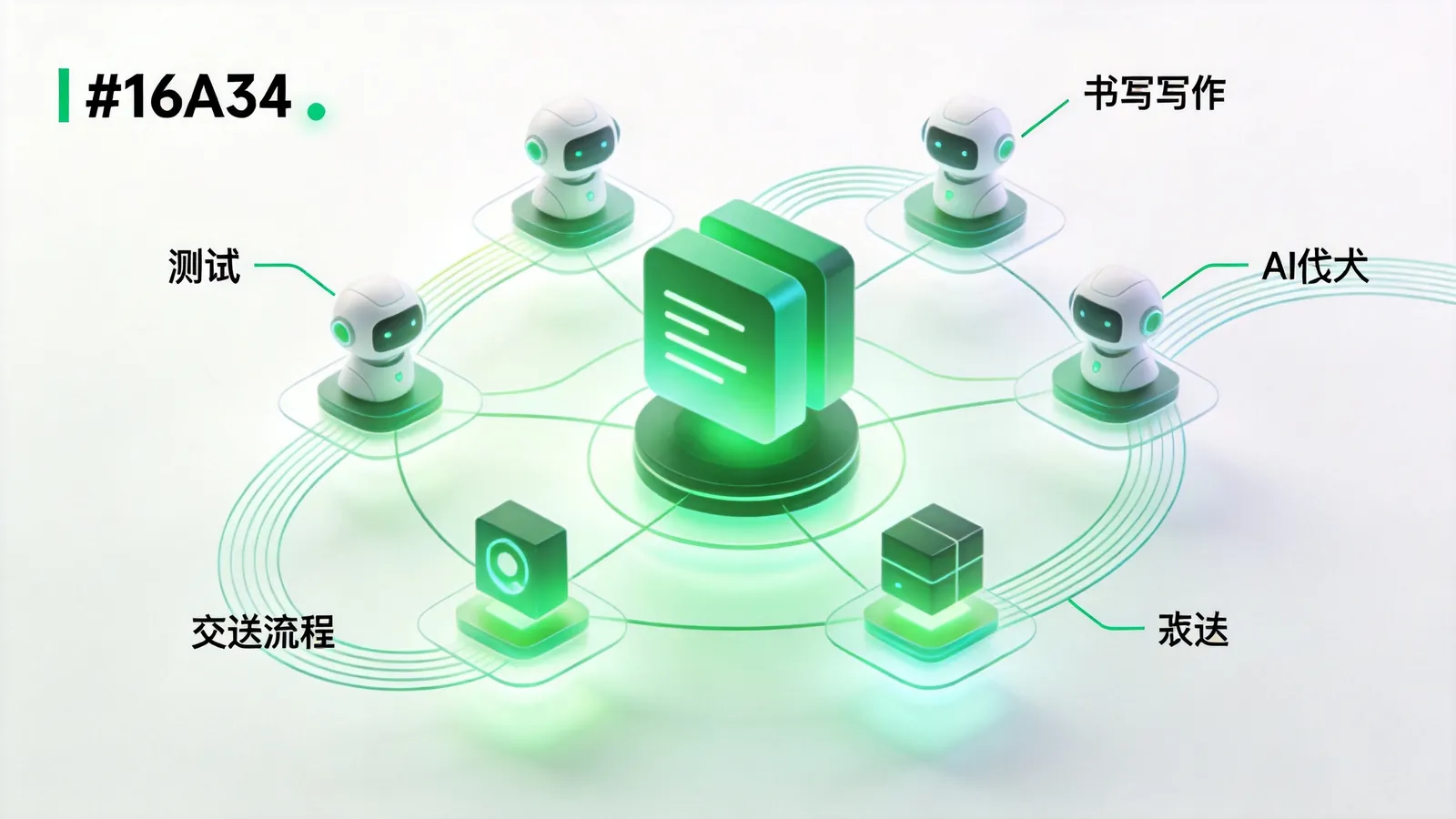
Qoder 1.0's core innovation is the "Agent Team" concept — it's not one large model helping you write code, but multiple specialized Agents collaborating:
You submit a requirement
  ↓
[ Qoder Scheduler Agent ] → Breaks down tasks
  ↓
[ Coding Agent ] → Writes code
  ↓
[ Testing Agent ] → Runs unit tests, integration tests
  ↓
[ Review Agent ] → Checks code standards, security vulnerabilities
  ↓
[ Delivery Agent ] → Generates change logs, updates documentation
  ↓
Completion, notification for your review
Each Agent is a specialized fine-grained model, not a general-purpose large model forced to handle all aspects. This is why Qoder can claim "autonomously completes execution, verification, and delivery" — it doesn't stop after generating code, but genuinely runs through the complete software development lifecycle.
New capability: Custom expert teams
Qoder 1.0 adds custom expert capability: Developers can create dedicated Agent teams, configuring:
- Domain knowledge (e.g., financial system development standards, medical data compliance requirements)
- Task skills (e.g., specific code review rules, deployment workflows)
- External tool interfaces (e.g., enterprise internal APIs, private code repositories)
This means Qoder isn't just a "general-purpose AI coding assistant," but an intelligent agent development platform that can be customized for specific business scenarios.
Relationship with Nizwo: It's an Agent for developers; Nizwo is the hardware that runs Agents
Qoder 1.0 is an AI Agent for software developers, running on the developer's own computer or Alibaba Cloud.
Nizwo Agent Computer is hardware that runs Agents 7×24, suitable for scenarios requiring persistent online presence (e.g., customer service Agents, monitoring Agents, automated operations Agents).
The target users are different:
| Comparison | Qoder 1.0 | Nizwo Agent Computer |
|---|---|---|
| Target user | Software developers, coders | Non-IT users, SMEs |
| Runtime | Developer's computer / Alibaba Cloud | Local desktop device, plug in and run |
| Core value | Improves coding efficiency, automates development workflow | 7×24 Agent runtime, local data |
| User barrier | Requires coding background | Scan QR code and go, no technical background needed |
Simply put: Qoder is for people who write code; Nizwo is for "people who want to use AI but don't understand technology."
Something is happening
The release of Qoder 1.0, alongside Google's Gemini Spark release (same week), points to the same trend:
2026 is the year AI Agents upgrade from "assistive tools" to "autonomously executing digital employees."
- Writing code? Agent writes it, tests it, and delivers it itself.
- Organizing email? Agent runs in the background persistently; you don't need to watch it.
- Customer service replies? Agent is online 7×24 and doesn't get tired.
This isn't a story about "AI makes work more efficient" — it's a story about "For some tasks, AI can directly finish them."
Nizwo's value lies precisely here: It gives you a computer dedicated to running Agents, 7×24 online, with data staying local, not locked into a single big-tech ecosystem.
Gemini Spark, Qoder — these are all applications that run on Nizwo. And Nizwo is the hardware foundation that keeps these applications "always online."
Nizwo AI Agent Column tracks the latest AI Agent product updates. Follow us to stay on top of the AI landscape.