Alibaba's Speech Models Win Three Global Firsts: What It Means for Voice Agents
📖 Glossary
AI Box (also known as Agent Computer / Agent PC), is a dedicated local hardware device that runs AI Agents. Pre-installed with an AI agent management system, plug-and-play, running 24/7. Users can remotely command AI to work via Discord, Slack, Telegram, WhatsApp, and more.
Abstract: In May 2026, Alibaba's speech models Fun-Realtime-ASR and Fun-Realtime-AudioChat topped the global Artificial Analysis leaderboard, beating GPT-Realtime-2 and other international models across three core metrics: accuracy, reasoning, and conversational fluency. This marks a shift from "transcribing speech" to "understanding and conversing." What does this mean for Agent applications? And how does Nizwo fit into the picture? This article breaks it down.
KaiheAiBox · AI Frontier Column
1. What Do "Three Firsts" Actually Mean?
On May 21, 2026, the global AI evaluation platform Artificial Analysis released its latest leaderboard—Alibaba's speech models Fun-Realtime-ASR and Fun-Realtime-AudioChat swept all three championship positions, surpassing international competitors including OpenAI's GPT-Realtime-2.
The Three Metrics, Explained
| Metric | What It Measures | Alibaba's Score | Industry Significance |
|---|---|---|---|
| Accuracy (WER) | Speech-to-text error rate | 1.8% WER | Fewer than 2 errors per 100 words |
| Understanding (Speech Reasoning) | Semantic comprehension, logic, intent | 97.6% | True end-to-end intelligence |
| Fluency (Conversational Dynamics) | Natural dialogue flow and adaptability | 97.8% | Near-human conversational rhythm |
Artificial Analysis uses blind user testing and an ELO dynamic ranking system to minimize brand bias. Winning all three metrics is not "barely passing the line"—it is demonstrably best-in-class.
2. Why This Win Matters
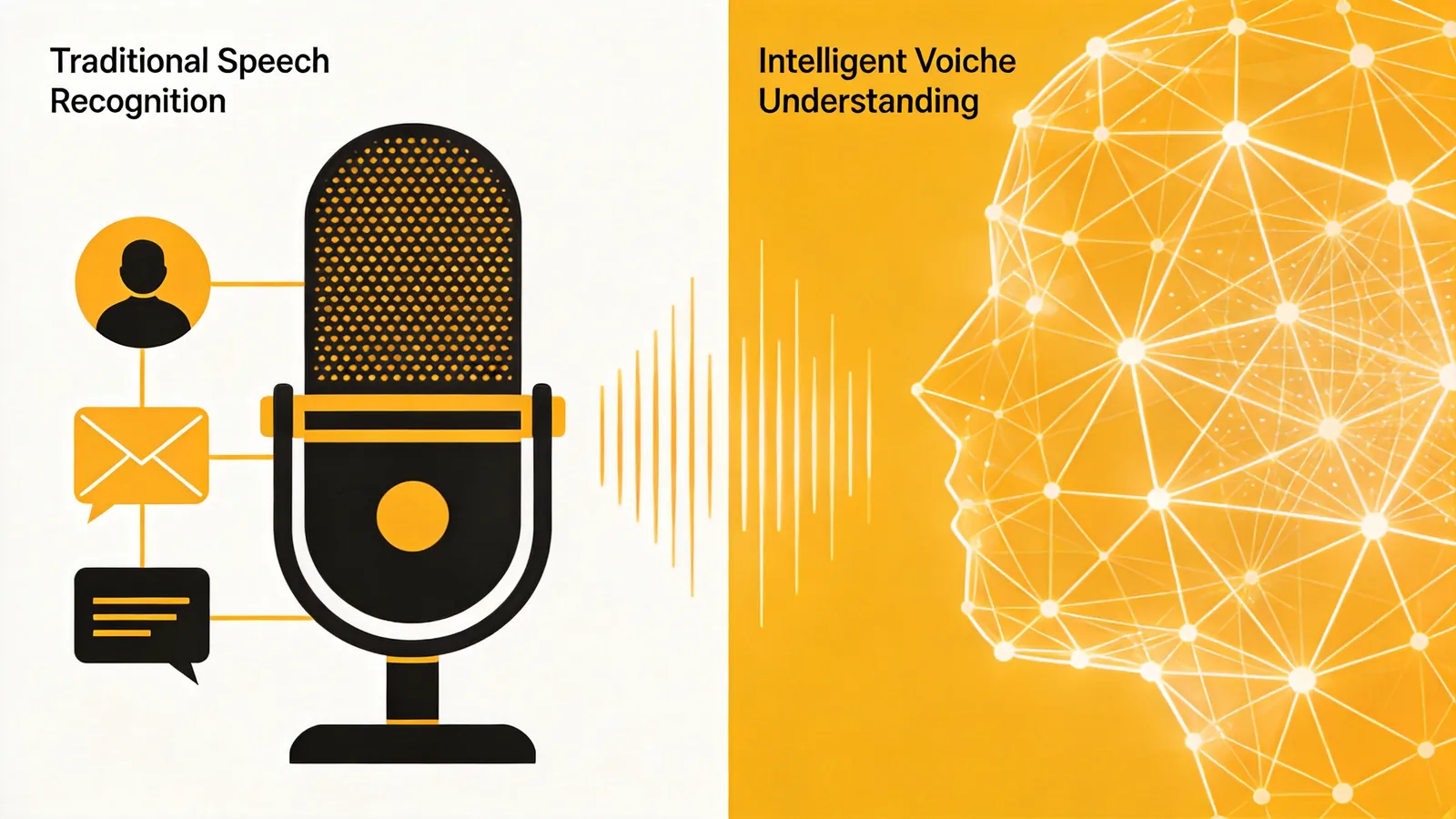
The speech model race has evolved from "who transcribes more accurately" to "who truly understands what you say."
From "Transcriptionist" to "Conversation Partner"
Traditional ASR only solves one problem: converting sound into text. But real-world applications demand far more—
- In-car scenarios: User says "I'm a bit cold"—the system needs to understand this is not a weather report, but a request to raise the AC temperature
- Medical scenarios: Doctor dictates "patient has recent chest tightness, history of hypertension"—the system needs to recognize the logical relationship between symptoms and medical history
- Customer service: User sounds rushed, uses vague language—the system needs to detect emotion and intent
Fun-Realtime-AudioChat's high scores in "understanding" and "fluency" mean it has evolved from a "transcriptionist" to a "conversation partner"—it knows not just what you said, but why you said it and how to respond.
Key Technical Breakthroughs
- Millisecond-level latency: In real-time conversations, humans can perceive lag beyond 300ms. Alibaba's models control latency to milliseconds, approaching natural human conversation rhythm
- 30+ languages + 7 major Chinese dialects: Not just Mandarin—Cantonese, Sichuanese, Hokkien and other dialects are accurately recognized across 20+ regional accents
- Interruption recovery: When a user interrupts mid-sentence, the model seamlessly resumes context—unlike traditional IVR systems that force you to "start over"
3. Versus GPT-Realtime-2: How Big Is the Gap?
The real headline from this evaluation is not just "Alibaba won"—it is "in which dimensions did it beat GPT-Realtime-2?"
Where Alibaba Wins
- Accuracy (WER): Alibaba 1.8% vs GPT-Realtime-2 ~2.3%, clear advantage in Chinese scenarios
- Understanding (Speech Reasoning): Alibaba 97.6% vs GPT-Realtime-2 ~95.8%, deeper semantic comprehension
- Fluency (Conversational Dynamics): Alibaba 97.8% vs GPT-Realtime-2 ~96.1%, more natural dialogue flow
Where GPT-Realtime-2 Still Leads
- Multilingual coverage: OpenAI supports more languages; performance on low-resource languages remains stronger
- English scenarios: In pure English conversation, GPT-Realtime-2 retains a slight edge
- Ecosystem integration: Deep integration with the entire OpenAI product family (ChatGPT, API ecosystem)
Conclusion: For Chinese speech scenarios, domestic models have comprehensively taken the lead; the gap in multilingual and English scenarios is rapidly narrowing.
4. What This Means for Agent Applications
Breakthroughs in speech models directly benefit Agent applications—because voice is the most natural human-computer interaction method.
Three Directly Benefiting Scenarios
1. Voice-driven Agent commands Users don't need to type—they can simply speak to give Agents tasks. Fun-Realtime-ASR's 1.8% WER means Agents will almost never "mishear instructions."
2. Emotion-aware Agents The "understanding" capability allows Agents to perceive not just literal meaning but also user emotion—urgency, confusion, satisfaction—and adjust response strategy accordingly. This is critical for customer service, companionship, and education scenarios.
3. Multi-turn conversational Agents The "fluency" capability allows Agents to maintain contextual coherence across long conversations without "losing the thread." This is essential for scenarios requiring back-and-forth communication (remote collaboration, project management).
Current Bottlenecks
- Local deployment: The Fun-Realtime series currently runs via cloud API; local deployment options are not yet fully available
- Edge latency: Although cloud latency is controlled to milliseconds, network latency still exists; edge deployment is the ultimate solution
- Privacy compliance: Voice data is highly sensitive; financial, medical, and other industries have strong localization requirements
5. Nizwo: The Best Runtime Foundation for Voice Agents
Voice Agents need to run 7×24, need stability, need low power consumption, need data security—these are exactly what Nizwo is designed for.
| Requirement | Nizwo's Solution |
|---|---|
| 7×24 online operation | Low-power desktop design, runs year-round without interruption |
| Voice data security | Local storage, physically isolated from big-tech cloud platforms |
| Flexible model switching | Pre-installed OpenClaw, one-click switch between Alibaba/GPT/Claude model APIs |
| Ready to use out of the box | WeChat QR code binding, enter API Key to start using immediately |
| Dedicated connectivity | Wired network support ensures low-latency voice interaction |
Typical scenario: An enterprise customer service system uses Alibaba's speech models as the voice entry point, running an Agent on Nizwo 7×24 to process voice commands—user calls and says "help me check last week's orders," the Agent automatically calls the backend system and returns results, no human intervention required.
Alibaba's three-first sweep in speech modeling is not an endpoint—it is a signal that voice interaction is becoming the standard interface for Agents. And the hardware foundation that lets voice Agents run stably is exactly what Nizwo is building.
KaiheAiBox · AI Frontier Column