How a Cross-Border E-Commerce Company Used Local AI for Multilingual Customer Service: Three Months of Real Data
📖 Glossary
AI Box (also known as Agent Computer / Agent PC), is a dedicated local hardware device that runs AI Agents. Pre-installed with an AI agent management system, plug-and-play, running 24/7. Users can remotely command AI to work via Discord, Slack, Telegram, WhatsApp, and more.
Lao Zhou runs a cross-border e-commerce business in Shenzhen, selling 3C accessories across seven markets in Europe, North America, and Southeast Asia. His customer service team had four people with significant labor costs. The real problem wasn't cost itself — it was small-language support. Thai, Vietnamese, and Indonesian inquiries simply couldn't be handled. Conversion rates in those markets ran less than half of English-speaking markets.
Late last year they deployed a KAIHE A1 with M4 Pro, running a local Qwen2.5-72B-based multilingual customer service agent. Three months in, the numbers are in.
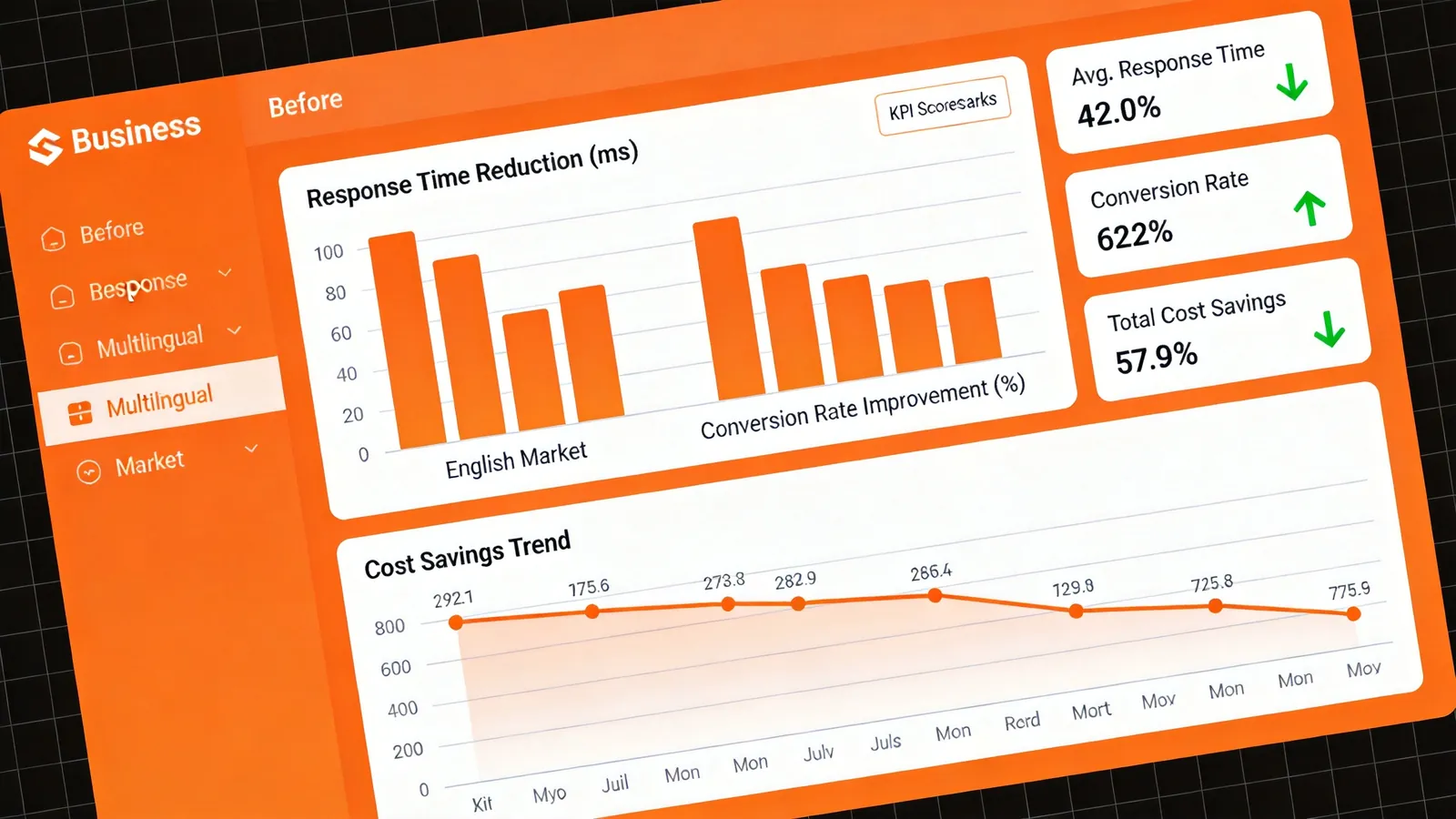
English market first. Average response time dropped from 45 minutes (human) to 8 seconds (agent). Daily sessions processed jumped from 60 to 380 (agent-human collaboration mode). Complaint rate fell from 12% to 7%. Average order value held steady. The most surprising gain: late-night shift (10 PM-2 AM) conversion. Human agents were slow to respond during those hours — customers just left. With the agent running 24/7, late-night order conversions rose 23%.
Small-language markets are where the real value emerged. Vietnamese and Indonesian session volume grew 40% and 35% respectively in the three months post-deployment. Not because demand suddenly appeared — demand was always there. Nobody was answering. Now the agent handles pre-sales consultation in both languages directly. Only complex issues like returns and refunds escalate to humans. The CS team's job changed from "know everything" to "handle exceptions only." Four people became two and a half, and they still feel it's lighter work.
One pitfall worth noting. Lao Zhou's first model choice was the 7B version. Small-language output had a serious "translation voice" problem — Vietnamese text was grammatically correct but sounded mechanical, prompting customers to ask "are you a bot." Switching to the 72B model nearly eliminated this issue. The implication: multilingual customer service demands higher language understanding capability than English-only scenarios. Don't downgrade model size to save money on this use case.
Cost breakdown: the KAIHE A1 + M4 Pro investment was far below the recurring expense of cloud API fees over the same period. As Lao Zhou put it: "I thought deploying local AI would be a hassle. Turns out the cloud API bills were burning more money every month than buying a server — and the data stays in my hands." The hardware is a one-time expense with an expected three-year service life, paying for itself almost immediately.