📖 Glossary
AI Box (also known as Agent Computer / Agent PC), is a dedicated local hardware device that runs AI Agents. Pre-installed with an AI agent management system, plug-and-play, running 24/7. Users can remotely command AI to work via Discord, Slack, Telegram, WhatsApp, and more.
Summary: OpenAI is preparing the largest architectural upgrade in ChatGPT history—transforming it from a Q&A chatbot into an AI super-app that can code, execute tasks, and orchestrate tools autonomously. With Codex elevated to a core role and Agent capabilities as the strategic direction, this shift signals AI's transition from "chatting" to "working"—a paradigm change with profound implications for every user.
I. The Biggest Upgrade Yet: What Is ChatGPT Becoming?
In June 2026, multiple sources close to the matter reported that OpenAI is preparing the most significant architectural overhaul since ChatGPT launched in late 2022. This is not about swapping models or adding features—the goal is to transform ChatGPT from a "you ask, I answer" chatbot into an AI super-app capable of autonomously executing complex tasks.
What does "super-app" mean? Simply put, ChatGPT will no longer be just a dialog box. It will become a unified work platform integrating coding tools (Codex), file operations, browser control, and API orchestration. Instead of "asking it questions," you "assign it tasks"—and it plans the steps, invokes the tools, and returns the results on its own.
This direction aligns perfectly with industry momentum: Google's Project Mariner, Anthropic's Computer Use, and Microsoft's Copilot Actions are all pursuing the same vision—turning AI from an "advisor" into an "executor." The race is no longer about who has the smartest chatbot, but about who can build the most capable AI agent platform.
The implications are staggering. Consider how smartphones replaced dozens of standalone devices—camera, GPS, music player, calculator—by integrating them into a single interface. ChatGPT's transformation aims to do the same for knowledge work: instead of switching between IDEs, browsers, email clients, and project management tools, you describe what you need done, and the AI orchestrates everything behind the scenes.
But this raises fundamental questions: How reliable will these autonomous agents be? What happens when they make mistakes? And perhaps most importantly, who controls the data flowing through these increasingly capable systems?
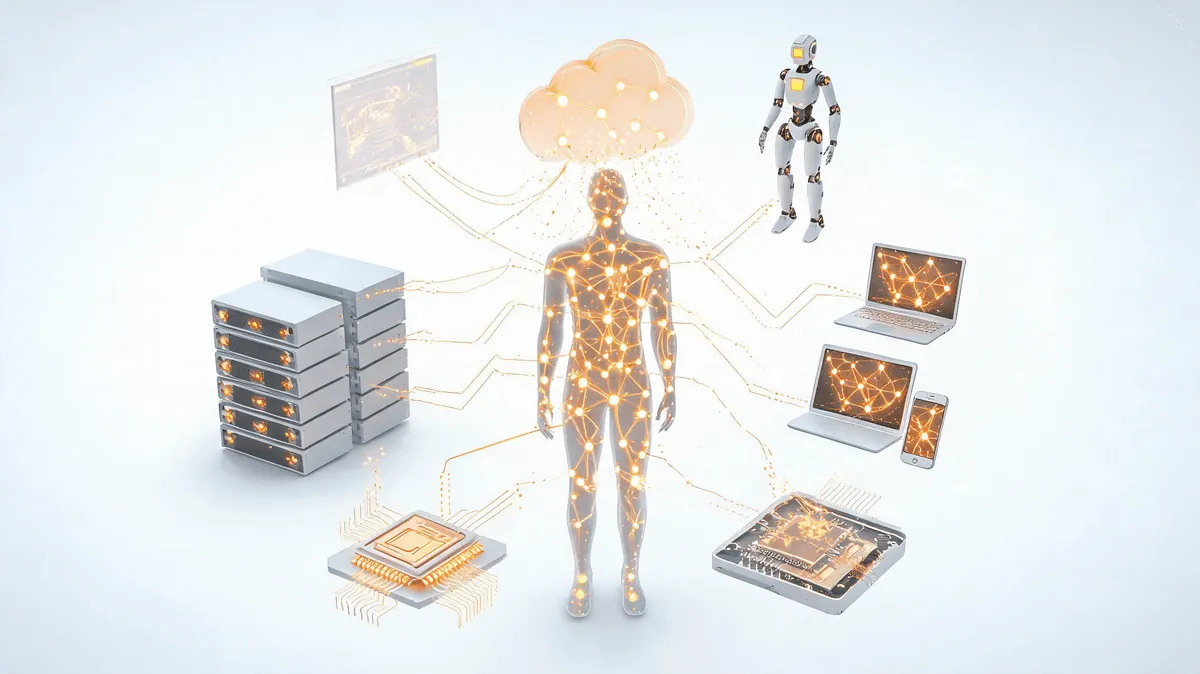
II. Codex Returns to Center Stage: The Coding Agent as ChatGPT's Engine
The most noteworthy shift in this upgrade is Codex's changed role. Previously, Codex existed as a standalone product requiring separate access. Post-upgrade, Codex capabilities will be deeply integrated into the main ChatGPT interface, serving as the core engine powering the "super-app."
Why coding? Because programming is the ultimate proving ground for AI Agent capabilities—it requires understanding requirements, decomposing tasks, writing code, running tests, and handling exceptions in a complete autonomous execution loop. An Agent that can write good code can, in theory, also operate browsers, manage files, and orchestrate APIs.
The technical argument is compelling: coding is deterministic in a way that general conversation is not. A program either works or it doesn't. Tests pass or they fail. Error messages provide clear feedback loops. This makes coding an ideal training ground for building reliable agent behavior that can then be generalized to other domains.
OpenAI has significantly increased Codex resource allocation internally, and hiring data shows substantial growth in related positions. According to job postings analyzed by tech outlets, OpenAI has been aggressively recruiting senior engineers with backgrounds in code generation, tool orchestration, and agent architecture—signaling that this is not an experimental side project but a core strategic initiative.
For a company valued at $85 billion and preparing for an IPO, integrating its most critical technical capability into its flagship product is an inevitable business logic. The market narrative shifts from "ChatGPT is a popular chatbot" to "ChatGPT is the operating system for AI agents"—a much more defensible and valuable positioning.
The competitive landscape adds urgency. GitHub Copilot, Cursor, and Windsurf have demonstrated that AI-assisted coding is not just viable but commercially successful. By bringing Codex into ChatGPT's core, OpenAI can offer a unified experience that standalone coding tools cannot match: the ability to not just write code, but to understand the broader context of why that code is needed and execute the entire workflow around it.
III. From Chatting to Executing: The Age of AI "Working" Has Arrived
ChatGPT's transformation reflects a fundamental shift across the entire AI industry:
Phase 1 (2023-2024): AI as a Tool. Humans operate; AI assists. You write emails; it polishes them. You write code; it autocompletes. The human is still the driver, and AI is a sophisticated autocomplete engine. Productivity gains are real but incremental—you work faster, but the fundamental nature of work hasn't changed.
Phase 2 (2025-2026): AI as an Assistant. Humans state intent; AI decomposes and executes. You say "create a competitive analysis report," and it searches, organizes, and generates one. The key shift is delegation rather than assistance. You're no longer doing the work with AI help—you're assigning the work to AI and reviewing the output.
Phase 3 (2027+): AI as a Collaborator. AI autonomously discovers tasks, proactively executes, and continuously optimizes. Humans only need to set goals and review results. This is the world where your AI agent notices a scheduling conflict before you do, proposes a resolution, and implements it upon approval.
ChatGPT's evolution from chatbot to super-app exemplifies the leap from Phase 1 to Phase 2. What truly makes this possible is not larger models, but Agent orchestration capability—the ability for AI to know when to call which tools, in what sequence, and how to handle exceptions.
This orchestration layer is the real innovation. Anyone can build a large language model—there are now dozens of competent models available through APIs and open-source releases. What separates a chatbot from an agent platform is the middleware that translates intent into action: parsing a user's request, breaking it into sub-tasks, selecting appropriate tools, executing in the right order, handling failures gracefully, and synthesizing results into a coherent response.
KaiheAiBox AIBOX-A1 is designed on precisely this logic: a locally deployed Agent orchestration engine running 24/7, where users simply set task objectives and AI autonomously schedules tools to complete the work. From concept to product, the era of Agent Computers has arrived.
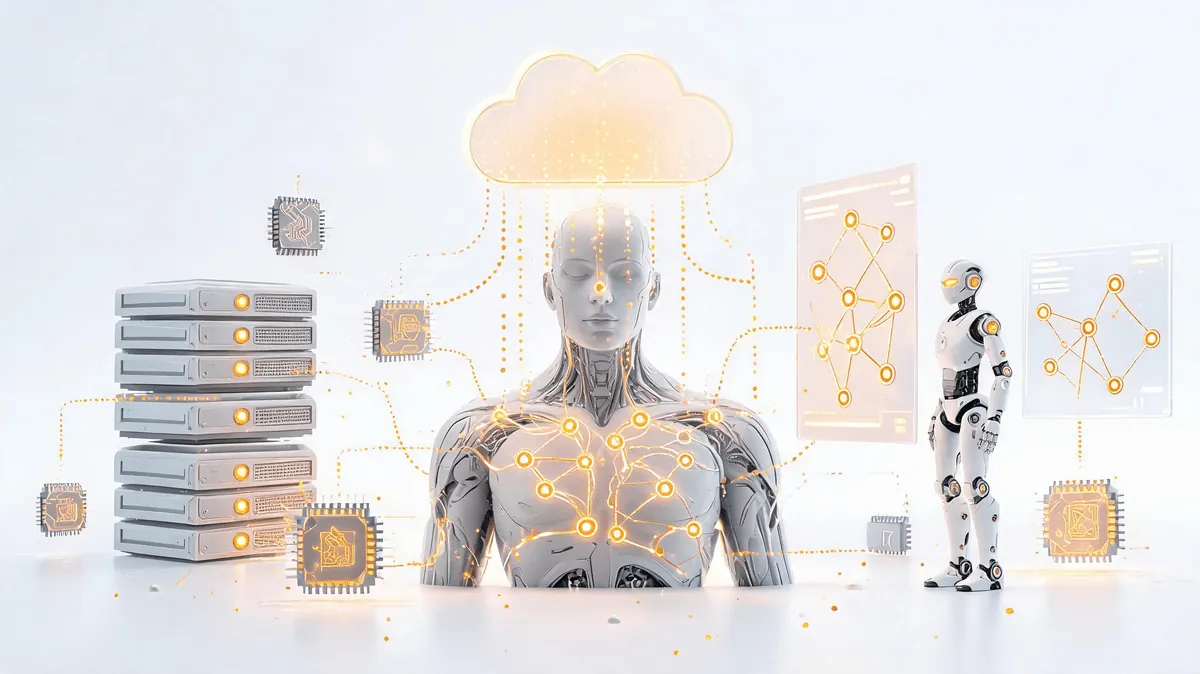
IV. What Does This Mean for Regular Users?
The impact of this upgrade extends far beyond developers:
-
Non-technical users can now "direct" AI to work. When ChatGPT becomes a super-app, you don't need to write code—describe tasks in natural language, and AI automatically invokes tools to execute. "Organize this Excel data for me" is more direct than "write a pandas script." This democratization of automation could be as significant as the spreadsheet was for financial modeling: it doesn't eliminate the need for expertise, but it dramatically lowers the barrier to entry.
-
AI pricing shifts from pay-per-use to pay-per-value. Chatting is billed by tokens; task execution is billed by results. This business model shift means devices that can run Agents locally 24/7 will have a significant cost advantage. Consider the economics: a cloud-based agent executing tasks continuously might cost hundreds of dollars per month in API fees. A locally running agent on a device like KaiheAiBox AIBOX-A1, drawing just 5 watts of power, can accomplish the same work at a fraction of the ongoing cost. For businesses and power users, this is the difference between an experiment and a sustainable workflow.
-
Data security becomes more critical. When AI can access your files, emails, and code, data flow is no longer as simple as "you send a message to a server." Locally running Agent computers have a natural advantage in privacy protection. Every task executed locally stays local—no data leaves your network, no third-party API sees your proprietary information. In regulated industries like finance, healthcare, and legal services, this isn't just a feature; it's a requirement.
-
The definition of "AI literacy" will change. Today, being AI-literate means knowing how to prompt effectively. Tomorrow, it will mean knowing how to delegate tasks to AI agents, how to verify their outputs, and how to design workflows that leverage AI capabilities. This shift is already happening in organizations that have adopted agent-based tools—the most valuable employees are not those who can write the best prompts, but those who can design the most effective AI-assisted workflows.
V. The Competitive Landscape: Not Just OpenAI's Game
While OpenAI's upgrade is the most headline-grabbing, the broader competitive landscape tells a more nuanced story:
Google's approach with Project Mariner focuses on browser-based task execution—letting AI navigate the web on your behalf. This is powerful for research and information gathering but limited by the constraints of web interfaces.
Anthropic's Computer Use takes a more fundamental approach, giving AI direct control over desktop interfaces. This is more flexible but raises more significant safety and reliability concerns.
Microsoft's Copilot Actions leverages the company's deep integration with Office 365 and enterprise workflows. The advantage is context—the AI already knows your organization's tools and data. The disadvantage is lock-in.
The open-source alternative represented by tools like OpenClaw offers a different value proposition: full control, local execution, and no dependency on any single company's API. For organizations that prioritize sovereignty and cost predictability, this approach is increasingly compelling.
What's clear is that no single company will "win" the agent platform race. The market will segment based on use case, security requirements, and budget—just as the cloud computing market did. And just as hybrid cloud emerged as the dominant enterprise architecture, hybrid agent deployment (some tasks local, some tasks cloud) will likely become the standard approach.
The Bottom Line
ChatGPT's biggest upgrade ever is essentially the evolution of AI from "answering questions" to "executing tasks." This is not just OpenAI's choice—it is the direction of the entire industry. When AI no longer needs you to tell it "how" but only "what"—the era of Agent Computers has truly begun.
The question is no longer whether AI agents will transform how we work, but how quickly and how completely. For individuals and organizations ready to embrace this shift, the tools are already here. For those still thinking of AI as a chatbot that answers questions, the gap between expectation and reality is about to widen dramatically.
KaiAIBox| Agentaibox that lets AI work for you 24/7· AI Frontier