China Mobile's Token Ecosystem: The "Universal Currency" of AI Era Has Arrived
📖 Glossary
AI Box (also known as Agent Computer / Agent PC), is a dedicated local hardware device that runs AI Agents. Pre-installed with an AI agent management system, plug-and-play, running 24/7. Users can remotely command AI to work via Discord, Slack, Telegram, WhatsApp, and more.
On May 8, 2026, at the Mobile Cloud Conference in Suzhou, China Mobile dropped a bombshell — officially launching its Token Operations Ecosystem. This is arguably the most ambitious AI strategic layout by a telecom operator this year.
Having 1 billion users and hundreds of billions in infrastructure is one thing. But when a state-owned enterprise says "we're turning Token into universal currency" — the entire industry has to reshuffle.
What Is Token, and Why Is China Mobile Monetizing It?
Let's clarify the concept first.
A Token is not cryptocurrency. It's the basic unit of measurement in AI — every time you chat with ChatGPT, generate an image, or run inference on code, you're "consuming Tokens". Simply put: a Token is the "data plan" of AI services, similar to GB in your mobile plan.
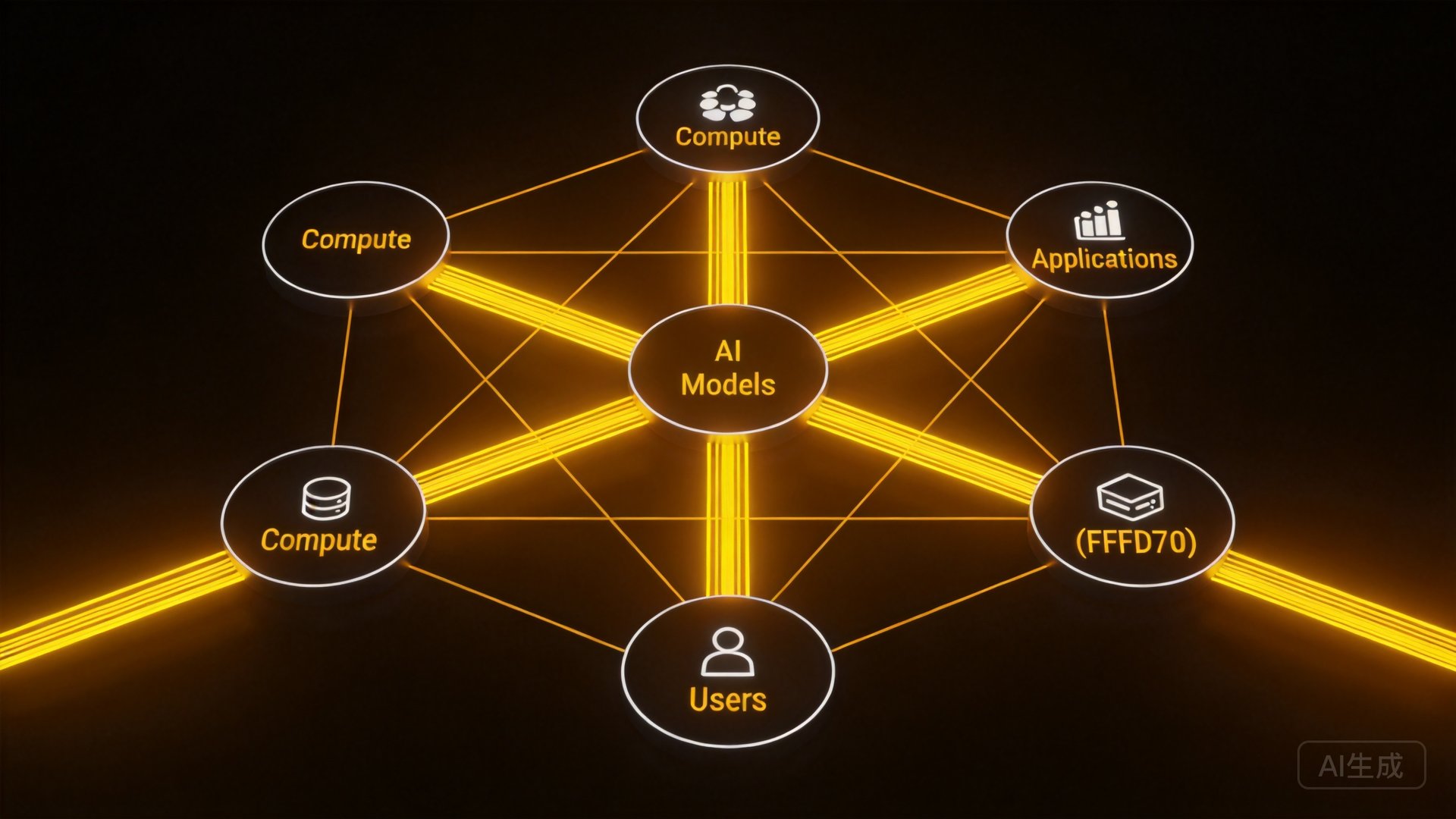
China Mobile's core logic can be summarized in one sentence: connect network, compute, models, applications, and 1 billion users with a unified Token system, making AI services as simple as making a phone call — anyone, on any device, with one account, can consume various AI capabilities.
Behind this are three converging industry trends:
Trend 1: LLM costs are in free-fall. GPT-5.5 consumes 40% fewer tokens than its predecessor for the same task; DeepSeek V4 Pro's 1-million-token input cost has dropped to ¥0.1. The era of selling Token "by the penny" has arrived.
Trend 2: AI Agent adoption is exploding. From OpenClaw going mainstream to Hermès deploying Agents — AI agents are moving from geek toys to consumer products. By March 2026, China's daily Token consumption exceeded 140 trillion — a 1000x increase since early 2024.
Trend 3: The commercial loop is closing. Individual Agent users are developing paid Token habits. The AI industry is transitioning from "tech demos" to "doing business" — no longer lacking breakthrough tech, but lacking complete user-to-value chains.
What China Mobile is targeting is this "chain".
Four Actions: How China Mobile Plays the Token Game
China Mobile's Token ecosystem isn't just a slogan — it has concrete "Four Actions" for implementation:
1. Token Aggregation: Unifying Compute Supply
Not just selling its own compute, but adopting a "self-build + partnership + joint venture" model, opening direct connections to closed-source models, self-deploying open-source models, and co-building premium models. Backend scheduling relies on "Compute Grid Brain 4.0" for cross-vendor, cross-region intelligent dispatching.
Industry impact: model vendors gain one more distribution channel; small developers don't need to integrate with seven separate cloud platforms.
2. Platform Foundation: Unified Billing + Auth
China Mobile is building a unified Token operations platform — unified billing, unified settlement, unified authentication. The key highlight: "one authentication, network-wide access" — your Token account with China Mobile can theoretically consume different AI services across applications.
Analogy: This is the "Alipay" of the AI era — regardless of whether you're on Taobao, Ele.me, or scanning QR codes offline, you pay with the same account.
3. Consumption Activation: 1 Billion User Touchpoints
This is China Mobile's killer asset. It's not just a compute seller — it has native touchpoints used by 1 billion people daily: phone calls, SMS, and its apps. The plan: build Agent services based on the 12580 hotline and "One-Button" entry, while promoting its own products' "Skill-ization" to cover AI phones, home screens, and AI terminals.
4. Value Win-Win: 10 Billion-RMB Resource Commitment
China Mobile pledges to invest 10 billion RMB in Token ecosystem resources over the next 3-5 years, building 100-billion-scale compute infrastructure, and launching three cooperation models: "capability purchase, revenue sharing, resource co-build".
This is the ruthless part: not coming to steal the cake, but coming to enlarge the table — while China Mobile becomes the table's host.
What Does This Have to Do with KAIHE (Local AI)?
You might ask: China Mobile is building cloud compute and distribution channels — isn't that a conflict with what I do selling local AI agent computers?
On the contrary — this is KAIHE's opportunity.
China Mobile's Token ecosystem is centralized distribution — compute is in the cloud, Token flows through China Mobile's pipes. The inherent problem: data must go to the cloud, privacy depends on the platform, and costs accrue per call.
KAIHE's positioning is decentralized on-premise — compute is on your desk, Token consumption happens locally, data doesn't leave your premises, and there's no ongoing API costs.
The more China Mobile pushes "cloud AI" into the mainstream, the more customers sensitive to data security and cost will need a "local AI" option. The two demands are complementary, not mutually exclusive.
Even more critically: China Mobile's Token operations are educating the mass market about "AI consumption" — as more people start using Token, start understanding what an AI agent is — they'll naturally compare "using the cloud" vs. "buying a box". And for specific scenarios, buying a KAIHE box has better cost efficiency.
Conclusion: Token Economy Is the Water; Hardware Is the Cup
China Mobile's Token Operations Ecosystem is a signal: AI is transitioning from geek tools to infrastructure, from "algorithm competition" to "commercial loop" stage.
But infrastructure needs an end-user device. Just like carriers built 4G/5G networks, but ultimately relied on Huawei/Xiaomi phones to consume traffic.
The AI agent computer is the end-consumption entry point of the Token economy.
Learn more about AI agent computer solutions at nizwo.com.