The Stronger Cloud AI Gets, the More Your Local AI Box Is Worth
📖 Glossary
AI Box (also known as Agent Computer / Agent PC), is a dedicated local hardware device that runs AI Agents. Pre-installed with an AI agent management system, plug-and-play, running 24/7. Users can remotely command AI to work via Discord, Slack, Telegram, WhatsApp, and more.
Abstract: DeepSeek V4 introduced surge pricing — daytime API costs doubled, but off-peak stays cheap. Kimi K3 suspended new signups on launch day due to compute shortage. The cloud AI arms race is accelerating, and local AI hardware that can schedule tasks around the clock to capture off-peak rates is being revalued in real time.
Mid-July delivered two seismic announcements in the AI world.
First, DeepSeek confirmed its V4 production release for mid-July, alongside a new "surge pricing" model: API costs during peak hours (9:00-12:00 and 14:00-18:00 Beijing time) doubled overnight. The V4 Pro model's input price jumped from ¥3 to ¥6 per million tokens, output from ¥6 to ¥12. In plain terms: using DeepSeek during working hours now costs twice as much.
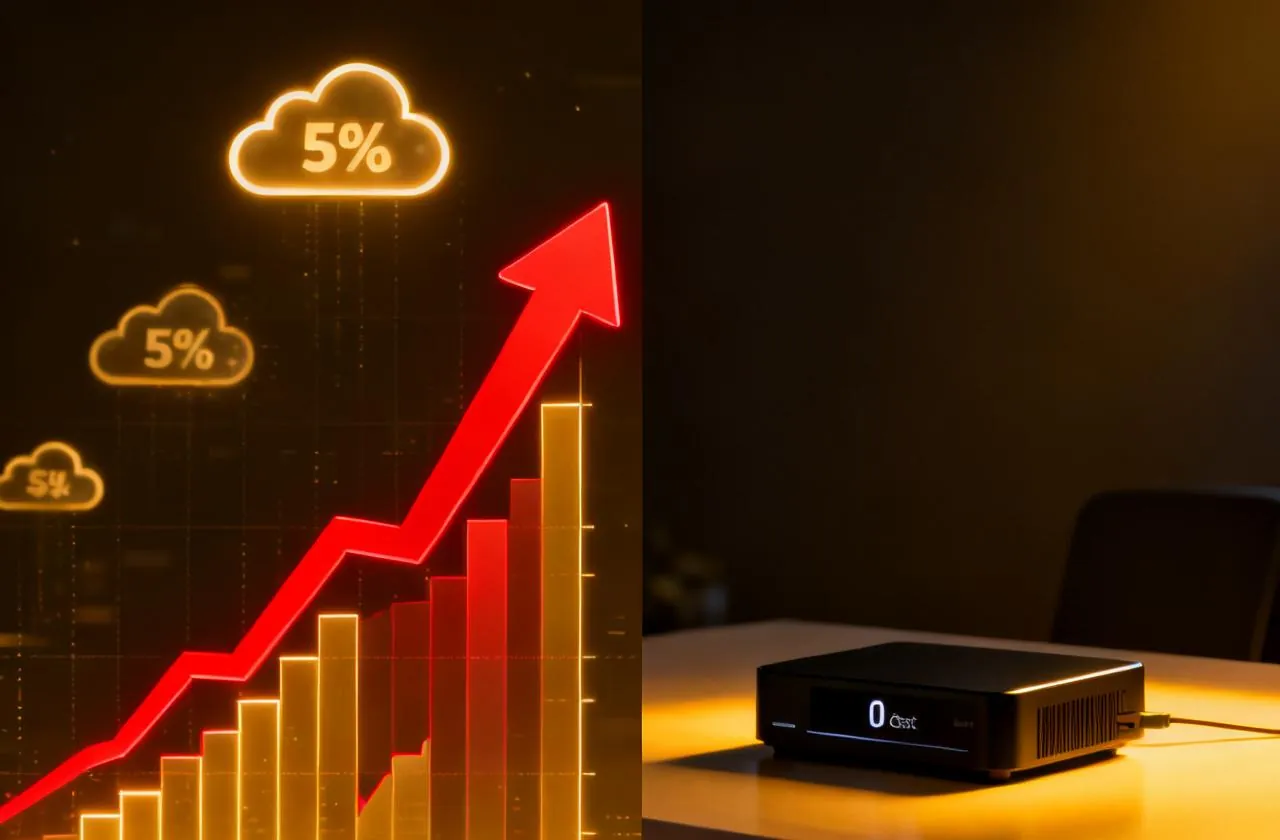
But here's the key detail — what goes up must come down. Off-peak hours (nights and early mornings) remain at the original lower rates. DeepSeek's pricing logic is straightforward: compute is expensive when demand is high, cheap when servers are idle. The exact same task costs literally half as much if you run it at midnight instead of noon.
Two days later on July 16, Moonshot AI unveiled Kimi K3 — a 2.8-trillion-parameter model with a 1-million-token context window, making it the largest open-source model on Earth. Benchmark results placed it neck-and-neck with Claude and GPT flagship models. Elon Musk left a one-word comment: "Impressive." Xinhua News Agency ran the story with the headline: "Marks a new step forward in China's AI model development."
But that was only half the story.
The day after launch, Kimi K3 suspended new user registrations due to severe compute resource shortages — training a 2.8-trillion-parameter MoE model demands GPU clusters that bring any provider to its knees. Goldman Sachs noted that K3's blended pricing hit $2.30 per million tokens — 13 times higher than DeepSeek V4 Pro — setting a new record for Chinese AI model pricing. An open-source banner, with closed-source pricing.
Rewind further: on July 4, ByteDance's Doubao and Alibaba's Tongyi Qianwen simultaneously shut down their free agent platforms, permanently wiping 8 million user-built AI agents. Three days later, GPT-5.6 launched with API pricing 30% higher than 5.5. The entire month of July reads like a relay race — every major vendor delivering the same message: the better the AI, the more you pay.
This is not a temporary blip. OpenAI has already signaled that GPT-6 training costs will exceed $10 billion. Training costs rise, compute scarcity intensifies, and the result is singular: your API bill keeps climbing. When your workflow, data, and habits are all locked into one cloud platform, any pricing adjustment leaves you with exactly two choices — accept it, or walk away.
This is where an overlooked logic is coming into focus: the stronger cloud models get, the more money a local AI device can save you through smart scheduling.
This is not "move the model to local and stop paying." Kaihe AIBOX uses a "local agent + cloud model" architecture — the agent runs locally, but inference still calls cloud models. You still pay API fees. The difference is this: your device is online 24/7. It can sleep during the day and work at night.
You define your tasks during work hours — scrape morning news at 8 AM, filter articles, generate summaries. The device doesn't run them immediately. It waits until 10 PM, when compute is cheap and electricity rates are low, then calls DeepSeek to do the work. Same task: ¥6 during peak, ¥3 during off-peak. Cut your daily bill in half. Over a month, that's hundreds saved. Over a year, thousands.
Most people's AI tasks don't need real-time response. Morning news digests, Friday reports, periodic data analysis — these can easily wait a few hours and run automatically at night. The only problem: nobody is awake at 3 AM to fire up an AI on their phone or laptop. A local agent device that's online around the clock fills exactly that gap.
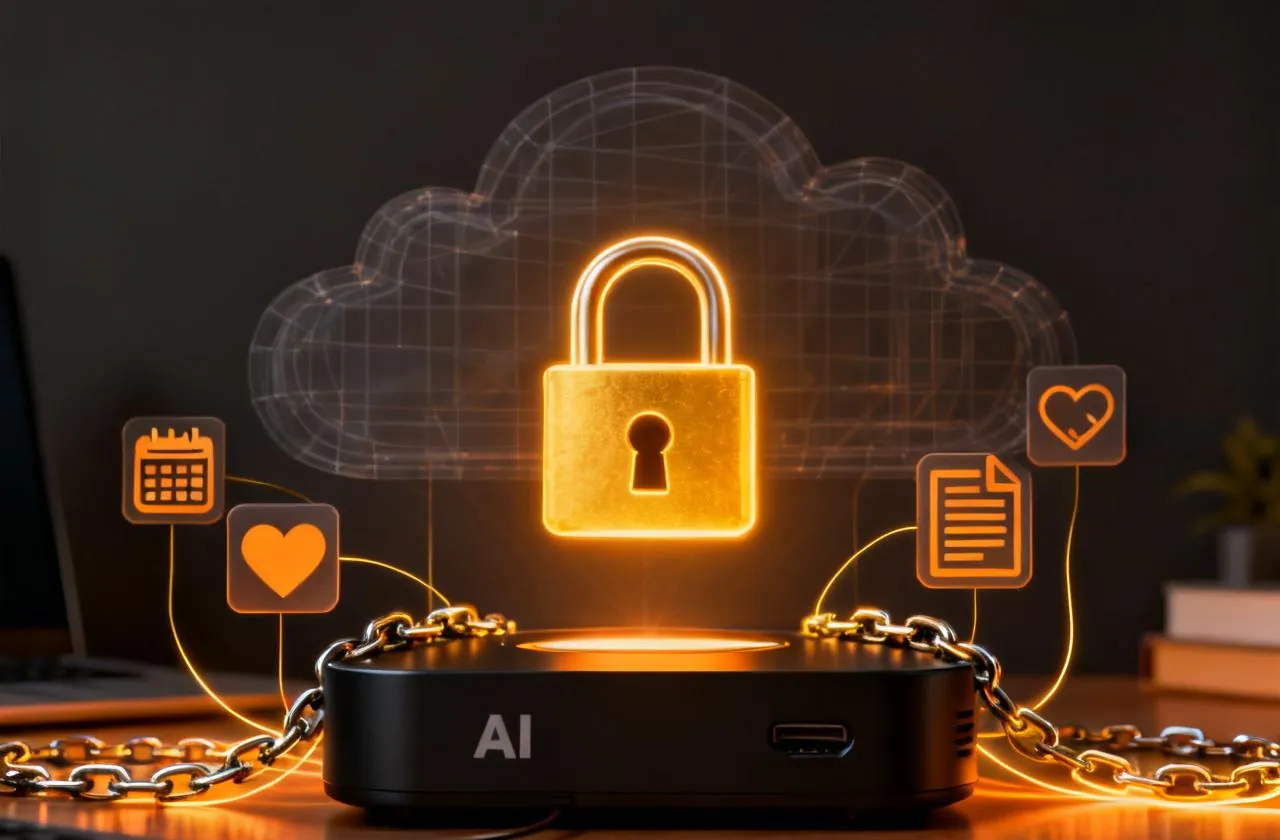
The larger value lies in optionality. Cloud model prices go up, you pay up. On a local device, if DeepSeek V4 gets expensive, switch to Kimi. If Kimi has a queue, switch to Qwen. Use whichever delivers the best cost-performance ratio. The local box is your model orchestration hub, not some vendor's billing endpoint. Your AI workflow is immune to any single vendor's pricing decisions.
There is an even subtler lock-in: data ownership. DeepSeek does not remember your agent conversation history. Kimi does not either. The personalized assistant you have tuned for six months? Its memory evaporates the moment the chat window closes. Permanent memory only exists on your hard drive. Two years from now, what remembers your family member's medical checkup date is not some cloud provider's database — it is that device sitting in your home. Switching costs become enormous, yet no one can "shut it down" or "raise the rent."
None of this means cloud models are irrelevant. Quite the opposite — the stronger DeepSeek V4 and Kimi K3 become, the smarter the "brain" your local device can connect to. The correct architecture is "local agent + cloud model" in edge-cloud synergy: cloud provides the strongest reasoning capability, local guarantees the lowest operating cost and the highest data sovereignty. The goal is to avoid single-vendor lock-in, not to avoid the cloud.
Returning to the two events that opened this piece: DeepSeek's surge pricing and Kimi K3's signup freeze appear independent, but share identical logic. Compute is becoming the scarcest resource, and pricing power sits entirely with vendors. Whoever masters the "time gap" — shifting non-urgent AI tasks to off-peak hours — extracts real savings from an increasingly expensive pricing system.
The more expensive the cloud becomes, the more those who time-shift save. A 24/7 local device scheduling your tasks today might save you a few hundred yuan monthly on API costs. Three months from now, when the next wave of price hikes hits, it may be the only reason you can look at a "price increase" notification and say "no problem."
Further Reading
- AnySearch Tops Product Hunt — Building Search Infrastructure for AI Agents
- 8 Million AI Agents Deleted Overnight — The Deeper Logic Behind Doubao & Qwenwen's Shutdown
- Stop Paying AI Monthly Fees — Buy Once, Use Forever
- Kaihe AIBOX Store — Full Range of AI Agent Computers
Want to learn more about Kaihe AIBOX? Email: [email protected]
KaiheAIBOX #AIModel #DeepSeekV4 #KimiK3 #LocalAI #AgentComputer #SurgePricing
Kaihe AIBOX | The Agent Computer That Works 7×24 for You · AI Frontiers