COMPUTEX 2026: Three Chip Giants Declare Year of the AI Agent
📖 Glossary
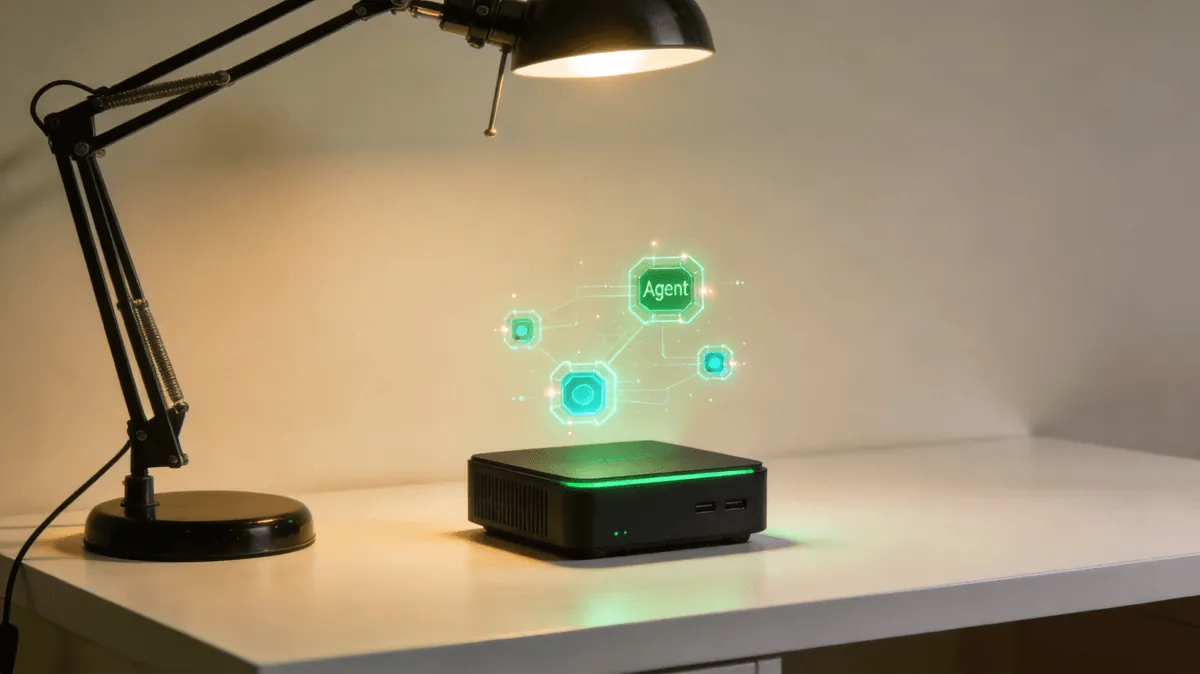
AI Box (also known as Agent Computer / Agent PC), is a dedicated local hardware device that runs AI Agents. Pre-installed with an AI agent management system, plug-and-play, running 24/7. Users can remotely command AI to work via Discord, Slack, Telegram, WhatsApp, and more.
Summary: At COMPUTEX 2026, NVIDIA, AMD, and Intel all centered their keynotes around AI Agents—from dedicated chips to development frameworks, a full-scale deployment of agent computing. This article analyzes the three giants' Agent strategies and their industry impact.
1. Three Giants, One Declaration: The Year of the AI Agent Has Arrived
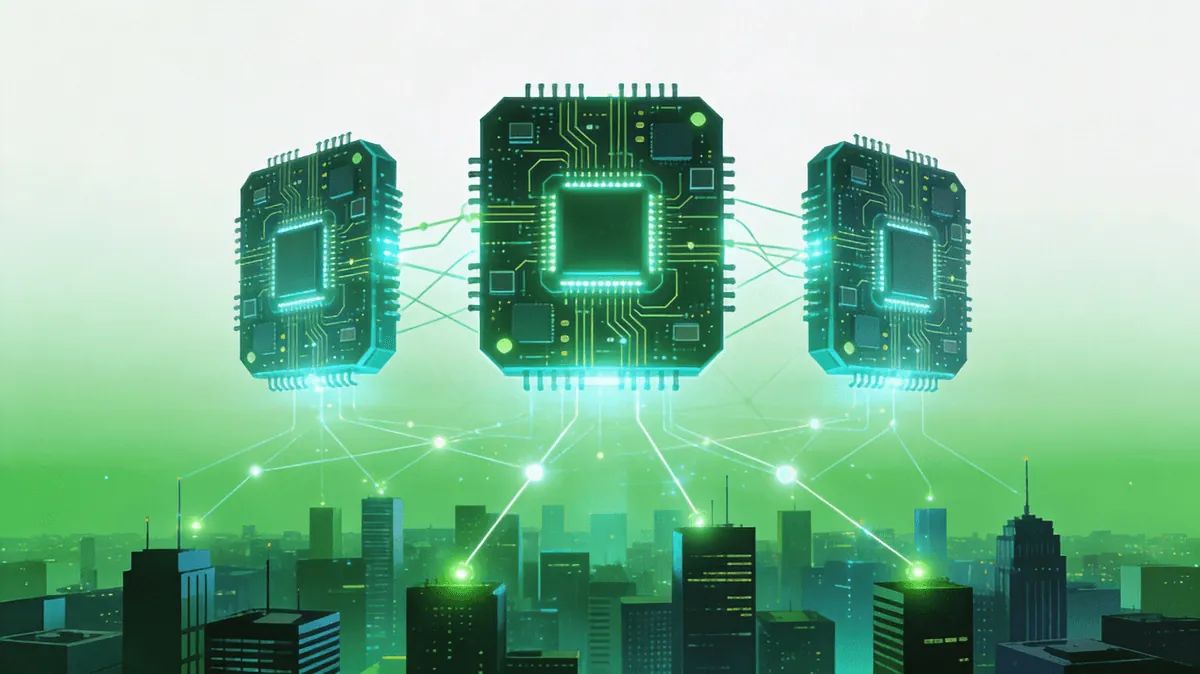
An unprecedented phenomenon appeared on the COMPUTEX 2026 stage—NVIDIA's Jensen Huang, AMD's Lisa Su, and Intel's Pat Gelsinger each centered their keynotes around AI Agents as the core theme.
This is no coincidence. All three chip roadmaps point in the same direction: Agent Computer—a computing architecture purpose-built for AI Agent runtime and orchestration.
NVIDIA: From GPU Dominance to Agent Computing Platform
NVIDIA CEO Jensen Huang unveiled the Vera Rubin-based dedicated AI Agent chipset, featuring 88-core CPUs paired with next-gen GPUs, optimized for Agent inference and task scheduling. Key innovations include:
- Agent Scheduling Unit (ASU): Hardware-level Agent task scheduling, 10x lower latency than software scheduling
- Shared Memory Architecture: Multiple Agents share the same high-bandwidth memory, eliminating data copies
- Native Multimodal Processing: Single chip simultaneously handles text, image, and voice inputs
Huang simultaneously launched the NVIDIA Agent SDK, providing ready-made frameworks for Agent orchestration, memory management, and multimodal processing. He declared: "In the future, every chip will natively support Agent execution, just as every chip today supports floating-point operations."
AMD: $300M AI Investment + Heterogeneous Computing
AMD CEO Lisa Su announced a $300M investment over 3 years for AI Agent ecosystem building, showcasing various AI deployment solutions based on their latest APUs—from data centers to edge devices, covering all Agent inference scenarios.
AMD's core strategy is "heterogeneous computing": - Data Center: MI400 series GPUs for large-scale Agent inference - Workstation: Ryzen AI MAX processors for local Agent + LLM execution - Edge Devices: Low-power Ryzen Embedded processors for lightweight Agent scheduling
Su emphasized: "Agents don't need the most powerful compute—they need the most appropriate compute. AMD's heterogeneous computing ensures Agents have optimal choices in every scenario."
Intel: Breakthrough in PC-Side Agent Inference
Intel CEO Pat Gelsinger demonstrated real-time Agent inference running on Lunar Lake processors, proving that even power-constrained PC platforms can handle Agent tasks smoothly.
Intel's core technical breakthroughs: - NPU Agent Offloading: Offload Agent scheduling tasks to NPU, freeing CPU/GPU for other applications - Agent Memory Management: Hardware-level Agent context switching with 100ns latency - PC 24/7 Agent Mode: NPU continuously runs Agent tasks in low-power state
Gelsinger stated: "The PC is no longer just a Personal Computer—it is a Personal Agent Computer."
2. Three Giants Strategy Comparison
| Dimension | NVIDIA | AMD | Intel |
|---|---|---|---|
| Core Strategy | Dedicated Agent chips + SDK | Heterogeneous computing + ecosystem | PC-side Agent inference optimization |
| Target Market | Data center + Enterprise | Full-scenario coverage | Consumer PC |
| Key Products | Vera Rubin chipset | MI400 + Ryzen AI | Lunar Lake + Arrow Lake |
| Agent Runtime | Dedicated hardware scheduling | CPU/GPU/NPU heterogeneous | NPU offload + low-power mode |
| Ecosystem | NVIDIA Agent SDK | Open source + partners | Intel Agent Runtime |
Each giant has distinct focus areas: NVIDIA emphasizes compute power and frameworks, AMD emphasizes scenario coverage, Intel emphasizes PC-side adoption. But the common thread—all are transforming AI Agents from "software applications" to "hardware-native capabilities."
3. Implications for KaiheAiBox
The chip giants' AI Agent push carries significant implications for KaiheAiBox:
3.1 Rising Tide Lifts All Boats
More developers, more frameworks, more applications—the entire AI Agent ecosystem is expanding rapidly. When chips natively support Agent execution, development barriers drop dramatically, and demand for Agent deployment devices will explode.
3.2 Falling Inference Costs
Mass production of dedicated Agent chips will drive API prices lower. Intel projects that by 2027, the per-token cost of Agent inference will drop to 1/10 of 2025 levels. This means KaiheAiBox users' operating costs will decrease further.
3.3 Accelerated Standardization
Common Agent hardware specifications defined by the three giants will standardize the industry. When Agent interfaces and scheduling protocols unify, KaiheAiBox as an orchestration layer device can seamlessly connect to Agent runtimes across different chip platforms.
3.4 KaiheAiBox's Unique Position
KaiheAiBox focuses on Agent orchestration and 24/7 operation, not Agent inference itself. This positioning becomes more solid amid the giants' compute power race—inference gets stronger and cheaper, but the market gap of "who orchestrates these Agents 24/7" is filled only by KaiheAiBox.
4. Future-Ready Enterprise Agent Deployment
As chipmakers embed AI Agent capabilities into every processor, the era of enterprise AI Agent deployment is accelerating. KaiheAiBox's role in this era:
- Orchestration Brain: Agent task scheduling, priority management, resource allocation—regardless of which chip platform Agents run on, scheduling commands originate from KaiheAiBox
- Security Gateway: Physical isolation between enterprise intranet and AI inference services, ensuring data never leaves the organization
- 24/7 Operating Base: Whether Agents run in cloud or on local inference chips, the orchestration layer never goes down. 10W power, under $1.50/month electricity
5. Summary and Outlook
COMPUTEX 2026 marks a turning point from "chips running AI models" to "chips natively supporting AI Agents." The simultaneous bets from all three chip giants mean agent computing will move from concept to mainstream in the next 2-3 years.
KaiheAiBox sits at the crest of this wave—inference is left to the chip giants, orchestration and 24/7 operation to KaiheAiBox.
KaiheAiBox| Agentaibox that lets AI work for you 24/7· AI Agent