KAIHE D1 Deep Dive: Real-World NVIDIA Orin NX Performance on a Desktop AI Box
📖 Glossary
AI Box (also known as Agent Computer / Agent PC), is a dedicated local hardware device that runs AI Agents. Pre-installed with an AI agent management system, plug-and-play, running 24/7. Users can remotely command AI to work via Discord, Slack, Telegram, WhatsApp, and more.
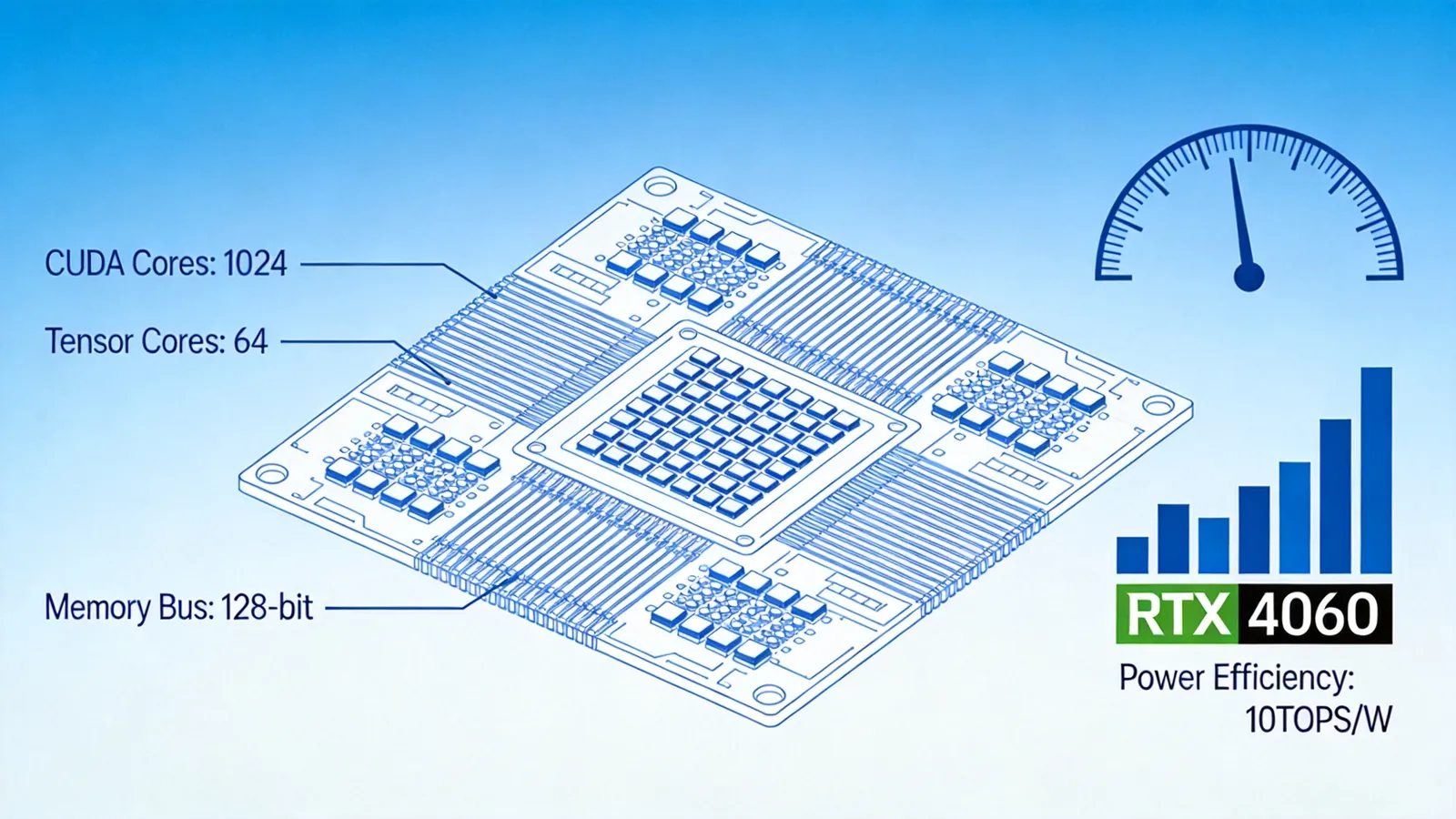
The KAIHE D1 packs an NVIDIA Jetson Orin NX module — silicon designed for autonomous driving and robotics, now repurposed as a desktop AI workstation. It's a different kind of hardware play, so I ran it through common local AI workloads to see what it can actually handle.
The hardware baseline: Orin NX 16GB variant, 1024 CUDA cores, 32 Tensor Cores, up to 100 TOPS INT8 compute. For context, a desktop RTX 4060 delivers about 15-20 TFLOPS (FP32). The Orin NX manages 4-5 TFLOPS (FP32) — roughly an order of magnitude less. But raw FP32 isn't where Orin NX wins. Its INT8 inference power efficiency is exceptional: 15W for 7B model inference. An RTX 4060 at the same task draws 40-60W. The power gap is substantial.
Real-world testing: Qwen2.5-7B-Instruct with vLLM acceleration achieves 25-35 tokens/s — adequate for daily conversation and content generation. Qwen2.5-14B with INT4 quantization runs at 12-18 tokens/s — usable but you'll feel noticeable pauses. 70B-class models? Forget it. The memory bandwidth and compute just aren't there.
Computer vision is where Orin NX shines — it was literally designed for visual workloads. YOLOv8 object detection at 640x640 input hits 60-80 FPS, 2-3x faster than comparably priced x86 hardware. This means the D1 works as an edge node for real-time video analytics — factory quality inspection cameras, warehouse security surveillance. These are precisely the workloads that conventional AI boxes can't handle.
Comparison with KAIHE A1 (Mac Mini M4): The A1 has stronger general-purpose inference — M4's Neural Engine delivers 50+ tokens/s on 7B models, nearly double the Orin NX. But A1 draws more power (50W+ at load) and handles video streams through CPU software decoding. For multi-stream video processing, D1 wins decisively. Simple rule: text and code workloads → A1. Multimodal and video workloads → D1. Tight budget plus vision requirements → D1 is currently the optimal choice.
One caveat: the ARM64 software ecosystem is narrower than x86. Some Python libraries need manual ARM compilation. The good news: JetPack 6.0+ now ships prebuilt ARM64 binaries for vLLM, Ollama, and mainstream inference frameworks. The deployment barrier has dropped significantly.