📖 Glossary
AI Box (also known as Agent Computer / Agent PC), is a dedicated local hardware device that runs AI Agents. Pre-installed with an AI agent management system, plug-and-play, running 24/7. Users can remotely command AI to work via Discord, Slack, Telegram, WhatsApp, and more.
Summary: On July 31, DeepSeek released V4-Flash production version (0731) on HuggingFace under the MIT license—no press conference, no press release, just model weights and a technical report uploaded to the web. Compared to the June preview, the production version delivers a step-change in agent benchmarks: DeepSWE surged from 7.3 to 54.4 (a 7.4x improvement), Cybergym nearly doubled from 38.7 to 76.7, and Terminal Bench 2.1 rose from 61.8 to 82.7. Based on the arXiv technical report and HuggingFace model card, this article breaks down the key differences between the preview and production versions, architectural details, API compatibility, and what it means for developers and everyday users.

I. The Numbers: How Much Better Is the Production Version?
DeepSeek published benchmark comparisons between V4-Flash-0731, V4-Flash Preview, and V4-Pro Preview in the official model card. All agent benchmarks were evaluated using DeepSeek Harness with reasoning_effort set to max, temperature=1.0, and top_p=0.95. These are not multiple-choice exams—they test whether an AI can independently complete real-world tasks: reading codebases, writing patches, executing terminal commands, invoking tools, and recovering from errors.
| Benchmark | V4-Flash 0731 | V4-Flash Preview | V4-Pro Preview | Change |
|---|---|---|---|---|
| Terminal Bench 2.1 | 82.7 | 61.8 | 72.1 | +33.8% |
| NL2Repo | 54.2 | 39.4 | 38.5 | +37.6% |
| Cybergym | 76.7 | 38.7 | 52.7 | +98.2% |
| DeepSWE | 54.4 | 7.3 | 12.8 | +645% |
| Toolathlon-Verified | 70.3 | 49.7 | 55.9 | +41.4% |
| AutomationBench Public | 25.1 | 10.8 | 12.8 | +132% |
Several signals stand out from this data.
First, the 7.4x jump in DeepSWE is the headline result. DeepSWE tests an AI's ability to independently complete real-world software engineering tasks—understanding a codebase, locating issues, writing patches, and passing tests without human intervention. The preview's score of 7.3 meant it could write code snippets but couldn't reliably deliver end-to-end solutions. You'd still need to sit beside it, review every change, and fix its mistakes. The production version's 54.4 means it can independently complete more than half of such tasks from start to finish. That's the difference between an auto-complete tool and a junior engineer.
Second, Cybergym nearly doubled from 38.7 to 76.7. Cybergym simulates cybersecurity offensive and defensive scenarios in sandboxes, requiring AI to perform multi-step reconnaissance, identify vulnerabilities, execute exploits, and adapt when defenses change. The near-doubling indicates substantial improvements not just in knowledge but in long-chain reasoning, tool-call accuracy, and the ability to recover from failed actions—precisely the capabilities that matter for real-world agent deployments.
Third, Flash surpassed Pro Preview across multiple tests. This is unusual in DeepSeek's release history. Traditionally, Pro has been the capability ceiling with larger parameter counts and more aggressive reasoning, while Flash is optimized for inference speed and cost efficiency. But on Terminal Bench, NL2Repo, and DeepSWE, the 0731 Flash production version has overtaken V4-Pro Preview. This signals that post-training quality improvements can outweigh raw architectural differences—a trend that will likely reshape how the industry approaches model development.
Fourth, every single agent benchmark improved, not just one. It's not unusual for a model update to improve one benchmark while regressing on others. The breadth of improvement across Terminal Bench, NL2Repo, Cybergym, DeepSWE, Toolathlon, and AutomationBench suggests a systematic upgrade in agent capabilities rather than benchmark-specific overfitting.
II. Architecture: What Changed Under the Hood
MoE: 284B Total, 13B Active
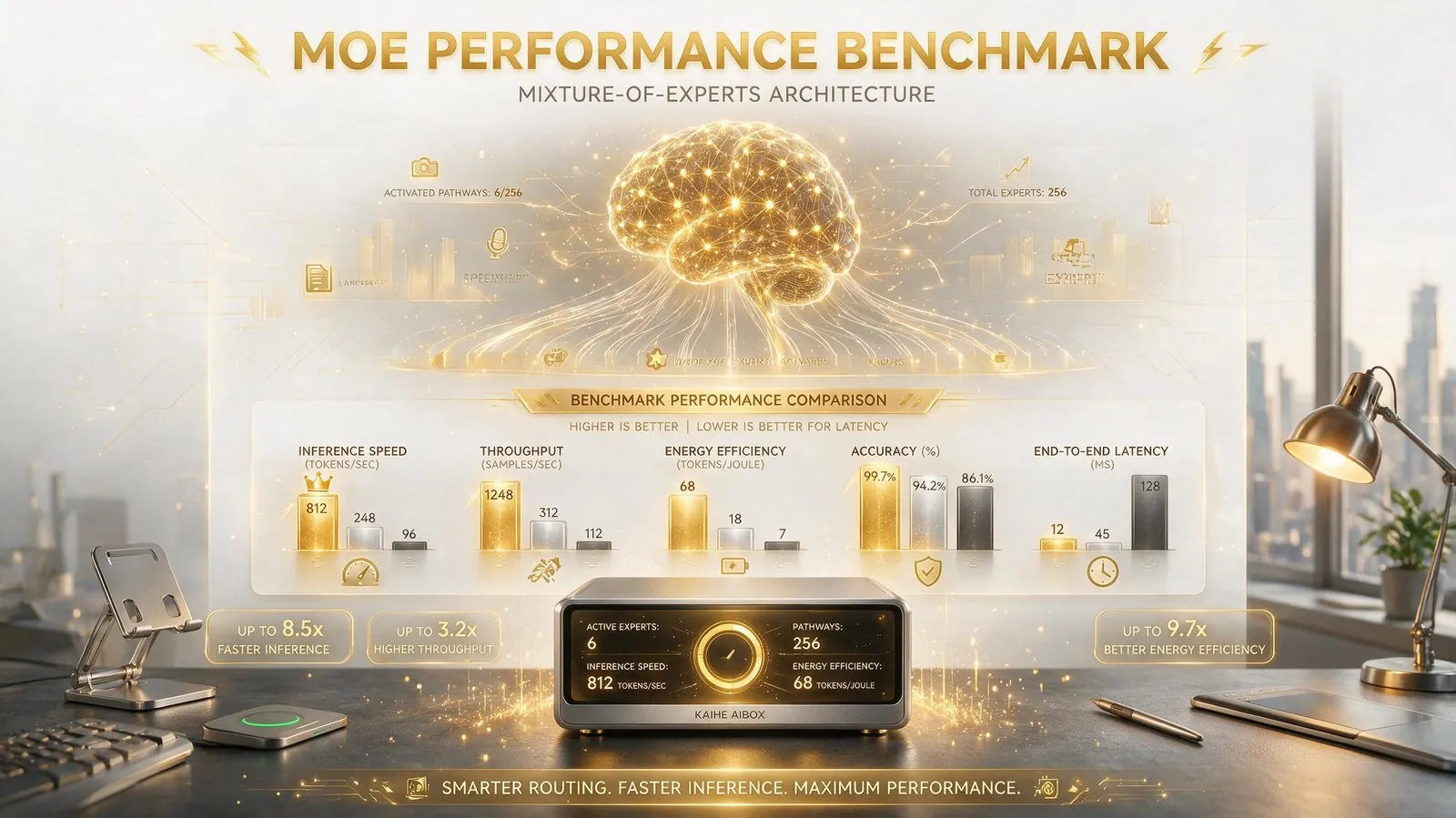
V4-Flash uses a Mixture of Experts (MoE) architecture where each token activates only 6 of 256 expert networks, yielding approximately 13B active parameters out of roughly 284B total (the HuggingFace interface displays about 304B due to tensor counting differences; the arXiv technical report uses 284B as the canonical figure).
The key insight here is that the architectural skeleton is identical between preview and production—both are MoE, both use 6-of-256 expert selection, both support million-token context windows. The differences lie in post-training: the production version underwent significantly more rounds of supervised fine-tuning and reinforcement learning, with specialized optimization for agent scenarios including tool invocation, multi-step planning, error recovery, and long-horizon task completion.
This is an important lesson for the industry: architecture alone doesn't determine capability. A well-architected model with poor post-training will underperform; the same architecture with rigorous RLHF and agent-specific training can multiply its practical capabilities several times over.
CSA + HCA Hybrid Attention
To support a 1,048,576-token context window without prohibitive memory costs, V4 combines two attention mechanisms:
- Compressed Sparse Attention (CSA): Instead of computing attention scores between every pair of tokens (quadratic complexity), CSA identifies important positions and concentrates computation there. This is particularly effective for long documents where most tokens are reference material and only a subset is critical for the current generation.
- Heavily Compressed Attention (HCA): For historical tokens far from the current generation position, HCA applies aggressive compression to reduce KV cache memory usage. This allows the model to maintain context over very long conversations or documents without memory growing linearly.
Together, these mechanisms enable V4-Flash to handle million-token contexts—roughly 750,000 words, or the length of several novels—while keeping inference costs manageable. For agent scenarios where the AI needs to remember hours of prior actions, tool outputs, and error messages, this long-context capability is foundational.
DSpark Speculative Decoding
V4-Flash-0731 includes a built-in DSpark speculative decoding module, configured on vLLM to predict 7 tokens using a greedy sampling strategy. Speculative decoding works through a two-model approach: a lightweight draft model quickly generates candidate tokens, and the main model verifies them in parallel. When the draft model's predictions are accurate—which is common for structured outputs like code—multiple tokens are accepted in a single forward pass, dramatically improving throughput. When predictions are wrong, the system reverts to standard autoregressive generation from the last verified position, guaranteeing identical output quality.
For developers, this means faster response times without any quality trade-off, particularly for code generation where token patterns are more predictable.
mHC and Muon Optimizer
The technical report also documents two training-side innovations:
- Manifold-Constrained Hyper-Connections (mHC): An advancement over standard residual connections that improves information flow across very deep network layers while constraining activations to a geometrically stable manifold. This helps prevent gradient degradation in deep networks and contributes to more stable training.
- Muon Optimizer: Used during pre-training to accelerate convergence and improve training stability. While optimizer choice may seem like an implementation detail, the ability to train larger models faster and more stably directly affects the quality of the final checkpoint.
These are training-side technologies that don't affect API usage but help explain how DeepSeek achieved such dramatic improvements within the same architectural framework.
III. API and Tooling: Codex Compatibility, Not Native Integration
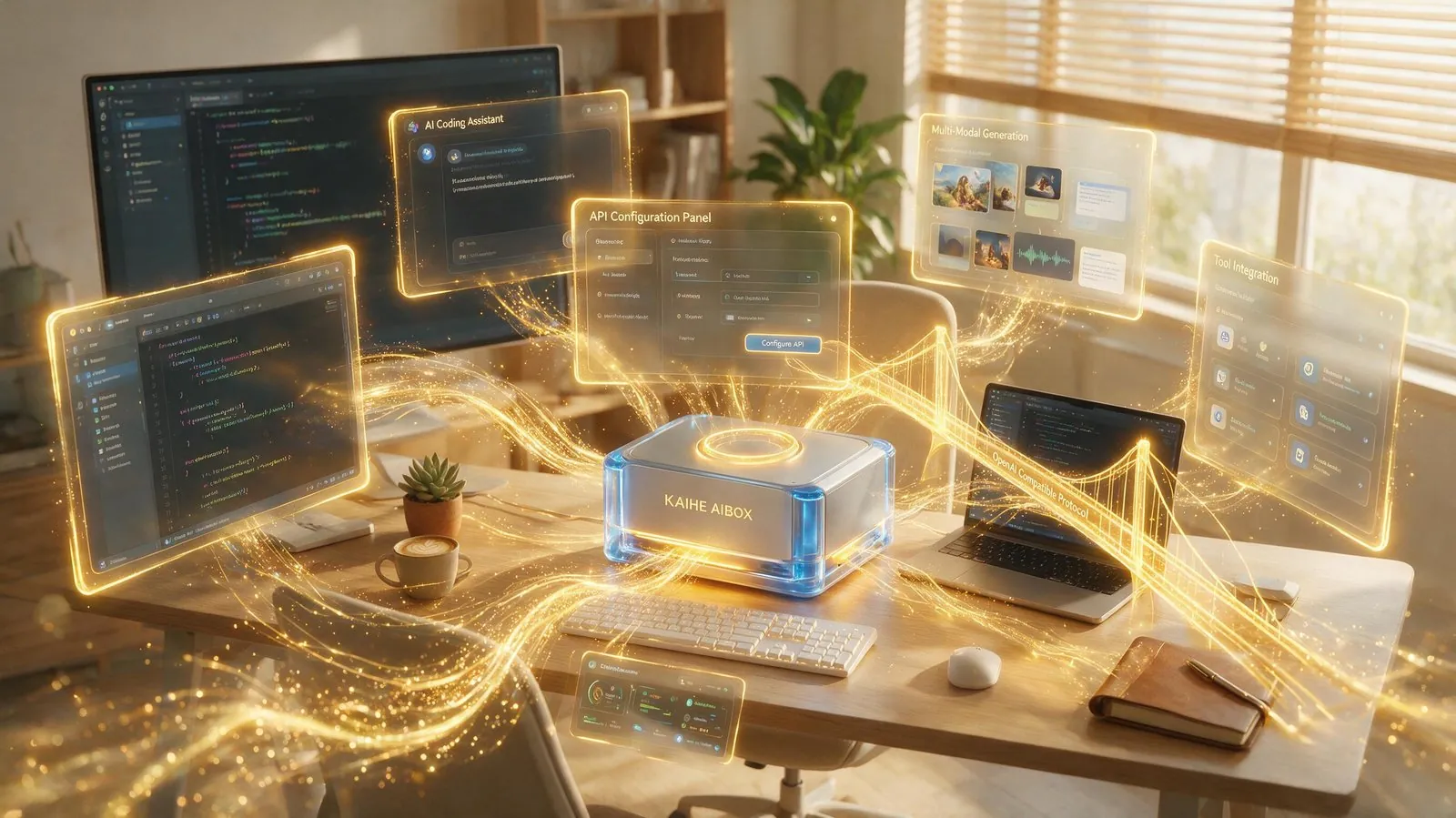
V4-Flash-0731 provides an OpenAI-compatible Chat Completions API. This means it supports the standard /v1/chat/completions endpoint, multi-turn messages arrays with system/user/assistant/tool roles, tools and tool_calls for function calling, a reasoning_effort parameter with three levels (low/high/max), and server-sent event streaming.
What does this compatibility mean in practice? Any tool that supports configuring a custom base_url with the OpenAI protocol can theoretically connect to V4-Flash through configuration—including Codex CLI, OpenAI Python/JavaScript SDKs, LangChain, LlamaIndex, and most agent frameworks. The setup requires just three environment variables:
DEEPSEEK_BASE_URL=<your endpoint URL>
DEEPSEEK_MODEL=deepseek-ai/DeepSeek-V4-Flash-0731
DEEPSEEK_API_KEY=<your key>
However, several important clarifications are necessary to avoid overstating the integration:
-
This is not "native integration." Codex does not have a built-in DeepSeek provider in its configuration. It connects through the OpenAI compatibility layer. While this works well for standard chat and tool calling, some advanced OpenAI features—such as full JSON schema structured output guarantees, certain streaming chunk formats, and multimodal inputs—may not be supported identically.
-
The public endpoint is a community resource, not an official service. HuggingFace community maintainer Victor Mustar currently provides a free public endpoint running on 4×NVIDIA H200 GPUs. It is rate-limited to approximately 12 requests per minute per IP, allows bursts of about 20 concurrent requests, and comes with no SLA or uptime guarantee. The URL itself is an AWS infrastructure endpoint that could change without notice. It is excellent for learning, prototyping, and evaluation, but should never be used for production workloads or sensitive data.
-
Self-hosting requires enterprise-grade GPU infrastructure. The official vLLM configuration example specifies a 4×NVIDIA GB300 node with expert parallelism, FP8 KV cache, block size 256, and the deep_gemm_mega_moe backend. This is not something that runs on a laptop, a gaming PC, or even a single-GPU workstation. The checkpoint itself is hundreds of gigabytes.
-
Three reasoning levels with a caveat. The API exposes low/high/max reasoning effort settings. However, on the current vLLM community deployment, low and high behave equivalently; only max triggers the full effort instruction. For simple classification or extraction tasks, omitting the field entirely gives the fastest response; for complex agent tasks, max provides the best quality at the cost of higher latency and token consumption.
Where KAIHE AIBOX Fits In
For individual developers and small teams looking to use V4-Flash as part of a long-term AI workflow, the practical challenge is not "can I access it?" but "how do I use it most reliably and cost-effectively?"
Cloud APIs bill by the token and costs accumulate unpredictably. Free public endpoints are rate-limited and unreliable. Self-hosting requires GPU infrastructure that costs tens of thousands of dollars. KAIHE AIBOX addresses this gap as a 24/7 local AI work base: it centrally manages API keys and model routing across providers, so you can switch to DeepSeek when it offers the best value, switch to another model when it drops prices, and never be locked into a single vendor's pricing. All conversation history, work files, and agent configurations remain on your local hard drive—never uploaded to the cloud—so your proprietary code, business data, and creative work stay private. The device runs at low power around the clock, so your AI workflows continue even when your main computer is off.
IV. Preview vs. Production: A Comprehensive Comparison
| Dimension | Preview (June 2026) | Production 0731 (July 31) |
|---|---|---|
| Release basis | Research preview | Production release |
| License | Preview/restricted | MIT (fully open source, commercial use) |
| DeepSWE | 7.3 | 54.4 (+645%) |
| Cybergym | 38.7 | 76.7 (+98%) |
| Terminal Bench 2.1 | 61.8 | 82.7 (+34%) |
| NL2Repo | 39.4 | 54.2 (+38%) |
| Toolathlon-Verified | 49.7 | 70.3 (+41%) |
| AutomationBench | 10.8 | 25.1 (+132%) |
| Architecture | MoE 284B/13B active | Same architecture |
| Context window | Up to 1M tokens | Up to 1M tokens (architectural) |
| Tool calling | Basic support | Optimized DSML internal format, more stable OpenAI tools protocol |
| Reasoning control | Limited | Official low/high/max reasoning_effort |
| DSpark decoding | Not enabled | Built-in 7-token speculative decoding |
| Streaming | Basic | Improved SSE support |
| Production readiness | Research/evaluation only | MIT licensed, commercial deployment permitted |
The license change alone is significant: the preview was released under terms that restricted commercial use, while 0731 uses the MIT license, one of the most permissive open-source licenses available. Startups can integrate V4-Flash into commercial products without licensing fees, without open-sourcing their own code, and without negotiating terms with DeepSeek.
V. What This Means for Different Audiences
For Developers and Engineers
V4-Flash-0731 is among the strongest open-source models for agent workloads available today. Its improvements in code generation, terminal operations, and multi-step tool invocation make it a serious option for:
- AI coding assistants: With DeepSWE at 54.4 and Terminal Bench at 82.7, it can handle substantial portions of real development work autonomously.
- DevOps and automation agents: Cybergym and Toolathlon scores indicate strong capabilities in system administration tasks and multi-tool workflows.
- Custom agent development: The OpenAI-compatible API and tool calling support make integration straightforward with existing frameworks.
The MIT license removes legal barriers to commercial adoption. The main caveat is infrastructure: plan to use either DeepSeek's official API (when available) or a properly provisioned self-hosted endpoint, not the community free endpoint for production.
For Technical Decision-Makers
The Flash-surpassing-Pro phenomenon carries a strategic lesson. As a buyer or builder of AI systems, you don't necessarily need the largest or most expensive model. Post-training quality is becoming the decisive differentiator. Evaluate models on the specific tasks your workflows require rather than on total parameter count or brand prestige. An open-source model with strong post-training, running on infrastructure you control, may outperform a more expensive closed model on your actual workloads.
For Everyday Users
You don't need to deploy a 284-billion-parameter model yourself. V4-Flash's improvements will reach you through the AI tools and platforms you already use—smarter coding assistants in your IDE, more reliable automation agents that handle repetitive tasks, and better long-document processing in your productivity apps.
What you should care about is choice and control. As models rapidly improve and prices fluctuate, being locked into a single cloud provider means you're always one price hike away from escalating costs. A local AI work base like KAIHE AIBOX lets you flexibly switch between models, keeps your data private, and runs 24/7 without keeping your main computer on.
For the AI Industry
Perhaps the most important takeaway is that LLM competition is shifting from parameter counting to post-training quality. V4-Flash-0731 proves that within the same architecture, better instruction tuning, reinforcement learning, and agent-specific optimization can multiply practical capabilities several times over. This favors teams with strong engineering and RL capabilities over those whose only advantage is training-budget size. It also means model improvement cycles will accelerate—architectural innovations will be followed by rapid post-training gains as the community iterates on the base model.
The open-source release under MIT ensures that these gains propagate quickly. Researchers can study the model, startups can build on it, and the entire ecosystem benefits from a state-of-the-art agent model that anyone can use without restriction.
VI. Practical Recommendations
- Try it now. Point your OpenAI-compatible tools at the community endpoint to evaluate quality on your own tasks. Just don't send sensitive data or rely on it for production.
- Benchmark on your workloads. Don't trust published numbers—test V4-Flash-0731 against your actual use cases and compare with whatever you're currently using.
- Plan for production properly. If you adopt it commercially, budget for either official API costs or self-hosted GPU infrastructure. The free endpoint is not a production service.
- Use max reasoning for hard problems. The
reasoning_effort=maxsetting provides noticeably better results on complex tasks; use it for code generation and planning, skip it for simple extraction. - Keep your options open. Don't rebuild your entire workflow around one model's proprietary API. Use OpenAI-compatible abstractions and a local management layer so you can switch models as better options emerge.
Further reading: - DeepSeek V4 Dual-Version Hands-On: 1M Context + Flash Speed Mode - Model Price Wars? AIBOX Lets You Switch to the Cheapest Model Anytime - Codex vs. Hermes: Three Scenarios to Help You Choose
DeepSeek #V4Flash #AIAgent #OpenSourceLLM #Codex #KAIHEAIBOX
For more information, search [KAIHE AIBOX] or contact: [email protected]
KAIHE AIBOX · 7x24 Personal AI Assistant | AI Frontier