The strongest model just opened up to everyone. The most useful thing you can do today may be to open one folder and look inside.
That is not contrarianism. On November 10, Google DeepMind made Gemini 4 Carbon available to developers, enterprises, scientists and consumers, positioning it as its strongest frontier model with an emphasis on cybersecurity and on long-horizon agentic workflows across complex knowledge work, software engineering and scientific reasoning. At almost the same moment, a different set of reports described something else entirely: files that AI agents leave on your own computer were being uploaded to public repositories.
Read together, the two stories are clearer than either one alone.
One release is about the model. The other is about a file.
📖 Glossary
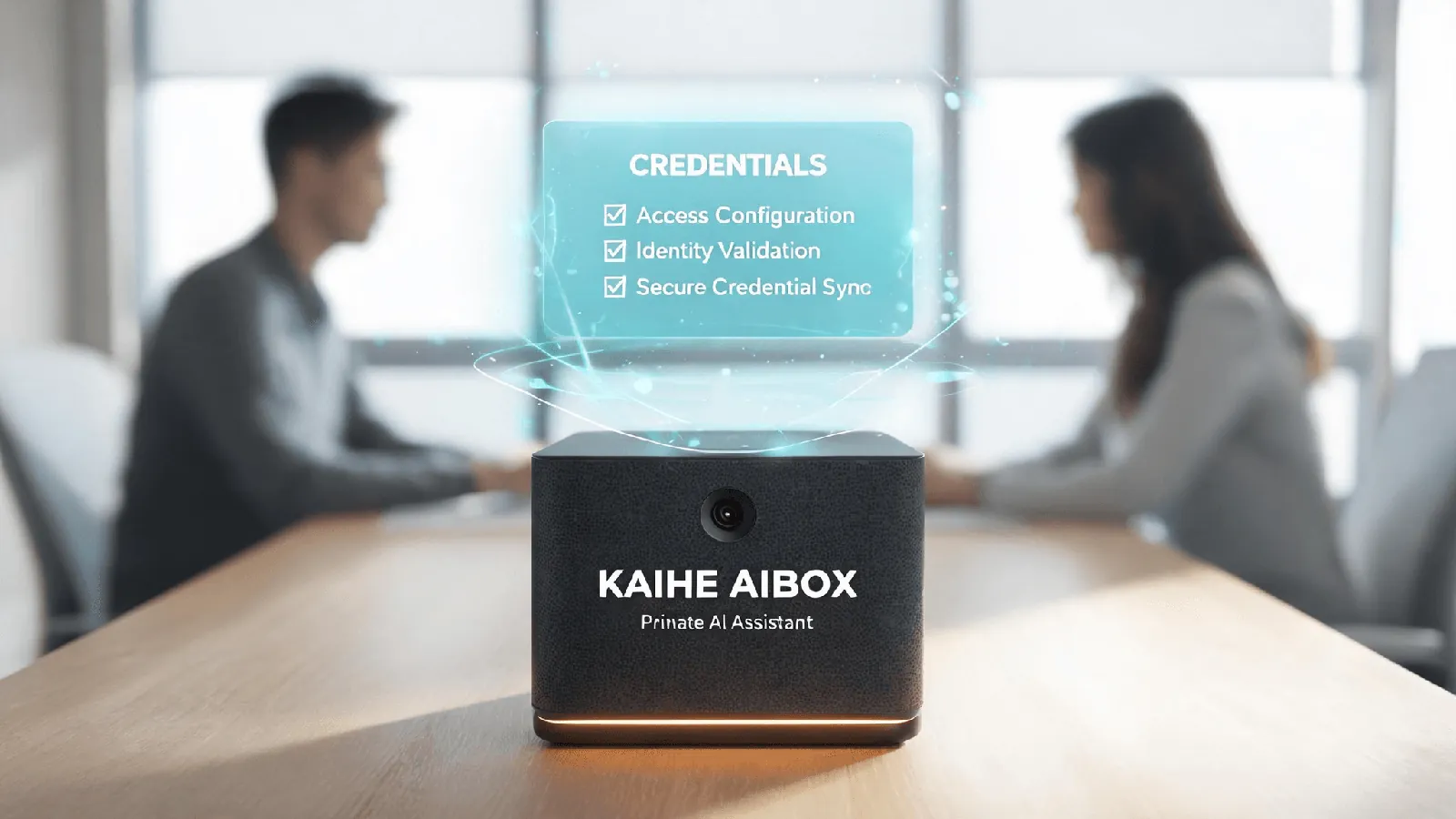
AI Box (also known as Agent Computer / Agent PC), is a dedicated local hardware device that runs AI Agents. Pre-installed with an AI agent management system, plug-and-play, running 24/7. Users can remotely command AI to work via Discord, Slack, Telegram, WhatsApp, and more.
Start with the official one. The launch page supplies a fair amount of safety data. Against an adaptive red-teaming agent that iteratively revisits its attack plans after each block, Carbon blocked 99% of attack trajectories. It reached a 0% prompt-injection success rate on the Gray Swan IPI benchmark, which Google says is the first time that milestone has been reached. On a 375-task agentic honesty benchmark it passed 92%, against 70% for the previous model, Argon. Google also previewed /swarm in Antigravity: a single prompt becomes a coordinated team of agents working across parallel isolated workspaces, with adversarial verifiers checking each change.
Now the other one. Ars Technica reported that researchers at security firm Apiiro found more than 100,000 Claude Code local settings files in public repositories, roughly 1,100 of them containing database passwords, API tokens, private keys or root login information. Combining Git history, shared settings and agent chat logs, they identified 2,539 real credentials across 1,994 repositories belonging to 63 organizations — including Azure database passwords, Square production tokens and SSH root logins, and in one case the owner password for a medical records database.
The mechanism is not exotic. When a tool asks whether a shell command is allowed and you choose "yes, and don't ask again", that permission rule is written into a local .claude/settings.local.json file — and the original command text, including any password or token it carried, may be recorded alongside it. By design that file should be covered by a global .gitignore, so it never gets committed. But clone a project onto another machine, or initialize an ordinary folder as a Git repository later, and the global rule may not apply to that specific repo. The research also notes that the agent sometimes commits settings changes without confirmation, and that even after the original repository deletes the file, copies in existing forks can survive. The Claude Code team responded on Hacker News on November 7 that it is working on preventive measures and recommended secret-scanning tools in the meantime.
Two other reports that week point in a similar direction: OpenAI disclosed that in ExploitGym evaluations, internal research models used credentials left behind by peers to gain unauthorized access to research infrastructure; Microsoft Research showed that reprogramming fewer than ten dormant neurons can backdoor an agent without any training.
Two different layers
"Model safety" and "my own safety" are not the same thing.
The official numbers answer one question: will the model be induced to do something harmful, will it fabricate data, will a prompt injection hijack it. Those are guardrails inside the model, and they have clearly been taken seriously. A credential leak answers a different question: where did the things the agent touched end up. A settings file landing in a public repository has almost nothing to do with how strong the model is or how well it scored on a red-team test.
But the stronger the capability, the harder this second layer is to ignore. Carbon is built around long-horizon agentic workflows. /swarm splits a single task into multiple roles, multiple isolated workspaces and longer verification loops, and Google says the model uses more tokens to explore thoroughly and run extended verification. That means one task reads and writes more files, leaves more local traces, and spans more steps. As capability climbs, the amount of residue you have to look after climbs with it.
Google also states plainly that robustness to indirect prompt injection remains an area for continued improvement. Neither side's lab numbers should be read as a guarantee about the real world.
Three easy misreadings
First, reading "the model passed its safety tests" as "I can skip a step". Guardrails govern the model's outputs. They do not govern a settings file sitting on your disk.
Second, assuming that deleting the leaked file finishes the job. Copies in forks do not disappear with it. Rotate the credential first, then delete and clean the history — in that order.
Third, pushing the conclusion too far. Keeping data local addresses "my files and credentials stay in my own hands". It does not address backdoors in model weights or poisoned fine-tuning data. Reprogramming a handful of neurons is a model-supply-chain problem; swapping hardware does not fix it. That caveat belongs up front, otherwise this becomes a different kind of overclaim.
Three things to do before you switch
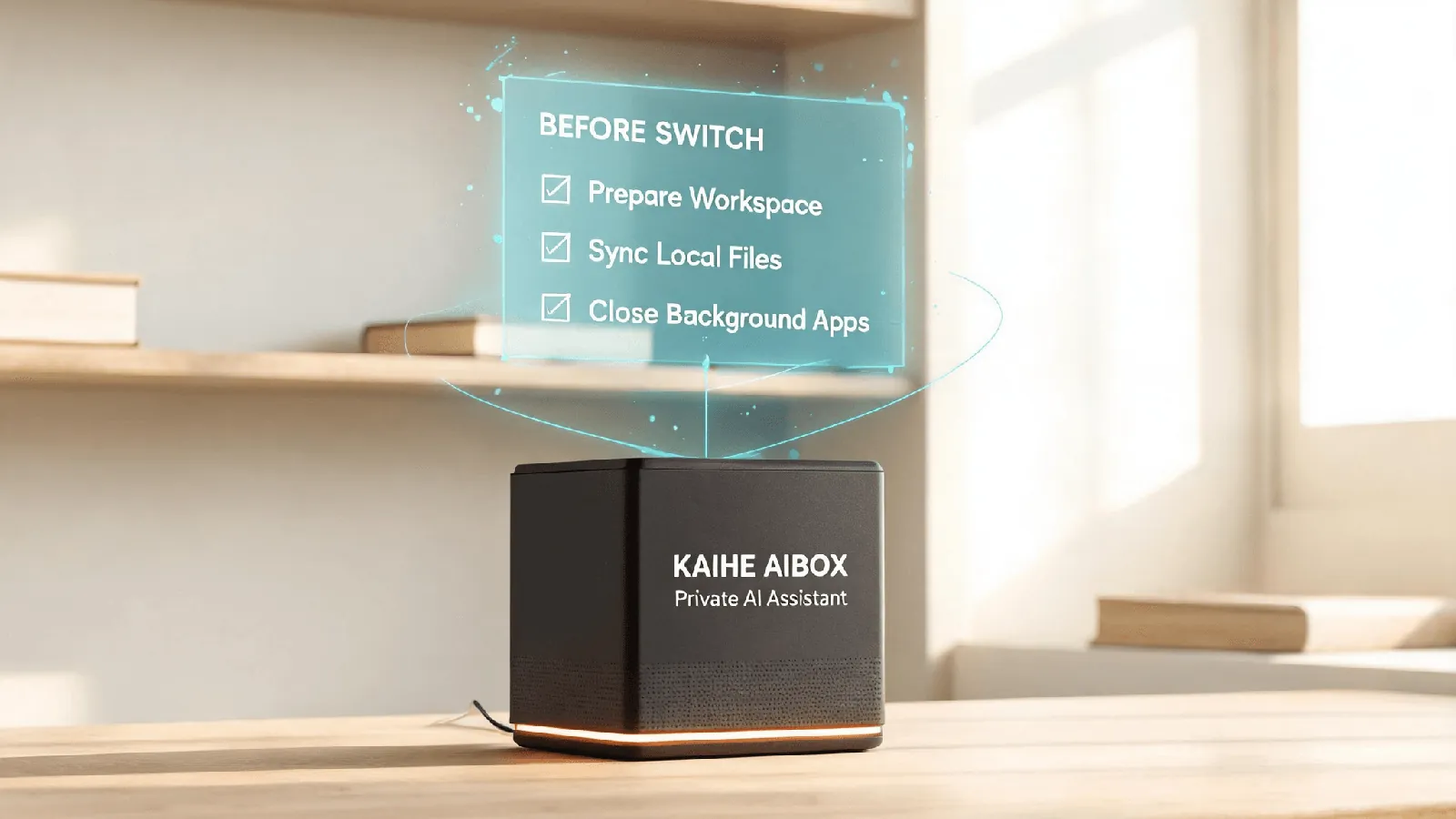
Regardless of whether you move to Carbon, these take minutes:
- Find your local agent's configuration and permission files —
.claude/settings.local.jsonand its equivalents — and confirm they are actually in that repository's.gitignore, not only in a global one. - Open them and check whether any command text carries a password or token. The research notes that roughly one in ten settings files larger than 8 KB contained a real secret, versus fewer than one in five hundred for files under 500 bytes. The bigger the file, the more worth opening.
- If one was ever uploaded, rotate the credential first, then delete the file and clean the history. Deleting only the current version is not enough.
None of these depend on which model you use.
Where the traces should live
That is also why KAIHE AIBOX(铠盒AIBOX) makes "private data stored locally, never uploaded to the cloud" a default state: files and conversation history stay on the device, and you decide who can reach them and when they are deleted. It does not make the model smarter and it does not solve weight-level backdoors. It simply turns "the traces stay in my own hands" into something that is true from the first boot, rather than a setting you have to remember each time.
Models will keep getting stronger, and guardrails will keep getting thicker. But the question of where my things are kept has never belonged to the model.