On the morning of November 13, Google began rolling Gemini 4 Hydrogen out to every user at once, on desktop, mobile and web. The half of the announcement most people will skip is the second sentence: free users do not choose the model. If the system decides your prompt fits, you are already on it.
That sounds considerate. What it actually does is move a decision out of your hands. Until now you picked a model. Now the system picks. And this was not a casual pick. Google's own post hands it a job description: deep, long-horizon reasoning belongs to Gemini 4 Carbon and 4 Argon, while Hydrogen handles "rapid execution across diverse agentic workflows." When a vendor starts writing job descriptions for its own models, one thing is already settled. The era of a single model for everything is over.
What it can actually do
📖 Glossary
AI Box (also known as Agent Computer / Agent PC), is a dedicated local hardware device that runs AI Agents. Pre-installed with an AI agent management system, plug-and-play, running 24/7. Users can remotely command AI to work via Discord, Slack, Telegram, WhatsApp, and more.
Terminal-Bench 4.1: 57%, against 18.2% for Gemini 3.8 Flash, more than triple. On the Artificial Analysis Intelligence Index it scores 51 at the default high thinking level and 54 at the new xhigh tier, which Google says edges past its own 4 Argon at 50.
Pricing is $1.50 per million input tokens and $7.50 per million output, flat across the entire one-million-token context window rather than stepped by length. Google also published efficiency figures: 2.5x faster than 3.8 Flash, 2x to 2.8x faster on charts, SQL and data-heavy enterprise workflows with 12% to 23% fewer output tokens, and more than 5x fewer fabricated claims.
On safety it reports agentic overreach down by up to 81%, resilience against indirect prompt injection up more than 2.3x, and 96.7% on an internal honesty evaluation.
One detail is worth translating. The model batches file reads and searches in parallel instead of checking files one at a time, and it recovers cleanly when a tool call fails or a search comes back empty. That is what "agentic" means in practice: not a smarter conversation, but fewer dead ends when the model is actually driving tools on your behalf.
Three things moved with it
The first is who does the work. You no longer choose, the system does, using a criterion that lives somewhere you cannot open. There is a manual route: paid subscribers can pick from the model dropdown in the Gemini app, while Antigravity and Sheets require an AI Pro or Ultra plan. The right to choose now follows the subscription.
The second is what it costs. The same sentence on a different model can differ by multiples in unit price, and the bill is counted per task rather than per answer: a task that takes four tool calls is four round trips, each carrying the whole conversation so far. Third-party evaluation sharpens the point: Hydrogen costs roughly 32% of what Claude Sonnet 5.5 costs per task, but roughly 2.5x what GPT-6.1 Sol costs. It is neither cheap nor expensive. It depends entirely on what you compare it to.
The third is who you call when something goes wrong. Model upgrades do not pop up a notification. Your workflow is unchanged, the output changes, and by the time you notice, there is no version number to roll back to.
"Daily driver" is a word worth pausing on
For two years the question was which model is strongest. This time the answer is not a name but a rota: the hard work goes to Carbon and Argon, the fast work goes to Hydrogen, and you can switch between them inside one session. For ordinary users the practical effect is that the tool on your desk is turning from an assistant into a switchboard. An assistant does the work. A switchboard decides who does the work.
Three questions worth asking
Can you see which model handled that request? Most products will not tell you. If you cannot see it, you cannot reproduce it, and you cannot explain it when it fails.
Who holds the price? Subscription tiers, unit prices and promotional windows all sit with the vendor. Your usage grows, the shape of your bill changes, and you accept it.
Who does your data pass through? Cloud processing is not the problem. The problem is whether a second path exists at all.
These numbers also deserve a discount. Google leans on phrases such as "leads its class" and "outperforms similar-tier models" without publishing every comparison score, and a meaningful share of the safety figures come from internal evaluations. The numbers are credible. They are not an absolute ranking.
So who holds the switch
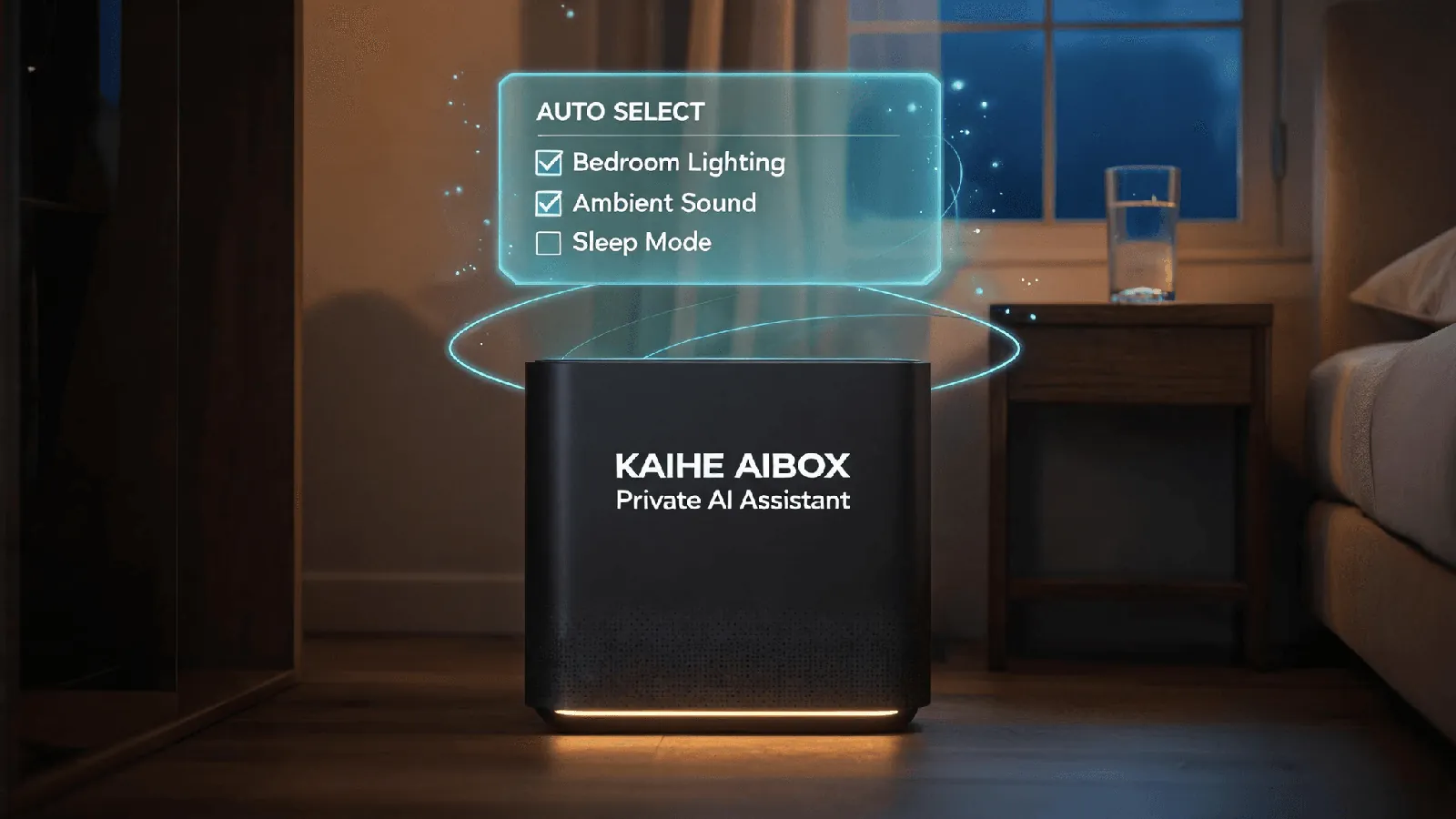
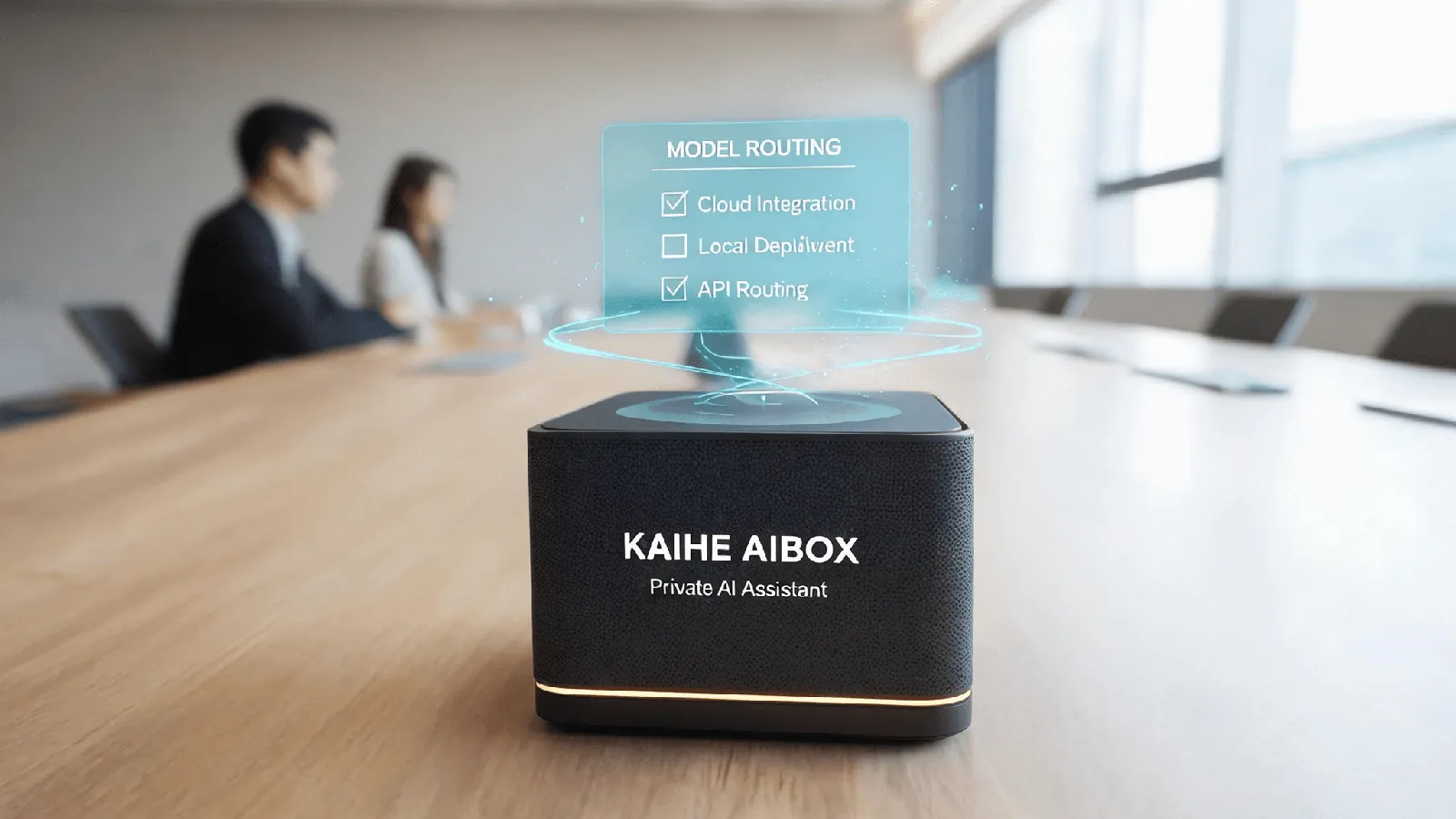
This is why we built KAIHE AIBOX(铠盒AIBOX). It does not promise the strongest model, because the strongest model changes every month. What it does is put three switches back on your desk: which model, when to switch, and whether data leaves the room. The machine sits in your home, the model runs on it, and the bill is electricity rather than tokens.
Capability can be bought. The right to decide does not have to be outsourced.