Google Gemini Spark Hands-On: A 24/7 AI Butler That Managed My Life for a Week
📖 Glossary
AI Box (also known as Agent Computer / Agent PC), is a dedicated local hardware device that runs AI Agents. Pre-installed with an AI agent management system, plug-and-play, running 24/7. Users can remotely command AI to work via Discord, Slack, Telegram, WhatsApp, and more.
Summary: The most talked-about product at Google I/O 2026 wasn't a new model—it was a personal AI Agent called Gemini Spark. Its defining feature is "always being there": running 24/7, proactively handling your emails, managing your schedule, and tracking tasks without you having to manually invoke it each time. I let Gemini Spark take over a week's worth of life's details, and what I discovered is this: the fundamental paradigm of human-AI interaction is shifting from "I ask, you answer" to "you watch my back."
From Chatbot to AI Butler: A Paradigm Shift in Interaction
For the past three years, our interaction with AI has barely changed: open a chat window, type a question, wait for the AI to respond, close the window. Whether it's ChatGPT, Claude, or Gemini, the underlying model is "request-response." If you don't speak up, the AI is a silent wall.
Gemini Spark changed that. When it was unveiled at Google I/O 2026, Sundar Pichai demonstrated a scenario: Gemini Spark automatically detected that you hadn't replied to an important email for three consecutive days, proactively reminded you, and drafted a response. The quietest moment in the auditorium—not because people were stunned, but because everyone was thinking the same thing: "Isn't this exactly what I need?"
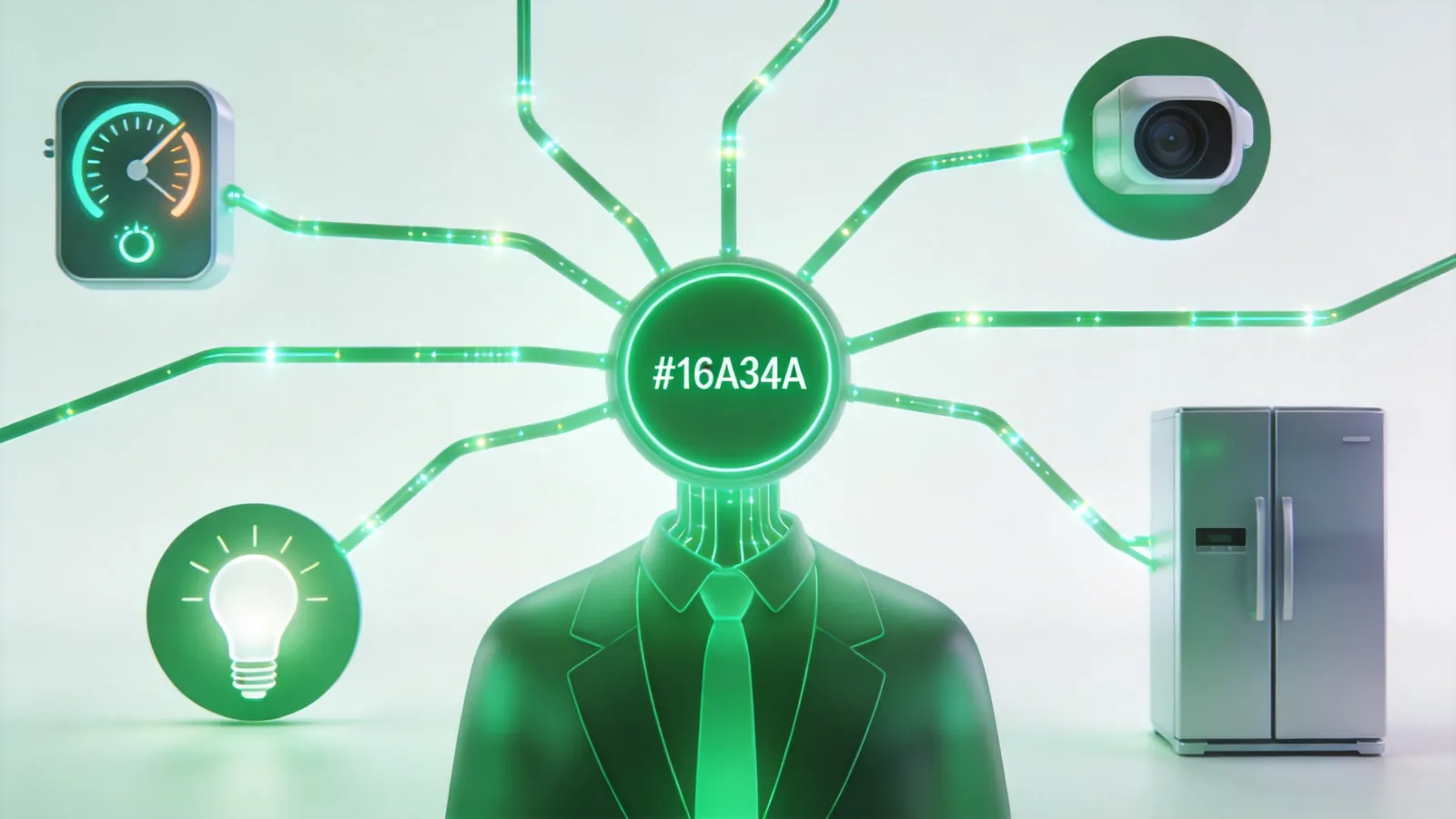
Gemini Spark's core capability isn't smarter answers. It's continuous operation. It's like a butler who never rests—online 24 hours a day, constantly scanning your emails, calendars, task lists, and message streams, and stepping in proactively when action is needed. This "proactive AI" paradigm is an entirely different species from the "reactive chat" that came before.
The significance of this shift cannot be overstated. For years, the AI industry has been optimizing the wrong variable: making answers better, faster, more accurate. But the real bottleneck in human-AI interaction wasn't answer quality—it was the fact that you had to initiate every single interaction. The AI never came to you. Gemini Spark inverts this equation. The AI comes to you, and you only intervene when necessary.
This is analogous to the difference between a library and a research assistant. A library has all the information you need, but you have to go find it. A research assistant comes to your desk and says, "I found something you should look at." The former is passive; the latter is proactive. The productivity difference between these two modes is enormous—not because the information is different, but because the proactive mode eliminates the cognitive overhead of monitoring and searching.
A Week of Testing: What I Let It Manage
I decided to give Gemini Spark a one-week "butler trial" to see what it could actually do and where it would fall short.
Day 1-2: Email Management—From 40 Minutes a Day to 5
My work inbox receives roughly 80-120 emails per day, about 60% of which are notifications, subscriptions, and marketing content. Previously, I spent 30-40 minutes daily on classification and quick replies.
The first thing Gemini Spark did after connecting to Gmail was reclassify everything by priority. This wasn't simple label filtering—it read email content and determined which messages required your personal attention, which could be auto-archived, and which needed timely reminders. For example:
- A client's project feedback email: flagged as "Must reply today," with a drafted response attached to the email. I just needed to confirm and send.
- A SaaS product renewal reminder: automatically filed into a "Pending" folder, with the deadline marked on my calendar.
- The team's weekly report: key data automatically extracted, condensed into a three-sentence summary pushed to me.
Over two days, email processing time dropped from 40 minutes a day to 5. The critical point: I didn't miss a single important email.
This is worth examining more closely. Traditional email management relies on rules and filters—mechanical pattern matching that can't understand context. Gemini Spark's approach is semantic: it understands that an email from a client about a project deadline is qualitatively different from a newsletter about the same project, even if they share keywords. This semantic understanding is what makes the difference between "helpful filtering" and "trustworthy delegation."
There's also a psychological benefit that's easy to overlook. When you know an AI is continuously monitoring your inbox, the mental burden of "Did I miss something important?" evaporates. It's like having a reliable assistant who always checks the mail—you stop worrying about it. This reduction in cognitive load is arguably more valuable than the time saved.
Day 3-4: Schedule and Task Management—Better Memory Than Mine
By the third day, Gemini Spark started showing the value of "proactive management." It did several things that surprised me:
First, it noticed I had a client meeting at 2 PM on Wednesday, but there was another internal sync at the same time slot. It proactively suggested rescheduling the internal meeting to 3 PM and sent the rescheduling request on my behalf.
Second, it noticed I had committed to submitting a report by Friday, but by Thursday I hadn't started. It sent a reminder with a suggested outline for the report.
Third, it automatically extracted action items discussed in the team chat group and synced them to my task list—something I used to do manually and often forgot.
These may sound like small things, but they represent a fundamental shift in how we relate to our own commitments. Most people don't fail to do things because they don't want to—they fail because they forget, or because the task gets buried under other priorities. A proactive AI that tracks commitments and nudges you at the right time isn't just convenient; it's a structural upgrade to personal reliability.
The task extraction feature deserves special attention. In most teams, action items are scattered across multiple communication channels—Slack messages, email threads, meeting notes, shared documents. The cognitive cost of tracking all these sources is significant, which is why things fall through the cracks. Gemini Spark's ability to monitor these channels and consolidate action items into a single task list addresses a real pain point that no amount of personal discipline can solve.
Day 5-7: Life Management—Where the AI Butler Hits Its Limits
Over the last three days, I let it handle some daily life tasks: food delivery tracking, package arrival notifications, utility bill due date reminders. Gemini Spark performed adequately in these scenarios, but had one obvious shortcoming—it can only process information, not directly execute actions.
For example, it knew my electricity bill was due, but couldn't complete the payment for me. It knew a package had arrived, but couldn't contact the courier to leave it at the pickup station. This is a common limitation of all current AI Agents: they can "see" and "think," but their "hands" are too short.
This distinction between information processing and action execution is crucial. An AI that can tell you your bill is due is helpful. An AI that can pay your bill is transformative. The gap between these two capabilities is where the next major breakthrough in AI Agents will occur. Currently, most Agent products operate in the "notification and suggestion" mode—they identify what needs to be done and tell you about it. The "execution" mode—actually doing it on your behalf—remains largely aspirational.
However, Gemini Spark supports smart home control through Google Home, which opens a door. In theory, if more API integrations are opened in the future, its execution capability would improve significantly. The smart home integration is instructive: it works because Google controls both the AI and the device ecosystem. When the same company builds the brain and the hands, execution becomes possible. The challenge is extending this to third-party services.
Technical Deep Dive: How Gemini Spark Achieves 24/7 Operation
Gemini Spark's ability to run continuously is backed by three key technical pillars:
1. Lightweight Inference with Gemini 2.5 Pro
Google applied quantization compression to Gemini 2.5 Pro, keeping the parameter count within acceptable limits for on-device execution. This means Gemini Spark doesn't need to call cloud APIs every second—most "scan-and-judge" work is done locally, only going to the cloud when deep understanding or content generation is needed. This dramatically reduces latency and cost.
The engineering trade-off here is worth examining. Full-precision Gemini 2.5 Pro would be too computationally expensive to run continuously on a consumer device. By quantizing the model—reducing the precision of its numerical representations from 16-bit to 4-bit or 8-bit—Google sacrifices a small amount of accuracy for a massive reduction in computational requirements. The key insight is that most of the "monitoring" work (scanning emails, checking schedules, evaluating priorities) doesn't require the full power of the model. A quantized version can handle these routine tasks locally, only invoking the full cloud model for complex reasoning or creative generation.
This hybrid approach—lightweight local inference for routine monitoring, cloud inference for complex tasks—is likely to become the standard architecture for always-on AI Agents. It balances performance, cost, and privacy in a way that purely cloud-based or purely on-device solutions cannot.
2. Always-On Perception Architecture
Traditional AI is "stateless"—it forgets everything after you ask. Gemini Spark introduces an Always-On Perception Architecture that maintains a dynamic "user state context": your schedule, habits, preferences, and current task progress. This context is continuously updated, making every intervention by Spark based on the latest information.
The technical challenge of maintaining persistent state is non-trivial. Unlike a chatbot that processes a single conversation and then resets, Gemini Spark needs to maintain a continuously evolving model of the user's world. This includes not just static preferences ("I prefer morning meetings") but dynamic states ("I'm currently working on the Q3 report, which is due Friday"). The system must also handle conflicts and contradictions gracefully—if your calendar says you're in a meeting but your email activity suggests you're at your desk, which signal should the AI trust?
Google's approach appears to use a combination of structured data (calendar entries, task lists) and unstructured context (email content, message patterns) to build a holistic user model. The structured data provides reliable anchors, while the unstructured data fills in the gaps and captures nuances that structured data alone would miss.
3. Proactive Trigger Engine
This is Spark's most core component. It defines a rule engine that automatically triggers actions when specific conditions are met. For example: "Important email unreplied for 24+ hours → draft reply and remind" or "Task deadline approaching → push reminder." These rules include both system presets and user-customizable options.
The trigger engine operates on a subscription model: it registers interest in specific types of events (new email, calendar change, task update) and evaluates each event against its rule set. When a rule's conditions are met, the corresponding action is triggered. This is conceptually similar to IFTTT (If This Then That), but with two crucial differences: the conditions can involve semantic understanding (not just pattern matching), and the actions can involve content generation (not just notification forwarding).
The user customization aspect is particularly important for adoption. Every person's priorities and preferences are different—a rule that one person finds helpful might be annoying to another. By allowing users to define their own triggers and adjust sensitivity thresholds, Gemini Spark can adapt to individual work styles rather than imposing a one-size-fits-all approach.
A Shared Philosophy with the KaiheAiBox A1
Interestingly, Gemini Spark's "24/7 continuous operation" philosophy aligns closely with the design philosophy of the KaiheAiBox A1 Agent Computer.
The KaiheAiBox A1 starts from the premise that AI shouldn't be a tool you occasionally open—it should be an always-on assistant. The difference lies in the path: Gemini Spark takes the cloud + mobile route, relying on the Google ecosystem (Gmail, Calendar, Home); the KaiheAiBox A1 takes the local route, running AI on your own device with data never leaving the local environment.
Both paths have their trade-offs. The cloud-based Gemini Spark offers high ecosystem integration and seamless connection to Google services, but data privacy and ongoing costs are concerns. The local KaiheAiBox A1 offers privacy control and no subscription fees, but requires more development work for cross-platform service integration.
However, the core trend is the same: AI is transitioning from "tool" to "butler." Whoever achieves true uninterrupted operation will capture the entry point for the next generation of human-computer interaction.
The convergence of these two approaches—cloud-native and device-native—suggests that the market is reaching consensus on the direction, even if the implementation paths differ. This is typical of technology inflection points: the "what" becomes clear before the "how." The what is always-on, proactive AI. The how is still being contested between cloud and local architectures.
Where It Still Falls Short
After a week of use, Gemini Spark has several notable weaknesses:
1. Not-low misjudgment rate. It classified several important personal emails as "low priority," nearly causing me to miss them. AI's "priority judgment" is still crude, especially when it comes to interpersonal relationships and emotional factors. An email from your boss saying "let's chat tomorrow" might look low-priority to an AI (no action items, no deadline), but the social implications make it anything but.
2. Privacy anxiety. Letting an AI continuously read all your emails, calendars, and messages creates a real sense of psychological insecurity. Google says data won't be used for ad training, but "whether you believe it" is a separate question. This isn't just a Google problem—it's inherent to any cloud-based always-on AI. The more access you grant, the more capable the AI becomes, but the more exposed your personal data is. This creates a fundamental tension that technical safeguards alone cannot resolve.
3. Proactive interruption frequency. Sometimes Spark is too "enthusiastic," pushing seven or eight reminders a day, some of which are trivial. Better "interruption threshold" controls are needed. The optimal number of proactive interruptions per day varies by person and context, but it's probably closer to 2-3 than 7-8. Each unnecessary interruption erodes trust and increases the likelihood that users will disable the feature entirely.
4. Insufficient execution closure. It can identify problems and suggest solutions, but can't directly get things done for you. Currently it's still "all talk, limited action." This is the most significant gap between the current state of AI Agents and the "AI butler" vision. Until agents can not only identify what needs to be done but actually do it, they remain sophisticated notification systems rather than true assistants.
Final Thoughts: From Passive to Proactive—AI's Next Watershed
Gemini Spark isn't perfect, but it points in a clear direction: AI shouldn't just be a tool that answers when you ask. It should be an always-on assistant that proactively intervenes.
This week gave me a new habit: I no longer consciously "go find AI." Instead, I assume the AI is watching things for me. I only step in when I need to; the rest of the time, it handles things on its own. Once you adapt to this interaction mode, it's hard to go back.
Of course, achieving a true "AI butler" still requires a long journey: improved execution capability, guaranteed privacy, reduced misjudgments. But the direction is clear—from "I ask, you answer" to "you watch my back," this is AI interaction's next watershed. And whether it's Gemini Spark's cloud path or the KaiheAiBox A1's local path, both are running toward the same destination.
The broader implication is that the next phase of AI competition won't be won by whoever has the smartest model—it will be won by whoever creates the most seamless always-on experience. Intelligence is a necessary but not sufficient condition. What matters more is persistence: being there when needed, without being asked, without being intrusive. This is a design challenge as much as a technical one, and it requires rethinking AI not as a product you use but as a presence you live with.
KaiheAiBox | The Agent Computer for Everyone · AI Agent Tracker