📖 Glossary
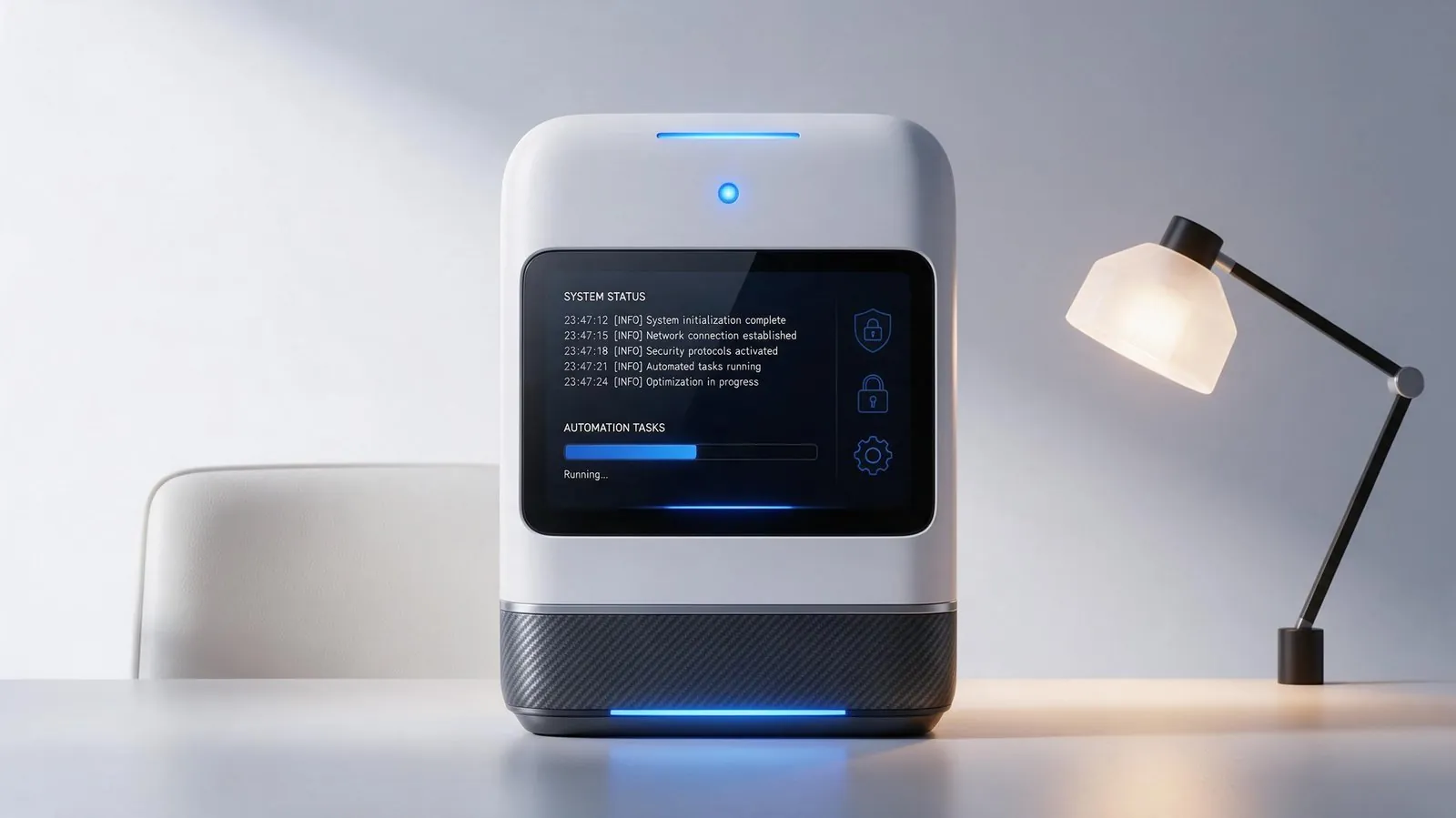
AI Box (also known as Agent Computer / Agent PC), is a dedicated local hardware device that runs AI Agents. Pre-installed with an AI agent management system, plug-and-play, running 24/7. Users can remotely command AI to work via Discord, Slack, Telegram, WhatsApp, and more.
Summary: Ghost has emerged from stealth with an $11M seed round led by Andreessen Horowitz and a $3,499 Personal AI Computer called Core. But the real story isn't which GPU it uses — it's a trend: why are more AI companies concluding that personal agents should have a computer of their own? KAIHE AIBOX represents a different architecture for the same direction: own the agent, choose the intelligence.
What Is Ghost Core?
Ghost is a San Francisco startup founded by 19-year-old Zain Javaid. Andreessen Horowitz led an $11M seed round. The product is Core — a $3,499 screenless computer shipping in late October.
The hardware is serious: NVIDIA RTX Pro 4000 Blackwell GPU, AMD Ryzen CPU, 64GB RAM, 1TB NVMe SSD. No traditional display — users interact through a phone app or iMessage. Qwen and Gemma models come preinstalled, with support for more from Hugging Face. All models, memory, files, and agents run locally with end-to-end encryption. A built-in firewall monitors every outbound request from the agent.
Ghost Core represents a clear conviction: personal AI shouldn't be just a chat window — it should have a persistent computing environment.
Why Does a Personal AI Agent Need Its Own Computer?
The old relationship was: Human → Computer → Software → AI Chat.
A new paradigm is emerging: Human → Private Agent → Computing Environment → Tools and Services.
Ghost is effectively saying: AI agents should have their own computer. Meta's Muse and OpenAI's Dot are each building cloud-based environments for persistent agents. A consensus is forming: truly long-running agents can't live inside a single conversation. They need memory, files, a browser, code execution, a scheduler, credentials, tools, permissions — and an always-on environment.
That's why the Personal AI Computer category is being defined right now.
An Agent Computer Is Not the Same as a Local LLM Workstation
This is the most important distinction in this entire conversation: Agent Computer ≠ Local LLM Workstation.
Ghost's architecture: Agent + Memory + Local Model + Large GPU + Local Compute. That's why it needs a 24GB GPU, 64GB RAM, and reaches $3,499.
The other approach: Agent + Memory + Knowledge + Automation + Local Devices + Cloud or Local Models on Demand. In other words — your personal agent must be persistent, but the most expensive large models don't have to live with it 24/7.
The Trade-Off of Putting the AI Model Inside the Hardware
Baking models into hardware is an architectural choice with three trade-offs.
Cost. A 24GB GPU, 64GB RAM, cooling, and power supply push the price to $3,499.
Power. A personal agent should run 24/7, but most of the time it's just remembering, retrieving, waiting, and handling simple tasks — not running the GPU at full load.
Model obsolescence. An agent might accompany a person for five or ten years, but models change every few months. Will the GPU you buy today still run the latest models 18 months from now?
The core insight: your personal agent should be long-term stable, but AI models should be continuously replaceable.
A Different Approach: Own the Agent, Choose the Intelligence
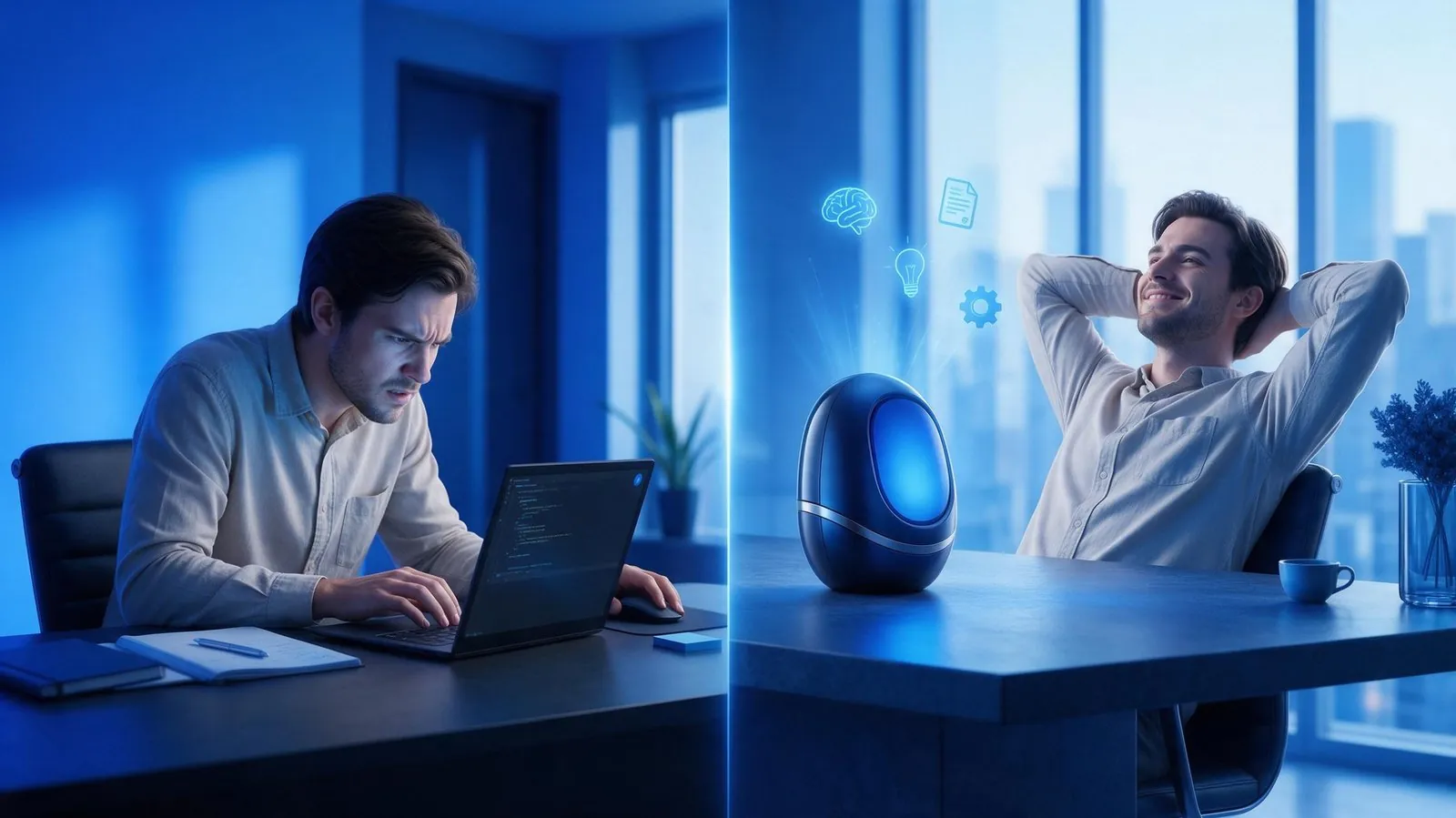
KAIHE AIBOX is also building a Personal AI Computer, but with a different architecture. KAIHE AIBOX is a dedicated Agent Computer — first and foremost a persistent runtime environment for a local personal AI assistant, not a high-performance workstation designed for local large models.
The agent runs locally. Memory and knowledge stay local. But models are dispatched on demand — GPT, Claude, Gemini, Qwen, DeepSeek, or local models. As cloud models get stronger and cheaper every month, KAIHE AIBOX users automatically benefit from every price cut.
One sentence: Own the agent. Choose the intelligence.
This is also why KAIHE AIBOX doesn't need a $3,499 GPU — it doesn't pay for model compute, only for the agent's persistent runtime environment.
Ghost Core vs. KAIHE AIBOX: Two Personal AI Computer Architectures
| Dimension | Ghost Core | KAIHE AIBOX |
|---|---|---|
| Core philosophy | Local AI + Agent | Local Private Agent |
| Agent runtime | Local | Local |
| Long-term memory | Local | Local |
| Large models | Primarily local | Cloud on-demand + local optional |
| Hardware strategy | High-compute GPU | Low-power Agent Computer |
| Entry cost | $3,499 | Hardware + Agent system, one-time purchase |
| Best for | Tinkerers / privacy purists | Regular users / families / professionals |
Ghost answers: "How do I bring AI intelligence home?" KAIHE answers: "How do I let ordinary people own their private agent first?" It's not about which is better — they're two different architectural choices.
Why Local Memory May Matter More Than Local Models
Today you can use GPT. Tomorrow you can use Claude. In the future, you might use something entirely different. But the private memory and knowledge a person accumulates over five or ten years shouldn't have to be rebuilt every time models change.
Zhuoguang Workbench, built into KAIHE AIBOX, is the local private workspace running on the device — personal diaries, notes, knowledge bases, client records, project histories, long-term memory, schedules, accounts — all stored locally, managed automatically by the agent. Models change. Memory persists.
Models change quickly. Personal memory should not. Your private agent should survive changes in models, hardware, and AI providers.
From Personal Computer to Personal AI Computer
For forty years, the Personal Computer solved human computing problems. Now the Personal AI Computer is emerging to solve the problem of persistent agent runtime.
Two routes may emerge: cloud-owned Agent Computers (Muse, Dot), and user-owned Agent Computers (Ghost, KAIHE AIBOX). Within user-owned, there's model-first (Ghost) and agent-first (KAIHE AIBOX).
The next question may not be which AI model you use. It may be where your personal agent lives, who owns its memory, and who controls the computer it runs on.
For more information, search [KAIHE AIBOX] or contact: [email protected]
KAIHE AIBOX · 7x24 Personal AI Assistant | Product Center