Wenxin 5.1 Trained at 6% of Industry Cost — Is the 2026 LLM Purge Finally Here?
📖 Glossary
AI Box (also known as Agent Computer / Agent PC), is a dedicated local hardware device that runs AI Agents. Pre-installed with an AI agent management system, plug-and-play, running 24/7. Users can remotely command AI to work via Discord, Slack, Telegram, WhatsApp, and more.
In 144 days, 53 major AI models launched globally. On May 9, Baidu's Wenxin 5.1 achieved global #4 ranking at only 6% of the industry's training cost, overtaking GPT-5.5 on LMArena's text leaderboard. The LLM arms race is undergoing a fundamental logic shift.
53 Models in 144 Days — But Only a Handful Will Survive Next Year
The pace of AI model releases in 2026 has become numbing even for insiders.
So far this year, major global and domestic players have launched 53 new models or significant upgrades — averaging one new model every 2.7 days. GPT-5.1, GPT-5.2, Claude 4.0, Gemini 3.0, Wenxin 5.1, GLM-5.1, Qwen 3.0... the list keeps growing.
But two numbers tell a different story:
- Wenxin 5.1 is the only domestic model in LMArena's top 15 globally
- The vast majority of these models never exceeded 1 million daily API calls
The "Hundred Model War" is becoming the "Hundred Model Cemetery" — models are being born dead more often than not.
Wenxin 5.1 Signals a New Rule: Efficiency Beats Parameters
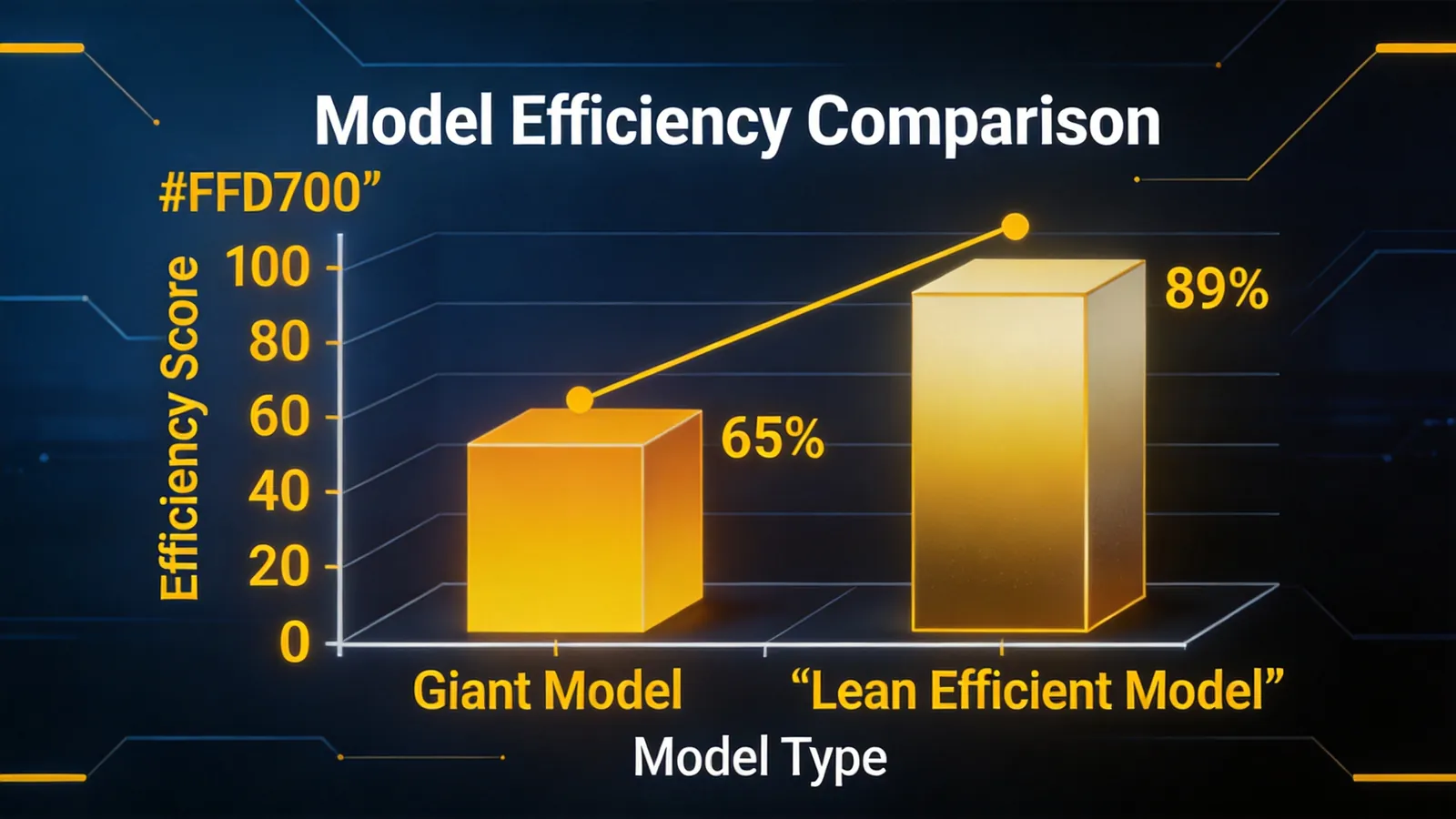
Baidu's May 9 Wenxin 5.1 launch didn't make headlines with parameter counts — it made them with a single number: pre-training cost at only 6% of the industry's average for comparable models.
What does this mean? If the industry averaged $1 billion to train a comparable model, Baidu spent just $60 million — and achieved LMArena search leaderboard #4 globally, #1 in China, beating GPT-5.5.
The underlying technology is called "Multi-Dimensional Elastic Pre-Training" — think of it as "compute-on-demand" training: the model dynamically allocates computing power to parameters that need it most, rather than evenly distributing effort across all parameters.
This Changes the Industry's Competitive Logic
The old logic of the past year: bigger parameters → more compute → higher cost → better results
The emerging logic: higher efficiency → lower cost → equal or better results → faster iteration
If a model trained at 6% of cost achieves global #4, who's burning the other 94%? And for what?
Three Signals to Identify Who Is "Swimming Naked"
The 2026 LLM purge can be predicted with three signals:
Signal 1: Is Your API Price Still Falling?
LLM API prices have plummeted over 90% in the past year. Wenxin 4.5 API costs just 1% of GPT-4.5's price. When pricing approaches free, you can't make money selling models alone — only companies that embed models into products and convert usage into user value will survive.
Signal 2: Do You Have a "Model → Agent" Closed Loop?
Li Yanhong's DAA (Daily Active Agents) metric at Create2026 wasn't accidental — models are engines; Agents are products. OpenAI has deep ChatGPT integration, Baidu has Search + Baidu Intelligent Cloud, Google has a vast app ecosystem.
But companies with "models only, no applications" are like building engines without cars — no matter how good the engine, it can't drive.
Signal 3: Are Your Ecosystem Partners Still There?
End users of LLM APIs are enterprise developers. They vote with their feet — whoever has the most stable APIs, best SDKs, and most active community wins their business. As model quality gaps narrow, developer experience becomes the real differentiator.
Implications for Nizwo Users
This model purge creates two direct benefits for locally deployed AI computers:
First, improved model efficiency directly benefits local deployment. Wenxin 5.1's 6%-cost training logic will eventually flow to inference — the same compute power can run better models, or the same models need less compute. This is a direct advantage for locally-powered devices with finite compute budgets.
Second, model oversupply means users have choices. The outcome of the hundred-model war isn't "winner takes all" — it's "multiple good models coexist." Local deployment flexibility (use whichever model you want, switch anytime) becomes a core advantage.
In one sentence: The 2026 LLM purge isn't about who has the biggest parameters — it's about who can turn models into Agents that users actually use, faster and cheaper. When the tide goes out, you'll see who's been swimming naked.
The AI Frontier column continuously tracks the latest AI industry developments, decoding the business logic behind technology.