Google's AI Smart Glasses: When AI Steps Out of the Screen and Onto Your Face
Abstract: At Google I/O 2026, Google officially unveiled the Android XR smart glasses prototype, announcing a fall consumer launch in partnership with Samsung, Gentle Monster, and Warby Parker. This isn't a screen you wear on your face — it's an AI assistant that can see your world. Powered by Gemini with voice-first interaction, these glasses are redefining what "smart glasses" actually mean.
From Google Glass to Android XR: A Decade in the Making
The failure of Google Glass in 2014 nearly sentenced the entire smart glasses category to death. The problems were clear: the camera triggered privacy backlash, battery life was abysmal, there was no killer app, and the design screamed "tech bro" rather than "everyday accessory." The Google Glass Explorer Edition cost $1,500 but could only handle basic tasks like photo capture, navigation, and simple search — an experience that fell far short of expectations. The media coined a derogatory term for Glass wearers: "Glassholes." The label itself reveals how low social acceptance was at the time.
A decade later, Google returns with an entirely different philosophy. At the May 2026 Google I/O developer conference, the Android XR glasses prototype made its official debut. This time, the core proposition isn't "displaying information in front of your eyes" — it's "understanding and responding to your world for you."
The critical shift: the interaction paradigm has moved from visual-first to voice-first. Shahram Izadi, General Manager of Google's XR division, made it clear that the first consumer product launching this fall aims to "deliver information privately through voice, not on a screen." This means it's primarily an AI assistant that can hear and see, and only secondarily a display device.
Three fundamental changes made this possible. First, large language models turned natural voice interaction into reality — you no longer need to speak precise commands to your glasses. Second, multimodal AI transformed the camera from a "photo tool" into "AI's eyes." Third, advances in chip and battery technology enabled always-on experiences at low power. These three factors combined to create the conditions for Android XR glasses to exist.
Gemini Is the Core: Not Glasses + AI, but AI + Glasses
The soul of Android XR glasses is Gemini AI. Equipped with a camera, microphone, and speaker, the glasses pair with your phone. You activate them by saying "Hey Google" or tapping the side of the frame. The glasses have no ambition for independent computation — they offload the heavy lifting to Gemini on your phone, handling only perception and presentation themselves.
This architectural decision is significant. By making the phone the computational hub, Google avoids the battery and thermal constraints that would come from packing a powerful processor into a lightweight frame. It also means the glasses can benefit from your phone's cellular connection, processing power, and storage — all without adding weight or cost to the glasses themselves.
But it also creates a dependency: the glasses are useless without a paired phone nearby. This is a trade-off Google has clearly accepted, and it aligns with how most people already use their devices. Your phone is already always with you; the glasses just give Gemini a new way to perceive and interact with the world.
How Gemini Sees Your World
When you ask Gemini a question through the glasses, here's what happens behind the scenes: the camera captures a frame, Gemini's vision model processes it alongside your voice query, and the multimodal model generates a response that's streamed back through the glasses' speaker. The entire loop is designed to complete in under two seconds for simple queries.
The camera isn't recording continuously — that would drain the battery and raise privacy concerns. Instead, it activates on-demand: when you ask a question that requires visual context, the camera captures a frame; when you take a photo, the camera activates fully; and when you're using navigation, the camera periodically samples the environment to update your position.
Gemini's understanding goes beyond simple object recognition. It can read text in multiple languages, identify specific products and provide pricing comparisons, recognize faces (with explicit user opt-in), understand spatial relationships ("the building to the left of the red sign"), and even interpret charts and diagrams. This depth of visual understanding is what separates Android XR from simpler camera-equipped glasses like early Ray-Ban Meta models.
Core Capabilities at a Glance
- Real-time environmental recognition: Gemini can see what you see — identifying buildings, text, and objects. Walk down the street and ask "what time does that store close?" and Gemini will answer based on the sign captured by the camera
- Multilingual real-time translation: Instant voice and text translation. The live demo glitched due to Wi-Fi issues at Google I/O, but it worked flawlessly on the TED 2025 stage — speaking to someone in Japanese, the glasses delivered real-time translation directly into your ear
- Navigation and information overlay: Turn-by-turn directions, weather, Uber pickup info. The future display version can overlay this directly onto the lens
- Photo capture and AI editing: Snap a photo and use the Nano Banana tool for AI processing — "put funny hats on everyone," for example. The fun factor is off the charts
- Memory function: Remembers things you've mentioned and places you've been. "What did I order last time I came to this restaurant?" Gemini can recall and recommend
- Phone app control: Send messages, make reservations, check routes — all without pulling out your phone
Google DeepMind's multimodal virtual assistant Project Astra is also coming to Android XR. Astra's core capability is "understanding the world through video" — it continuously observes your environment, understands context, and offers proactive suggestions. For instance, standing in front of a supermarket shelf, Astra can tell you which brand offers better value, or remind you what you're missing at home.
The Nano Banana Moment: AI Photo Editing Goes Mainstream
One of the most talked-about demos at Google I/O was the Nano Banana feature. After taking a photo with the glasses, you can ask Gemini to modify it using natural language: "put funny hats on everyone," "make it look like a watercolor painting," "remove the person in the background." The edits are generated in seconds and can be shared directly.
While this seems like a party trick, it actually represents something deeper: the democratization of creative tools. Professional photo editing that once required Photoshop expertise is now accessible through a voice command. And because it runs through the glasses, you can do it hands-free — take the photo, describe the edit, and share the result without ever touching a screen.
For content creators and social media users, this could be a killer feature. The ability to capture and creatively edit content while staying present in the moment — rather than retreating to a phone screen — is genuinely new. Expect to see "shot on Android XR" become a social media flex.
The Memory Layer: Your AI Remembers So You Don't Have To
Perhaps the most underappreciated feature is the memory system. Gemini can remember details from your conversations and interactions across sessions. "What did I order last time?" "What was the name of that restaurant we walked past?" "When is my next dentist appointment?" — all answerable without pulling out your phone.
This memory layer is what transforms the glasses from a fancy voice remote into something closer to a personal assistant. And it aligns with a broader trend in AI agent development: persistent memory that makes AI more useful over time. The longer you use the glasses, the more context Gemini accumulates, and the more valuable its responses become.
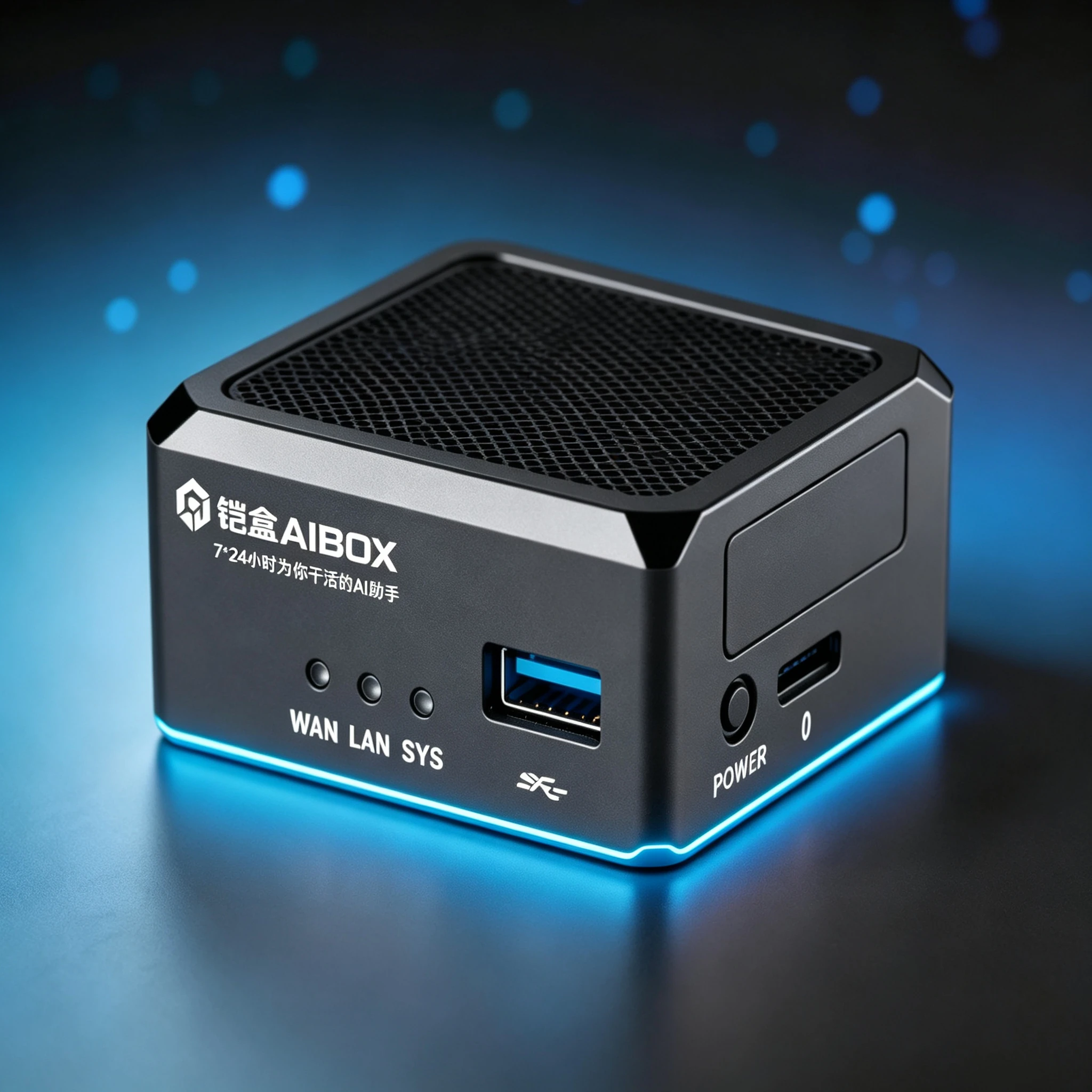
This is the same principle that drives agent computing platforms — an AI that grows with you is fundamentally more useful than one that starts from scratch every time. KaiheAiBox's approach of 7×24 persistent agent operation follows the same logic: continuity creates competence.
Two Product Lines: Screenless First, Then Screen Evolution
Google's launch strategy is crystal clear: start with a screenless version to lower the barrier, then add screens for expanded use cases.
The Audio-First Approach: Why No Screen Is Actually Smart
The audio-only version launching this fall: No built-in display. Focused on voice interaction, photo capture, and real-time AI assistance. The wearing experience approaches that of regular Ray-Ban glasses — no external devices or cables required. Compatible with both iOS and Android phones. This is crucial: it means iPhone users can use them too, doubling the market reach. Pricing is expected to be competitive with Meta Ray-Ban.
Removing the display isn't just a cost-cutting measure — it's a deliberate design philosophy. A display adds weight, bulk, battery drain, and complexity. It also changes the social dynamic: someone staring at something in their glasses looks different from someone simply wearing glasses and occasionally talking to them. The audio-first approach makes the glasses feel more like a natural extension of yourself and less like a computer strapped to your face.
There's also a practical consideration: most of the time, you don't need visual output from your glasses. When you ask "what's the weather?" or "translate this sign" or "remind me to buy milk," the answer is brief enough for audio delivery. Visual output becomes valuable mainly for navigation, reading, and extended content — use cases that can wait for the display version.
The Display Version: When Visual AR Becomes Necessary
The future display version: Features a built-in lens display that can overlay navigation, translation, notifications, and other visual information, with support for AI-customizable widgets. The prototype was available for media hands-on at I/O, but the production version will take longer. The display version faces greater technical challenges: how to project clear, readable information onto a transparent lens while maintaining transparency and wearing comfort requires major breakthroughs in optical engineering.
The display version will likely follow 12-18 months after the audio version, based on Google's typical hardware cadence. By then, the voice interaction model will be mature, the developer ecosystem will be established, and early adopters will have provided feedback on what they actually want displayed in their field of vision.
One intriguing possibility is that the display version might use different form factors for different use cases. A slim overlay for everyday use, a clip-on lens for extended AR sessions, or even prescription lens integration — the open Android XR platform means multiple manufacturers can experiment with these approaches simultaneously.
The brilliance of this strategy: first get users comfortable with the concept of "an AI assistant on your face," then layer on visual capabilities once the voice interaction experience matures. This avoids feature overload that could scare away mainstream consumers. Meta's Ray-Ban glasses have already validated this path — audio-only smart glasses sold 7 million units, proving that users don't need another screen in front of their eyes, but an AI companion that's always ready.

The Competitive Landscape: Meta's First-Mover Advantage, Google's Late-Mover Strategy
Google isn't the first to crack this market. Meta, through its partnership with EssilorLuxottica on Ray-Ban smart glasses, reached 7 million units sold in 2025. Meta also plans to launch a new version with a built-in display and an Oakley-style AR glasses model codenamed Hypernova. Apple has Vision Pro, but that's a headset, not glasses — at $3,499, it's in an entirely different consumer category.
Meta's advantages: first-mover ecosystem, brand partnerships, and prices that have already come down. But Google has something Meta doesn't — the search ecosystem and Gemini's multimodal capabilities. When you ask "what's that building in front of me," Meta needs to call a third-party API, while Gemini is backed by twenty years of Google's Knowledge Graph and real-time search. This gap will be very apparent in daily use: Meta's answer is "this is a commercial building," while Gemini's answer is "this is the International Trade Center, it has Restaurant XX and Company YY inside — which would you like to know about?"
There's another key difference: open vs. closed. Android XR is a platform — Xreal, Samsung, and other manufacturers can build products on it. Meta's ecosystem is walled. In the long run, device diversity and price competition from an open platform could prove decisive. Just like the Android phone market, multi-vendor competition drives innovation and price reduction.
The Meta-Google Feature Comparison
Understanding how the two platforms compare on key dimensions helps predict where the market will go:
AI depth: Gemini's multimodal understanding gives Google a clear edge. Meta uses a combination of Llama models and third-party APIs, but Gemini was purpose-built for multimodal reasoning — it can process images, text, and audio in a unified model rather than stitching together separate services. This shows in real-world performance: Gemini can follow multi-turn conversations about what you're looking at, while Meta's AI tends to handle single queries less coherently.
Platform openness: Android XR allows any manufacturer to build compatible glasses, which will create price competition and form factor diversity. Meta's partnership with EssilorLuxottica gives them beautiful designs but limits consumer choice. If you don't like Ray-Ban's style, you're out of luck in Meta's ecosystem — but Android XR will have Samsung, Xreal, and potentially dozens of other options.
Ecosystem integration: Meta has Instagram, WhatsApp, and Facebook integrations that Google can't match on the social side. But Google has Maps, Search, Translate, and YouTube — services that are arguably more useful in an always-on glasses context. When you're walking through a city, Google Maps integration beats Instagram integration every time.
Developer tools: Google is providing a comprehensive SDK for Android XR with support for Gemini API calls, spatial computing, and voice interaction. Meta's developer tools are more limited and tightly controlled. The open approach will likely attract more developers, especially in the enterprise space where customization matters.
Samsung's role is worth watching. As one of the world's largest phone manufacturers, Samsung's partnership with Google means Android XR glasses will deeply integrate with the Galaxy phone ecosystem — Galaxy users will have a smoother experience. And Xreal Project Aura represents the addition of AR-native manufacturers, who have deeper expertise in optics and wearing comfort.
The China Factor
An often-overlooked dimension is how Android XR glasses will perform in China, the world's largest smartphone market. Google services are not natively available in China, which means Gemini-powered features would need local alternatives. Chinese manufacturers like Xreal, Rokid, and Nreal have been building their own AR ecosystems for years, often with deeper integration with domestic AI services like Baidu's Ernie Bot or Alibaba's Qwen.
If Android XR gains traction globally, expect Chinese tech companies to either build compatible alternatives or create their own Android-forked smart glasses platforms. The competitive dynamics in China will be fundamentally different from the West — and could produce innovations that flow back into the global market.
For a company like KaiheAiBox, which operates at the intersection of hardware and AI agent software, the emergence of AI glasses as a mainstream form factor opens interesting possibilities. A lightweight agent terminal that pairs with a dedicated agent computer could deliver experiences that phone-tethered glasses can't match — always-on agent processing without draining your phone battery, dedicated agent memory that persists across devices, and specialized agent workflows optimized for hands-free interaction.
Xreal Project Aura: The Second Official Device
Project Aura, a collaboration between Google and Xreal, is the second official device on the Android XR platform. It integrates Gemini AI and supports both optical see-through (OST) and video see-through (VST) modes. Google plans to reveal more details at the Augmented World Expo (AWE) in June 2026.
Xreal has already built a substantial user base in the consumer AR glasses market. The Air and Light series have earned solid reputations among consumers, particularly for their lightweight designs and competitive pricing. Project Aura could become the vanguard of the "display-equipped Android XR" wave, offering a choice for users who want visual overlay experiences.
What makes Xreal's involvement interesting is their expertise in optical design. Unlike smartphone makers who are new to glasses form factors, Xreal has been solving problems like weight distribution, lens quality, and nose pad comfort for years. Their collaboration with Google on Project Aura could result in a device that feels more like premium eyewear and less like a tech gadget — a crucial distinction for mainstream adoption.
Samsung's Role: The Galaxy Connection
Samsung's participation in the Android XR ecosystem shouldn't be underestimated. As the world's largest Android phone manufacturer, Samsung has a distribution network and brand recognition that no other partner can match. When Samsung launches an Android XR-compatible Galaxy device — whether a phone, tablet, or dedicated companion device — it instantly creates a massive installed base for the glasses platform.
Rumors suggest Samsung is working on a dedicated XR companion chip for future Galaxy phones, which would handle the computational demands of Android XR glasses more efficiently than general-purpose mobile processors. If true, this could address the latency and battery concerns that are currently the biggest technical risks for the platform.
Samsung also brings something Google has historically struggled with: premium hardware design at consumer price points. The combination of Google's AI and software expertise with Samsung's hardware prowess could produce a product that's genuinely competitive with Apple's ecosystem approach — something the Android world has rarely achieved.
Why This Time Is Different
The core reasons Google Glass failed in 2014 are largely addressed by Android XR glasses in 2026:
| Problem | Google Glass (2014) | Android XR (2026) |
|---|---|---|
| Privacy concerns | Camera always on, no indicator | Photo capture has clear LED indicator, with audio-visual dual notification |
| Battery life | Less than 1 day | Phone-paired, focused on low-power voice mode |
| Killer app | Virtually none | Gemini real-time AI assistant + multimodal understanding |
| Wearable design | Too "techy" | Gentle Monster / Warby Parker designs |
| Price | $1,500 | Expected to be much more accessible, close to Ray-Ban price range |
| Ecosystem | Isolated product | Android ecosystem + Gemini + Google full suite |
| Phone compatibility | Android only | iOS + Android dual-platform support |
The biggest difference is the qualitative leap in AI capability. In 2014, there was no Gemini, no multimodal understanding, no natural voice interaction. You could only say rigid commands like "Ok Glass, take a picture." Today, AI can genuinely "see" your world and provide meaningful responses — transforming smart glasses from a "novel tech toy" into a "useful everyday tool."
Another often-overlooked factor is the shift in social acceptance. In 2014, wearing glasses with a camera in public attracted strange looks. In 2025, millions of people wear Ray-Ban Meta to take photos — society has gotten used to "cameras on glasses." This lowered psychological barrier is crucial for Android XR glasses to gain widespread adoption.
What This Means for Agent Computing
AI glasses are essentially the lightest-weight agent terminal possible. You don't need to open a laptop, unlock a phone, or launch an app. The AI is always on, always observing, always ready to respond. You don't need to "decide when to use AI" — AI is just there, as natural as air.
This is the natural extension of the agent computing philosophy that KaiheAiBox advocates: a 7×24 online AI assistant, except instead of a small box on your desk, it's glasses on your face. Different form factor, same core logic — seamless AI integration into your life and workflow.
Imagine these scenarios: you walk into a meeting room, and the glasses automatically identify attendees and pull up relevant background. During the meeting, AI takes real-time notes, and afterward automatically summarizes and emails them to you. You're grocery shopping, and the glasses remind you that milk at home is about to expire. While traveling, AI translates in real-time, explains landmark stories, recommends nearby restaurants. These aren't science fiction — they're capabilities that Gemini + camera + voice interaction can already deliver.
Privacy and Social Trust: The Elephant in the Room
No discussion of camera-equipped glasses is complete without addressing privacy. Google learned this the hard way with Glass in 2014, and this time they're taking a fundamentally different approach.
The Android XR glasses feature a visible LED indicator light that activates whenever the camera is in use — both for photo capture and for AI-powered environmental recognition. This is a hardware-level privacy signal that can't be disabled by software. Additionally, the glasses are designed to process most data on-device when possible, with cloud processing only when necessary for complex AI queries.
But the real privacy question isn't about the glasses themselves — it's about the people around you. When you're wearing AI glasses in a restaurant, on public transit, or in a meeting, everyone in your field of view is potentially being observed by Gemini. Google's current approach is to keep AI processing reactive (triggered by your explicit request) rather than proactive (constantly scanning), but as Project Astra's always-on capabilities develop, this boundary will blur.
Meta faced similar concerns with Ray-Ban glasses and addressed them through a combination of indicator lights and social norms. The fact that 7 million people now wear camera-equipped Ray-Ban glasses suggests that society is gradually accepting this trade-off. But the stakes are higher with AI glasses — a camera that merely records is one thing; a camera that understands and interprets everything it sees is quite another.
Google will need to be transparent about what data is processed, how long it's stored, and who has access. The open-source community will likely scrutinize Android XR's data handling more intensely than Meta's closed system — which could actually become an advantage if Google gets it right.
The Technical Challenges Ahead
While the Android XR prototype impressed at Google I/O, several technical challenges remain before consumer-ready products can ship:
Latency: Voice-first interaction demands sub-second response times. If you ask "what am I looking at?" and wait three seconds for an answer, the experience feels broken. Gemini's multimodal inference needs to be fast enough to feel conversational, not transactional. Google's custom Tensor chips and edge computing optimization will be critical here.
Battery life: Always-on AI listening and camera processing drain batteries fast. The phone-paired architecture helps — the glasses offload heavy computation to the phone — but the camera and microphone still need continuous power. Expect initial battery life to be in the 4-6 hour range for active use, with standby measured in days.
Optical quality (display version): Projecting clear, readable information onto a transparent lens while maintaining natural vision quality is one of the hardest problems in AR. Current waveguide technology still involves trade-offs between brightness, field of view, and transparency. The display version will need to solve this without adding bulk or weight.
Durability and weather resistance: Glasses need to survive rain, sweat, drops, and daily wear. Consumer electronics typically don't face these conditions, but eyewear does. IPX4 water resistance at minimum will be expected.
Audio quality in noisy environments: Bone conduction or open-ear speakers work well in quiet settings but struggle in loud environments like streets or restaurants. This is where the voice-first paradigm faces its toughest test — if you can't hear Gemini's response, the whole value proposition collapses.
The Developer Opportunity
Android XR being an open platform creates opportunities for developers that Meta's closed ecosystem doesn't. Third-party apps can integrate deeply with the glasses' capabilities — a cooking app could use the camera to identify ingredients and guide you through recipes step by step; a fitness app could analyze your form during workouts; a travel app could provide AR-guided city tours with real-time historical context.
Google is also bringing its full suite of services: Maps, Search, Translate, Assistant, Photos, Calendar. This means the glasses work with the tools hundreds of millions of people already use daily. The integration depth will be hard for competitors to match.
For enterprises, Android XR glasses could transform field work. Technicians could have schematics overlaid on equipment they're repairing; warehouse workers could get picking instructions without looking at a handheld device; healthcare professionals could access patient records hands-free. The enterprise AR market has been waiting for a platform that combines consumer-grade hardware with enterprise-grade software — Android XR might finally deliver that.
The Killer App Question
Every new platform needs a killer app — the one use case that makes people say "I need this." For smartphones, it was mobile web and email. For the Apple Watch, it was fitness tracking and notifications. For smart glasses, the killer app might not be a single feature but a combination: hands-free AI assistance in everyday situations.
Think about the moments when pulling out your phone feels like too much friction: you're carrying groceries and want to check a recipe, you're on a run and want to know your pace, you're at a museum and want context about a painting, you're in a foreign country and need instant translation. These micro-moments, individually trivial, collectively add up to a fundamentally different computing experience.
Google's advantage is that Gemini can handle all of these through a single natural language interface. You don't need separate apps for translation, navigation, information lookup, and photo editing — Gemini does them all. This unified experience could be the "killer app" that no single-featured competitor can match.
Enterprise Use Cases: The Quiet Revenue Driver
While consumer use cases get the headlines, enterprise applications could be the real revenue driver for Android XR. Consider these scenarios that are achievable with current technology:
Manufacturing: Assembly line workers view step-by-step instructions overlaid on the equipment they're building, reducing errors and training time. Quality inspectors compare real-time camera views against reference images.
Healthcare: Surgeons access patient vitals and imaging data without looking away from the operating field. Nurses scan medication labels to verify dosages against prescriptions. Medical students receive real-time guidance during training procedures.
Retail: Store associates check inventory and product information while maintaining eye contact with customers. Visual merchandisers preview display changes before physically moving products.
Field service: Telecommunications technicians climbing cell towers can access wiring diagrams hands-free. HVAC repair workers identify equipment models through AI recognition and pull up relevant service manuals.
These enterprise scenarios don't require consumer-style cool factor — they require reliability, accuracy, and integration with existing business systems. Google's enterprise cloud partnerships (through Google Cloud) and the open Android XR platform make this integration feasible in ways that Meta's consumer-focused ecosystem doesn't.
The Bigger Picture: AI's Form Factor Evolution
Android XR glasses represent more than just a new product category. They're part of a broader evolution in how humans interact with AI — from desktop to mobile to wearable.
The first wave of AI interaction was desktop-bound: you sat at a computer, typed a prompt, and received a response. The second wave made AI mobile through phones and apps, but you still had to actively decide to engage — unlock your phone, open an app, type or speak a command.
AI glasses represent the third wave: ambient AI. The AI is always present, always aware, always ready. You don't decide to "use AI" any more than you decide to "use your eyes" — it's just part of how you perceive and interact with the world. This is a fundamental shift in the human-AI relationship.
From an industry perspective, this evolution has major implications. If AI glasses become mainstream, the "app" paradigm that has dominated computing for the past 15 years could give way to an "agent" paradigm. Instead of opening separate apps for navigation, translation, messaging, and search, you simply tell Gemini what you need and it orchestrates the right tools automatically. This is the vision that agent computing platforms like KaiheAiBox are built around — and glasses could be the form factor that makes it mainstream.
The timeline matters too. Google is aiming for a fall 2026 launch, which means the holiday shopping season will be the first real test. If initial sales are strong, expect a rapid expansion of the Android XR ecosystem through 2027 — more device partners, more apps, more use cases. If adoption is slow, Google has the patience and resources to iterate, much like they did with Android itself in its early years.
Final Thoughts
Google isn't building a "smart screen" this time — it's building an "AI that can see the world." Voice-first, phone-paired, open platform: this combination is far more mature than the Google Glass of 2014.
When the fall product hits the market, the real test will be: will ordinary users want to wear it every day? Can Gemini's response speed and accuracy sustain the promise of "always ready"? Will third-party developers build enough compelling apps for Android XR? These questions can only be answered once real hardware is in real hands.
But one thing is certain: the day when AI steps out of the screen and onto your face is no longer distant. And when AI becomes a capability you wear, the value of agents upgrades from "efficiency tool" to "part of life."
A Personal Reflection on the Shift
Having watched the AI industry evolve from chatbots to agents to embodied AI, the Android XR announcement feels like an inflection point — not because the technology is revolutionary (it's evolutionary), but because it represents the first credible attempt to make ambient AI a consumer product.
The key insight is that Google isn't asking users to learn a new behavior. People already talk to their phones, already wear glasses, already ask questions about what they see. Android XR just removes the friction — the step of pulling out your phone, the step of framing a search query, the step of switching between apps. When those steps disappear, AI becomes less like a tool you use and more like a sense you have.
This is why the form factor matters more than the specs. A faster processor or better camera would be incremental improvements. But glasses — something you put on your face and forget about — change the relationship between human and AI in a way that no desktop or phone interface ever could. The AI is no longer something you go to; it's something that's with you.
For the agent computing ecosystem, this is both an opportunity and a challenge. If AI glasses succeed, they'll create demand for more sophisticated agent capabilities — persistent memory, multi-step task execution, proactive assistance — exactly the kinds of capabilities that dedicated agent computers are designed to deliver. The glasses become the interface; the agent computer becomes the engine. Together, they could deliver an experience that neither could achieve alone.
The fall 2026 launch will be the beginning of a new chapter in computing. Not the end of phones or laptops, but the start of something that coexists alongside them — an always-present AI layer that makes everything else more useful. Whether Google executes this vision successfully remains to be seen, but the vision itself is compelling enough to take seriously.
KaiheAiBox · AI Frontier