KAIHE AIBOX has always held one view: voice will be the first door AI walks through to reach ordinary people, but what actually matters is not "does it understand you" — it's "is it still on your side after you close the laptop." On September 15, Google shipped two real-time voice models, Gemini 3.8 Live and Gemini 3.8 Live Extended Thinking, and pushed that view one step further: it can listen to you, reason in the background, call tools, and read your camera — almost without dropping the thread.
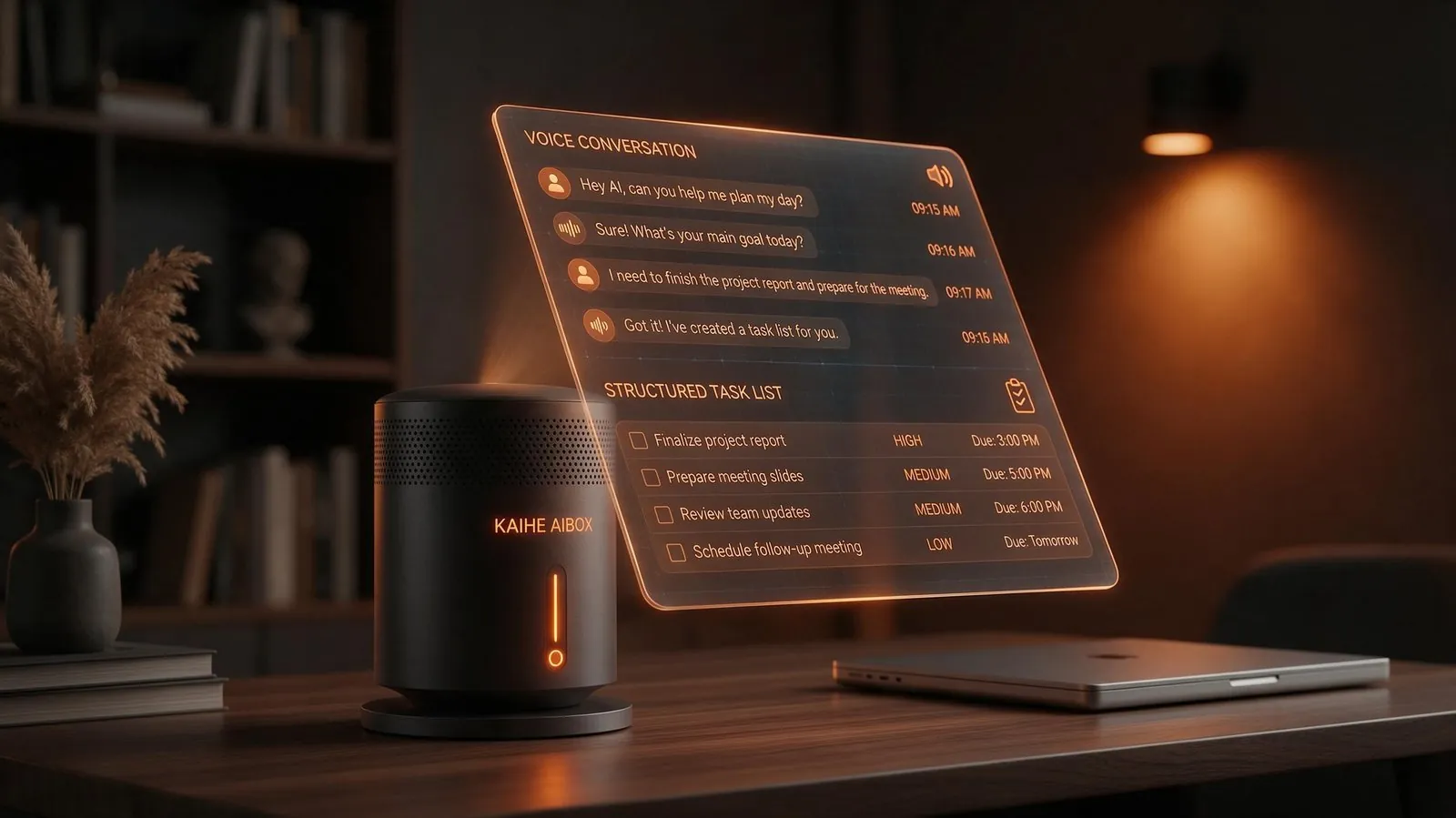
A friend in customer support vented the other day: a client calls, fires off rambling speech, and holds up the phone to show the device screen. He has to listen, take notes, and dig through the system at the same time, then spend twenty minutes writing up the ticket after hanging up. He said, "if an AI could listen, watch, and write the ticket while I talk, I'd leave two hours earlier." The two models Google shipped on September 15 do exactly that — and far more smoothly than the previous generation.
This looks like Google shipping yet another model, but for a local agent computer like KAIHE AIBOX it's a reverse tailwind: the smarter cloud voice gets, the more it proves that "wiring AI into daily life" is officially validated by the giants. And what the giants can't validate is exactly the slice KAIHE fills.
First, what Gemini 3.8 Live actually improves
📖 Glossary
AI Box (also known as Agent Computer / Agent PC), is a dedicated local hardware device that runs AI Agents. Pre-installed with an AI agent management system, plug-and-play, running 24/7. Users can remotely command AI to work via Discord, Slack, Telegram, WhatsApp, and more.
The core change is one word: native speech. Old voice assistants chained microphone → transcription → LLM → speech synthesis. They couldn't take over mid-sentence and froze on interruptions. Gemini 3.8 Live goes audio-in, audio-out with no transcription step in between, so it can pick up on your half-sentence and handle pauses and cut-ins.
The two variants split cleanly. Gemini 3.8 Live is fast and cheap, aimed at high-volume support lines. Gemini 3.8 Live Extended Thinking reasons in the background while it talks, uses verbal cues like "let me check that" to acknowledge you, then narrates multi-step progress live — built for trip planning across flights and hotels. The numbers: Extended Thinking tops Artificial Analysis' Speech-to-Speech Quality Index at 82.6 overall, scores 97.7% on Big Bench Audio, and completes 68.6% of τ-Voice agentic tasks; Live places second in the Speech Agent Arena. It also reads your camera near real time, auto-switches across 97 languages mid-conversation, and runs tool calls in the background without breaking the flow.
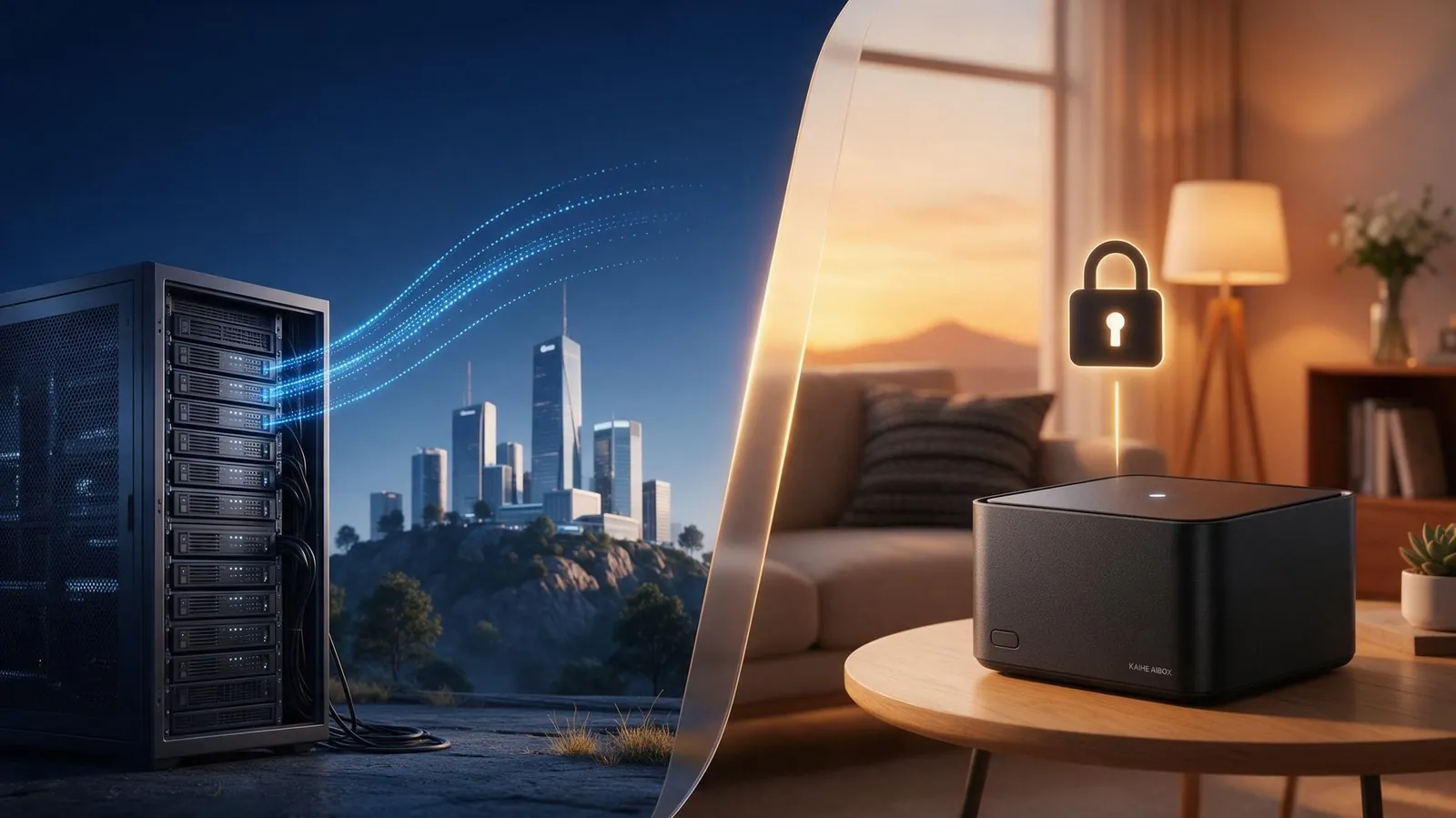
It's strong, but tied to three premises you don't control
First, it lives in the cloud. What you say, what you show the lens, and what systems it queries all flow through Google's servers. Fine for small talk; for a client's support details, family matters, or internal systems, that line is only as hard as your "data stays home" requirement. Google watermarks audio with SynthID so AI output is traceable, but doesn't spell out where your conversation sits or how long it's kept.
Second, it needs connectivity, an account, and Google's ecosystem. No network, no service. Switch devices and context doesn't carry. Want it to proactively do something for you on a fixed schedule? That depends on whether Google opens that door. It's a "wakes when you call" conversation service, not a "still running after you sleep" resident base.
Third, a single conversation is capable, but cross-day memory and local沉淀 aren't in its hands. Today it helps you write the ticket; tomorrow you ask "what budget did that client mention last week" and it doesn't remember — unless you re-feed the history every time. The "conversation is workflow" direction is stamped by Google, but "where does the workflow settle" is answered by Google as the cloud, and by KAIHE as your own home.
The resident and private slice a local base adds
KAIHE AIBOX doesn't run model inference. It's a local agent computer that orchestrates cloud models like Gemini and GPT as swappable tools. Google paved the road, but who catches your work after you close the laptop, and who keeps your conversations at home, is the real question.
Same "turn voice into productivity" job, KAIHE AIBOX adds two slices. One is residency: extremely low power, still running after you close the laptop and lock the phone. Tell it before bed "tidy the client recording into a ticket and send it to my WeChat tomorrow morning," and it runs in idle hours overnight, the list waiting in WeChat when you wake. The other is local: voice, tickets, and knowledge sit on your own device; only necessary fragments go out when calling a model, results return locally — data sovereignty stays with you. Add cross-device persistent memory: this call's client preferences and last month's history settle on the same machine, so next time you ask "what was Zhang's budget last time" it pulls local, no re-feeding.
One more layer Gemini Live can't solve: proactive execution. It moves when you start the conversation; KAIHE AIBOX runs on your schedule — pull data, run flows, send reports every day, no one watching. The smarter the voice model, the more it's like a brighter switchboard plugged into KAIHE — but the "7×24 local server room" behind the switchboard is the layer that actually saves worry.
Don't let "who's stronger" steer the choice
Ordinary users easily fall into comparing specs: 82.6 vs 81.5, who speaks first. But for yourself the question isn't "which model is smartest" — it's "which one I can use daily, with data still mine." Gemini 3.8 Live is a big step; the voice agent's "silent moment" is sharply compressed. But it's born in the cloud, in Google's ecosystem, in a "moves when you call" mode.
KAIHE AIBOX's value isn't out-thinking it — it's filling three things it can't: running after you close the laptop, data not leaving home, remembering across days. For individuals and small teams who live on voice and WeChat yet don't want to park private life with the giants, this local base isn't optional, it's the premise. Put simply, the stronger the cloud model, the more KAIHE looks like the base that keeps the strong model in your own home — the model is rented compute, the base is your own asset.
Further Reading
- GPT-6 Launch: The Computer Works Itself, but Where Does the Work Run and Who Keeps the Data? — The smarter the cloud model, the more you must ask who owns the base
- DeepSeek API Price Hike: Lock to One Model and a Single Announcement Leaves You Exposed — Free model switching is the real value of local orchestration
Learn more about KAIHE AIBOX, search 【铠盒AIBOX】.
Email: [email protected]