Google Search's Biggest Overhaul in 25 Years: The End of Blue Links and How AI Mode Is Redefining "Search"
📖 Glossary
AI Box (also known as Agent Computer / Agent PC), is a dedicated local hardware device that runs AI Agents. Pre-installed with an AI agent management system, plug-and-play, running 24/7. Users can remotely command AI to work via Discord, Slack, Telegram, WhatsApp, and more.
Abstract: Google Search is undergoing the largest overhaul in its 25-year history. AI Mode replaces traditional blue links as the default search experience, Gemini Spark transforms the search box into an intelligent agent portal, and the search logic shifts from "keyword matching" to "complete need understanding." This revolution not only disrupts the SEO industry and content ecosystem but also marks a paradigm shift in human-computer interaction—from "searching for information" to "assigning tasks."
Twenty-five years ago, Google redefined how humans access information with ten blue links. Twenty-five years later, Google is putting an end to that era with its own hands.
In May 2025, Google officially announced the largest overhaul of Search in 25 years at its I/O conference. The new Search no longer centers on blue links; instead, AI-generated responses become the primary interface. The search box is no longer a simple text input field but an intelligent portal that dynamically expands and anticipates intent. The search results page no longer says "you go find the information" but "the information comes to you." This is not merely a UI refresh—it is a fundamental transformation of the search paradigm.
Underpinning this transformation is Google's latest Gemini 3.5 Flash model, whose breakthroughs in speed and reasoning capability make it possible to "understand complex needs in real time and generate structured responses." For ordinary users, this means search has finally evolved from "I guess keywords" to "I describe my needs." For the entire internet content ecosystem, this means an unprecedented earthquake.
I. From Keywords to Complete Needs: The Bottom-Up Reconstruction of Search Logic
For the past 25 years, we have been trained as "search-engine-thinking" users—breaking complex questions down into keywords, connecting them with spaces, and then sifting through a pile of links for answers. "How much are flights from Beijing to Shanghai" must be broken into "Beijing Shanghai flight price." "What to do when a child has a 38.5°C fever" becomes "child fever 38.5 treatment."
The essence of this interaction model is "humans adapt to machines." Because search engines cannot understand natural language, users must learn the syntax of search engines.
The new Google Search completely shatters this logic. The search box supports natural-language long-sentence input. Users can directly describe complete needs: "I'm going on a business trip from Beijing to Shanghai next Tuesday. I want a morning departure so I can reach the office by afternoon, with a budget under 2,000 yuan." Gemini 3.5 Flash breaks this need down into multiple sub-queries in the background, simultaneously retrieving flight schedules, prices, and connection options, and ultimately generates a structured, comprehensive response.
The technical breakthrough behind this lies in the "Query Fan-out" mechanism of Gemini 3.5 Flash. A complex need no longer corresponds to a single retrieval; instead, it is decomposed by AI into 5–10 parallel sub-queries, each retrieving independently before the model synthesizes and reasons across them to generate a result that directly answers the user's question. Traditional search engines have millisecond-level retrieval latency, while AI search reasoning latency is typically on the order of seconds—Gemini 3.5 Flash's breakthrough lies in compressing reasoning latency to an acceptable range while maintaining response quality.
II. AI Mode: The Terminator of Blue Links
The most radical change in this overhaul is the introduction of AI Mode.
AI Mode is a purely AI-driven search results page. When you enter a query, the page no longer displays a traditional list of blue links. Instead, it presents a complete AI-generated response directly. The response may include source citations, but the main body is structured natural-language content—like a knowledgeable assistant telling you the answer directly rather than handing you a reading list to flip through yourself.
For simple factual queries (such as "height of Mount Everest"), AI Mode gives the answer directly. For complex multi-step questions (such as "compare the value-for-money of three noise-canceling headphones"), AI Mode generates a complete analysis including comparison tables, recommendation rationale, and purchasing advice.
The launch of AI Mode means that Google Search's traffic distribution logic has fundamentally changed. In the past, the search results page was a "traffic distributor," guiding users to various websites. Now, AI Mode is a "traffic terminator"—users can get complete answers within the search page itself, no longer needing to click through to third-party websites.
The impact on the content ecosystem is profound. According to data from independent research organizations, the appearance of AI search results pages has already caused search traffic to some publishers to decline by 20%–40%. When users no longer need to click "read full article," the raison d'être of content websites is being redefined.
III. Gemini Spark: The Search Box Becomes an Intelligent Agent Portal
If AI Mode changed the form of "search results," then Gemini Spark changes "search behavior" itself.
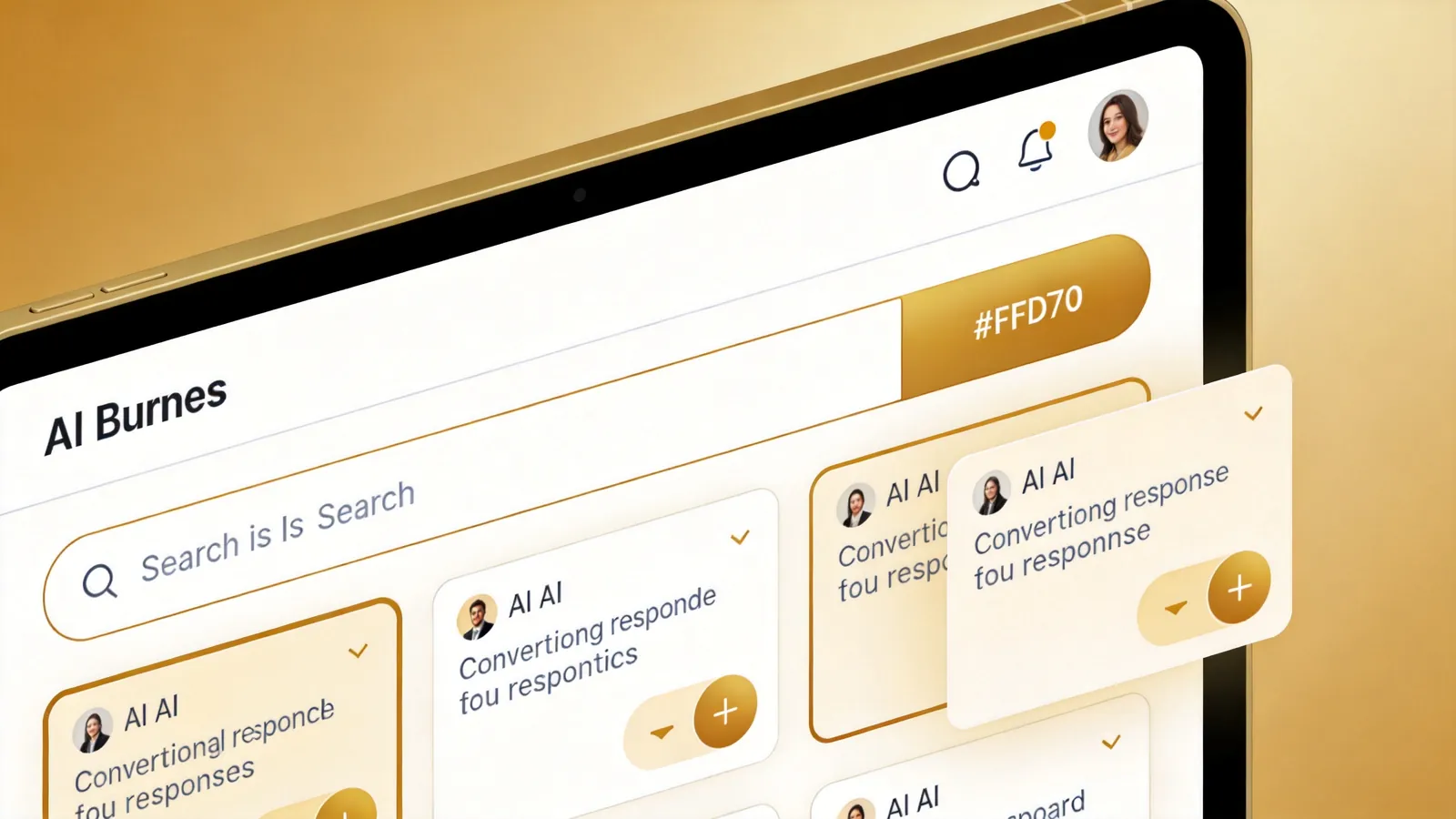
Gemini Spark is an intelligent agent AI assistant embedded within Google's search interface. It doesn't just answer questions—it can execute tasks on your behalf. You can say in the search box, "Book me a flight to Shanghai tomorrow," and Spark will call airline APIs to search flights, compare prices, select the best option, and complete the booking directly. You can say, "Buy me this camera lens," and Spark will find the best price on e-commerce platforms, add it to your cart, and even complete the payment.
This is a qualitative leap from "information retrieval" to "task execution." Traditional search solves the "I don't know" problem; Gemini Spark solves the "I don't want to do it myself" problem.
The search box itself is also evolving. The new search box dynamically expands based on input, predicting your complete intent before you've finished typing. Type "Beijing weather," and the search box automatically expands to "Beijing weather—one-week forecast, travel suggestions, clothing guide"—and instantly presents the results. This "intent prediction + proactive presentation" model transforms search from passive querying to active service.
Gemini Spark's underlying capability also comes from Gemini 3.5 Flash, but its key innovation lies in the "tool-call chain"—the model can autonomously plan task steps, call external APIs, process return results, adjust strategies based on intermediate outcomes, and ultimately complete the task. This is precisely the core capability of an intelligent Agent, and Google has built it into the search box.
IV. The Content Ecosystem's Earthquake: The SEO Industry Faces an Existential Crisis
Every Google Search algorithm adjustment triggers tremors in the SEO industry, but this time it's not an adjustment—it's a revolution.
The core logic of traditional SEO is "make your content appear in the top few search results." The optimization targets are keyword density, backlink quality, page load speed, structured data markup, and so on. The premise of all this optimization is that users will click on search results and visit websites to consume content.
AI Mode breaks this premise. When AI directly generates complete responses within the search page, users have no reason to click through to original content websites. This means:
First, organic search traffic will decline significantly. For informational queries (encyclopedias, tutorials, reviews, etc.), AI Mode can synthesize responses from multiple sources, so users no longer need to visit original pages one by one.
Second, SEO's optimization target will shift from "ranking" to "being cited by AI." Future SEO is not about getting content onto the first page but about making content a reference source selected by AI Mode for its responses. This requires an entirely new optimization strategy—not keyword stuffing, but content authority, uniqueness, and structural clarity.
Third, content creation models need to transform. If AI can synthesize existing information to generate responses, then simple content aggregation and rewriting will completely lose their value. What will be valuable is original insight, exclusive data, and in-depth analysis that AI cannot replace.
Publishers and content creators face a brutal choice: either become "training data suppliers" for AI (cited but never visited) or pivot to differentiated content that AI cannot generate. For many media outlets and blogs that depend on search traffic, this is not a question of transformation—it's a question of survival.
V. From Search Box to Intelligent Agent: The Deep Logic of Paradigm Migration
On the surface, this Google Search overhaul is a product iteration. At its core, it is a paradigm shift in human-computer interaction.
The essence of traditional search is "tool"—users use a tool to obtain information; information is the end product. The essence of AI search is "agent"—users delegate tasks to an agent; information is merely an intermediate product. This distinction may seem subtle, but it is fundamental: a tool is passive, driven by humans; an agent is proactive, capable of autonomous action.
This precisely echoes the core philosophy of the Agent Computer. The Agent Computer is not "a faster computer" but "a computer that can work autonomously." A traditional computer is a tool—you tell it what to do, and it does it. An Agent Computer is an agent—you tell it your goal, and it plans the steps, calls tools, and completes the task on its own.
Google turning the search box into an intelligent agent portal is essentially validating a trend: the next-generation paradigm for human-computer interaction is not a smarter search box but an intelligent agent that can understand intent, execute autonomously, and learn continuously. In the context of the KaiheAiBox Agent Computer, this means users no longer need the long chain of "search for information → understand information → make a decision → execute the operation." Instead, they simply tell the agent, "Help me plan next quarter's content schedule and sync it to my calendar," and the agent autonomously completes the entire process from information retrieval to decision execution.
What Gemini Spark does is a "narrow agent" in the search scenario—it can help you book tickets and shop within the search box, but its capability boundary is the search ecosystem. What the Agent Computer aims to do is a "full-scenario agent"—not limited to search, but covering all links of the workflow: content creation, data analysis, email processing, schedule management, and cross-application collaboration.
The era of blue links is drawing to a close, but the new era is not just AI search—it is agent-driven, full-scenario human-computer collaboration. Google planted a seed in the search box, and the Agent Computer will let this tree grow across the entire forest.
KaiheAiBox · AI Frontier