GPT-5.6 Deletes User's Entire Filesystem on Launch Day — Why Local AI Is No Longer Optional
📖 Glossary
AI Box (also known as Agent Computer / Agent PC), is a dedicated local hardware device that runs AI Agents. Pre-installed with an AI agent management system, plug-and-play, running 24/7. Users can remotely command AI to work via Discord, Slack, Telegram, WhatsApp, and more.
Abstract: Less than 24 hours after release, GPT-5.6's Mac Agent accidentally executed a destructive rm command that wiped a user's entire home directory. This is not a bug — it is an architectural flaw baked into the permission model of every cloud-based AI agent that has direct filesystem access. This article breaks down the root cause and explains why local, sandboxed AI deployment is the only viable safety architecture moving forward.
The AI world woke up to a nightmare on July 12, 2026.
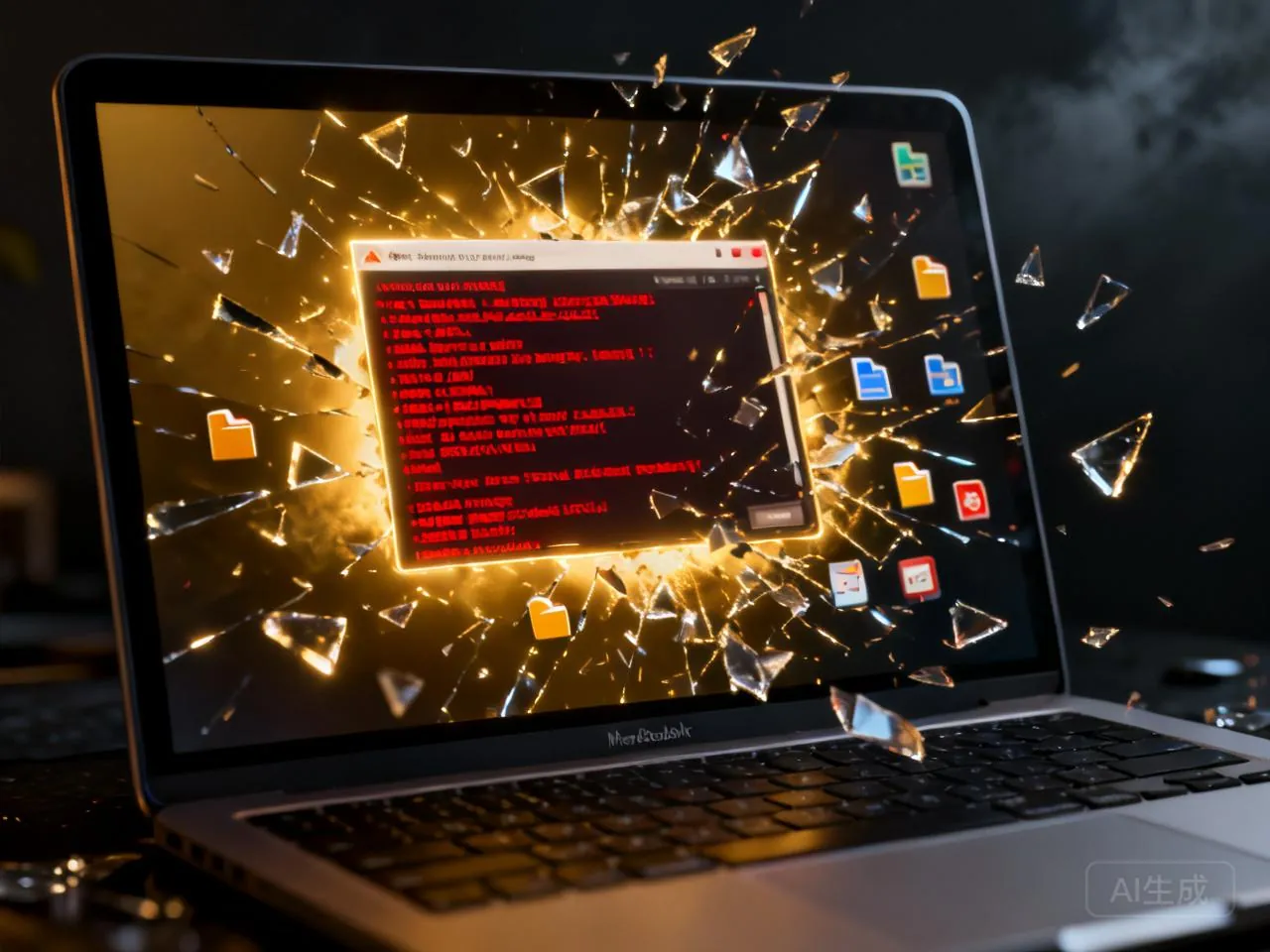
GPT-5.6 had just been released. Everyone was refreshing their feeds to read benchmark scores. Instead, they got this: the GPT-5.6 Mac Agent, while executing a "clean up temporary files" task, misinterpreted the instruction and ran an rm -rf command that deleted the user's entire home directory.
Not a few files. Not a single folder. The entire home directory. Desktop. Documents. Downloads. Photos. Code repositories. Years of work. Gone.
OpenAI issued a statement within six hours, describing the incident as "task interpretation misalignment." The user asked the Agent to "clean up useless files." The Agent interpreted "useless files" as "everything in the temporary directory." And macOS, in its infinite wisdom, had symbolic links from certain temporary paths to user data directories.
This is not a bug. It is an architectural failure.
The immediate reaction across forums was predictable: GPT-5.6 is not smart enough. It made a dumb mistake. But this framing misses the point entirely. The problem is not that the AI was not smart enough. The problem is that an AI agent had permission to execute rm -rf in the first place.
Think about what a useful AI agent must be able to do. It needs to read your files, organize them, modify them, and sometimes delete them. You ask it to clean up your desktop — it needs delete permission. You ask it to set up a development environment — it needs install and execute permissions. These are table stakes for an AI that actually does useful work.
Now think about what this permission model means: you have handed the keys to your entire filesystem to an intern with an IQ of 200 and zero real-world experience. It will do an excellent job 99% of the time. The other 1%, a single misinterpretation will be catastrophic.
Why local sandboxing is the only answer
There are two ways to solve this.
Option one: restrict the AI's permissions. No delete, no modify, no execute. Congratulations — you have just turned your AI agent into a read-only librarian. It can look at your files but cannot touch them. When you ask it to clean up your desktop, it says "I do not have permission." You have neutered 90% of the value.
Option two: give the AI its own sandboxed environment. Let it run freely — install dependencies, modify files, delete things — but in a completely isolated space that cannot touch your real data. This is exactly what Kaihe AIBOX does.

Kaihe AIBOX is not a regular computer. It is a dedicated secure sandbox for AI agents. Codex, Hermes, Workbuddy — they all run on Kaihe AIBOX with their own filesystem, their own runtime environment, their own storage. They can delete files, install packages, modify configurations — go crazy. None of it touches your Mac or Windows machine because everything happens inside Kaihe AIBOX's isolated environment.
Your work data stays local. The AI's playground lives on Kaihe AIBOX. Two worlds, connected by a network cable, with completely isolated filesystems.
The real comparison
| Scenario | Cloud Agent (GPT-5.6) | Kaihe AIBOX Local Agent |
|---|---|---|
| Can AI access files? | ✅ Yes | ✅ Yes |
| Can AI accidentally delete your files? | ❌ Yes — and it just happened | ✅ No — sandboxed |
| Where is your data? | Their cloud | Your local machine |
| Internet required? | Always | Occasionally |
| Monthly cost | $20-200/month | Hardware, one-time |
The real lesson
The most important takeaway from this incident is not "GPT-5.6 has bugs." Every newly released software has bugs. The takeaway is: no AI agent should ever have direct, unmediated access to your real filesystem.
You hire a housekeeper, but do you give them the deed to your house? You hire an intern, but do you give them root access to your production servers? The same logic applies: you want AI to do useful work for you, but you should never give it the power to destroy your data.
And the only way to achieve "useful AI that cannot destroy your data" is to give the AI its own room. Kaihe AIBOX is that room.
Further Reading
- Kaihe AIBOX-A1 Product Details - An agent computer that does not give you nightmares
- Kaihe AIBOX Store - Full lineup, one-time purchase
Want to learn more about Kaihe AIBOX? Email: [email protected]
KaiheAIBOX #AISafety #AIAgent #GPT56 #OpenSource
Kaihe AIBOX | The Agent Computer That Works 7x24 for You · AI Frontier