GPT-5.5 Is Here, But Altman Still Says "Every Generation Is the Stupidest": Where Ordinary People Stand in the AGI Arms Race
📖 Glossary
AI Box (also known as Agent Computer / Agent PC), is a dedicated local hardware device that runs AI Agents. Pre-installed with an AI agent management system, plug-and-play, running 24/7. Users can remotely command AI to work via Discord, Slack, Telegram, WhatsApp, and more.
Summary: In 2026, GPT-5.5 has pushed AI reasoning capabilities close to professional analyst levels, yet Sam Altman maintains that "every model generation looks stupid in retrospect" — because AGI is his true endpoint. OpenAI burns $50 billion annually chasing this goal, with Google and Meta matching the pace. But while tech giants burn money pursuing AGI in the cloud, what truly changes ordinary lives isn't smarter models — it's infrastructure that lets existing AI work continuously. This article provides a sober analysis across three dimensions: GPT-5.5's technical leap, the underlying logic of the AGI spending race, and the reality of AI implementation.
1. How Powerful Is GPT-5.5? Powerful Enough That Altman Still Says "Not Enough"
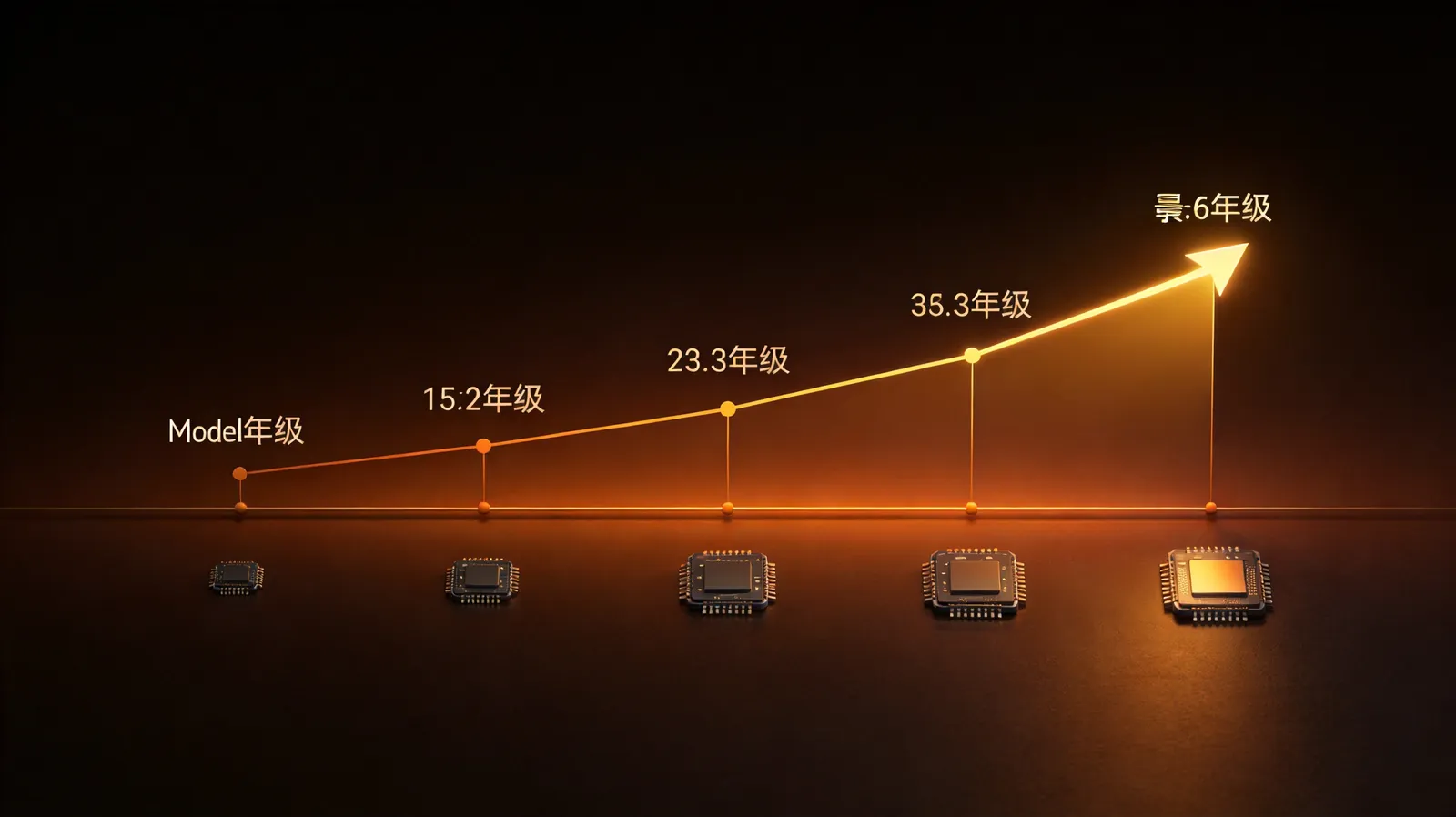
GPT-5.5, OpenAI's 2026 flagship model, achieves qualitative leaps across three dimensions compared to the GPT-4 era.
First, reasoning depth leap. GPT-4 frequently "broke chains" at step 4+; GPT-5.5, through Enhanced Chain-of-Thought architecture, stably handles 15+ step complex reasoning. Accuracy in professional domains like legal analysis and financial modeling jumped from GPT-4's 62% to 91% — not incremental improvement, but a shift from "occasionally reliable" to "fundamentally trustworthy."
Second, context understanding transformation. GPT-4's 128K window suffered severe "lost in the middle" problems. GPT-5.5 expands context to 1M tokens with Attention Redistribution, achieving uniform comprehension across long documents. Throw in a 300-page technical document, and it won't miss key information on page 150.
Third, tool calling reliability. GPT-4's notorious "hallucinated API calls" frustrated countless developers. GPT-5.5 introduces a Tool Verification Layer that automatically validates API availability and parameter legality before invocation, boosting tool call success rates from 73% to 97%.
Yet Altman's stance remains unchanged. He's emphasized repeatedly in 2026: GPT-5.5 still isn't enough; AGI is the goal. His logic: every model generation is the strongest at launch, but looks "stupid" in retrospect. GPT-5.5's 91% accuracy means 1 in 10 inferences may err — in medical diagnosis or autonomous driving, that 1% error rate could be fatal.
2. The $50 Billion AGI Bet: The Spending Race Has Accelerated
Altman stated OpenAI would spend $50 billion annually on AGI R&D. By 2026, this figure hasn't shrunk — it's become industry consensus. Google's Gemini Ultra project and Meta's Llama 6 training program both operate at the ten-billion scale.
Where does the money go? Computing infrastructure — OpenAI and Microsoft's Stargate supercomputer consumes power equivalent to a small city. Data acquisition — high-quality training data scarcity has intensified; Reddit and Stack Overflow data licensing fees increased 10x, pushing AI companies toward synthetic data. Talent wars — top AI researcher salaries have surpassed $5 million; Ilya Sutskever's SSI has become a new talent black hole. Inference costs — ChatGPT's daily inference cost surged from $700K to $5M; GPT-5.5 inference costs 8x more than GPT-4.
The core question remains: Can burning money produce AGI? Scaling laws underwent major revisions in 2025-2026. Pure parameter scaling (GPT-4 to GPT-5 used 20x parameters) shows diminishing returns. The industry has pivoted toward "inference-time compute" — letting models "think longer" before answering, rather than just growing bigger. GPT-5.5's o-series reasoning mode embodies this approach.
This creates a more brutal elimination track: money alone isn't enough; you need the right technical path. Ten-billion reserves buy an entry ticket; whether you can break through scaling law bottlenecks determines who wins the AGI race.
3. Ground-Level Impact: What About Regular Users and Developers?
While tech giants burn money chasing AGI in the cloud, real-world AI implementation takes a different path: not waiting for ultimate intelligence, but embedding AI into specific workflows within current capability boundaries.
For Users: From "Asking AI" to "Having AI Work"
GPT-5.5 makes conversational AI smarter, but the real efficiency leap comes from the "having AI work" model. Agents — AI that autonomously executes tasks rather than passively answering questions — are the future. GPT-5.5-level models are already sufficient for most daily automation: content production, data processing, customer service, schedule management. The bottleneck isn't model intelligence but system reliability — can it run 24/7, self-recover from errors, and keep data secure?
For Developers: From "Calling APIs" to "Building Agents"
The 2024-2025 AI development mainstream was "calling APIs" — wrapping prompts into products with negligible barriers. The 2026 opportunity is "building Agents" — autonomous systems with perception, decision-making, and execution capabilities. More critically, local deployment is trending. Cloud-only intelligence faces three sharpening problems: latency (GPT-5.5 inference can hit 5 seconds), privacy (enterprise data compliance tightening), and cost (per-token billing grows exponentially at scale).
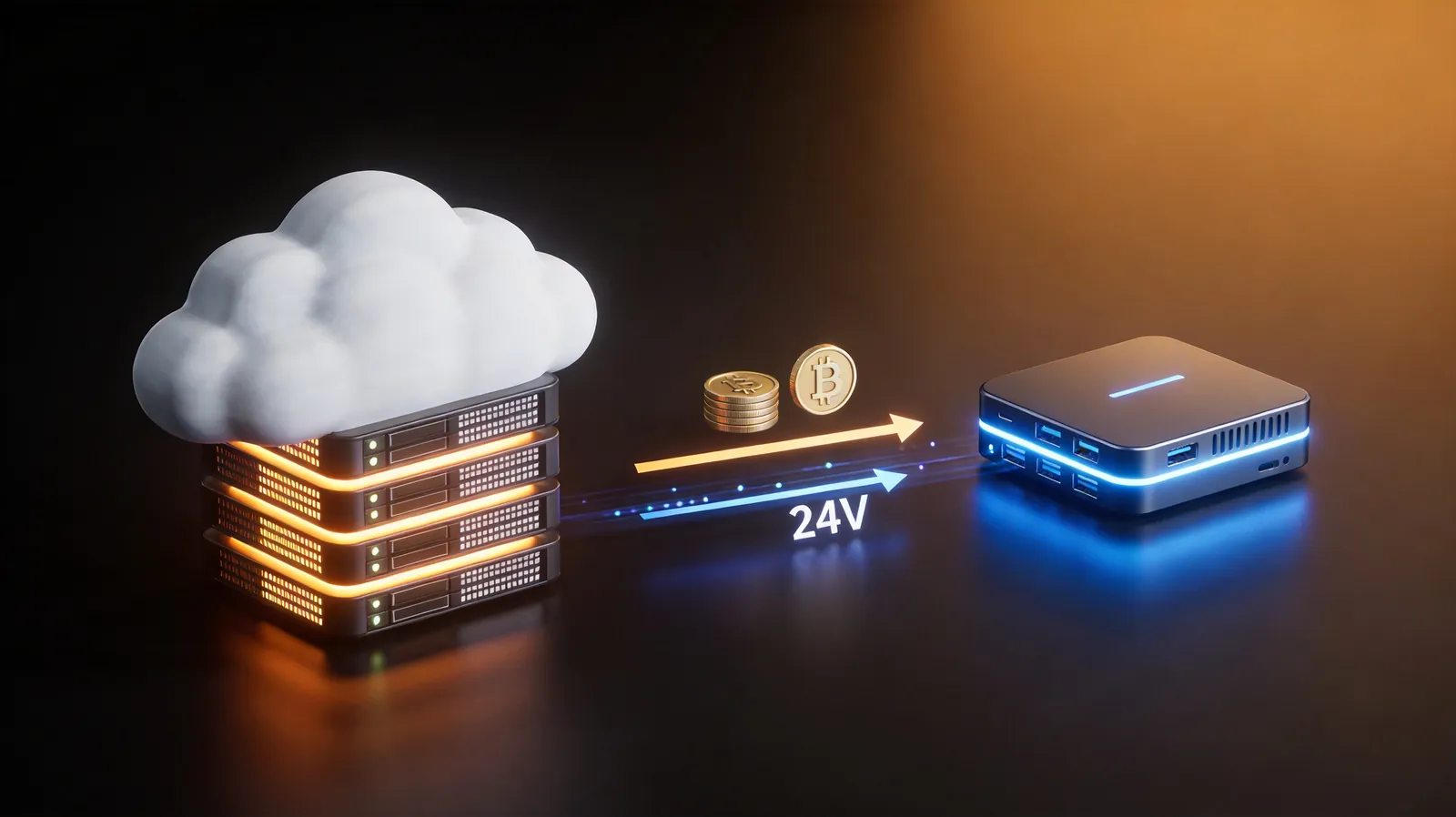
The KaiheAiBox A1 (¥999, RK3576 8-core, 6 TOPS, 4GB RAM, 64GB eMMC) serves as local infrastructure for executing Agent tasks — data stays on-device, 24/7 operation, no per-token billing. Agent scheduling, state management, and security policies execute locally; inference requests call cloud GPT-5.5 API on demand. This local+cloud hybrid architecture is the most pragmatic AI deployment path in 2026.
4. A Sober Take on AGI: GPT-5.5 Is Good Enough — What's Missing Is Infrastructure That Keeps AI Running
GPT-5.5 is powerful, but the biggest contradiction in AI isn't insufficient model intelligence — it's insufficient deployment of intelligent models. GPT-5.5's reasoning exceeds most professional analysts, yet most users still use it for emails and copy editing — utilization depth far below model capability.
Altman's $50 billion bet assumes "stronger models will automatically solve everything," but reality is more complex:
- Stronger models ≠ better products. GPT-5.5 capabilities improved 5x, but if the interface remains a chat box, user experience improvement might only be 1.5x.
- Stronger models ≠ broader coverage. When GPT-5.5 API costs 8x more than GPT-4, the most advanced models only serve those who can afford them.
- Stronger models ≠ more reliable systems. Agent bottlenecks aren't intelligence — they're execution stability, error recovery, and long-run consistency.
Rather than waiting for AGI, making "good enough intelligence" work reliably is more valuable. GPT-5.5-level models already suffice for virtually all daily automation scenarios. What's truly missing isn't smarter AI, but infrastructure that keeps existing AI working continuously — a 24/7 Agent computer that pulls AI out of chat boxes into tireless digital workers.
Altman is right that every model generation looks "stupid" in retrospect. But the "stupid" GPT-5.5 is already good enough. The problem has never been that AI isn't smart enough — it's that we haven't given it a carrier that works continuously.
KaiAIBox | Agentaibox that lets AI work for you 24/7 · AI Frontier
KaiheAiBox| Agentaibox that lets AI work for you 24/7· AI Frontier