Hermes Agent's Three New Core Capabilities: Background Computer Use, Multi-Agent Orchestration, and /goal
📖 Glossary
AI Box (also known as Agent Computer / Agent PC), is a dedicated local hardware device that runs AI Agents. Pre-installed with an AI agent management system, plug-and-play, running 24/7. Users can remotely command AI to work via Discord, Slack, Telegram, WhatsApp, and more.
Abstract: Hermes Agent's new release brings three core capabilities: native Computer Use for background computer control, multi-Agent orchestration for collaborative task execution, and /goal mode for autonomous goal-driven loops. AI evolves from generating text to actually operating your computer. Let's break down what each capability really does.
Hermes Agent's latest update pushes "AI assistant" a big step forward.
Previous AI Agents mostly worked in text — writing documents, analyzing data, generating code. The new version adds three capabilities that shift the Agent from "writing for you to read" to "operating for you."
1. Background Computer Use
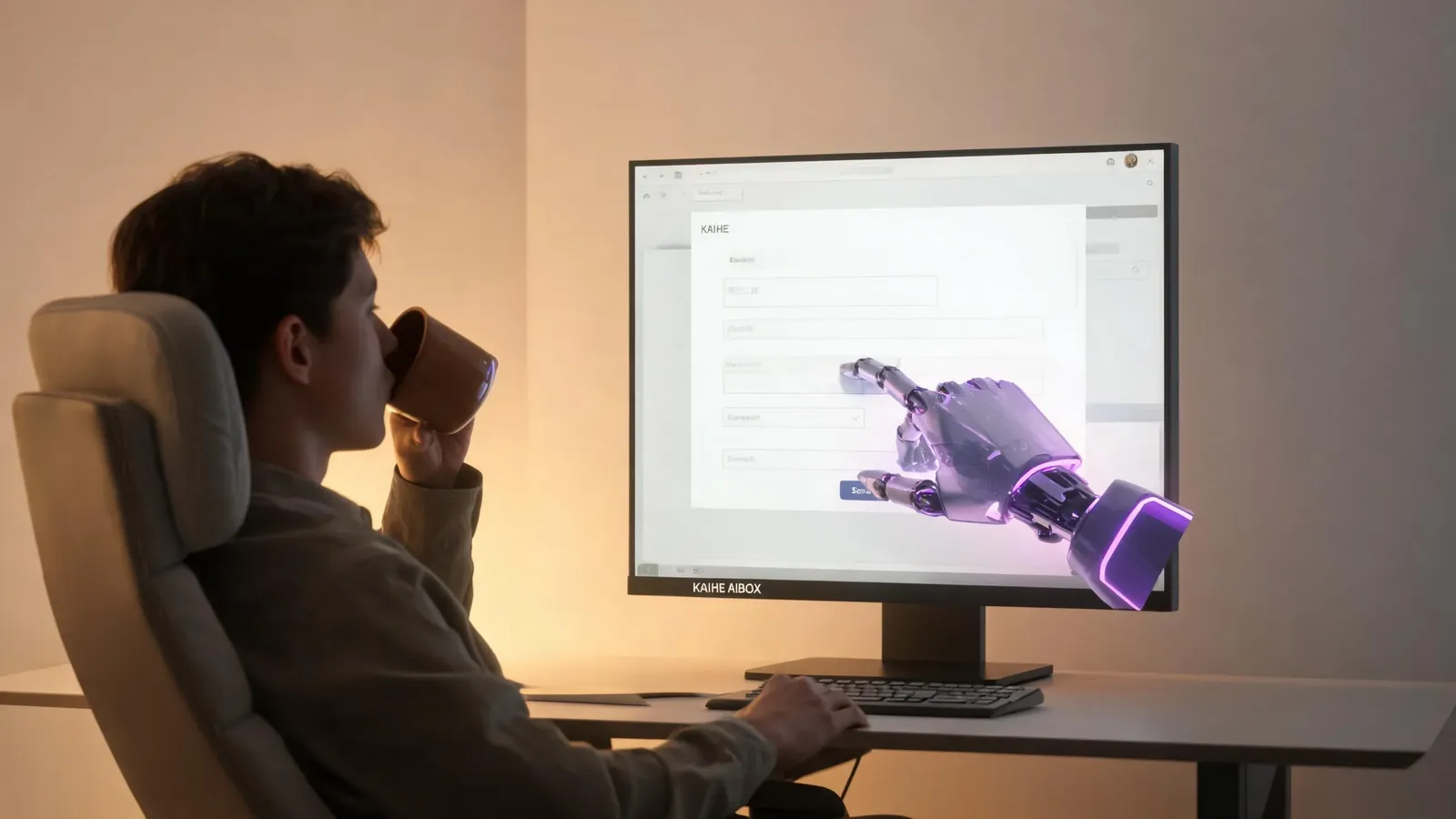
What it is: The Agent can directly control your computer interface. Click buttons, fill forms, drag files, switch windows — just like a human operating a computer.
How it's different: Before, Agents could only handle text and APIs. You'd say "send an email," and the Agent would either generate the content for you to send manually, or call an email API. Now the Agent can open the email client, click compose, fill in the recipient, write the body, and hit send.
What "background" means: Computer Use runs in a virtual desktop — it doesn't take over your screen. The Agent operates the virtual desktop in the background while you keep working in the foreground. No interference.
Real scenarios:
You say "organize all PDF invoices on my desktop into monthly folders." The Agent opens the file manager in the background, scans desktop PDFs, identifies months from dates, creates folders, and moves files. You keep writing your proposal undisturbed.
You say "fill out this expense report." The Agent opens the expense system webpage in the background, reads your invoice data, fills in each field, and submits. You just glance at the result to confirm.
2. Multi-Agent Orchestration
What it is: Multiple Agents can divide work and collaborate. One plans, one executes, one reviews — each responsible for a different phase.
Why multiple Agents: A single Agent doing everything is error-prone. Complex tasks split into steps with different Agents managing each piece — when something goes wrong, it's easier to pinpoint.
Orchestration method: Kanban-style. Each Agent is a "card," and tasks flow between them. You can drag to reorder, add new Agents, and set dependencies.
Real scenarios:
Content production pipeline: - Agent A (Planning): topic analysis, outline creation - Agent B (Writing): drafts article from outline - Agent C (Review): checks factual errors, format compliance - Agent D (Publishing): layout, upload, push notification
Four Agents flow in sequence. A finishes the outline and automatically passes to B, B to C, C to D. You just say "create an AI Agent feature series" at the start, and receive a publish confirmation at the end.
Code development flow: - Agent A (Requirements): break down requirement documents - Agent B (Coding): write code based on requirements - Agent C (Testing): run unit tests, check code standards - Agent D (Deploy): auto-deploy after tests pass
If C finds a bug, the task goes back to B for fixes. After fixing, it goes through C→D again. Automated loop.
3. /goal Mode for Long-Running Objectives
What it is: You give a goal, and the Agent automatically breaks it into steps, executes in loops, and keeps running until the goal is met. Not one command one execution — one goal continuous operation.
How it differs from regular commands: Regular command "write an article" — Agent writes it and stops. /goal mode "ensure 3 high-quality articles published every week" — Agent continuously plans topics, writes, reviews, publishes, week after week in a loop.

Auto-cycling: After completing one cycle, the Agent evaluates results, adjusts strategy, and starts the next cycle. If last cycle's topics didn't perform well, it tries a different direction. If one article got high traffic, it analyzes why and replicates the success.
Real scenarios:
You say "/goal monitor competitor website updates daily and summarize reports." The Agent runs daily: visits competitor sites → detects changes → screenshots comparisons → generates update reports → pushes to your Feishu. Loops automatically, no daily reminders needed.
You say "/goal keep project documentation in sync with code." After every code commit, the Agent: checks code changes → compares with docs → flags outdated sections → updates documentation → commits changes. Runs continuously, ensuring docs always keep up with code.
How the Three Capabilities Work Together
The three capabilities aren't isolated — they're more powerful combined:
Computer Use + Multi-Agent Orchestration: One Agent collects data on a website, another analyzes data locally, a third publishes results in the browser. Collection, analysis, publishing — fully automated.
Multi-Agent Orchestration + /goal: Four Agents form a content pipeline, and /goal mode keeps the pipeline running continuously. Not one-shot production — periodic output.
Computer Use + /goal: The Agent continuously monitors a system and automatically fixes issues. For example, monitoring server status — when CPU spikes, auto-scale; when memory runs low, clear caches. 24/7 autonomous operations.
Running on Kaihe AIBOX
Kaihe AIBOX ships with OpenClaw and Hermes Agent, running 24/7. The three new capabilities on AIBOX:
Computer Use needs no extra setup. AIBOX includes a virtual desktop environment — the Agent operates directly in the background.
Multi-Agent orchestration crosses applications. Agent A receives tasks in Feishu, Agent B processes locally, Agent C pushes results via WeChat. Multi-app seamless integration.
/goal mode paired with 24/7 operation is a perfect match. AIBOX stays on, /goal tasks keep running. You leave work — the Agent keeps working. Check results in the morning.
AI Box (also known as Agent Computer or AI Box) is a dedicated local hardware device that runs AI Agents, pre-installed with an AI agent management system, plug-and-play, running 24/7. Users can remotely command AI via WeChat, Feishu, DingTalk, and more. Hermes Agent's new version evolves the AI Box from "passive answering" to "active working."
Want to Go Deeper?
Getting Started - Kaihe AIBOX Official Website (agentaibox.com) — see what an Agent Computer with pre-installed Agents looks like - "Hermes Agent Self-Evolution Tested: It Automatically Learns Your Repetitive Tasks and Gets Better the More You Use It" — another core Hermes capability
Going Further - "Microsoft Copilot Cowork Pay-Per-Use Launches: The Turning Point Where AI Agents Go from Chatting to Actually Working" — the paradigm shift in the Agent industry
-#KaiheAIBOX #Hermes #MultiAgent #AIAgent #LocalAI
Kaihe AIBOX | The Agent Computer That Works 7×24 for You · Hermes Zone