Another Crayfish? Hermes Agent Says It's a Coworker, Not a Tool
📖 Glossary
AI Box (also known as Agent Computer / Agent PC), is a dedicated local hardware device that runs AI Agents. Pre-installed with an AI agent management system, plug-and-play, running 24/7. Users can remotely command AI to work via Discord, Slack, Telegram, WhatsApp, and more.
Summary: Nous Research's Hermes Agent launches with a fundamentally different positioning from OpenClaw—it's a "coworker" with persistent memory, contextual understanding, and proactive reminders. What technical capabilities enable this positioning, and how should enterprises choose between the two?
1. "Coworker" Is Not Just Marketing
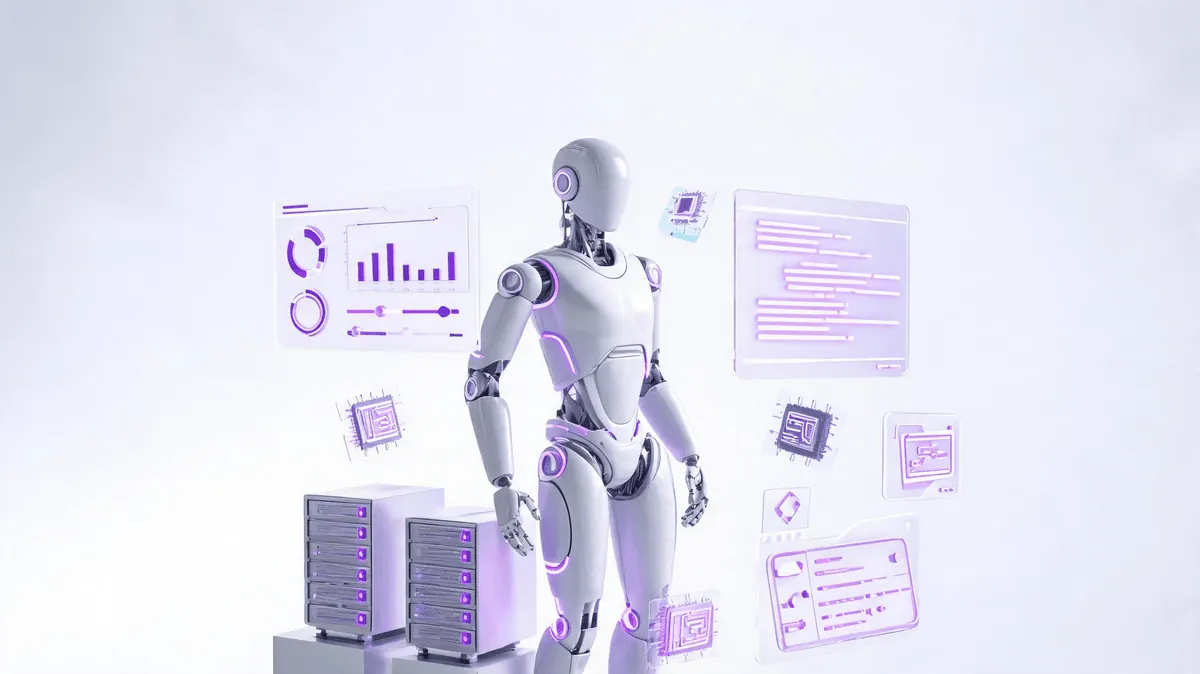
At the Hermes Agent launch, Nous Research's CEO said something that sparked industry-wide discussion:
"Hermes is not your tool, it's your coworker. A tool doesn't remember last week's decisions, doesn't proactively remind you of missed items, doesn't challenge you when you're about to make a mistake."
This isn't just branding—it reflects genuine technical capability differences.
2. Hermes vs OpenClaw: Core Architecture Differences
| Dimension | OpenClaw | Hermes |
|---|---|---|
| Positioning | Agent workflow engine | AI coworker system |
| Core unit | Skill | Persona (identity + memory) |
| Memory | Session-level (cleared after task) | Persistent (cross-session) |
| Decision mode | Rule-triggered | Intent-understanding |
| Collaboration | Pipeline (Skills in sequence) | Negotiation (multi-turn dialogue) |
2.1 Persistent Memory: Hermes's Core Differentiator
OpenClaw's Skills operate in "one question, one answer" mode—user triggers a Skill, execution completes, state clears. The next Skill starts fresh.
Hermes's Persona possesses persistent memory: - Decision memory: You chose Option A over Option B last week—Hermes remembers and references it next time - Preference memory: You prefer concise report formats—Hermes automatically adjusts output style - Contextual memory: "Continue yesterday's project"—Hermes knows which project and where you left off
In practice: OpenClaw is a precision assembly line; Hermes is a colleague who increasingly understands you.
2.2 Proactive Reminders vs Reactive Response
OpenClaw works in "you call, it executes" mode—purely reactive.
Hermes can proactively engage: - "You mentioned finishing this report by Friday—it's Thursday afternoon, need help?" - "Three clauses in this contract differ from the similar project last time—want me to highlight them?" - "You've worked late three days in a row—shall I attend today's meeting and compile notes?"
This proactivity is technically enabled by Hermes's intent-understanding engine—it doesn't just execute instructions but comprehends the user's work context and goals, determining when intervention is valuable.
3. Enterprise Scenario Testing
3.1 Legal Contract Review
A law firm tested both:
OpenClaw: 3 Skills chained—clause extraction → risk identification → compliance check. Uniform output, fast (2 min/contract), but each review starts from scratch.
Hermes: One Persona—reviews referencing similar historical contracts, proactively noting "this clause resembles one from last month's XX contract where you chose to accept," flagging conflicts with client preferences.
Verdict: Standardized reviews are faster with OpenClaw; context-dependent reviews are more accurate with Hermes.
3.2 Project Management
OpenClaw: Scheduled status pulls, progress reports. Fresh statistics each time.
Hermes: Remembers key milestones and decision history, compares "planned vs actual" in reports, proactively flags schedule risks.
4. KaiheAiBox's Dual-Framework Support
KaiheAiBox supports both OpenClaw and Hermes simultaneously—no need to choose:
- Daily automation (data sync, report generation, message forwarding) → OpenClaw
- Deep understanding tasks (project management, legal review, strategic analysis) → Hermes
- Hybrid scenarios → OpenClaw for pipeline stages, Hermes for key decision points
On KaiheAiBox A1: OpenClaw uses ~2GB memory, Hermes ~4GB (including persistent memory module)—both run comfortably with headroom.
5. Selection Guide
| Your Scenario | Recommended | Reason |
|---|---|---|
| Customer FAQ auto-reply | OpenClaw | Standardized, high concurrency, low latency |
| Legal/financial document review | Hermes | Needs historical context and professional judgment |
| Social media content publishing | OpenClaw | Process-oriented, batch execution |
| Project management & decision support | Hermes | Needs memory and proactivity |
| Data monitoring & alerting | OpenClaw | Rule-triggered, instant response |
| Executive AI assistant | Hermes | Needs preference and context understanding |
7. The Technical Deep Dive: How Persistent Memory Works
Understanding Hermes's memory architecture helps explain why it feels fundamentally different from other Agent frameworks:
7.1 Three-Layer Memory Structure
Hermes stores memories in three tiers: - Working memory: Current conversation context, cleared after session ends (similar to OpenClaw's session state) - Episodic memory: Records of specific events and interactions, retained across sessions with automatic relevance scoring - Semantic memory: Abstracted knowledge and patterns distilled from episodic memories—what the user generally prefers, common decision patterns, relationship contexts
When a user says "continue from yesterday," Hermes retrieves relevant episodic memories, cross-references them with semantic patterns, and constructs a contextually appropriate response. This is fundamentally different from retrieving a chat log.
7.2 Memory Compression and Decay
Not all memories are retained indefinitely. Hermes implements: - Temporal decay: Older memories lose weight unless reinforced by recent interactions - Relevance compression: Similar memories are merged into generalized patterns - Priority boosting: Memories related to active projects or recent decisions are weighted higher
This prevents memory bloat while preserving the most important contextual information—a practical solution to the "infinite context" problem.
8. Enterprise Deployment Considerations
8.1 Memory Privacy
Hermes's persistent memory raises legitimate privacy concerns. Enterprises need clear policies on: - What types of interactions are stored in long-term memory - Who can access or delete stored memories - How memories are handled when employees leave the organization
KaiheAiBox addresses this with hardware-level memory isolation: each Hermes Persona's memories are encrypted and stored locally on the device, never transmitted to external servers.
8.2 Memory Accuracy Over Time
Persistent memory can accumulate errors—if Hermes remembers something incorrectly, it may reinforce that error across future interactions. Best practice: implement periodic memory audits where human operators review and correct Hermes's stored knowledge.
8.3 Cost Implications
Hermes's persistent memory requires additional storage and compute resources: - 4GB RAM minimum (vs. 2GB for OpenClaw) - ~500MB storage per Persona per year - Slightly higher API costs due to longer context windows
For most enterprise deployments, these costs are marginal compared to the productivity gains from context-aware AI assistance.
9. The Future of AI Coworkers
Hermes represents a step toward AI systems that genuinely collaborate rather than merely execute. The implications extend beyond customer service and project management:
- Strategic planning: AI coworkers that remember past strategies and their outcomes can contribute meaningfully to future planning sessions
- Knowledge continuity: When employees leave, their AI coworker retains institutional knowledge that would otherwise be lost
- Skill development: AI coworkers that track their own performance and learn from feedback improve over time without retraining
The shift from "AI as tool" to "AI as coworker" is more than semantics—it reflects a fundamental change in how humans and AI systems interact. Hermes is early in this journey, but the direction is clear.
10. Comparing Total Cost of Ownership
When evaluating OpenClaw vs Hermes, total cost of ownership matters as much as capabilities:
| Cost Component | OpenClaw Only | Hermes Only | Both (KaiheAiBox) |
|---|---|---|---|
| Hardware (one-time) | KaiheAiBox A1 (¥1,130) | KaiheAiBox A1 (¥1,130) | KaiheAiBox E1 (¥1,600) |
| Monthly API cost | ¥200-500 | ¥500-1,200 | ¥700-1,700 |
| Monthly electricity | ¥2.6 | ¥2.6 | ¥3.9 |
| Setup time | 12 minutes | 20 minutes | 25 minutes |
| Memory usage | 2GB | 4GB | 6GB (8GB total) |
Running both frameworks on a single KaiheAiBox E1 costs only ¥470 more upfront than running OpenClaw alone on an A1, but provides the flexibility to use the right tool for each task. The monthly API cost increase is proportional to the additional tasks Hermes handles—not a fixed overhead.
For most organizations, the dual-framework approach delivers the best value. The marginal hardware cost is negligible compared to the productivity gains from having both a precision workflow engine and a context-aware AI coworker available on demand.
6. Conclusion
Hermes's "coworker" positioning isn't a gimmick—it's backed by persistent memory and intent understanding. But this doesn't make Hermes universally better than OpenClaw—they solve different layers of problems.
OpenClaw is an efficiency tool; Hermes is a decision partner. The smartest approach isn't choosing one, but choosing the right one for each scenario—and KaiheAiBox makes that choice costless.
KaiheAiBox| Agentaibox that lets AI work for you 24/7· Hermes
For enterprises evaluating AI Agent strategies today, the practical recommendation is clear: deploy both frameworks. Use OpenClaw for high-volume standardized tasks where speed and reliability matter most, and Hermes for scenarios requiring contextual understanding and accumulated knowledge. KaiheAiBox makes this dual deployment seamless—both frameworks run simultaneously on a single device, and the unified management interface means operations teams only need to learn one system rather than two completely different toolchains.
The practical bottom line: if your organization handles more than 50 decisions per week that benefit from historical context—legal reviews, project management, strategic planning, executive assistance—Hermes delivers measurable value that OpenClaw alone cannot provide. And with KaiheAiBox supporting both frameworks simultaneously, there is no reason to choose one over the other. Deploy both, use each where it excels, and let the results speak for themselves.
The era of AI as a mere tool is ending. The era of AI as a trusted colleague is beginning. Hermes Agent is at the forefront of this transition, and KaiheAiBox provides the infrastructure that makes it practical for everyday business use. The future of work is not humans replaced by AI, but humans augmented by AI coworkers who remember, anticipate, and contribute.
KaiheAiBox| Agentaibox that lets AI work for you 24/7· Hermes Zone