Hermes Agent Part 3: Deep Dive into the Memory System — Why It Can Actually "Remember You"
📖 Glossary
AI Box (also known as Agent Computer / Agent PC), is a dedicated local hardware device that runs AI Agents. Pre-installed with an AI agent management system, plug-and-play, running 24/7. Users can remotely command AI to work via Discord, Slack, Telegram, WhatsApp, and more.
Summary: The biggest weakness of LLMs isn't IQ — it's memory. They forget everything when the session ends. Hermes Agent uses a "layered memory + file persistence + self-evolution loop" design to make AI truly remember your preferences, project context, and workflow habits across sessions. This article breaks down its four-layer memory architecture and why this design is more reliable than vector databases.
1. Why Is AI Always "Forgetful"?
You've definitely encountered this:
- You spent hours explaining requirements to ChatGPT, but the next session it treats you like a stranger again
- You told Claude your code preferences, but the next conversation it still writes code that doesn't match your style
- You told an agent "I like concise bullet points, not long paragraphs," but the next time it still gives you a wall of text
Root cause: Traditional LLMs are stateless. Every session is a fresh start — historical conversations are either truncated or compressed into vague summaries, and all details are lost.
Hermes Agent's core differentiator: It designed a persistent memory system that lets AI truly "remember you" across sessions.
2. Hermes' Four-Layer Memory Architecture
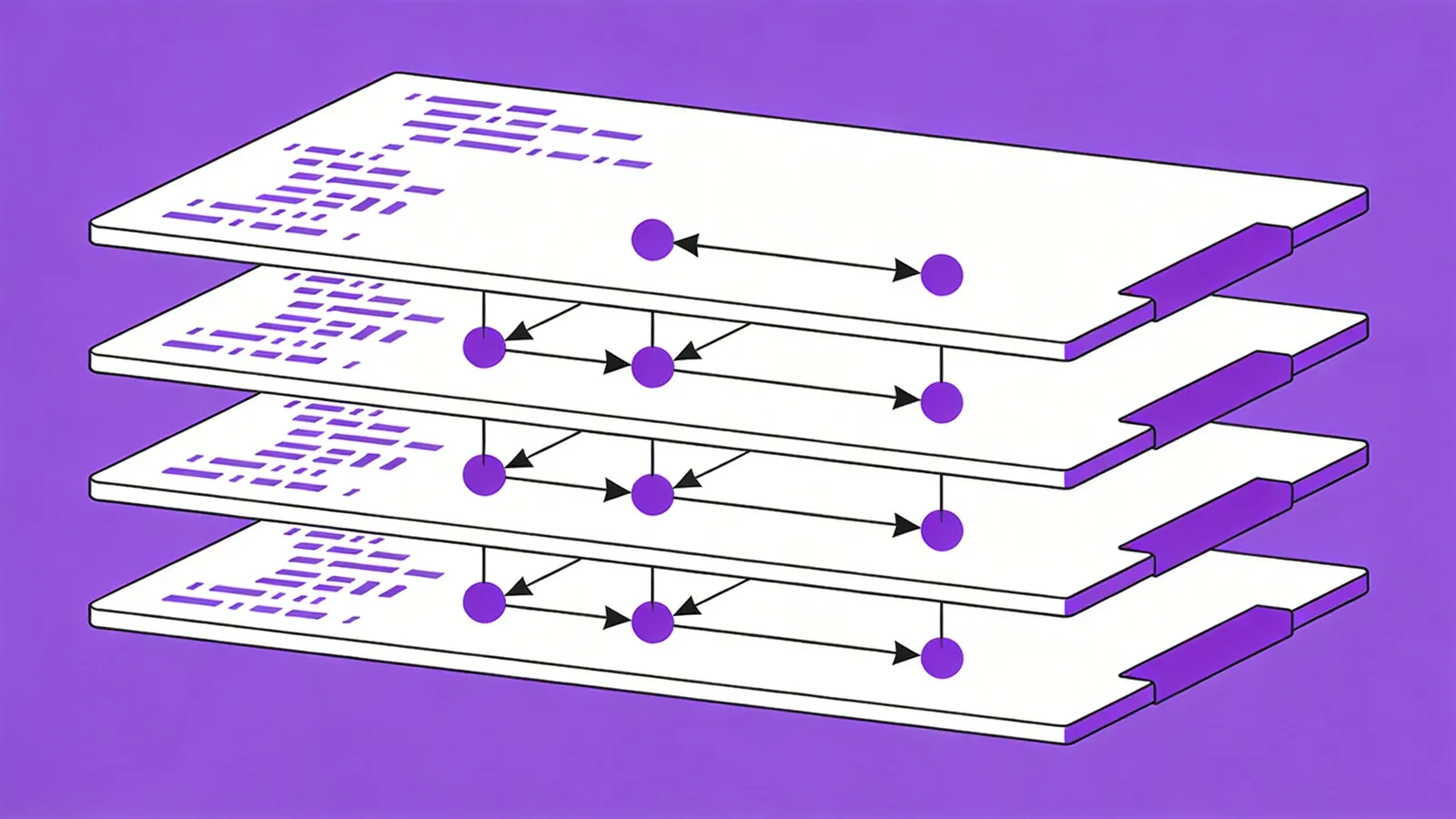
Hermes Agent's memory system isn't just "store conversations in a database." It borrows the layered design idea of CPU caching, dividing memory into four tiers:
🔥 Layer 1: Core Memory (Hot Memory)
Storage location: MEMORY.md (~2200 chars) + USER.md (~1375 chars)
Function: This is the agent's "working memory," directly injected into the system prompt at the start of every session, ensuring critical context isn't lost.
What does MEMORY.md store?
- Environment facts ("This project uses React 18 + TypeScript, testing framework is Vitest")
- Project conventions ("API endpoints use RESTful, error code format see
docs/error-codes.md") - Tool characteristics ("Seedream 4.5 generates garbled text, all image generation prompts must add NO text")
- Lessons learned ("PowerShell Chinese encoding has issues, write .py file to disk and execute with python.exe")
What does USER.md store?
- User basic info (name, role, timezone)
- Communication preferences ("Prefers concise bullet points, dislikes long paragraphs")
- Tech stack preferences ("Backend uses Go, frontend uses React, deployment uses Docker")
Key design: Frozen Snapshot Mode
During an active session, the contents of MEMORY.md and USER.md are frozen — they won't change due to temporary updates in the session.
This has two benefits:
- Stability: The current session's context won't suddenly change, avoiding model confusion
- Cache-friendly: Anthropic's Prompt Caching mechanism depends on the system prompt staying unchanged; frozen snapshots maximize cache utilization and reduce costs
🟡 Layer 2: Skill Memory (Warm Memory)
Storage location: Markdown files under ~/.hermes/skills/ directory
Function: Records "what you're good at" — when Hermes solves a difficult problem, it automatically generates skill documentation, precipitating the solution into a reusable Skill.
Example:
You ask Hermes to help debug a Python memory leak issue. It uses tracemalloc to find the problem and fixes it.
After the session ends, Hermes automatically writes a Skill file:
# Python Memory Leak Debugging

## Tools

- tracemalloc (standard library)
- objgraph (visualize object references)

## Steps

1. Start tracemalloc
2. Take snapshots before / after
3. Compare differences, find the object type with the largest growth
   ...
Next time you say "My Python program's memory is blowing up," Hermes will automatically load this Skill and use the previously precipitated method to solve it, without needing to re-explore.
This is "self-evolution": Hermes doesn't rely on the model itself getting stronger, but on accumulating a skill library that gets more powerful with use.
🔵 Layer 3: Session Memory (Long-term History)
Storage location: SQLite database (FTS5 full-text indexing)
Function: Stores complete records of all historical sessions, supporting millisecond-level full-text retrieval.
Why SQLite + FTS5, not a vector database?
| Solution | Advantages | Disadvantages |
|---|---|---|
| Vector database (Pinecone/Weaviate) | Semantic similarity retrieval | High cost, complex deployment, black box (don't know what was retrieved) |
| SQLite + FTS5 | Zero cost, exact match, debuggable | Only keyword retrieval, no semantic similarity |
Hermes' choice: Prioritize cost and debuggability; semantic retrieval is handled by the model itself (load relevant historical sessions into context, let the model understand on its own).
Retrieval flow:
- User sends message: "Help me optimize this code's performance"
- Hermes uses FTS5 to search historical sessions, finding previous discussions about "performance optimization"
- Load relevant historical sessions into context
- Model gives a more precise answer based on history + current question
🟣 Layer 4: External Memory Plugins (Extensible)
Storage location: Pluggable external memory providers (Honcho / Mem0 / Hindsight / Supermemory, etc.)
Function: If you have a preference for a certain external memory system, you can access it via a plugin, and Hermes' memory system will automatically call it.
Design philosophy: Don't hard-bind to a memory solution — you can choose the most suitable storage backend based on your own needs.
3. Why Is This Design More Reliable Than Vector Databases?
1. Debuggability
Vector database retrieval results are a black box — you don't know why it retrieved a certain memory, and you can't manually correct it.
Hermes' MEMORY.md + USER.md are plain text files — you can directly open and view them, or even manually edit them.
Practical scenario: Hermes remembered an incorrect preference ("User likes to use TensorFlow"). You directly edit USER.md and change this entry.
2. Controllable Cost
Vector databases charge by storage volume + query count, and costs increase over time.
Hermes' memory system is based on local file system + SQLite, with zero operational cost.
3. Cache-friendly
Anthropic's Prompt Caching mechanism requires the system prompt to remain unchanged to hit the cache.
Hermes' "frozen snapshot mode" perfectly matches this requirement — MEMORY.md and USER.md don't change during a session, the system prompt is stable, cache hit rate is high, and API call costs are low.
4. Self-Evolution Loop: Memory → Skill → Training Data
Hermes Agent's memory system isn't isolated — it forms a closed loop with the skill system and training data system:
Execute task
  ↓
Reflect: What did I learn from this task?
  ↓
Precipitate: Write experience into MEMORY.md (memory) or generate Skill (skill)
  ↓
Reuse: For similar tasks next time, automatically load memory and skills
  ↓
Optimize: Use historical task data for reinforcement learning fine-tuning (future planning)
This is the fundamental difference between Hermes and traditional Chatbots:
- Traditional Chatbot: Stateless, starts from zero every session
- Hermes Agent: Stateful + self-evolving, understands you more with use, gets stronger with use
5. Comparison with OpenClaw
| Dimension | OpenClaw | Hermes Agent |
|---|---|---|
| Memory system | Depends on LCM (Lossless Context Management) compressing historical sessions | Four-layer memory architecture (files + SQLite + external plugins) |
| Cross-session memory | Limited (compressed summaries) | Complete (MEMORY.md + USER.md persistence) |
| Skill precipitation | Not supported | Supported (automatically generate Skills) |
| Self-evolution | Not supported | Supported (execute → reflect → precipitate → reuse → optimize) |
| Deployment | Depends on OpenClaw platform | Self-hostable (VPS / GPU server / Serverless) |
Conclusion: OpenClaw is more suitable for "platform-based usage" (pre-installed on Kaihe devices, out-of-the-box), Hermes Agent is more suitable for "deep customization" (self-hosted, teach memory and skills yourself).
6. How to Use Hermes Agent Well on Kaihe Devices?
Kaihe (Nizwo) 's Hermes Zone has pre-installed Hermes Agent. You only need to:
- Bind with WeChat scan (same process as OpenClaw)
- Chat with Hermes a few times, let it remember your preferences and workflows
- Observe it understanding you more and more:
- 1st time: You need to explain project background
- 5th time: It already remembers your code style and deployment habits
- 10th time: It proactively suggests "Using the strategy pattern would be more elegant for this project"
Core advantage: Runs 7×24 hours, memory continuously accumulates, won't be lost due to shutdown or restart.
7. Summary: Why Can Hermes Truly "Remember You"?
- Layered memory architecture: Hot memory (MEMORY.md / USER.md) + Warm memory (Skills) + Long-term history (SQLite) + External plugins
- Frozen snapshot mode: Memory doesn't change during session, stable and cache-friendly
- Self-evolution loop: Execute → Reflect → Precipitate → Reuse → Optimize, gets stronger with use
- Debuggable + zero cost: Plain text files + local database, doesn't depend on black-box services
Unlike telling a LLM "remember this," Hermes actually remembers — and the way it remembers, you can view, edit, and debug.
Kaihe Agent Computer × Hermes Agent
The Hermes Agent Zone is now live on the Kaihe official website, pre-installed on Hermes high-end models (D1 / E1 / F1 / G1).
Runs 7×24 hours, memory continuously accumulates, letting your AI truly get smarter with use.
About Kaihe: Kaihe (Nizwo) is an Agent Computer brand, pre-installing OpenClaw (Crayfish) and Hermes Agent dual systems, running stably 7×24 hours, letting AI agents truly work for you.
About Hermes Agent: An open-source AI agent framework developed by Nous Research. Core features include a persistent memory system + self-evolving skill precipitation, letting AI truly remember you across sessions.