Hermes Agent vs Coze vs Dify: Full Comparison of 3 Mainstream Agent Tools
📖 Glossary
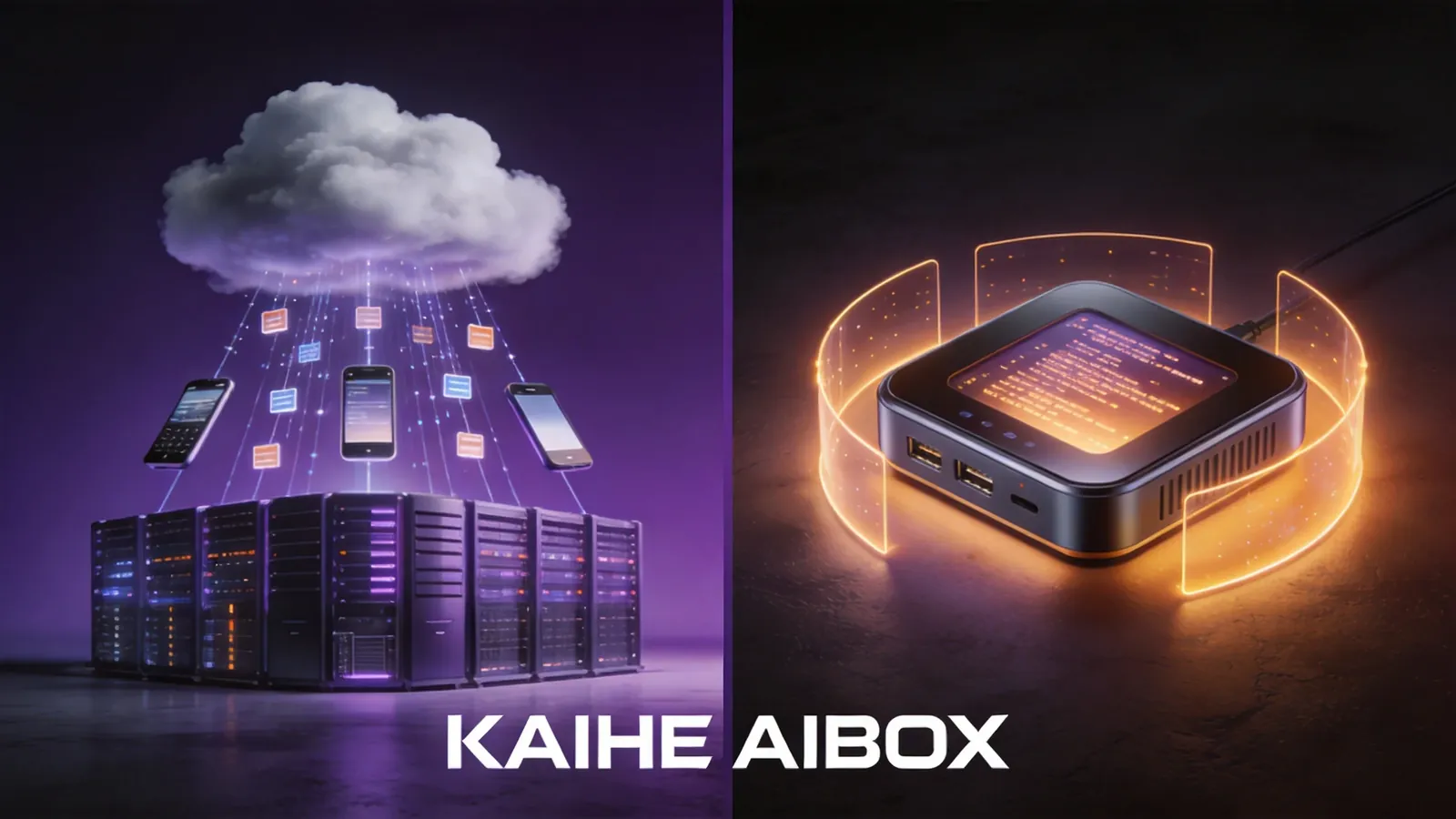
AI Box (also known as Agent Computer / Agent PC), is a dedicated local hardware device that runs AI Agents. Pre-installed with an AI agent management system, plug-and-play, running 24/7. Users can remotely command AI to work via Discord, Slack, Telegram, WhatsApp, and more.
Abstract: Three mainstream Agent development platforms side-by-side: Hermes Agent supports local deployment, persistent memory, and self-learning — data stays on-device and gets smarter with use. Coze (bytedance) excels at visual workflow orchestration but depends entirely on the cloud. Dify is user-friendly for visual development but limited in customization. Hermes' core differentiator is "local-first + continuous evolution." Kaihe AIBOX ships with Hermes pre-installed, plug-and-play.
Want to build an AI Agent? The first question is: which tool?
Coze, Dify, Hermes — these three are the most mainstream Agent development platforms right now. Which one? I've been asked this more than 20 times.
Short answer: there's no "best" — only "best for you." The three have very different positioning. Pick wrong, and you're digging your own hole.
30-Second Quick Comparison
| Dimension | Hermes Agent | Coze | Dify |
|---|---|---|---|
| Deployment | Local-first, cloud optional | Cloud-only | Cloud-first, self-hosted supported |
| Data Privacy | High (data stays on-device) | Low (data on ByteDance servers) | Medium (cloud + self-hosted option) |
| Persistent Memory | Yes (cross-session) | Limited (session-level) | Yes (manual configuration) |
| Self-Learning | Yes (improves after each task) | No | Limited (requires manual knowledge base) |
| Workflow Orchestration | Yes | Strong (core selling point) | Yes (visual) |
| Learning Curve | Medium | Low | Low |
| Multi-Platform Access | Yes (WeChat/Feishu/DingTalk +10) | Yes (Feishu/WeChat etc.) | Yes (requires config) |
| Cost | Zero API cost with local deployment | Per-call billing | Cloud per-call; self-hosted has server cost |
| Best for | Personal long-term assistant, enterprise private deployment | Quick cloud Agent prototyping | Team collaboration, rapid prototyping |
Coze: ByteDance's Workflow Powerhouse
Coze is ByteDance's Agent development platform. Its biggest selling point is visual workflow orchestration.
No coding needed — drag and connect nodes to build complex Agent workflows. Example: user asks → call search API → extract key info → call LLM to generate response → format output. The entire flow can be built by dragging and connecting on a canvas.
Strengths: - Workflow orchestration is the strongest among the three — complex logic can be visualized - Deep ByteDance ecosystem integration; Feishu access is the smoothest - Rich template library; official provides many ready-to-use Agent templates - Low barrier to entry; zero coding background can quickly build
Weaknesses: - Cloud-only; data must be uploaded to ByteDance servers — hard blocker for privacy-sensitive enterprises - Weak persistent memory; Agent won't remember your conversations from last month - No self-learning; Agent doesn't get stronger from executing more tasks - Per-call billing; costs become unpredictable at scale
Best for: - Quickly building cloud Agent prototypes - Teams using Feishu, wanting deep Feishu ecosystem integration - Not privacy-sensitive; comfortable with data on ByteDance servers - Don't require Agent to have long-term memory and self-learning
Dify: Visual-Friendly, Strong for Collaboration
Dify is an open-source LLM application development platform positioned as "letting everyone develop AI applications."
Strengths: - Friendly visual interface; non-technical users can get started quickly - Supports private deployment; data can stay on your own servers - Strong knowledge base management; supports multiple document format imports - Team collaboration features are well-developed; suitable for multi-person Agent development - Open-source version is free; active community
Weaknesses: - Customization is limited; complex logic requires coding - Persistent memory requires manual configuration; not out-of-the-box like Hermes - Self-learning is weak; Agent doesn't automatically improve from repeated tasks - Multi-platform access requires manual configuration; not as seamless as Hermes
Best for: - Team collaboration on Agent development - Need private deployment but don't want to build from scratch - Want to quickly prototype and validate ideas - Okay with some configuration; not demanding out-of-the-box experience

Hermes Agent: Local-First, Continuous Evolution
Hermes Agent is the only local-first Agent platform among the three.
Core Differentiators:
1. Local deployment, data stays on-device. Hermes Agent can run on local devices like Kaihe AIBOX. Your conversation history, files, work habits — all data stays local, not uploaded to any cloud server. For privacy-sensitive users and enterprises, this is a hard requirement.
2. Persistent memory, remembers across sessions. Hermes has cross-session persistent memory. You tell it today "I have a meeting next Wednesday" — it still remembers next week. This isn't simple in-session memory; it's true long-term memory.
3. Self-learning, gets smarter with use. This is Hermes' strongest differentiator. After completing a task, the Agent automatically summarizes lessons learned. Next time it encounters a similar task, it's more efficient. For example: you ask it to organize your emails. The first time it might not be perfect, but after 10 iterations, it has learned your preferences and habits.
4. Zero API cost. Local deployment means daily conversations use local models; only heavy tasks like GPT-5.5 calls hit the cloud API. For the same usage, costs drop 50%-70%.
5. Multi-platform access, one Agent across all channels. Hermes supports 10+ platforms: WeChat, Feishu, WeCom, DingTalk, Telegram, Discord, etc. An Agent configured on WeChat works on Feishu without reconfiguration.
Best for: - Want a long-term personal AI assistant that grows with you - Enterprise needs private deployment; data cannot leave the domain - Want Agent to get smarter with use, not start from zero every time - Cost-sensitive; want to minimize cloud API calls
How to Choose Among the Three
Choose Coze if: - You work within the ByteDance ecosystem (primarily Feishu) - Need to quickly prototype and validate ideas - Not privacy-sensitive - Don't require Agent to have long-term memory
Choose Dify if: - You're a team collaborating on Agent development - Need private deployment but don't want to build from scratch - Want robust knowledge base management - Open-source and free is a plus
Choose Hermes Agent if: - You want a long-term personal AI assistant - Data privacy is a hard requirement - Want Agent to get smarter with use - Kaihe AIBOX user (pre-installed, plug-and-play)
What About Kaihe AIBOX Users?
Kaihe AIBOX ships with Hermes Agent pre-installed, plug-and-play. No extra installation needed — power on and you can create and manage Agents.
Of course, Kaihe AIBOX also supports calling other platforms' APIs via OpenClaw. If you need to use Coze or Dify, you can access them via cloud API — but then your data goes through the cloud.
Local-first Hermes + cloud-optional OpenClaw = the choice stays with you. Use local models for privacy-sensitive scenarios, call cloud APIs for top-tier capability scenarios.
Bottom Line
Coze excels at workflow orchestration and ByteDance ecosystem integration — best for quick cloud Agent prototyping. Dify shines at team collaboration and knowledge base management — best for private deployment scenarios. Hermes Agent wins on local deployment, persistent memory, and self-learning — best for long-term personal AI assistants and enterprise private deployment.
No best tool — only the tool that fits your needs. Know your requirements, and you won't pick wrong.
-#KaiheAIBOX #OpenClaw #AITutorial #AIBOX #AIAgent
Kaihe AIBOX | The Agent Computer That Works 7×24 for You · Hermes Zone