📖 Glossary
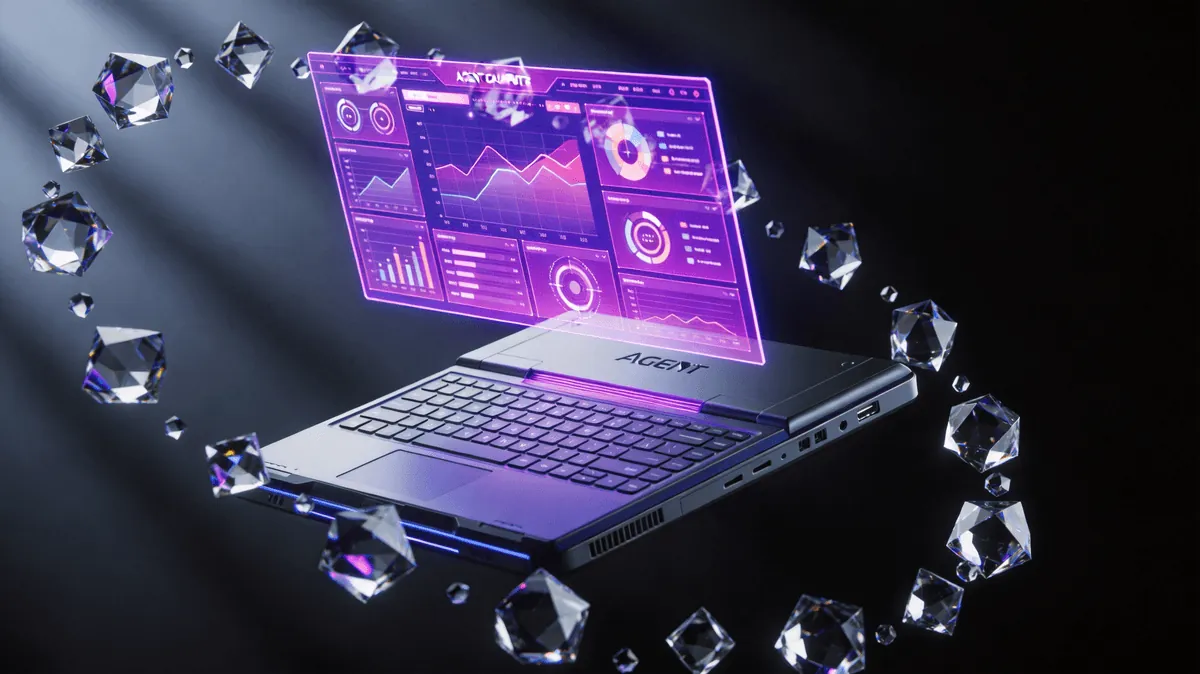
AI Box (also known as Agent Computer / Agent PC), is a dedicated local hardware device that runs AI Agents. Pre-installed with an AI agent management system, plug-and-play, running 24/7. Users can remotely command AI to work via Discord, Slack, Telegram, WhatsApp, and more.
Summary: The latest OpenRouter rankings show Hermes Agent topping the AI framework growth chart with a 204% monthly growth rate. How did an open-source project crush established frameworks in just months? From the "coworker, not a tool" philosophy, to running on a $5 VPS, to a full-platform messaging gateway and multi-agent parallel architecture — this article deconstructs the logic behind Hermes's meteoric rise, and explains why Kaihe AIBOX-A1 has become the best agent computer for running Hermes.
I. The Numbers Don't Lie: Hermes's Rocket Growth
In May 2026, an interesting phenomenon emerged from OpenRouter's latest monthly rankings: among AI framework and model call rankings, Hermes Agent topped the growth chart with a 204% month-over-month increase. The data sent shockwaves through the AI developer community.
With 200+ models and dozens of AI frameworks on OpenRouter, standing out in such a competitive ecosystem is no accident.
What does 204% monthly growth really mean? An AI framework, without massive marketing budgets or big-tech backing, tripled its monthly active API calls purely through product quality and community reputation.
Hermes's GitHub trajectory tells an even more impressive story. Since its early 2026 release, Hermes Agent's stars have surged from 4,000 to 5,600+, far outpacing comparable projects. On Nous Research's official Discord, discussion volume has grown nearly 10x in the past three months.
This growth rate is phenomenal by any standard in the open-source AI ecosystem. Just a year ago, the AI Agent framework market was dominated by OpenClaw — with its early-mover advantage, mature plugin ecosystem, and strong community support, it held an absolute leading position in developer mindshare. But Hermes, born just months ago, has completely reshuffled the competitive landscape in less than half a year.
Why Hermes? An open-source project without Silicon Valley backing, achieving 204% growth on OpenRouter? The answer lies in three growth engines.
II. Growth Engine #1: An AI Agent on a $5 VPS — Crushing Cost Barriers
Hermes's first growth secret lies in its minimum configuration requirements.
"Run it on a $5 VPS" — arguably the most powerful sentence in Hermes's official documentation. It directly signals the turning point where AI Agents transition from "high-end luxury" to "consumer commodity."
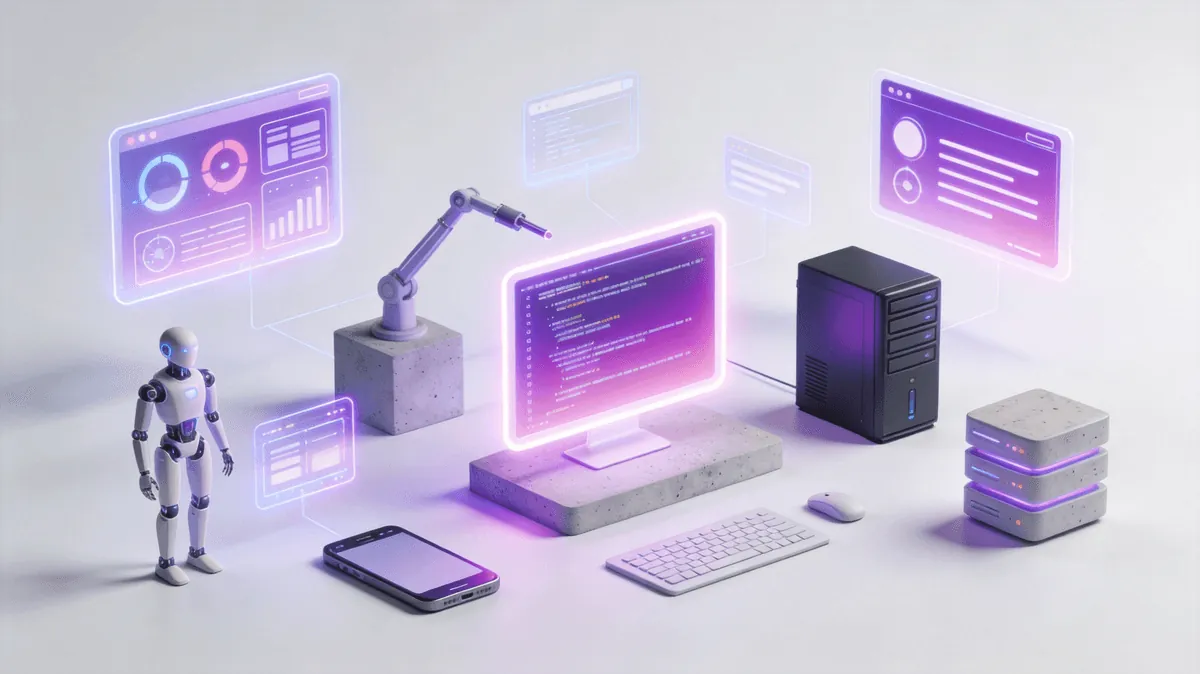
Traditional AI Agent deployment models rely either on expensive GPU clusters or on being tethered to a local laptop. Hermes shattered this paradigm: it supports six terminal backends — local, Docker, SSH, Singularity, Modal, and Daytona. Daytona and Modal offer serverless persistence — the agent environment hibernates when idle and wakes on demand, costing nearly nothing between sessions.
What does this mean in practice? A regular developer can rent a cloud server for just $5 a month and have a 24/7 AI Agent handling emails, monitoring messages, and executing scheduled tasks — like a digital employee that never sleeps.
Better yet, Hermes's installation process is remarkably simple. One command deploys everything on Linux/macOS:
curl -fsSL https://hermes-agent.nousresearch.com/install.sh | bash
For Windows users, one PowerShell command suffices:
iex (irm https://hermes-agent.nousresearch.com/install.ps1)
The installer handles everything automatically: Python 3.11, Node.js, ripgrep, ffmpeg, and even a portable Git Bash (MinGit) — no admin privileges required, completely isolated from any system installation. This frictionless installation experience dramatically lowers the barrier to trying Hermes.
For enterprise users, the Kaihe AIBOX-A1 — purpose-built as an agent computer — takes this experience to the extreme: plug in and go, zero-configuration deployment, no monthly cloud fees, a one-time investment for lifetime benefits. The Kaihe AIBOX-A1 comes pre-loaded with Hermes Agent's full runtime environment — users power it on, run one command, and their AI Agent is online instantly. Its low-power architecture enables 24/7 operation without electricity cost concerns, and all data stays local for enterprise compliance.
III. Growth Engine #2: Coworker, Not a Tool — A New AI Agent Paradigm
Hermes's second growth secret lies in how it fundamentally redefined our perception of AI Agents.
Most AI frameworks position Agents as "tools" — you command, they execute, then part ways. Hermes, from day one, declared: "Agent is a coworker, not a tool."
This philosophical shift translates into three major product breakthroughs:
1. Closed Learning Loop. Hermes is the only agent with a built-in learning loop. It creates skills from experience, self-improves during use, autonomously nudges itself to persist knowledge, and searches its own past conversations across sessions. Every interaction makes it smarter. You never need to teach it the same thing twice — it has genuine "experience accumulation" capabilities.
2. Persistent Memory. Hermes's agent-curated memory system periodically nudges itself to record critical information. Using FTS5 full-text search across past conversations combined with LLM summarization, it achieves cross-session knowledge continuity. Teach it a workflow today — it uses it tomorrow, no reconfiguration needed. Even more impressively, it supports Honcho dialectic user modeling, building a deep understanding of your personal preferences and work habits over long-term interaction.
3. Multi-Agent Parallel Architecture. When a task grows too complex for one agent, Hermes autonomously spawns subagents, deploying them into independent parallel workflows. It's its own "project manager" — splitting tasks, scheduling execution, and aggregating results without human intervention. Subagents collaborate via RPC calls, automatically collapsing multi-step pipelines into zero-context-cost atomic operations, dramatically improving large-task processing efficiency.
A real scenario: You run Hermes Agent on a Kaihe AIBOX-A1 and give it a task: "Analyze all new products released by competitors last week and generate a comparison report." Hermes autonomously spawns three subagents: one for web scraping, one for data analysis, one for report writing. Fifteen minutes later, a complete report lands on your Telegram. Throughout this process, you don't even need to be at your computer — it runs independently, 24/7.
This shift from "tool" to "coworker" gives Hermes user stickiness far beyond competing products. The 204% OpenRouter growth rate reflects a fundamental truth: once you've used an AI Agent that learns on its own, there's no going back.
IV. Growth Engine #3: Full Platform Coverage — Agent Everywhere
If you think Hermes is just a CLI tool, think again. Its "everywhere" strategy is growth engine number three.
The Messaging Gateway is one of Hermes's killer features. Through a single gateway process, Hermes Agent can simultaneously run on Telegram, Discord, Slack, WhatsApp, Signal, and Email. Ask it about today's schedule on Telegram during your commute, then switch to Slack at the office to continue the same conversation — context is continuous, the Agent is the same one.
It supports voice memo transcription and cross-platform conversation continuity. Send a voice message, and Hermes automatically transcribes, understands, and responds. This experience is approaching that of a human colleague — you don't need to tell it "who you are" or explain conversation context; it naturally knows.
The built-in Cron Scheduler allows Agents to execute scheduled tasks — automatic daily reports, nightly backups, weekly audits — all configured in natural language and running unattended. No additional development required. Just say: "Check server logs at 10 PM every day and generate a summary report," and the Agent creates and executes this task automatically.
For developers, MCP Integration opens up even more possibilities — any MCP-protocol service can be plugged in as an Agent skill. The Agent's capabilities aren't fixed; they're a pluggable ecosystem. Add a browser control tool today, a code review service tomorrow — the Agent's capabilities expand infinitely with your needs.
Notably, Hermes is compatible with the agentskills.io open standard, giving access to thousands of community-contributed skills that can be installed and used immediately. With the Skills Hub ecosystem, developers never start from scratch — find the skill you need, install it with one command, and your Agent gains new capabilities instantly.
V. The Hidden Growth Engine: Agent Computers
For Hermes to achieve 204% growth on OpenRouter, one more factor cannot be ignored: it found the best running platform — the agent computer.
Traditional AI Agent deployment faces an awkward "middle ground": cloud deployment is too expensive, personal computers can't run 24/7. The agent computer fills this gap perfectly — it's neither a traditional server nor a personal computer, but specialized hardware tailored for AI Agent operation.
The Kaihe AIBOX-A1 is the flagship product of this category. Designed for 24/7 uninterrupted Agent operation, it features a low-power architecture, pre-installed Hermes Agent runtime, and headless mode — no monitor, no keyboard needed. Plug it into power, boot up, and manage everything via a web browser.
The Kaihe AIBOX-A1's core advantages boil down to three "zeros": Zero configuration — pre-installed environment, ready out of the box; Zero disturbance — fanless silent design, sits unobtrusively in any workspace; Zero monthly fees — one-time purchase, lifetime use, no recurring GPU cloud server bills.
Agent Computer vs. Traditional Solutions: GPU cloud servers cost hundreds per month, and data in the cloud may breach compliance red lines. Personal computers can't run 24/7; shut them down and the Agent "dies." The Kaihe AIBOX-A1 requires a one-time purchase, runs 24/7, stores data locally, and requires no monthly fees — this is the complete value proposition of the agent computer category.
With this hardware foundation, Hermes Agent can truly fulfill its potential as a "never-sleep AI coworker." OpenRouter's 204% growth rate is also a microcosm of the agent computer category's rise. More developers and enterprises are realizing: AI Agent needs a "home" — a dedicated operating environment that works 24/7, never crashes, never lags, and never leaks data.
Conclusion: Behind the 204% Growth — A Fundamental Shift in AI Agent Deployment
Looking back at Hermes's 204% growth rate on OpenRouter, it's not an isolated number. Behind this figure, three fundamental shifts in the AI Agent industry are reflected:
- From GPU-intensive to low-cost popularization — running on a $5 VPS turns AI Agents from "big-tech toys" into "personal tools"
- From passive tools to proactive coworkers — learning loops and persistent memory make Agents genuinely "smarter with use"
- From single entry point to omnichannel coverage — Agents no longer live in one terminal; they integrate into your workflow
These three shifts together fueled Hermes's explosive growth. The 204% growth rate is not just a milestone — it's a signal that AI Agents are transitioning from "usable concepts" to "usable products."
For developers, now is the best time to enter the Hermes ecosystem. Whether through a $5 VPS solution or a one-stop Kaihe AIBOX-A1 agent computer, the barrier to entry has never been lower. You don't need to be an AI expert, you don't need to understand GPU configuration, you don't need to manage complex cloud infrastructure — one command, one box, and you have your own 24/7 AI coworker.
Kaihe AIBOX-A1 will continue to deepen the agent computer category — the Kaihe AIBOX-A1, as the first agent computer optimized for Hermes Agent, is redefining the answer to "what should an AI Agent look like." When people start asking "What does your Agent run on?" instead of "What can your Agent do?" — that's when the era of agent computers truly begins.
KaiAIBox| Agentaibox that lets AI work for you 24/7· Hermes Zone