Most people install Hermes on a laptop. For the first hour it is genuinely impressive: it reads files, clicks buttons, looks things up on its own. Then you close the lid to go to a meeting, come back, and the task is still sitting there, the progress bar frozen at the same number.
Nothing was misconfigured. You tied a horse that can run to a table that folds up.
The framework decides what it can do
📖 Glossary
AI Box (also known as Agent Computer / Agent PC), is a dedicated local hardware device that runs AI Agents. Pre-installed with an AI agent management system, plug-and-play, running 24/7. Users can remotely command AI to work via Discord, Slack, Telegram, WhatsApp, and more.
The Hermes layer answers one question: can it act at all. It gives an agent tools it can call, skills it can write down and reuse, memory that survives between sessions, sub-agents that split a large task into parallel tracks, and separate profiles you can run side by side on one machine, one for code and one for scheduling, without them leaking into each other.
All of it shares a single precondition: time. A skill accumulates. Memory settles. A multi-step task has to wait for intermediate results. This is not a chat box. It has a process.
The machine decides whether it finishes
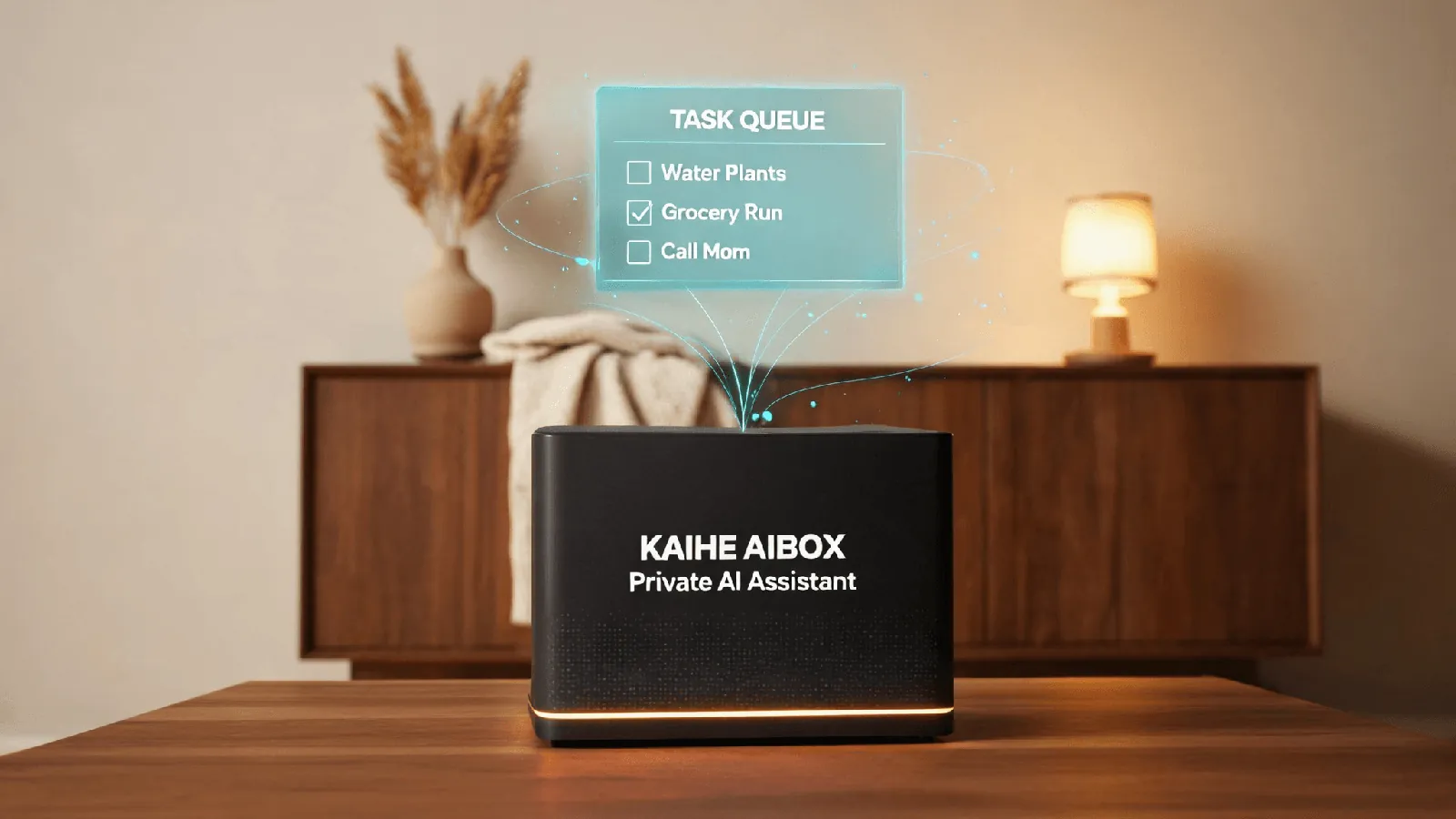
Anything with a process is vulnerable to interruption, and the interruptions are mundane.
Closing the lid. A laptop suspends, processes freeze, the task stops mid-step. Most people assume the model stalled. The computer slept.
Competing for resources. Run a video call and a design tool on the same machine and the agent simply queues. It does not error. It slows down, quietly enough that you conclude it is not working.
Power and network. A desktop loses power and it is gone. A cloud instance loses its connection and it is unreachable. One router reboot is enough to void forty minutes of work.
None of this has anything to do with how well the framework is written. It is a property of the body.
So it is a multiplication, not a sum
Framework capability times machine availability. If either factor approaches zero, the result approaches zero.
The reason this gets missed is that nobody sells the second factor. Every guide stops at the same place: installed, running, congratulations. What you are shown is how many tools it supports and how it grows its own skills. What you are never shown is how long it stays awake in your house.
For this class of software the second factor is the expensive one. Tools can be added later. Skills accumulate over months. Being continuously present either exists or it does not, and there is no partial version of it.
Three tests, ten minutes of work
You do not need a spec sheet. Test three things.
The lid test. Give it a task that takes ten minutes or more, close the laptop, wait five, open it again. If the task is still moving, it was never running on your laptop. If it stopped halfway, it was.
The offline test. Unplug the network and ask a question it has not been primed for. If it answers, the work is local. If it returns a connection error, it has been calling someone else's servers the whole time.
The week test. Let it run seven days without a restart. On day seven, if the memory is still there and the skills are still callable, the machine passes.
The first two test location. The third tests endurance. The third is the one people skip, and the one that actually decides the question.
What it does not fix
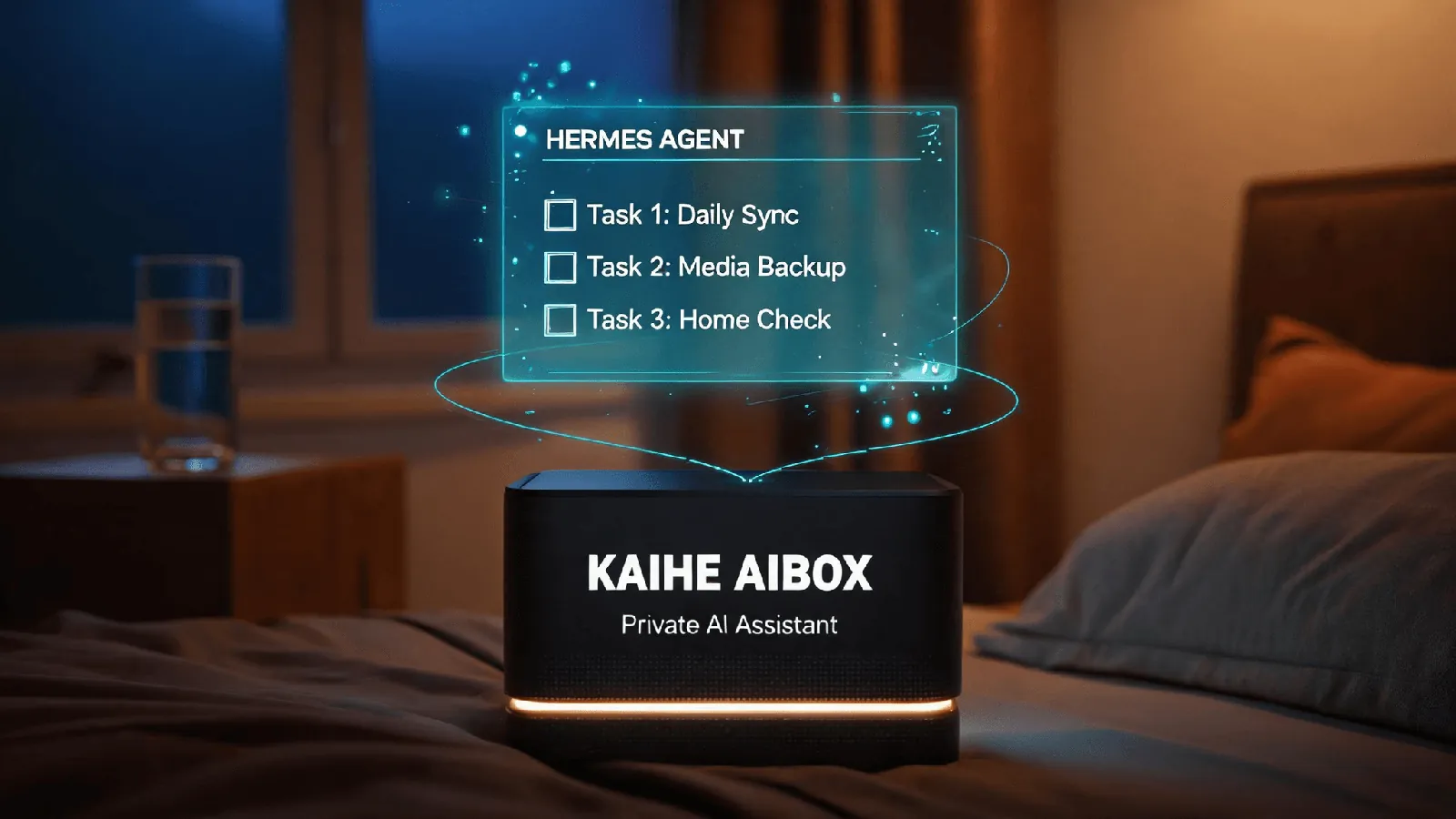
A machine that never sleeps is not a better model. Model capability still belongs to the vendors, and the vendor leaderboard changes monthly.
It is also not cheaper by default. Cloud billing scales with use, so light usage is cheap. A dedicated machine costs hardware up front plus electricity regardless of whether you use it.
And it is not for everyone. If you ask an occasional question or draft the odd document, a browser tab is enough. If you only need it during an eight-hour workday, a laptop is fine and suspension is not a defect. If you are comfortable with data leaving the building and paying monthly, a cloud instance is the least trouble of all.
The narrow case that justifies a dedicated machine is specific: something needs watching around the clock, and the material involved cannot leave the room. Both conditions, or it is money wasted.
What we built
KAIHE AIBOX(铠盒AIBOX)is the second half of that multiplication.
A machine built to run agents, with OpenClaw and Hermes preinstalled, plugged in and ready without a shell or an environment. It draws 10W, which comes to roughly 88 kWh if it runs for a year without stopping. It does not borrow your work laptop and does not occupy your phone, so closing the lid, shutting down, or leaving the country changes nothing. Files and records stay on the machine. Not a promise not to upload them, but the absence of an upload step.
It does not make Hermes smarter. It keeps the machine from falling asleep.
The framework decides what it can do. The machine decides whether it gets to finish. Those were always the same question.