HP Commercial AI Full Refresh: Endpoint-Cloud Synergy vs. KaiheAiBox — What's the Difference?
📖 Glossary
AI Box (also known as Agent Computer / Agent PC), is a dedicated local hardware device that runs AI Agents. Pre-installed with an AI agent management system, plug-and-play, running 24/7. Users can remotely command AI to work via Discord, Slack, Telegram, WhatsApp, and more.
Abstract: HP's commercial AI lineup doubles down on endpoint-cloud synergy, embedding AI into traditional PCs. KaiheAiBox takes a fundamentally different path — building a dedicated AI agent computer that runs 24/7 independently. Two visions, two philosophies.
HP's AI Chess: From PC to "AI-Enhanced PC"
In 2025, HP unveiled a comprehensive commercial AI product portfolio spanning laptops, desktops, and workstations. The core strategy can be summed up in one sentence: bring AI to every workstation without changing what a PC fundamentally is.
Specifically, HP's approach operates across three layers:
- Hardware Layer: Powered by Intel Core Ultra or AMD Ryzen AI processors with integrated NPUs (Neural Processing Units) that provide local inference compute for AI workloads. The HP EliteBook, ProBook, and ZBook lines have all received NPU upgrades.
- Software Layer: HP AI Companion and similar on-device AI tools handle tasks like document summarization, meeting notes generation, and data retrieval — reducing cloud dependency for routine work.
- Cloud Services Layer: Deep integration with Microsoft Copilot, Google Gemini, and other cloud AI services, automatically routing complex tasks to cloud infrastructure while handling lightweight inference locally.
The central philosophy here is "endpoint-cloud synergy" — the local NPU handles light inference, cloud large language models carry the heavy lifting, and the two switch automatically based on task complexity. For HP, the PC remains the center of the computing universe; AI is simply a new capability layered on top.
It's a pragmatic strategy. Hundreds of millions of commercial PCs won't vanish overnight. HP's approach — adding AI capabilities to existing hardware without disrupting established workflows — represents the path of least resistance. From a market penetration standpoint, "incremental upgrade" sells better than "paradigm shift."
But the problem is staring back at us: a PC is still a PC.
KaiheAiBox's Path: A "Home" for the Agent
KaiheAiBox chose a fundamentally different entry point — not an AI-enhanced PC, but a dedicated AI agent computer.
The core positioning of KaiheAiBox A1 (home) and B1 (business) is straightforward: provide dedicated hardware for AI agents to run 24/7 without interruption. This is not a "better PC" — it's an entirely new product category.
Here are the key distinctions:
Architecture first. HP runs on x86 with discrete graphics, chasing raw compute. KaiheAiBox A1/B1 uses ARM architecture with no dedicated GPU, but delivers remarkably low power consumption — the kind of device that can run indefinitely without being turned off. When your agent needs to monitor emails around the clock, auto-reply to customers, or scrape data on a schedule, you don't want it running on a 200-watt x86 workstation.
Operating model second. HP's AI capabilities are tied to PC power state — you shut down, AI stops; you close the lid, the agent dies. KaiheAiBox is designed for "always-on" operation. Agents run as persistent background services without human presence at the keyboard.
Security isolation third. In HP's model, AI and office data share the same machine. While HP offers Wolf Security and similar enterprise protections, the environment is fundamentally shared. KaiheAiBox provides physical isolation — your primary workstation handles day-to-day work, KaiheAiBox runs the agent independently, the two interact over the network but run on separate hardware. For finance, healthcare, and other data-sensitive industries, "the agent has its own device" is inherently more reassuring than "the agent runs on my computer."
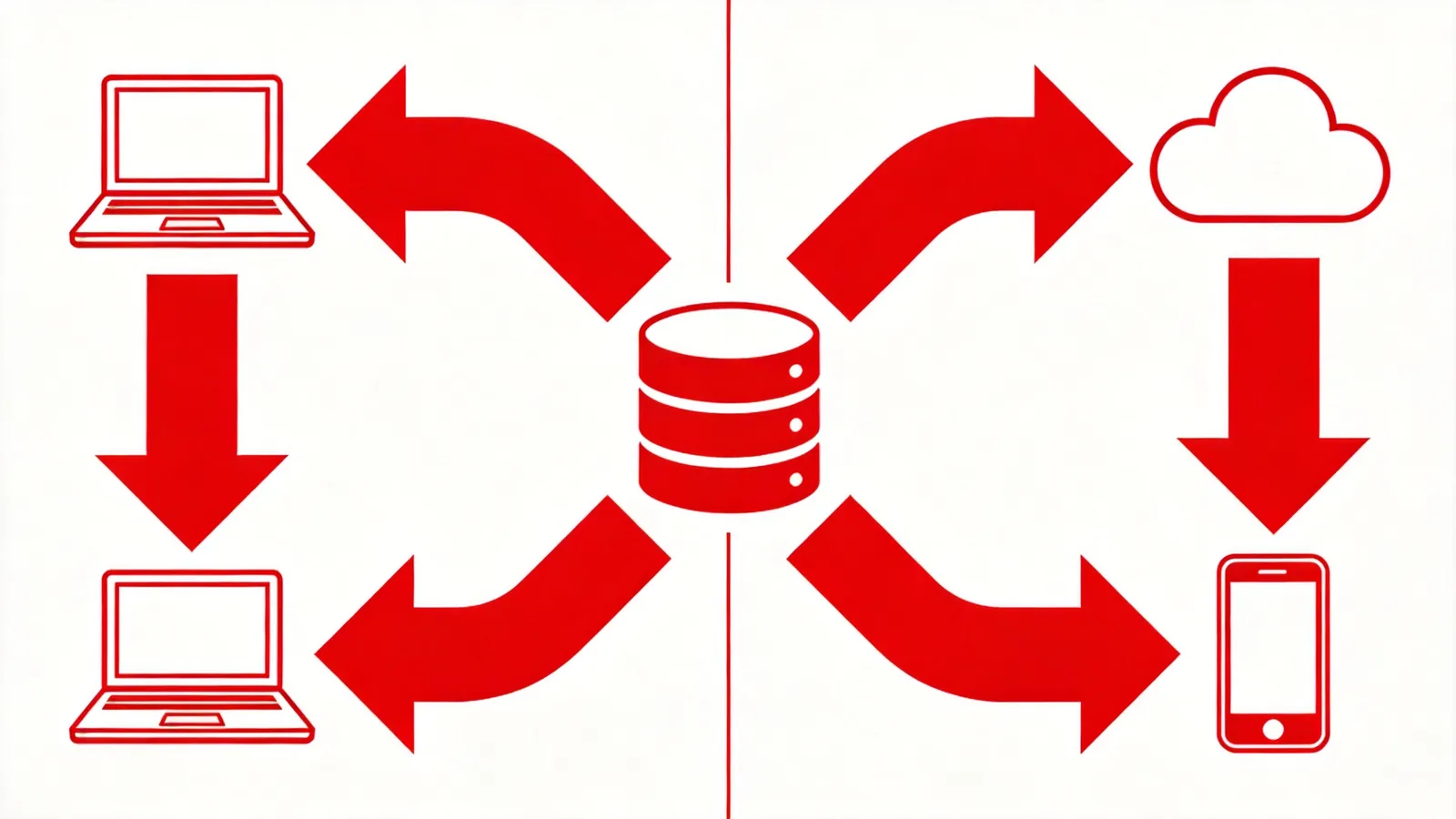
Endpoint-Cloud Synergy vs. Endpoint-Cloud Division: Two Philosophies
HP's "endpoint-cloud synergy" and KaiheAiBox's "endpoint-cloud division" sound similar in concept but operate on entirely different logic.
HP's endpoint-cloud synergy is task-level. Within the same task, the system decides whether to run locally or route to the cloud based on computational complexity. You ask Copilot on your EliteBook to draft a report — a simple outline generates locally, deep analysis goes to the cloud, and results return to your screen. Endpoint and cloud are two executors within a single workflow.
KaiheAiBox's endpoint-cloud division is role-level. A local agent handles orchestration, scheduling, and lightweight inference; the cloud LLM handles deep understanding and content generation. The agent running on KaiheAiBox autonomously decides when to call cloud capabilities and when to process locally — not a "switch," but a "collaboration." The local agent is like a project manager; the cloud LLM is like a contracted expert. The manager is always present; the expert is brought in when needed.
Here's the analogy: HP's endpoint-cloud synergy is like a smartphone automatically switching between Wi-Fi and 5G — you're always using the same device, just changing networks. KaiheAiBox's endpoint-cloud division is like a local team plus a remote advisory panel — the local team is permanently on-site, the remote experts are connected on demand, and both have clearly defined responsibilities.
Who Fits Which?
These two solutions serve different use cases. This is not a simple replacement scenario.
HP Commercial AI is the right fit when: - Your primary needs are office productivity scenarios — AI as a work assistant (meeting notes, document drafting, data analysis) - Your enterprise already runs a HP commercial PC ecosystem and you're looking for a smooth upgrade path - You're a mobile worker who needs to do everything on one device - Your AI usage is moderate and you don't need agents running continuously
KaiheAiBox A1/B1 is the right fit when: - You need an agent running 24/7 — automated customer service, data monitoring, content generation pipelines - Your organization has strict data security requirements and wants the agent's runtime environment physically isolated from your work environment - You already have a primary workstation and want AI tasks to not compete for your everyday computing resources - Your ops team wants an agent that's "set it and forget it" — a true plug-and-play deployment
A common complementary setup: equip employees with an HP EliteBook for daily work, then place a KaiheAiBox B1 on each desk to run automation agents. PC handles the work, KaiheAiBox runs the agent. Division of labor at its finest. This isn't an either/or decision — it's a 1+1 scenario.
From "AI PC" to "Agent Computer": The Paradigm Shift Is Live
The contrast between HP and KaiheAiBox reflects a deeper paradigm migration happening right now in the industry.
Phase One is the "AI PC" — adding NPU capability to traditional PCs so they can run AI workloads. This is HP's current battleground, shared by Lenovo, Dell, and virtually every other traditional PC maker. The logic: the PC is the computing hub; AI is the PC's new trick.
Phase Two is the "Agent Computer" — providing a dedicated runtime environment for AI agents so AI is no longer a feature of a PC, but an entity with its own dedicated hardware. This is the territory KaiheAiBox is exploring. The logic: the AI agent is the new computing subject; it needs its own device.
These two paradigms are not in replacement mode — they coexist and complement each other. Just as cloud computing didn't kill the on-premises server, and smartphones didn't eliminate PCs, AI PCs and agent computers will coexist long-term, each serving different scenarios.
HP's advantage is ecosystem and installed base. Hundreds of millions of commercial PCs in use globally represent a scale KaiheAiBox cannot match in the short term. But KaiheAiBox's advantage is clarity of purpose — when more and more people realize "I want my agent running continuously but I don't want my computer running continuously," the demand for a dedicated agent computer will surface.
HP's answer: "Make the PC smarter." KaiheAiBox's answer: "Give the agent a home." Both problems are real. Both answers have merit.
KaiheAiBox · OpenClaw Zone