Huawei's Open-Source Swarm Agent JiuwenSwarm: What It Means When AI Goes from Solo to Swarm
📖 Glossary
AI Box (also known as Agent Computer / Agent PC), is a dedicated local hardware device that runs AI Agents. Pre-installed with an AI agent management system, plug-and-play, running 24/7. Users can remotely command AI to work via Discord, Slack, Telegram, WhatsApp, and more.
Abstract: The Huawei-backed open-source AI Agent platform community openJiuwen has released JiuwenSwarm, a swarm intelligence Agent framework that marks a paradigm shift from single-Agent to multi-Agent collaborative systems. Built on the concept of Coordination Engineering, multiple Agents can work together like a bee colony to divide labor and complete complex tasks. For enterprise applications, this is a qualitative leap — evolving from "one AI does one thing" to "a swarm of AIs collaboratively executing complex workflows." This article dives into the technical principles of swarm Agents, their real-world applications, and the profound implications for enterprise AI deployment.
1. From Single Agent to Swarm Intelligence: A Paradigm Shift in AI Agents
2024 was the year of the single Agent. From AutoGPT to Claude with Tools, from Coze to Dify, the vast majority of Agent products on the market were solving the same problem: enabling one AI to autonomously use tools and complete complex tasks.
That was already a huge step forward. But when you actually deploy an Agent in production, you hit a fundamental limitation:
No matter how capable a single Agent is, it's still constrained by its context window and attention bottleneck.
When task complexity exceeds a certain threshold — say, "analyze the company's sales data from the past three years, identify growth bottlenecks, formulate next quarter's strategy, and generate a PowerPoint presentation" — a single Agent starts to struggle. It either simplifies the task (cutting corners), makes errors in long-chain reasoning (hallucinations), or exceeds its context limit entirely (crashing).
This isn't a model capability problem. It's an architectural paradigm problem.
Just as no single person, no matter how smart, can simultaneously be a data analyst, strategy consultant, and presentation designer — what you need is a team, not a "super-individual."
The Swarm Agent is the answer to this problem.
2. What Is JiuwenSwarm?
2.1 Biological Inspiration: Swarm Intelligence
The concept of a "swarm" comes from the collective behavior of bees in nature.
A single bee has extremely limited intelligence. But when a bee colony works cooperatively, they can accomplish tasks far beyond the sum of individual capabilities: scouting new nesting sites, allocating foraging routes, coordinating defense. Biologists call this phenomenon "Emergent Intelligence" — individuals follow simple rules, and the collective exhibits complex intelligence.
JiuwenSwarm applies this same logic to AI Agents:
- Each Agent is a "worker bee" with specialized capabilities and responsibilities
- Multiple Agents communicate and collaborate through a Coordination Protocol
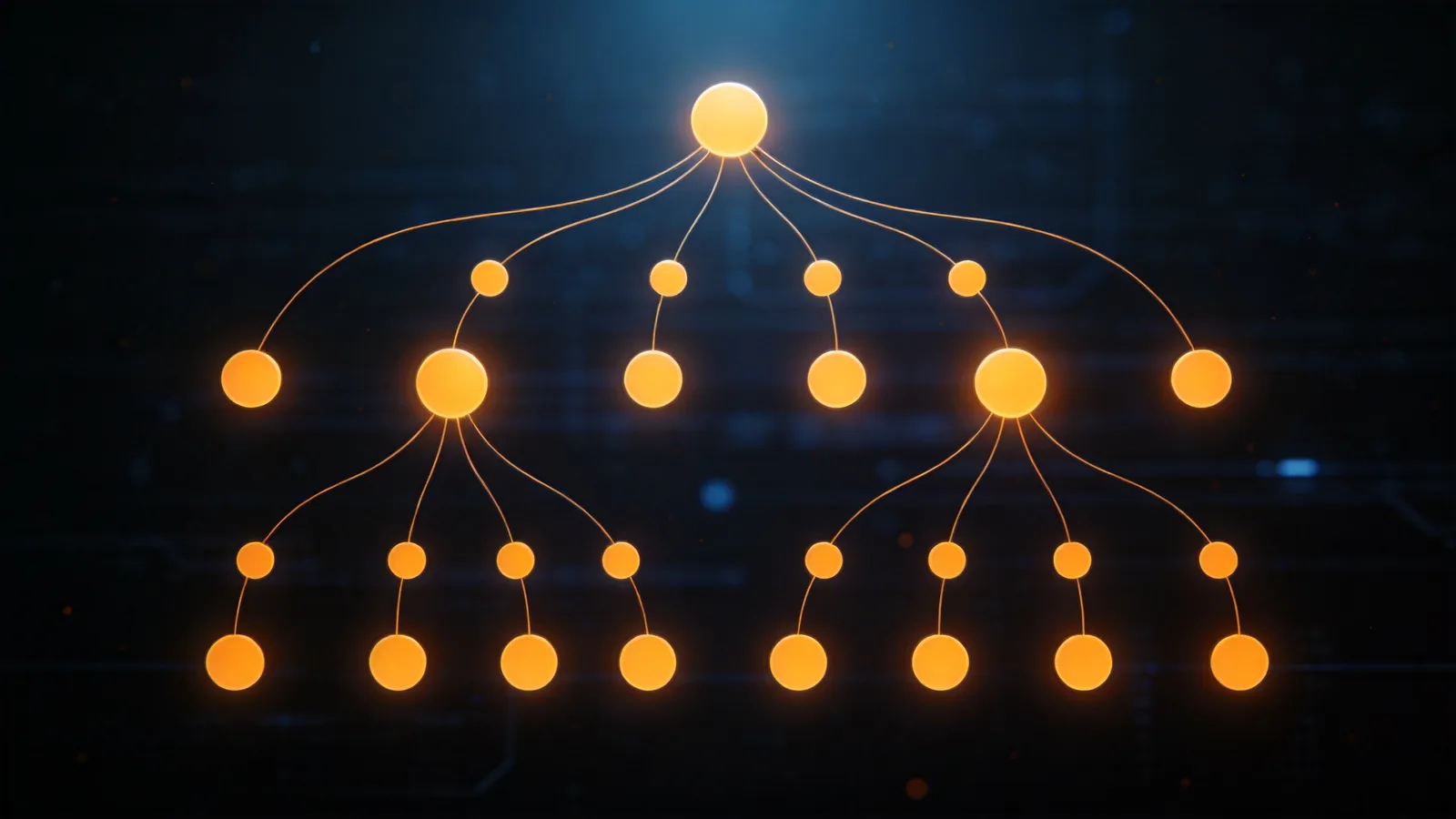
- Complex tasks are automatically decomposed and assigned to the most suitable Agents
- Execution results are aggregated to produce the final output
2.2 openJiuwen and Huawei's Strategic Intent
openJiuwen is an open-source AI Agent platform community supported by Huawei. JiuwenSwarm is the swarm Agent framework released by this community, fully open-source under the Apache 2.0 license — available for any enterprise or individual to use, modify, and deploy freely.
Huawei's strategic intent in supporting openJiuwen is clear: in the AI Agent era, having a say in platform standards matters more than any single product. Establishing de facto standards through an open-source community has more long-term value than building behind closed doors.
This is consistent with Huawei's approach in cloud computing, 5G, and open-source operating systems (openEuler, HarmonyOS).
2.3 Coordination Engineering: The Core of Swarm Intelligence
The technical core of JiuwenSwarm is a concept called Coordination Engineering.
The problem with traditional multi-Agent systems is that collaboration between Agents is often hard-coded (baked into the code), lacking flexibility. Agent A finishes and calls Agent B, Agent B finishes and calls Agent C — this is essentially still a centralized pipeline, not true "collaboration."
Coordination Engineering solves this: it enables Agents to dynamically negotiate, autonomously divide labor, and flexibly adjust, just like a human team.
It comprises three core mechanisms:
① Task Decomposition & Assignment
When a user submits a complex task, the Coordinator automatically breaks it down into subtasks and assigns them based on each Agent's Capability Profile. Think of it as a project manager breaking down requirements into tickets and assigning them to the most suitable engineers.
② Communication Protocol
Agents need a standardized "language" to exchange information. JiuwenSwarm defines a JSON-based Agent Communication Protocol (ACP) that includes standard message types for task requests, status reports, result delivery, and exception handling.
③ Dynamic Coordination
When an Agent fails, the Coordinator can automatically reassign the task. When a subtask finishes early, the Coordinator can dynamically adjust the priority of subsequent tasks. This "elastic scheduling" capability is the defining feature that distinguishes swarm intelligence from traditional pipelines.
3. JiuwenSwarm's Technical Architecture
3.1 Three-Layer Architecture
JiuwenSwarm adopts a classic three-layer architecture:
┌─────────────────────────────────────┐
│        Application Layer             │  ← Business scenarios, user interface
├─────────────────────────────────────┤
│       Coordination Layer             │  ← Task decomposition, Agent scheduling
├─────────────────────────────────────┤
│        Execution Layer               │  ← Individual Agent capability execution
└─────────────────────────────────────┘
The Execution Layer is the runtime environment for individual Agents. Each Agent can connect to different LLMs (Huawei Pangu, Claude, GPT, open-source models, etc.) and can call different tool sets (APIs, databases, code executors, etc.).
The Coordination Layer is JiuwenSwarm's core, responsible for "team management" among Agents. It maintains an Agent Registry that tracks each Agent's capabilities and status, while running coordination algorithms that determine how tasks are assigned.
The Application Layer faces end users and business systems, providing API interfaces and a low-code configuration interface.
3.2 Comparison with Mainstream Frameworks
| Dimension | LangGraph | AutoGen | CrewAI | JiuwenSwarm |
|---|---|---|---|---|
| Coordination Mode | Fixed flow graph | Conversation-driven | Role-based division | Dynamic coordination |
| Flexibility | Low | Medium | Medium | High |
| Open-Source License | MIT | MIT | MIT | Apache 2.0 |
| Enterprise Support | None | Microsoft | None | Huawei |
| Chinese Ecosystem | Weak | Weak | Weak | Strong |
| Deployment Complexity | Medium | Medium | Low | Medium |
JiuwenSwarm's core differentiators are dynamic coordination and enterprise-grade support. Unlike LangGraph, which requires pre-defining a fixed execution flow graph, JiuwenSwarm dynamically determines collaboration patterns at runtime based on the task. Meanwhile, Huawei's enterprise support means more mature guarantees around stability, security, and large-scale deployment.
4. Real-World Applications: Where Swarm Intelligence Delivers the Most Value
4.1 Scenario 1: Enterprise-Grade Data Analysis Reports
Traditional approach: A data analyst spends 2 days handling data extraction, cleaning, analysis, visualization, and report writing separately.
Swarm approach:
- Agent A: Extract raw data from databases, perform cleaning and preprocessing
- Agent B: Execute statistical analysis, identify trends and anomalies
- Agent C: Generate visualization charts (bar charts, trend lines, heatmaps)
- Agent D: Draft the report narrative based on analysis results
- Agent E: Consolidate all content and generate the final PDF report
Result: 2 days → 30 minutes, with higher standardization across every analysis.
4.2 Scenario 2: Customer Service Ticket Processing
Traditional approach: Support staff manually process every ticket, even for simple issues that waste human resources.
Swarm approach:
- Agent A (Intent Recognition): Classify ticket type and urgency level
- Agent B (Knowledge Base Retrieval): Search the enterprise knowledge base for relevant solutions
- Agent C (Auto-Reply): Generate direct responses for simple issues
- Agent D (Human Handoff): Generate a summary for complex issues and route to human agents
- Agent E (Ticket Archival): Automatically archive completed tickets and update the knowledge base
Result: 70% of simple tickets are fully automated; human agents focus on complex problems.
4.3 Scenario 3: Content Production Pipeline
Traditional approach: Content teams divide labor across drafting, illustration, layout, and publishing — long cycles, high coordination costs.
Swarm approach:
- Agent A (Topic Analysis): Recommend topics based on trending data and historical performance
- Agent B (Content Creation): Draft the article body
- Agent C (Image Generation): Generate illustrations based on article content
- Agent D (SEO Optimization): Optimize titles, keywords, and meta descriptions
- Agent E (Multi-Platform Adaptation): Adapt content to the format requirements of the website, WeChat Official Account, Zhihu, etc.
- Agent F (Scheduled Publishing): Automatically publish according to the content calendar
Result: Content output efficiency increases 5–10×, with higher quality standardization.
4.4 Scenario 4: Code Review and Refactoring
Traditional approach: Senior engineers spend significant time on code review, with even low-level issues consuming attention.
Swarm approach:
- Agent A (Static Analysis): Check for syntax errors, style issues, and potential bugs
- Agent B (Security Scanning): Identify security vulnerabilities and potential risks
- Agent C (Performance Analysis): Detect performance bottlenecks and optimization opportunities
- Agent D (Refactoring Suggestions): Provide refactoring plans based on analysis results
- Agent E (Report Aggregation): Generate a comprehensive review report with issues prioritized by severity
Result: Code review coverage increases from 30% (only critical modules reviewed) to 100%, with more scientifically graded issue prioritization.
5. The Enterprise Implications of Swarm Intelligence
5.1 From "AI Tools" to "AI Organization"
The most profound significance of swarm Agents is that they upgrade how enterprises deploy AI — from "procuring tools" to "building an AI team."
The traditional AI tool model is: humans use tools. The human remains the center; AI merely amplifies human capability.
The swarm intelligence model is: humans define goals, and the AI team collaborates autonomously to achieve them. Humans shift from "operator" to "manager," from "hands-on execution" to "setting direction and reviewing results."
This has far-reaching implications for enterprise organization design. When AI can work in "teams," many traditional workflows, job structures, and reporting relationships need to be rethought.
5.2 Lowering the Barrier to AI-Enabling Complex Tasks
Before swarm intelligence, fully AI-enabling a complex task required deep custom development — essentially writing bespoke software for that specific task.
With swarm intelligence, you only need to: 1. Define the task objective and decomposition logic 2. Prepare or select suitable specialized Agents 3. Configure coordination rules
This dramatically lowers the barrier to enterprise AI adoption. It's no longer "only the big players can afford it" — small and medium enterprises can also use swarm Agents to build their own AI workflows.
5.3 The Strategic Value of Open Source
JiuwenSwarm's decision to go open-source is a signal worth paying attention to.
Open source means: - Lower adoption barriers: Enterprises can try it directly without signing contracts or paying upfront - Community-driven iteration: Developers worldwide can contribute code and use cases; iteration speed far exceeds closed-source products - Defense against ecosystem lock-in: Once an enterprise builds AI workflows on JiuwenSwarm, migration costs become high, establishing a de facto standard position
Huawei's success in 5G, cloud computing, and operating systems has been significantly driven by open-source strategy. JiuwenSwarm is likely Huawei's play in the AI Agent era, following the same blueprint.
6. Challenges and Limitations: Swarm Intelligence Is Not a Panacea
Despite representing a major direction forward, swarm intelligence in its current stage still has clear limitations:
① Coordination Overhead
Multiple Agents collaborating inevitably introduces communication and coordination overhead. For simple tasks, the swarm approach may actually be slower and more expensive than a single Agent. The swarm advantage only becomes clear when task complexity is sufficiently high.
② Error Propagation
In a swarm, one Agent's error can affect the entire task chain. If Agent A outputs incorrect intermediate results, Agents B, C, and D may continue working based on bad input, creating a "garbage in, garbage out" amplification effect.
③ Debugging Difficulty
A single Agent's behavior can still be traced, but when multiple Agents collaborate dynamically, pinpointing which link is responsible when something goes wrong is difficult. This requires more robust logging and observability tooling.
④ Cost Considerations
Running multiple Agents means multiple calls to LLM APIs — costs can be several times higher than a single Agent. Enterprises need to carefully evaluate ROI and avoid blindly adopting swarm architectures.
7. Future Outlook: The Race for Agent Infrastructure
The release of JiuwenSwarm marks the shift in AI Agent competition from "point capabilities" to "coordination capabilities."
Over the next 12–24 months, we'll see:
- More swarm frameworks emerging: LangGraph, CrewAI, and others will strengthen multi-Agent coordination capabilities
- Enterprise Agent platforms maturing: Analogous to Kubernetes in cloud computing, Agent orchestration platforms will become the core component of enterprise AI infrastructure
- Agent standardization accelerating: Interoperability standards between Agents (similar to HTTP for the Web) will gradually form — JiuwenSwarm's ACP protocol is a candidate
- "Agent Team as a Service" rising: Enterprises will no longer need to build Agent teams themselves, but can directly procure specialized Agent team services
8. Conclusion
The leap from solo Agents to Agent swarms is not simply "adding more Agents" — it is a paradigm shift.
Just as humans unlocked exponential growth in organizational productivity by evolving from individual combat to team collaboration, swarm Agents do the same for AI — endowing it with "organizational capability."
The open-source release of JiuwenSwarm is a major milestone in this transformation. It may not be the ultimate winner, but the direction it points to — Coordination Engineering, open-source ecosystem, enterprise-grade support — is almost certainly the future.
For enterprise technology decision-makers, starting to pay attention to and experiment with swarm Agents now is not "chasing a trend" — it is laying the foundation for AI infrastructure 2–3 years out.
In the single-Agent era, the competition was about models. In the swarm-Agent era, the competition is about coordination and ecosystem.
This race has only just begun.
Nizwo | The Agent Computer for Everyone · AI Agents