From ChatGPT Bills to Local Freedom: How a Solo Developer Cut Costs by 90%
📖 Glossary
AI Box (also known as Agent Computer / Agent PC), is a dedicated local hardware device that runs AI Agents. Pre-installed with an AI agent management system, plug-and-play, running 24/7. Users can remotely command AI to work via Discord, Slack, Telegram, WhatsApp, and more.
Every indie hacker knows the pain: you're building the next big thing at 2 AM, the code is flowing, you ask ChatGPT for help debugging... and you see the "usage limit" warning. Again.
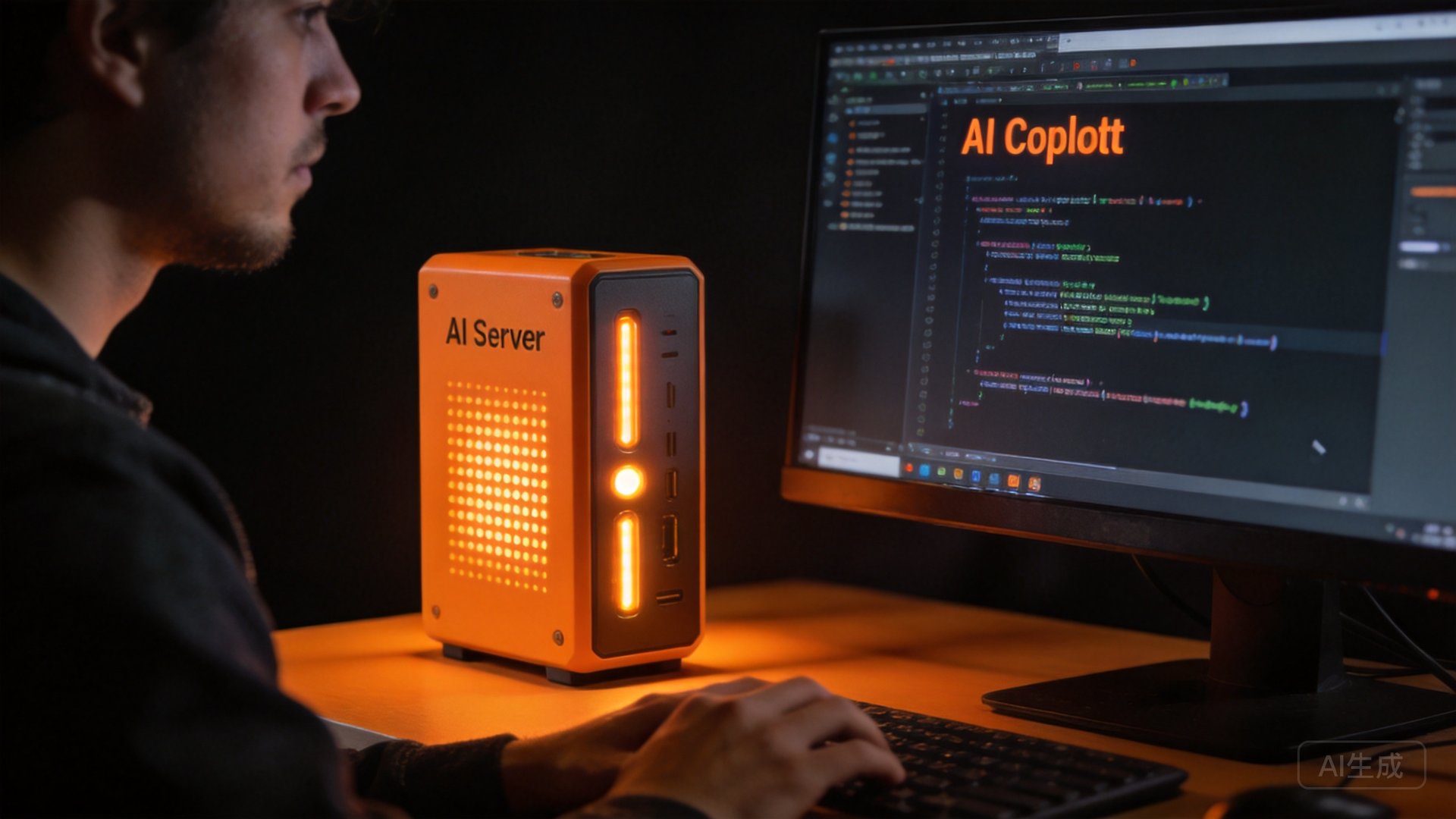
Now imagine working with a GPT-4-level coding assistant that never runs out of quota, never sends your code to a cloud, and costs nothing per query after the initial hardware purchase. That's exactly what Shenzhen-based developer Li Wei achieved by migrating his entire dev workflow to a local AI setup powered by Kaihe.
The API Tax on Solo Developers
Before Kaihe, Li Wei's monthly AI spending looked like this:
| Service | Usage | Cost/Month |
|---|---|---|
| GitHub Copilot | Daily coding | ¥68 |
| ChatGPT Plus | Daily debugging + research | ¥148 |
| OpenAI API (GPT-4) | Complex code generation | ¥200-400 |
| Claude API | Long context analysis | ¥100-200 |
| Total | ¥500-800 |
That's for a single developer earning under ¥10,000/month from their SaaS product. And every time OpenAI raised prices (which happened twice in 2025), his margins shrank further.
Worse: his product was an enterprise SaaS dealing with financial data. Sending proprietary business logic through third-party APIs was a compliance nightmare waiting to happen.
The Migration Stack
Li Wei's setup after switching to Kaihe:
Kaihe C1 (¥1,999 one-time purchase)
├── DeepSeek-Coder-V2 (locally hosted) → code generation
├── Qwen-2.5-72B → research + debugging
├── OpenClaw with local providers → tool orchestration
└── Continue.dev plugin → VS Code integration
The local coding assistant experience:
- Code completion: 1-3 seconds (slightly slower than Copilot's 0.5s, but acceptable)
- Debugging conversations: full context, no limits
- Code review: offline analysis of entire project repos
- Privacy: zero code leaves the machine
ROI After 6 Months
After half a year of migration:
| Metric | Cloud Era | Local Era |
|---|---|---|
| Monthly AI cost | ¥650 avg | ¥15 (electricity) |
| Total 6-month cost | ¥3,900 | ¥1,999 + ¥90 |
| Code quality (self-reported) | Baseline | +20% (unlimited iterations) |
| Privacy anxiety | High | Zero |
| Downtime from API outages | ~3 hours/month | 0 |
Key insight: By month 6, the total costs cross. From month 7 onward, Li Wei saves ¥600+ every single month. Over two years, that's ¥15,000 in pure savings — enough for a second, higher-spec Kaihe machine.
The Hidden Benefit: No API Anxiety
Beyond the numbers, Li Wei reported a psychological shift:
"I used to hesitate before sending a complex query to GPT-4. 'Is this worth ¥3?' Now I just ask. I ask the stupid questions, the speculative ones, the 'what if I try this weird approach' prompts. That freedom — not worrying about cost — made me a better developer."
This is the real unlock: when AI becomes a zero-marginal-cost resource, you use it differently. You experiment more. You fail faster. You learn faster.
What About Quality?
Independent benchmarks show that DeepSeek-Coder-V2 achieves ~95% of GPT-4's coding capability at similar parameter counts. For most solo developer workflows — writing React components, debugging Python scripts, generating SQL queries — the difference is imperceptible.
The gap only shows in highly specialized domains (cryptography implementation, complex algorithmic proofs) where GPT-4 still leads. But that's <5% of a typical indie dev's workload.
The solo developer economy is built on minimizing burn rate. A ¥2,000 one-time hardware investment that eliminates ¥650/month in API bills isn't just cost-cutting — it's a competitive advantage. When your competitors are still rationing their GPT-4 tokens, you're building freely.