📖 Glossary
AI Box (also known as Agent Computer / Agent PC), is a dedicated local hardware device that runs AI Agents. Pre-installed with an AI agent management system, plug-and-play, running 24/7. Users can remotely command AI to work via Discord, Slack, Telegram, WhatsApp, and more.
Summary: On June 7, 2026, JD and Tencent announced deep cooperation around AI Agent. JD's supply chain and fulfillment system connects with Tencent's ecosystem gateways through the A2A (Agent to Agent) protocol, forming a complete service loop from intent recognition to service guarantee. This marks the transition from single-point applications to ecosystem collaboration.
I. The Core: Supply Chain Meets Social Gateways via Agent Interconnection
On June 7, JD and Tencent formally announced deep cooperation around AI Agent. This isn't a simple traffic swap—it's a foundational integration at the Agent level between two fundamentally different platform types. In the history of China's internet, JD and Tencent's cooperation is nothing new—Tencent was once a significant JD shareholder, and the two have long collaborated on traffic gateways and e-commerce referrals. But this time is fundamentally different: previous cooperation was 'humans finding humans'; this time it's 'Agents finding Agents.' When the interacting subject shifts from humans to AI, the depth and breadth of collaboration undergo a qualitative leap.
The core logic is clear:
- JD's side: Provides commodity supply chain and fulfillment capabilities. JD holds over 1 billion SKUs, a nationwide warehousing and logistics network including 1,500+ warehouses and hundreds of thousands of delivery personnel, and mature after-sales service systems. More importantly, JD's supply chain isn't just 'selling goods'—it encompasses the entire service chain from product selection, pricing, and inventory management through delivery, installation, and after-sales support. Once these capabilities are standardized through Agent output, they become infrastructure for the entire AI ecosystem, not just an e-commerce platform's privilege.
- Tencent's side: Provides ecosystem gateway resources. WeChat, QQ, and Tencent Video cover virtually every Chinese internet user's daily social and information scenarios. Tencent's AI ecosystem cooperation has already connected with Huawei, Xiaomi, OPPO, and vivo—users don't need to open any specific app; they can initiate requests directly through native terminal agents.
- A2A Protocol: Enables Agents from different platforms to 'converse.' A2A (Agent to Agent) is a cross-Agent collaboration protocol—like a 'common language' among Agents. Regardless of the framework used to develop an Agent, as long as it follows the A2A protocol, it can understand and collaborate with other Agents.
In plain terms: you tell Tencent's Agent in WeChat 'help me buy an air conditioner,' Tencent's Agent passes the request to JD's Agent via A2A, JD's Agent finds the best match from its supply chain, arranges delivery, and tracks after-sales service—you never need to leave WeChat or open the JD app.

II. A2A Protocol: The 'Common Language' of Agent Collaboration
The A2A protocol is the technical foundation of this partnership, worth examining in detail.
What is A2A? A2A stands for Agent to Agent—a standardized inter-Agent communication protocol. Its core goal is enabling AI Agents developed by different vendors and frameworks to communicate and collaborate. If MCP (Model Context Protocol) solves 'how Agents call tools,' A2A solves 'how Agents collaborate with each other.'
Why does it matter? Before A2A, every AI Agent was an island. Agents built on different platforms couldn't communicate directly, let alone commercial Agents from different companies. Each Agent could only operate within its own ecosystem, requiring users to manually switch between apps for cross-scenario tasks—this was still 'humans adapting to machines,' not 'machines adapting to humans.' A2A breaks down this barrier, making Agent to Agent cross-platform collaboration possible. Your OpenClaw-built Agent couldn't communicate with a Coze-built Agent, let alone JD's e-commerce Agent with Tencent's social Agent. A2A eliminates this barrier entirely.
Current ecosystem: A2A has gained native support from Microsoft, Google, and Alibaba frameworks. Tencent has connected with Huawei, Xiaomi, OPPO, and vivo; JD's AI Agent has integrated with Huawei, OPPO, and Honor. The protocol's coverage is expanding rapidly—when a protocol is collectively adopted by major vendors, it becomes a standard rather than an option. A2A's design draws on the layered approach of internet protocols: the transport layer handles reliable inter-Agent communication, the semantic layer manages intent understanding and task decomposition, and the application layer handles specific business logic. This layered design means the protocol can evolve continuously without requiring a complete rewrite.
For developers: If your Agent supports A2A, it can automatically access JD's supply chain, Tencent's social gateways, and any A2A-compliant third-party service. No need to integrate APIs one by one—the protocol itself is the connector. This dramatically lowers the barrier to building interconnected Agent ecosystems, enabling even small teams to plug into major platforms seamlessly and rapidly. This dramatically lowers the barrier to building interconnected Agent ecosystems, enabling even small teams to plug into major platforms seamlessly and rapidly.
III. The Service Loop: From Intent Recognition to Service Guarantee
The most noteworthy aspect isn't the technology itself, but the complete experience loop it enables. This loop matters because it's one of the few cases in the industry moving from 'proof of concept' to 'commercial deployment.' Many companies talk about Agents, but most remain at the 'an Agent checks the weather for you' stage. JD and Tencent's cooperation is the first time Agent collaboration covers the complete commercial process from demand generation to product delivery.
Traditional e-commerce flow: Open app → Search → Compare prices → Place order → Wait for delivery → Receive → Review. Every step requires active user operation.
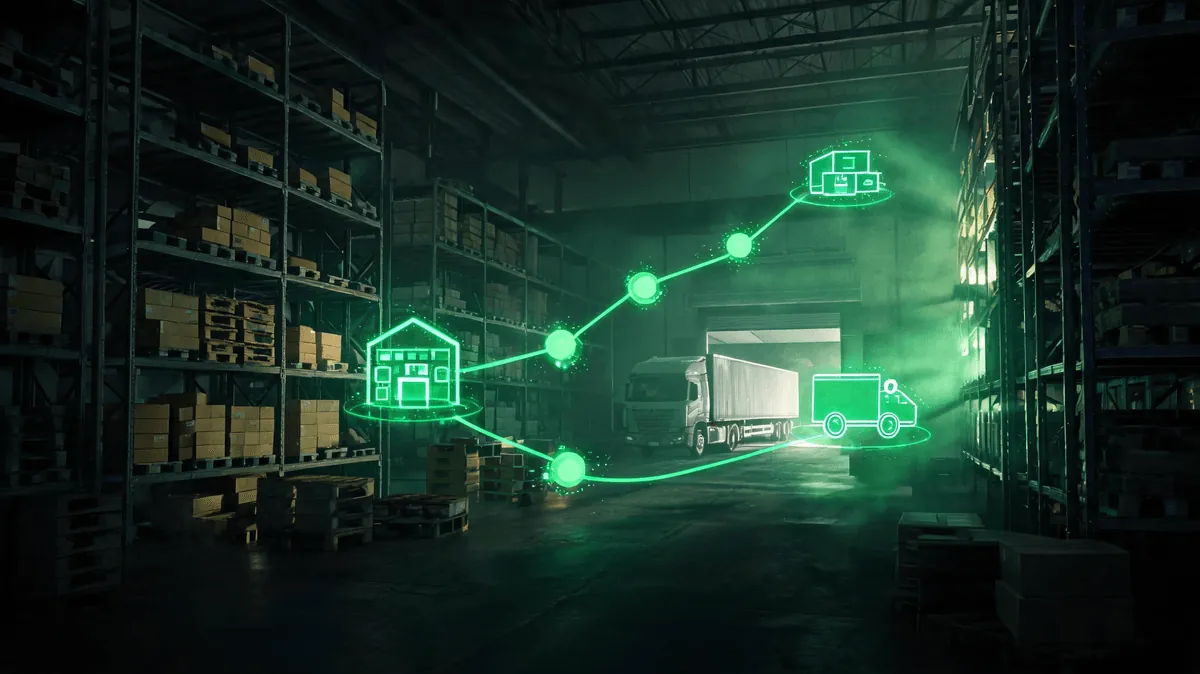
After JD-Tencent AI Agent cooperation: User expresses a need in any terminal or social scenario (intent recognition) → Tencent's Agent understands and routes to JD's Agent (A2A collaboration) → JD's Agent matches the optimal product from supply chain (intelligent selection) → Automatic ordering and fulfillment (service guarantee) → Full tracking and after-sales support (loop complete).
The key difference: Users only need to express intent; Agents handle everything else. This is a fundamental shift in interaction paradigm. From GUI (Graphical User Interface) to CUI (Conversational User Interface), and now to Agent-autonomous execution, user participation shrinks from 'operating every step' to 'stating the need once.' When this transition completes, the very concept of an 'app' may be redefined—you no longer need to 'open a specific app' because your Agent handles all service interactions. This distinction is precisely what separates a sophisticated Agent ecosystem from a simple chatbot wrapper around an API.
JD's supply chain advantage is amplified to the extreme here. When an Agent can autonomously select products and place orders, the breadth, depth, and fulfillment efficiency of the supply chain directly determine the ceiling of user experience. JD's 1 billion SKUs and nationwide warehousing network is no longer just a moat for an e-commerce platform—it's infrastructure for an AI ecosystem. This is precisely why JD has strong motivation for this partnership: when interaction gateways shift from apps to Agents, JD risks becoming a pipelined 'backend supplier' losing direct user touchpoints unless it establishes connections at the Agent layer. The A2A protocol lets JD maintain its identity as a 'service provider' in the Agent era, not merely a 'product catalog.' This is precisely why JD has strong motivation for this partnership: when interaction gateways shift from apps to Agents, JD risks becoming a pipelined 'backend supplier' losing direct user touchpoints unless it establishes connections at the Agent layer.
IV. What Does This Mean for Regular Users?
1. Shopping no longer requires 'browsing.' Just say 'I need an air conditioner for a small apartment,' and the Agent finds the best match based on your location, budget, and preferences. No price comparison, no review reading, no platform switching. The shopping experience transforms from 'active searching' to 'passively receiving optimal solutions,' minimizing cognitive load for users.
2. AI ecosystem cooperation accelerates. JD and Tencent's cooperation is just the beginning. When A2A becomes standard, any two Agents can interconnect—travel Agents finding hotel Agents, education Agents connecting with content Agents, finance Agents linking to insurance Agents. The Agent collaboration network will grow organically like the internet itself. Each newly connected Agent adds value to the entire network, and network effects attract more Agents to join—this is a classic positive feedback loop.
3. Local Agent value confirmed again. Cloud Agents are powerful but have inherent limitations in continuous operation and privacy protection. When your Agent needs to monitor requests 24/7 and coordinate multiple services, a local agent computer becomes essential. Devices like KaiheAiBox AIBOX-A1 run at low power around the clock, handling Agent scheduling and sensitive data processing locally while using the cloud only for inference—efficient and secure. For enterprises, this is also an important safeguard for data sovereignty—sensitive user data and business logic stay local, and only necessary inference requests go to the cloud.
4. The standards battle for AI ecosystem cooperation has begun. Whoever controls the protocol standard controls the ecosystem's connectivity. A2A is currently led by Google, but JD and Tencent's partnership proves Chinese companies are actively positioning themselves. The future Agent ecosystem landscape may not be dominated by a single company but determined by protocol standards—just as HTTP doesn't belong to any company but defines how all companies connect.
5. Enterprises need to start building Agent capabilities now. If your business involves supply of goods, services, or content, you must start thinking: how can your services be invoked by Agents? Can your data be understood by Agents? Do you support the A2A protocol? When user interaction gateways shift from apps to Agents, service providers that don't support Agent integration will be simply bypassed.
---#JD #Tencent #A2AProtocol #AIAgent #AIEcosystem
KaiAIBox| Agentaibox that lets AI work for you 24/7· AI Agent