Kai-Fu Lee's Latest Verdict: AI Won't Replace Your Job — It Will Replace Your Entire Department
📖 Glossary
AI Box (also known as Agent Computer / Agent PC), is a dedicated local hardware device that runs AI Agents. Pre-installed with an AI agent management system, plug-and-play, running 24/7. Users can remotely command AI to work via Discord, Slack, Telegram, WhatsApp, and more.
Abstract: Innovation Works chairman Kai-Fu Lee stated in a 2026 public speech that AI's impact is not about "one person being replaced" but about "an entire department being replaced." This judgment is sharper and closer to reality than "AI is coming for your job." When AI agents can execute complete business processes around the clock, what gets displaced is not a single position but an entire workflow. This article dissects the logic behind Lee's claim, quantifies the real-world impact across industries, and provides a practical framework for individuals and organizations to navigate the transition.
From "Job Replacement" to "Department Replacement": A Qualitative Shift
Kai-Fu Lee's core argument is this: past discussions have always focused on "whether AI will replace a particular job," but the real impact is different. AI will not replace a customer service rep, a copywriter, or a data analyst — it will replace the entire customer service department, the entire content team, the entire data analysis group.
Why? Because AI agents do not "complete a task" — they "execute a process."
Traditional AI tools (like ChatGPT) are "assistive" — you ask, it answers; you stop, it stops. But AI agents are "autonomous" — you give it a goal, and it plans steps, invokes tools, executes tasks, and reports results on its own. This model does not require human supervision. Running 24/7, its efficiency is dozens of times that of manual labor.
Take customer service as an example: AI is not replacing a particular customer service agent. It is replacing the entire "receive-classify-respond-followup-archive" process. This process requires 5-8 people working collaboratively, but one AI agent can handle it all.
The Process Execution Paradigm
This distinction between "task completion" and "process execution" is critical. A task is a single unit of work — write an email, generate a report, answer a question. A process is a chain of interdependent tasks — receive a customer complaint, classify its urgency, retrieve relevant knowledge base articles, draft a response, get supervisor approval if needed, send the response, log the interaction, follow up in 48 hours, and escalate if unresolved.
AI agents excel at processes because they can maintain state, make decisions at each step, handle exceptions, and loop back when things go wrong. This is fundamentally different from a chatbot that answers one question at a time.
Consider this real-world example: A mid-size e-commerce company deployed an AI agent for customer service in early 2026. Before deployment, the team had 22 customer service agents working in shifts to cover 16 hours of daily operation. After deployment, the team shrank to 3 people managing 8 AI agents that cover 24/7. First-response time dropped from 45 seconds to 2 seconds. Customer satisfaction actually increased by 12 percentage points because the AI agent never lost patience and always followed the optimal resolution path.
The Economics of Department-Level Replacement
Why departments rather than individual positions? It comes down to process integrity. When you replace one person in a multi-step process, the remaining humans become bottlenecks — they must wait for AI output, translate between AI and human colleagues, and handle handoffs. The efficiency gain is marginal, sometimes even negative due to coordination overhead.
But when you replace the entire process end-to-end, the efficiency gain is multiplicative. No handoffs, no translation layers, no waiting for human colleagues to come back from lunch. The AI agent handles the full pipeline seamlessly.
A McKinsey analysis from Q1 2026 estimated that partial AI automation (replacing individual tasks) yields 15-30% efficiency gains, while full-process automation (replacing entire workflows) yields 200-500% gains. This exponential difference is what Lee means by "department replacement" — it is not about headcount reduction, it is about process redesign.
Historical Precedent: The Assembly Line
This pattern has played out before. When Henry Ford introduced the assembly line in 1913, he did not replace one craftsman at a time. He replaced the entire artisan workshop model with a fundamentally different production process. A single craftsman who previously built an entire car door now became one person performing one repetitive step in a sequence. The output per worker increased 8x.
AI agents are doing something similar for knowledge work. Instead of a content team where each person handles research, writing, editing, and distribution, you get an AI-powered pipeline where each step is handled by a specialized agent, with humans managing the process rather than executing the steps. The parallel is striking — and so are the implications for organizational structure.
Why This Shift Matters More Than You Think
The shift from "job replacement" to "department replacement" is not merely semantic — it fundamentally changes how individuals and organizations should prepare. If AI were replacing individual jobs, the correct response would be to become the best at your specific role, hoping to be the last person replaced. But if AI is replacing entire departments, individual excellence within the old paradigm is irrelevant. The department is going away regardless of how good you are at your specific tasks.
This is why Lee's framing is so important and so unsettling. It invalidates the most common coping strategy: "I will just get really good at what I do, and AI will not be able to replace me." In a department-level replacement scenario, being the best customer service rep in the world does not help if the entire customer service function is automated. Your skill is valuable only within the context of a human-staffed department; when the department itself is restructured, that context disappears.
The correct response is not to optimize within the old system but to position yourself for the new one. This means developing skills that are valuable in a department that includes both humans and AI agents — skills like process design, exception handling, quality assurance, and strategic oversight.
The Cognitive Bias That Prevents Preparation
There is a well-documented cognitive bias at work here: the "boiling frog" effect. When change is gradual, humans tend to underestimate its cumulative impact. Year 1: AI handles 10% of your department's work. Year 2: 25%. Year 3: 50%. Each increment feels manageable, so you do not prepare for the eventual endpoint — 80-90% automation — until it is too late.
Lee's "department replacement" framing is designed to combat this bias. By painting the end state clearly, he forces people to confront the full magnitude of the change rather than comforting themselves with incremental comparisons. It is the difference between "the water is getting slightly warmer" and "you are about to be boiled."
Which Departments Are Most at Risk
Based on Kai-Fu Lee's analysis and the current development level of AI agents, the following types of departments face the greatest impact:
Customer Service and After-Sales
This is currently the most mature application area for AI agents. Natural language understanding, multi-turn dialogue, knowledge base retrieval, and ticket routing are already commercialized. Many enterprises have reduced their customer service departments from 30 people to 3 (1 managing AI + 2 handling exceptions).
The economics are compelling: a customer service agent costs approximately $35,000-50,000 annually (salary + benefits + overhead in a mid-tier Chinese city). An AI agent running on an Agent Computer costs roughly $2,000-4,000 per year (hardware amortization + API costs). For a 30-person department, the annual savings can exceed $900,000.
The quality argument is equally strong. Human customer service agents have bad days, lose patience, provide inconsistent answers, and occasionally make factual errors. AI agents maintain consistent tone, never lose patience, always follow the optimal resolution path, and can instantly access the entire knowledge base. In blind satisfaction surveys, customers frequently rate AI agent interactions higher than human ones for routine inquiries.
Content and Marketing
Copywriting, social media operations, SEO optimization, and data analysis — AI agents can already complete over 80% of these tasks. The remaining 20% involves strategy formulation and creative decision-making, which is precisely where humans should focus.
A content team of 8 people typically produces 40-60 pieces of content per month. With AI agents, the same output can be achieved by 2 people managing 4-6 AI agents, with production increasing to 120-200 pieces per month. The quality differential is narrowing rapidly — in blind tests conducted by multiple agencies in 2026, AI-generated marketing copy was preferred over human-written copy 43% of the time.
The marketing department transformation is particularly interesting because it goes beyond just content production. AI agents can also handle A/B testing at scale, automatically generate and optimize ad creatives, monitor brand sentiment across social platforms in real-time, and adjust campaign spending based on performance data. A CMO at a Fortune 500 company described their AI-augmented marketing team as having "the output of a 50-person department with the headcount of a startup."
Data and Analytics
Report generation, data cleaning, trend analysis, anomaly detection — AI does these 10x faster than humans and without basic calculation errors. More importantly, AI agents can run these analyses continuously rather than on a schedule. Instead of waiting for the weekly report, you get real-time anomaly alerts and trend notifications.
A financial services firm reported that their 12-person analytics team, after integrating AI agents, now produces the same volume of analysis with 4 people. The AI handles data ingestion, cleaning, and preliminary analysis, while humans focus on interpreting results and making strategic recommendations.
The analytics transformation is especially significant because it changes the very nature of the function. Traditional analytics teams are reactive — they produce reports when asked. AI-augmented analytics is proactive — it continuously monitors data streams and surfaces insights before anyone asks. This shift from "answer questions" to "surface insights" represents a fundamental change in how organizations relate to their data.
Administration and HR
Resume screening, onboarding processes, attendance management, benefits distribution — these standardized processes are the most suitable for AI agent takeover. A 500-employee company's HR department typically processes 200+ resume screenings, 15-20 onboarding cycles, and hundreds of attendance/benefits queries per month. AI agents can handle 90% of these interactions without human intervention.
The HR transformation goes beyond efficiency. AI agents can reduce hiring bias by focusing on qualifications rather than demographic markers, ensure consistent onboarding experiences for every new hire, and proactively identify employee engagement risks before they lead to turnover. One company reported a 25% reduction in early-stage turnover after implementing an AI-powered onboarding agent that provided personalized support during the first 90 days.
Finance and Compliance
Invoice auditing, expense approval, compliance checks, risk assessment — these rule-defined tasks are handled more accurately by AI. In fact, a major bank's compliance department reported that AI agents caught 23% more anomalies than human reviewers, primarily because AI does not suffer from fatigue and processes every single transaction with the same level of scrutiny.
The financial sector is particularly ripe for agent-driven transformation because of the sheer volume of repetitive, rule-based processes. A single bank might process millions of transactions daily, each requiring compliance checks against evolving regulatory frameworks. Humans cannot maintain perfect consistency across this volume; AI agents can.
Legal Operations
Contract review, legal research, due diligence, regulatory filing — these tasks, which traditionally consume 40-60% of junior lawyers' time, are increasingly handled by AI agents. A Big Four consulting firm reported that their AI-powered contract review agent processes 500+ contracts per day with 94% accuracy, compared to a human reviewer's average of 15 contracts per day at 89% accuracy.
The legal department transformation is counterintuitive to many because law is perceived as requiring deep expertise and judgment. But the reality is that 70-80% of legal work in most organizations is routine: standard contract templates with minor variations, regulatory filings following established formats, and legal research that primarily involves finding relevant precedents. AI agents handle the routine 80%, freeing lawyers to focus on the complex 20% where judgment truly matters.
Education and Training
Curriculum development, assignment grading, student progress tracking, personalized learning path generation — AI agents are beginning to handle these at scale. Several Chinese universities have piloted AI teaching assistants that provide 24/7 tutoring, reducing the burden on human faculty by an estimated 30%.
The education transformation is particularly profound because it enables true personalization at scale. Traditional education offers one-size-fits-all instruction; AI agents can adapt teaching methods, pace, and content to each student's learning style and progress. A pilot program at a Shanghai university showed that students using AI teaching assistants improved their test scores by an average of 18% compared to the control group.
It Is Not "Replacement" — It Is "Reorganization"
Lee specifically emphasizes that the word "replacement" is not quite accurate. A more precise term would be "reorganization."
AI does not simply lay off everyone in a department. It redefines the department's function and personnel structure. A customer service department that previously had 30 people might be reorganized into: 3 people + 10 AI agents. The 3 people handle strategy, exception processing, and AI management, while the 10 AI agents handle daily execution.
The essence of this reorganization is: humans transition from "executors" to "managers" and "designers." You no longer write copy yourself — you design the rules and workflows for AI to write copy. You no longer answer customer calls yourself — you train AI on how to serve customers better.
The New Organizational Chart
Traditional departments are organized around functional silos — marketing, sales, support, operations. The AI-augmented organization is structured differently:
- AI Operations Team: 2-3 people managing all AI agents across departments
- Strategy and Decision Layer: Senior staff who define goals, set boundaries, and make judgment calls
- Exception Handlers: Specialists who intervene when AI encounters edge cases
- Human-Centric Roles: Positions requiring empathy, creativity, and interpersonal judgment
This is not speculative — companies like Shopify, Klarna, and several Chinese tech firms have already adopted versions of this structure. Klarna's CEO publicly stated in 2025 that AI agents now handle work equivalent to 700 full-time employees.
The Timeline: Faster Than You Think
Lee predicts that 30% of enterprise departments will undergo AI-driven reorganization by 2028, and 70% by 2031. These numbers initially sound aggressive, but they align with adoption curves from previous technology shifts. Cloud computing went from 5% enterprise adoption to 94% in roughly 15 years. Mobile went from niche to universal in 10 years. AI Agent adoption, which requires less infrastructure change than either cloud or mobile, could move even faster.
The critical inflection point will be when "managing AI agents" becomes a line item in standard job descriptions — not as a specialized role, but as a core competency expected of all managers. This is already happening in tech-forward companies and will spread to mainstream enterprises within 2-3 years.
The Middle Management Paradox
One of the most surprising implications of department reorganization is what happens to middle management. In traditional organizations, middle managers are the linchpins — they translate executive strategy into operational execution, manage teams, resolve conflicts, and ensure alignment. In an AI-augmented organization, many of these functions are automated.
Strategy translation? AI agents can decompose high-level objectives into executable workflows. Team management? AI agents do not need motivation, coaching, or conflict resolution. Alignment? AI agents follow defined processes perfectly, every time.
This creates a paradox: middle managers are simultaneously the most threatened and the most essential group. Those who merely coordinate human labor will be displaced. Those who can design processes, manage human-AI collaboration, and make judgment calls that AI cannot will become more valuable than ever. The dividing line is not position but capability.
A study by a leading business school found that middle managers who proactively developed AI management skills saw their career trajectories accelerate — promotions came 18 months faster on average. Those who resisted AI adoption saw their roles diminish or disappear within 24 months. The choice is stark but clear.
The Company You Work For Matters More Than Your Job
One often-overlooked factor: which company you work for will matter enormously in the AI transition. Companies that embrace AI agent adoption early will grow faster, generate more revenue, and create more (different) jobs. Companies that resist will shrink, stagnate, and eventually fail.
This means that one of the most impactful career decisions you can make right now is to join or stay at a company that is actively investing in AI agent capabilities. Ask in your interviews: "What is your AI agent strategy?" If the answer is vague or dismissive, that is a red flag.
The companies that will thrive in the AI agent era share several characteristics: leadership that views AI as a strategic priority (not just a cost-cutting tool), a culture of experimentation and rapid iteration, existing data infrastructure that AI agents can leverage, and a willingness to restructure teams around AI-augmented workflows rather than forcing AI into existing organizational structures.
The Geographic Dimension
The impact of department replacement will vary significantly by geography. In China, where AI adoption is government-supported and labor protections are relatively weak, the transition will be faster and more disruptive. In Europe, where labor protections are strong and the AI Act adds regulatory friction, the transition will be slower but potentially more humane. In the United States, the pattern will be industry-specific — tech-forward industries will move fast, regulated industries will move slowly.
For individuals, this geographic variation means that your location increasingly determines your AI transition timeline. Someone working in customer service in Shenzhen might face department reorganization in 2026-2027, while someone in the same role in Berlin might not see it until 2029-2030. This creates both anxiety and opportunity — those who prepare early can position themselves advantageously regardless of when the transition reaches their market.
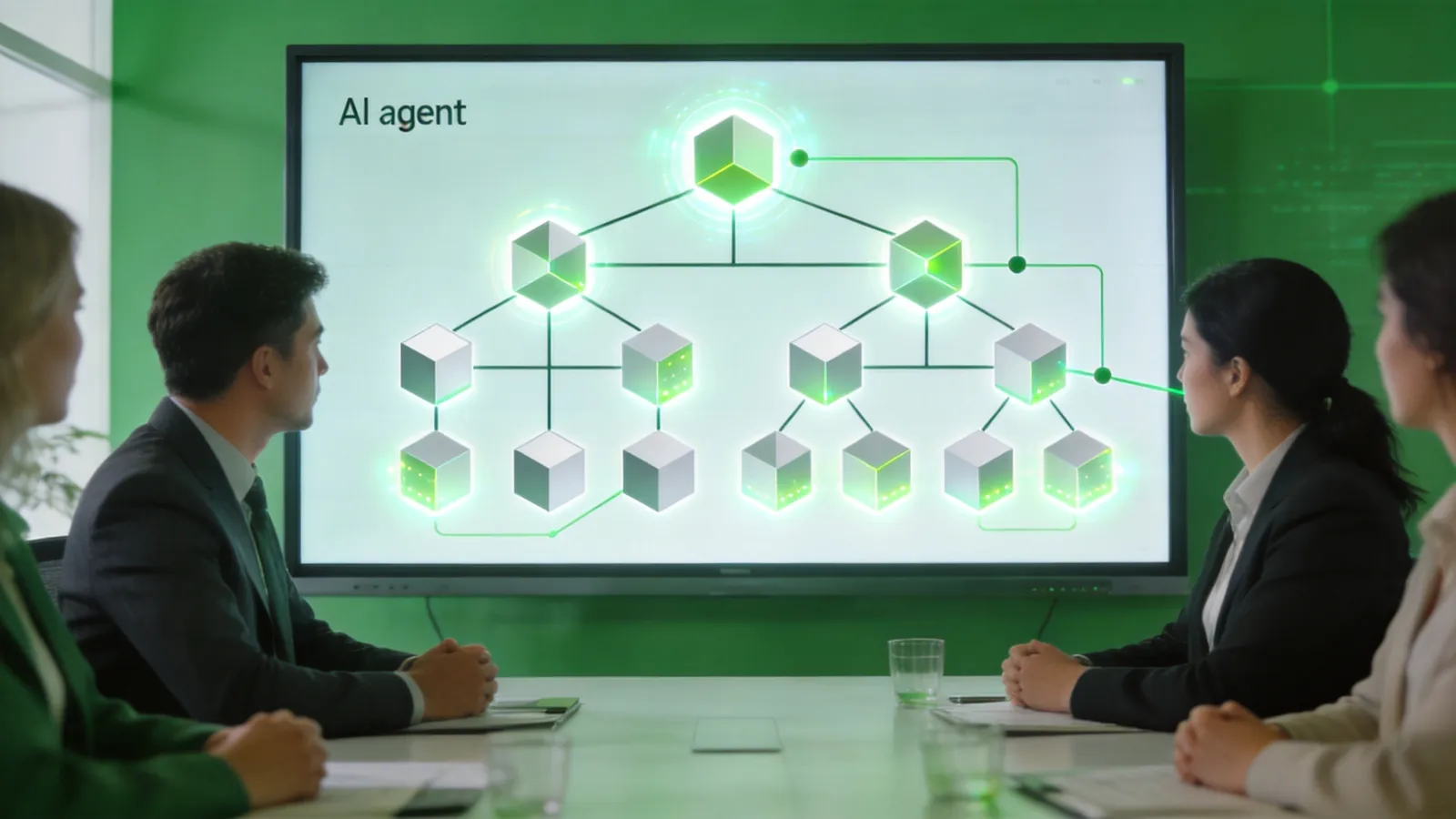
How Ordinary People Should Respond
In the face of this trend, anxiety is useless. Lee offers three pieces of advice:
Learn to Use AI
Not just learn to chat with AI, but learn to manage AI agents. This includes: how to define task objectives, how to set permissions and boundaries, how to evaluate AI output quality, and how to handle AI anomalous behavior. These skills will become as fundamental as Excel is today within the next five years.
The learning curve is not as steep as it seems. Most AI agent management interfaces are designed for non-technical users. The key skill is not programming — it is clear thinking about process design. If you can break down a complex task into clear, sequential steps, you can manage an AI agent to execute it.
Move Up
If AI can complete 80% of your work, you should focus your energy on the remaining 20% — strategy, creativity, interpersonal relationships, complex decision-making. These are the areas where AI is currently least capable.
But "moving up" also means expanding your scope. Instead of being responsible for one type of work, you become responsible for the outcomes of multiple AI agents. A person who previously wrote marketing copy now manages the entire content pipeline — from AI-generated drafts to quality review to publication scheduling to performance analysis.
Become an "AI Manager"
The future workplace is not "humans vs. AI" but "people who can use AI vs. people who cannot." Someone who can simultaneously manage 5-10 AI agents is far more valuable than someone who only knows how to do the work themselves.
This is not about being a "prompt engineer" — that is a transitional skill. The durable skill is "AI workflow design": the ability to decompose business objectives into agent-executable workflows, configure the right agents for each step, monitor their performance, and continuously optimize the entire system.
Think of it this way: in the 1990s, the key skill was "computer literacy." In the 2000s, it was "internet literacy." In the 2010s, it was "data literacy." In the late 2020s, it will be "agent literacy" — the ability to effectively delegate, supervise, and collaborate with AI agents.
The Psychological Adjustment
Perhaps the hardest part of this transition is psychological. For decades, professional identity has been tied to what you do — "I am a copywriter," "I am an analyst," "I am a customer service manager." When AI can do 80% of what you do, the natural response is anxiety and denial.
But reframing helps: you are not being replaced. Your role is being upgraded. You are moving from execution to orchestration. A conductor does not play every instrument in the orchestra — they ensure every instrument plays together beautifully. The future professional is a conductor of AI agents.
The Global Perspective: How Different Regions Are Responding
Lee's department replacement thesis is playing out differently across regions, shaped by labor market structures, regulatory environments, and cultural attitudes toward AI.
United States: The Efficiency Play
American enterprises are adopting AI agents primarily for cost efficiency. With average enterprise salaries among the highest globally, the ROI of replacing a $80,000/year analyst with a $4,000/year AI agent is compelling. However, regulatory scrutiny is also the most intense — the SEC, FTC, and EEOC are all developing frameworks for AI agent accountability in enterprise settings.
Europe: The Precautionary Approach
European companies are moving more cautiously, constrained by GDPR, the AI Act, and strong labor protections. France and Germany have introduced "AI displacement reporting" requirements for companies deploying agents that affect more than 10% of a department's headcount. The result: slower adoption but more thoughtful implementation, with greater emphasis on human-AI collaboration rather than outright replacement.
China: The Speed Play
Chinese companies are moving fastest, driven by government support for AI adoption and a more permissive regulatory environment. Beijing's 2025 AI Industry Development Guidelines explicitly encourage enterprise AI agent deployment. The competitive intensity in China's tech sector means companies that hesitate risk losing market share to AI-augmented competitors within months, not years.
Southeast Asia: The Leapfrog Opportunity
Southeast Asian markets, with their large populations of digital-native workers and relatively lower labor costs, present a unique dynamic. AI agents are not primarily a cost-reduction tool here — they are a capability-multiplier, enabling small businesses to compete with larger ones by providing enterprise-grade AI capabilities at accessible prices.
The Ethical Dimension: Who Is Responsible When AI Makes Mistakes
Lee briefly touched on the ethical dimension of department replacement, and it deserves deeper examination. When an entire department is replaced by AI agents, the question of accountability becomes acute.
The Accountability Gap
If a human employee makes a mistake, the chain of accountability is clear: the employee, their manager, the department head. When an AI agent makes the same mistake, who is responsible? The person who configured the agent? The company that built the agent platform? The large model provider whose reasoning produced the error?
This is not a theoretical question. In 2025, an AI agent handling insurance claims at a Chinese company incorrectly denied 47 legitimate claims before the error was caught. The affected customers sued — but whom? The insurance company, the AI platform provider, and the model provider were all named in the lawsuit. The case is still ongoing, but it highlights a critical gap in our current legal and regulatory frameworks.
The Bias Amplification Risk
Department-level replacement also amplifies bias risks. When individual employees make biased decisions, the impact is limited to their specific caseload. When an AI agent making biased decisions replaces an entire department, the bias is systematized and scaled. A single biased hiring algorithm can affect thousands of applicants; a single biased credit assessment agent can deny loans to entire demographic groups.
Organizations deploying department-level AI agents must implement rigorous bias testing, not just at launch but continuously. The bias landscape shifts as training data evolves and societal norms change. What was acceptable in 2024 may not be acceptable in 2026. Continuous monitoring is not optional — it is a moral and legal imperative.
The Transition Justice Question
Lee has been vocal about the need for "transition justice" — ensuring that the benefits of AI-driven productivity gains are shared broadly, not captured exclusively by capital owners. When a department of 30 people is replaced by 3 people and 10 AI agents, who captures the $900,000 in annual savings? If it all goes to shareholders, the social contract fractures.
Lee proposes a framework where displaced workers receive retraining subsidies funded by a portion of AI-driven productivity gains, companies that achieve large-scale automation contribute to a transition fund, and the government provides a safety net during the retraining period. Whether this framework will be adopted remains an open question, but the question itself cannot be ignored.
Agent Computing: Enabling Everyone to Manage AI Teams
Lee's perspective points to an important trend: AI agents are transitioning from "tools for technical experts" to "assistants for ordinary people." But realizing this transition requires a critical piece of infrastructure — a platform that lets ordinary people easily deploy and manage AI agents.
This is exactly the design goal of the KaiheAiBox Agent Computer. Through a web interface, users without any technical background can: - Scan a QR code to bind their device - Enter an API Key to start using - Select and install Skills (agent capabilities) - Monitor and manage running agents
This "idiot-proof" experience is the prerequisite for truly popularizing AI agents. If only programmers can use AI agents, then "department replacement" will forever remain a self-congratulatory exercise within tech circles. Only when every department manager can manage AI as easily as they manage people will this transformation truly happen.
The Total Cost of Ownership Comparison
For enterprises evaluating Agent Computing, the total cost of ownership (TCO) comparison is illuminating:
Traditional Approach (hire and train): - Recruitment cost: 5,000-15,000 RMB per position - Training: 2-4 weeks per new hire - Salary + benefits: 80,000-200,000 RMB/year per position - Management overhead: 15-25% of team salary - Turnover cost: 50-150% of annual salary per departure - Annual TCO for a 10-person department: 1,200,000-2,500,000 RMB
AI Agent Approach (KaiheAiBox): - Hardware: 3,000-8,000 RMB per Agent Computer (one-time) - API costs: 1,000-5,000 RMB/month depending on usage - Training: 4-8 hours for the managing team - Management: 2-3 people instead of 10+ - Near-zero turnover - Annual TCO for equivalent output: 80,000-250,000 RMB
The TCO differential is 5-10x, and this gap will widen as API costs continue to decrease. For any enterprise still evaluating whether to invest in AI agents, the financial case is no longer debatable — the only question is how quickly to deploy.
The Training Gap: Why Simplicity Matters
One of the biggest barriers to AI agent adoption is not technology but training. Most department managers have never managed an AI agent. The learning curve for traditional AI platforms is steep: understanding API configurations, prompt engineering, error handling, and integration patterns requires significant technical knowledge that most business users do not possess.
This is where the "QR code simplicity" of KaiheAiBox becomes a strategic advantage. By reducing the deployment process to scan → configure → run, the training gap shrinks from weeks to hours. A department manager who would never attempt to set up an AWS Lambda function can confidently deploy and manage an AI agent through a web interface.
The implication: the organizations that will benefit most from AI agents are not the ones with the best technical teams — they are the ones with the most user-friendly agent platforms. Technical depth matters less than accessibility.
The Hybrid Architecture Opportunity
For enterprises with data security requirements, the Agent Computer offers a compelling architecture: local execution + cloud inference. Sensitive data stays on-premises, while heavy computation leverages cloud-based large models. This hybrid approach addresses the three biggest enterprise concerns simultaneously — privacy, cost, and performance.
A law firm using this architecture reported: client data never leaves the local device, but the AI agent can still leverage GPT-4-class reasoning for contract analysis. The result was a 60% reduction in contract review time with zero data exposure risk.
The 24/7 Advantage
Perhaps the most underappreciated capability of Agent Computing is continuous operation. Human workers need sleep, breaks, and weekends. AI agents running on an Agent Computer do not. For tasks like market monitoring, customer inquiry handling, and data pipeline maintenance, 24/7 operation is not a luxury — it is a competitive necessity.
Consider a small trading firm: before deploying an AI agent, they could only monitor markets during trading hours. After deploying a 24/7 agent on an Agent Computer, they receive overnight alerts about pre-market movements, execute automated hedging strategies before the opening bell, and capture opportunities that previously would have been missed entirely.
Bridging the Digital Divide
Lee has long been an advocate for ensuring AI benefits are distributed equitably, not concentrated among the tech elite. Agent Computing is a key enabler of this vision. If AI agents require a $100,000 engineering team to deploy, only large corporations benefit. If they require a $500 device that any department manager can set up with a QR code, the benefits become democratized.
This is why the simplicity of the KaiheAiBox experience matters beyond convenience — it is an accessibility issue. The gap between "companies that use AI" and "companies that do not" is already widening. Agent Computing that anyone can use is the bridge that prevents this gap from becoming an unbridgeable chasm.
Real-World Deployment: A Mid-Size Enterprise Case
A 200-employee manufacturing company in Guangdong deployed KaiheAiBox in Q1 2026. Their setup: 3 Agent Computers running customer service, order processing, and quality control monitoring agents. Total deployment time: 2 days. Training: 4 hours for the 5-person team that now manages these agents. Cost: approximately 15,000 RMB for hardware plus 3,000 RMB/month in API costs.
Results after 3 months: customer service response time reduced from 3 hours to 8 minutes; order processing errors reduced by 85%; quality issue detection speed improved from 24 hours to 15 minutes. The company estimated total annual savings of 800,000 RMB against a total cost of under 50,000 RMB — a 16x return on investment.
AI will not steal your job — but someone who knows how to use AI will. And they will not come alone; they will bring 10 AI agents with them.
KaiheAiBox · AI Agent Tracking