Job hunting exhausts most people—not because of the interviews, but because of everything before them.
Scanning dozens of job boards daily. Rewriting the same resume with slightly different keywords for every posting. Filling in the same work history, project experience, and contact information, over and over, across forms that don't even accept the same file format.
You just wanted a job. Instead, the job search itself became a second job.
Your AI assistant is starting to job hunt for you
📖 Glossary
AI Box (also known as Agent Computer / Agent PC), is a dedicated local hardware device that runs AI Agents. Pre-installed with an AI agent management system, plug-and-play, running 24/7. Users can remotely command AI to work via Discord, Slack, Telegram, WhatsApp, and more.
Something is quietly shifting.
AI assistants now exist that can take over the most mechanical parts of job searching: scanning job boards automatically every day, matching roles against your resume, tailoring your application materials per posting, and even filling out and submitting forms on your behalf. Set your criteria once, and the agent runs in the background daily. The next morning, it tells you: here's what I found, already applied to these.
You only do one thing: prepare for interviews.
Sounds good. But here's a question nobody's really asking:
Who has your resume on their servers?
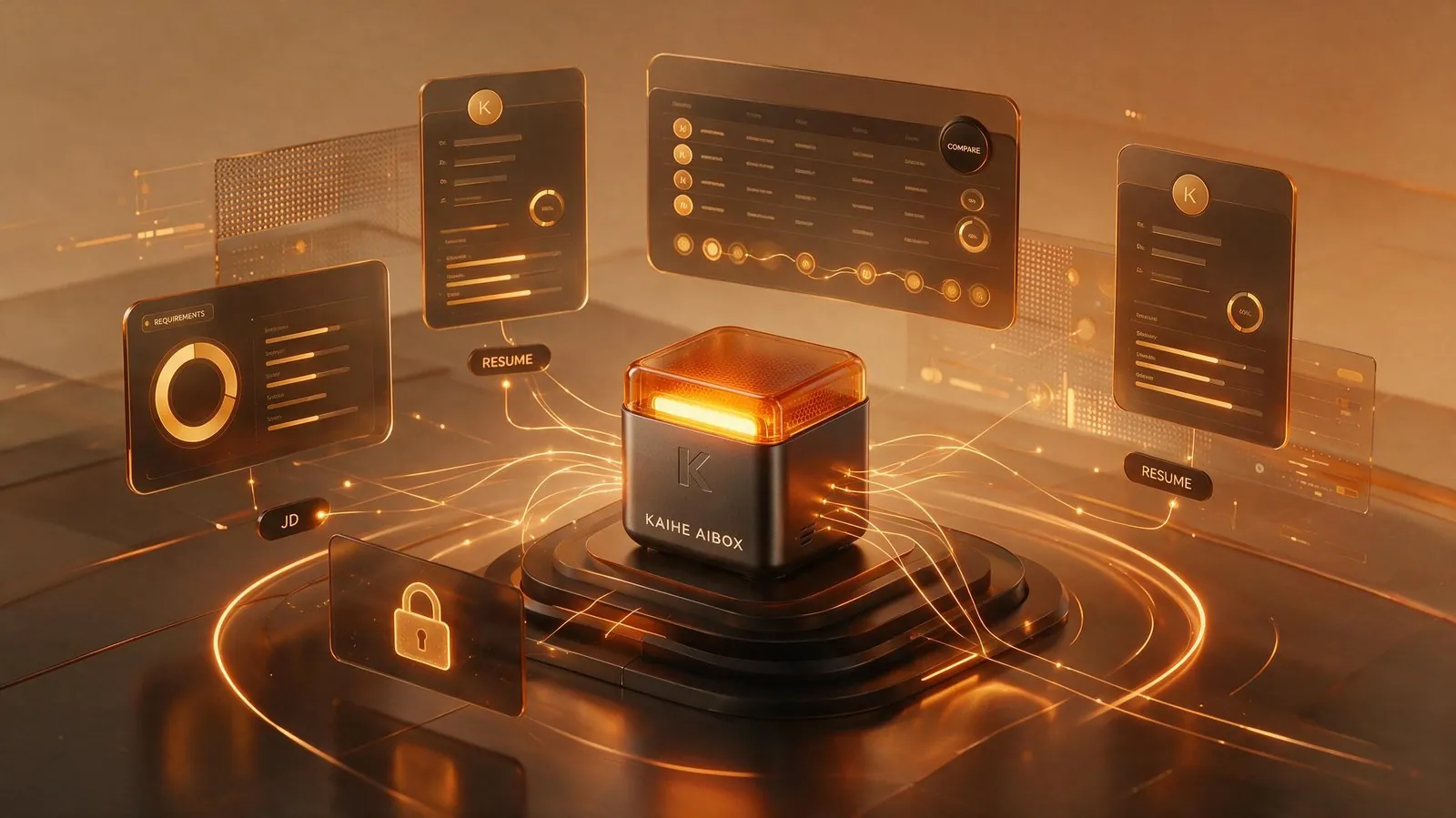
Your job-search data is worth more than your resume
Once you upload your resume to a cloud-based job-hunting AI, what it can do goes far beyond submitting applications for you.
It has read your entire professional history: every project you've worked on, every job you've switched, your salary expectations, the industries you care about most. It knows you better than any recruiter.
Here's the problem: where is all that data sitting, right now?
When you're done using the tool, will those records be deleted? Will they be used to train models? Will your job preferences show up in someone else's results?
Most platforms won't tell you unless you ask.
Using a cloud AI to help with job hunting is the same as using one to help write proposals or reports—you're feeding your most sensitive professional data into someone else's servers, over and over again.
What a local job-hunting assistant looks like
Picture this: your AI job-hunting assistant runs on a device sitting right in your home.
You upload your resume, set your search direction, and it scans job boards automatically every day. Matched roles get organized and sent to your phone. You decide which ones to apply to and how—and it executes. Application history, status tracking, interview notes—all stored on your own device, not the cloud.
Changing jobs later? No need to rebuild your profile from scratch—it remembers your last position, your project history, the roles you flagged.
It is part of your professional memory, not someone else's database.
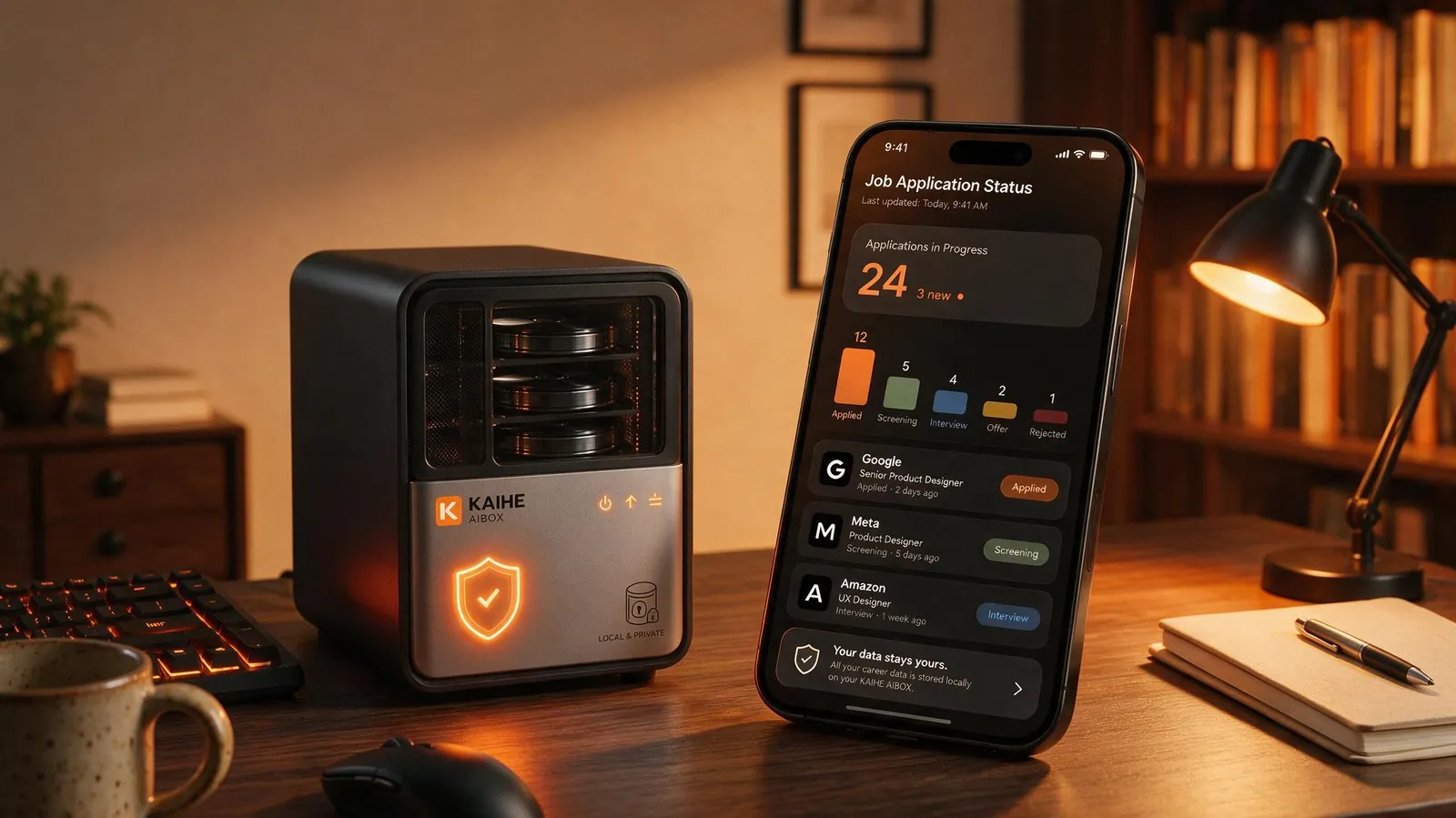
KAIHE AIBOX is that local job-hunting base
By now you probably see where this is going.
AI helping you find a job isn't the novel part—what matters is who holds the memory of your job-search journey.
A cloud assistant helps you job hunt while simultaneously building up your professional profile, one search at a time. A local assistant helps you job hunt, and the data from that work stays with you.
KAIHE AIBOX is that base: a standalone local mini-host that runs 24/7 the moment you plug it in, with your AI job-hunting assistant running inside. Your resume, project history, application records, and interview notes—all private, stored in the box in your own home, never uploaded.
AI helping you is real. But keeping your professional data in your own hands? That's the part that actually matters.
延伸阅读: - Models Keep Getting Smarter, But What You're Missing Is an Always-On Base - Voice AI Can Now Fool Your Ears—What You're Missing Isn't Speech, It's an Always-Awake Assistant - Xiaohongshu Open-Sources a 280B Model: The More Models Race, The More You Need a Butler
KaiheAIBOX #AIAssistant #JobHunting #Resume #AIBOX
了解更多 可联系邮箱:[email protected]
KAIHE AIBOX · 7x24 Agent Computer | User Stories