📖 Glossary
AI Box (also known as Agent Computer / Agent PC), is a dedicated local hardware device that runs AI Agents. Pre-installed with an AI agent management system, plug-and-play, running 24/7. Users can remotely command AI to work via Discord, Slack, Telegram, WhatsApp, and more.
Summary: On October 18, security firm Claroc reported that one passive-DNS query returned 6,800 share links for Meta's Muse assistant, because Muse built each share address out of the conversation's title. A few hundred opened pages held a CEO's revenue review, a loan application and a staff vacation calendar. Nobody broke in. Meta paused sharing on October 20. KAIHE AIBOX takes the other position: sessions, files, memory and credentials belong on your own device.
One query, 6,800 links
Muse shares a conversation by publishing it as a web page and handing back a link:
loan-application-draft-a4c9e2.cf.metaaiusercontent.com
The title comes first, a random code second. The code was fine. The title sat in the subdomain, and subdomains get written into public DNS records, which passive-DNS services collect and index. Unguessable strings became a table of contents.
Claroc ran the search once: 6,800 results.
What was in the pages
The researchers opened a sample with no login and no access request. Ars Technica listed the rest: a candidate's notes for a confidential executive search at a frontier AI lab, naming the contact and time; a revenue review marked for its CEO; a loan application with the amount; a workplace's vacation calendar.
A vacation calendar looks harmless. It is a schedule of who is away and when, which is what social engineering runs on.
Claroc reported it on October 8 and published on October 18 without logging in or bypassing a control. Meta spokesperson Tracy Clayton said sharing creates a page open to anyone with the link, and the company paused it while it reviews how links are discovered.
Why sharing became publishing
Meta's help page says it plainly: anyone with the link can see the chat, and the link never expires.
That is the definition of the feature, not a bug. If the recipient is going to open it, the page has to be public. In the product sense sharing means sending something privately to one person. Technically it means publishing to the open web.
After Meta acted, Claroc found earlier sample links no longer worked. The system could take pages down. It simply did not, by default.
Permission has two settings
Look at how hosted assistants share and one variable sits under your control: whether you hold the address.
What businesses need sits in the setting that is missing. These paragraphs go to finance, those cannot go to accounts payable.
Same week, another route
On October 15, Meta and Apple announced Muse Spark Open, an 816-billion-parameter open-weight model tuned to run on two Apple M5 Ultra Mac Studios with MLX.
Five days later, the share button that turned conversations into public pages was switched off.
Downloadable weights mean the model runs on hardware you own. Sessions, memory, files and credentials still lived in that cloud machine, so the platform drew the boundary. A model ships as open weights. A conversation history does not.
KAIHE AIBOX puts the boundary on the device
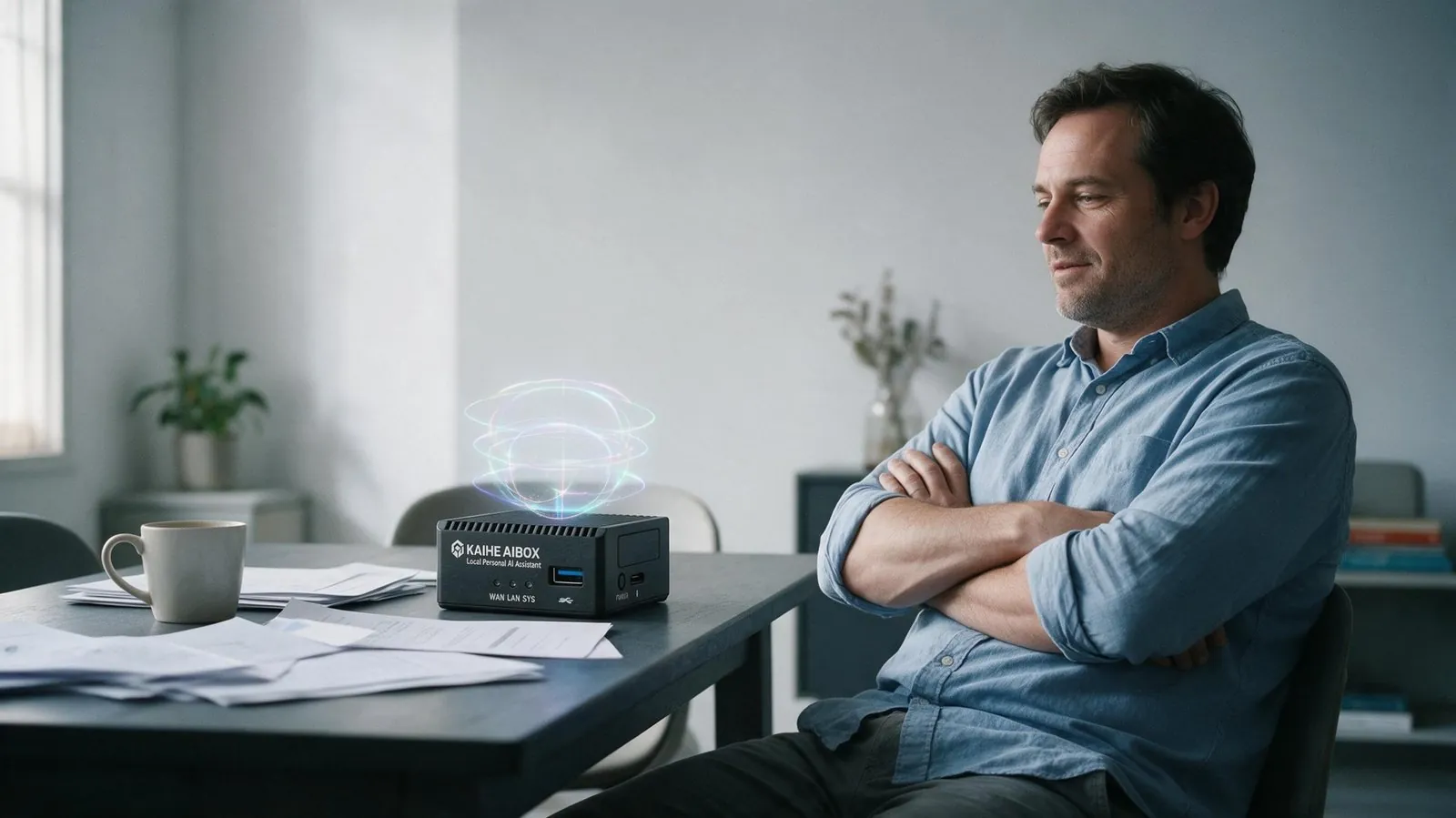
KAIHE AIBOX is a dedicated Agent Computer that runs inside your own local network. Sessions, working files, memory and credentials sit on the device, with no service that publishes pages at a public domain.
- Sharing: no share link points at a public domain. Work passes inside your own network boundary.
- Permission: the agent starts with no credential access. It queries the KAIHE credential vault, and nothing moves until you approve.
- Scope: grants stack across five dimensions: agent, task, endpoint, count and expiry.
- Audit: every call is logged, and any grant can be revoked while it is live.
| Hosted cloud assistant | KAIHE AIBOX | |
|---|---|---|
| What sharing creates | A page on the public web | Nothing leaves your network |
| Address searchable | Yes, the title is in the subdomain | No such address exists |
| Link expiry | Usually none | You decide |

Three things you can do today
First, go through the links you have already shared. If any carried sensitive material, revoke it.
Second, put the share button into your team's AI policy. Most cover what employees type in, few cover what happens after they click share.
Third, decide what should never leave your device.
Nobody broke in, the tools work this way, and people use them. Sharing is something a person does. Exposure is a default the system hands you. A default is not something users should have to guess at.
Related Reading: - Why an AI agent's memory belongs in your own house - Why your API key should never live on someone else's server - Is a private knowledge base safe in the cloud?
For more information, search [KAIHE AIBOX] or contact: [email protected]
KAIHE AIBOX · 7x24 Personal AI Assistant | Product