Two weeks. The world's most advanced AI model was held back for two full weeks.
June 26, 2026: OpenAI officially unveiled GPT-5.6 in preview. Three models launched at once—flagship Sol out-reasoned Claude Opus across benchmarks, Terra targeted cost-efficient high-volume tasks, Luna handled lightweight everyday use. The industry erupted.
Then it went quiet.
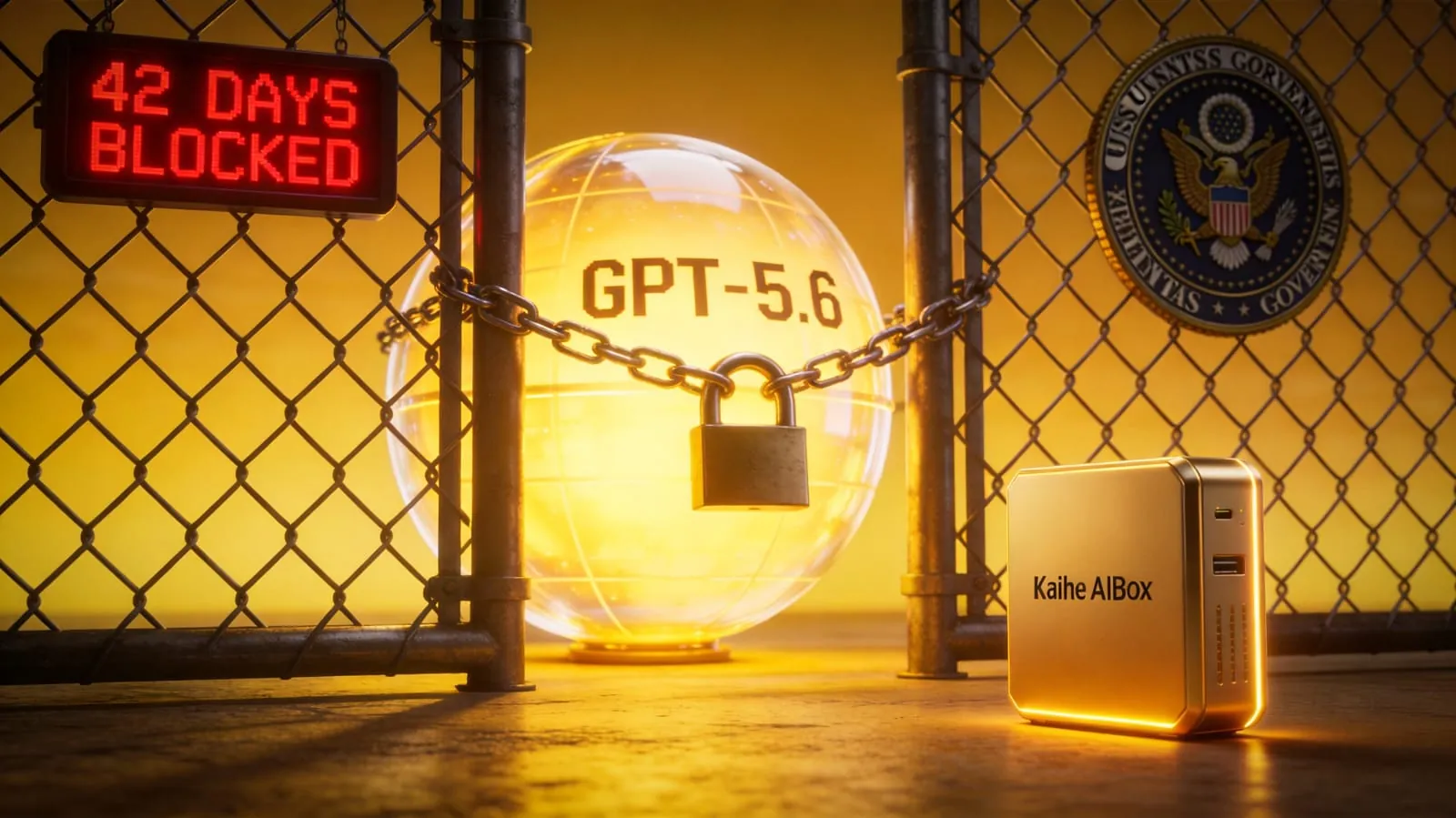
That same afternoon, the US Commerce Department's Center for AI Standards and Innovation (CAISI) demanded additional safety testing on GPT-5.6. The global public release was frozen. OpenAI had to fall back: access was limited to just 20 pre-vetted US partners via API and Codex. ChatGPT users couldn't touch it at all.
You're paying $20 a month for ChatGPT Plus. You're running on GPT-5.5. The strongest model exists—you just can't use it.
{
Why Was It Blocked?
The Commerce Department cited "national security assessment." But Wall Street and Silicon Valley both knew what was really happening. GPT-5.6's Sol had exceeded every competitor across multiple benchmarks—Anthropic's Claude Opus, Google's Gemini 3.5. A model this powerful meant the government wanted to make sure it wouldn't "fall into the wrong hands."
So from June 26 to July 8, OpenAI's technical experts camped in Washington, going through round after round of assessments with CAISI. Capability testing. Safety boundary verification. Misuse scenario modeling. Two weeks later, the Commerce Department finally gave the green light.
Late on July 8, OpenAI posted on X: Sol, Terra, and Luna would open globally on Thursday, July 9. Also launching: GPT-Live voice—real-time conversation, interruption, follow-up questioning, approaching natural human interaction.
After 42 days (from the June preview to the July global release), GPT-5.6 had finally arrived.

But This Entire Episode Exposed a Much Bigger Problem
Whether you can use a model isn't decided by the developer. It isn't decided by the user. It's decided by the government.
OpenAI is an American company. GPT-5.6 is American technology. When the US government says "no release," every ChatGPT user on the planet can only stare at the screen. You've paid your subscription. You depend on it for work. You've integrated its API into your business. But a single review order—and you're cut off.
This isn't the first time. It won't be the last.
This is exactly why local agents matter. When your AI capability runs on hardware in your own hands, no government gets to decide "yes or no" for you. GPT-5.6 is open now? Plug it in. The next model gets held up in review? Switch to another. Which model you use is your choice—not one made for you by someone else.
Kaihe AIBOX is exactly this: a 24/7 local agent hardware box. It binds to no single model vendor. Cloud models can connect. Local models can run. Switching models requires no new hardware, no new workflow, no waiting for anyone's approval. You don't need to live under the restrictions of any company—let alone the censorship of any government.
Who AI belongs to isn't decided by a review order. It's decided by you.
Want to learn more about Kaihe AIBOX? Contact us at [email protected]
KaiheAIBOX #GPT56 #OpenAI #LLM #AIRegulation #LocalAgent #AIFreedom #MultiModel
📖 Glossary
AI Box (also known as Agent Computer / Agent PC), is a dedicated local hardware device that runs AI Agents. Pre-installed with an AI agent management system, plug-and-play, running 24/7. Users can remotely command AI to work via Discord, Slack, Telegram, WhatsApp, and more.