How a 22-Person Dev Team Boosted Bug Detection by 40% with AI Code Review
📖 Glossary
AI Box (also known as Agent Computer / Agent PC), is a dedicated local hardware device that runs AI Agents. Pre-installed with an AI agent management system, plug-and-play, running 24/7. Users can remotely command AI to work via Discord, Slack, Telegram, WhatsApp, and more.
The Review Bottleneck No One Talks About
Every engineering leader knows the feeling. Your sprint is moving fast, features are shipping, and then—code review becomes the chokepoint. Merge requests pile up. Developers wait days for feedback. And when reviews finally happen, they're rushed, shallow, and inconsistent.
This isn't a management failure. It's a structural problem that gets worse as teams grow. And for one SaaS company in Hangzhou, it was about to become a crisis.
Their 22-person engineering team was productive on paper—shipping features, hitting deadlines—but the hidden costs were staggering. Bugs were slipping through review into production. The same categories of issues kept resurfacing. Senior engineers, already stretched thin, were spending nearly a full workday each week just reviewing code.
Then they deployed the KAIHE AI Box A1, pre-loaded with Hermes, an AI agent purpose-built for code intelligence. Ninety days later, the numbers told a different story: bug detection rate climbed from 42% to 59%—a 40% improvement. Merge request response time dropped from 1.8 days to 0.3 days. And the team reclaimed over 60% of their review time.
Here's how they did it.
The Triple Trap: Why Code Review Breaks Down at Scale
Before the transformation, the Hangzhou team faced three interconnected problems that fed on each other. Chances are, your team faces them too.
1. Not Enough Reviewers, Too Much Waiting
With 22 developers and only 4 senior engineers qualified to review critical paths, merge requests formed a queue. The average wait time before a review even started? 1.8 days. In a two-week sprint, that's nearly 13% of the cycle lost to waiting.
The bottleneck wasn't just about speed—it distorted behavior. Developers started bundling massive changes into single MRs to "make the wait worth it," which made reviews even harder. Junior developers avoided asking questions because they didn't want to add to the queue. The feedback loop that code review was supposed to provide had essentially broken.
2. Shallow Reviews, Repeating Problems
When a reviewer has 15 minutes to review 800 lines of changed code, what happens? They check for the obvious—naming conventions, formatting, maybe a quick logic scan—and move on. Deep architectural concerns? Subtle race conditions? Edge cases in error handling? Those get missed.
The data confirmed it: the team's bug detection rate was only 42%. More tellingly, the bugs that escaped review tended to fall into the same categories—improper null handling, missing error propagation, inconsistent state management. These weren't exotic edge cases. They were patterns that a thorough review should have caught, but didn't, because thoroughness was impossible at the pace required.
3. No Knowledge Accumulation, Same Bugs Repeated
Perhaps the most insidious problem: every review started from scratch. The team had no institutional memory. When a senior engineer caught a subtle concurrency bug, that insight lived in their head—not in a system. When someone left the team, their review expertise left with them.
The result was grim: the same categories of bugs appeared month after month. The team averaged 12 repeat-category bugs per month—issues that shared root causes with previously identified problems but weren't caught because the review process had no way to learn.
The Hermes Approach: AI That Understands Your Codebase
The KAIHE AI Box A1 isn't just another linter or static analysis tool. It's an AI agent—Hermes—that lives inside your development workflow and operates with the full context of your project. Here's what makes it fundamentally different.
Automatic Code Change Detection
Hermes integrates directly with your Git workflow. When a merge request is opened, Hermes automatically detects the change, classifies its scope and risk level, and initiates a review—before any human reviewer is even assigned. There's no trigger to set, no button to press. The AI watches the pipeline and acts.
For the Hangzhou team, this alone eliminated the 1.8-day wait. The moment an MR was submitted, Hermes began its analysis and posted initial feedback within minutes. Human reviewers could then focus their attention on the areas Hermes flagged as high-risk, rather than scanning every line.
Full-Context Analysis
Unlike traditional tools that examine files in isolation, Hermes constructs a dependency graph of the entire change. It traces function calls across modules, follows data flow through layers, and evaluates the impact of changes on downstream consumers. A null-check omission in a utility function isn't just flagged locally—it's traced to the three services that call it and the edge cases they might encounter.
This full-context capability is what drove the bug detection rate from 42% to 59%. Hermes caught issues that humans missed precisely because it could hold the entire call chain in working memory simultaneously—a cognitive task that exceeds human capacity for large codebases.
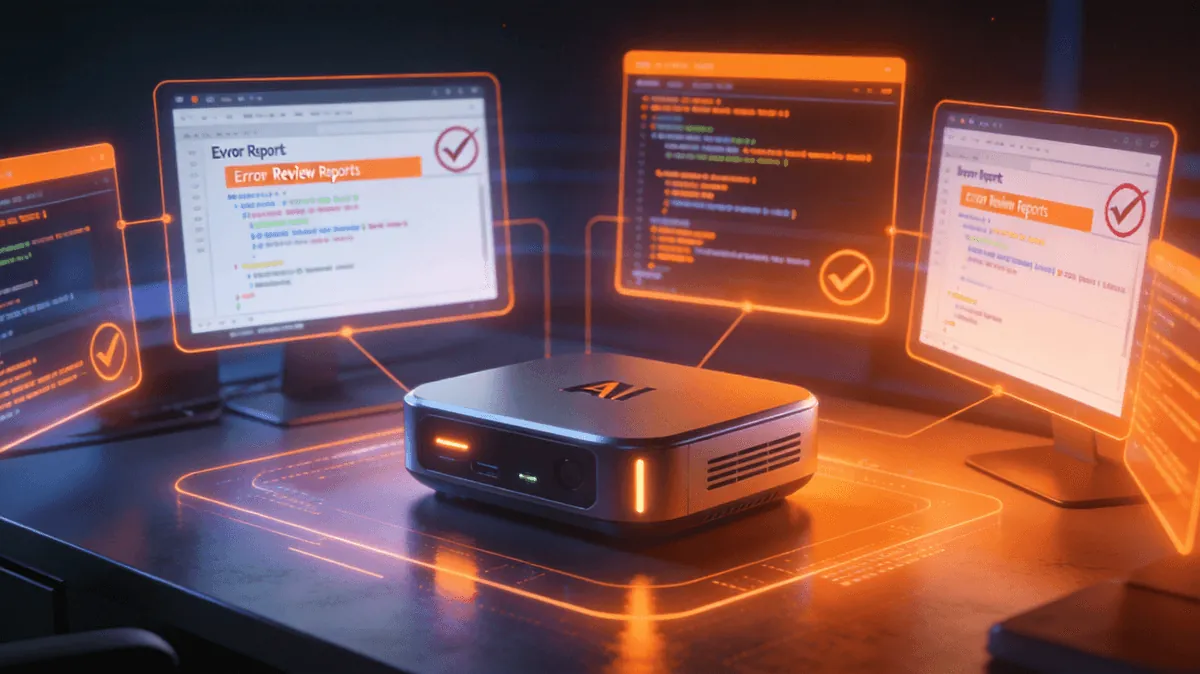
Structured Review Reports
Every Hermes review produces a structured report, not a firehose of warnings. Issues are categorized by:
- Severity: Critical, Warning, Info
- Category: Security, Logic, Performance, Style, Architecture
- Confidence: High, Medium, Low
- Suggested Fix: With code snippets when applicable
This structure serves two purposes. For developers, it makes feedback actionable—you know exactly what to fix and why. For engineering leaders, it creates a data trail. You can see which categories of issues appear most frequently, which modules generate the most warnings, and whether review quality is improving over time.
Continuous Learning from Project Norms
This is where Hermes transcends static analysis. Over time, Hermes learns your project's conventions, architectural patterns, and known anti-patterns. If your team has a specific way of handling database transactions, Hermes learns it and flags deviations. If a particular module has a history of concurrency issues, Hermes applies heightened scrutiny to changes touching that area.
For the Hangzhou team, this learning capability was the key to reducing repeat-category bugs from 12 per month to just 3—a 75% reduction. Hermes remembered what the team had already fixed and actively prevented regressions.
Why On-Premises Matters for Code Review
The Hangzhou team had evaluated cloud-based code review tools before. They always hit the same wall: their code couldn't leave the network. As a SaaS company handling customer data, compliance wasn't optional—it was existential.
The KAIHE AI Box A1 solved this elegantly. It's an Agent Computer—a physical device that sits inside your network. Code never leaves your infrastructure. No data is sent to external APIs. No third party ever sees your source.
But on-premises deployment delivers benefits beyond compliance:
- Zero network latency: Reviews complete in seconds, not minutes. When Hermes analyzes a 2,000-line diff, it doesn't wait for data to traverse the internet and back. The computation happens locally, on dedicated hardware optimized for AI inference.
- Zero API costs: There's no per-query billing. No surprise invoices when your team has a busy sprint. The A1's compute capacity is yours—full stop. Run 10 reviews a day or 100; the cost is the same.
- Guaranteed availability: No dependency on external service uptime. When your team is in a late-night push before release, Hermes is there. No maintenance windows, no rate limits, no degraded performance during peak hours.
For teams handling proprietary code, regulated data, or simply those who value operational autonomy, on-premises isn't a luxury—it's the only architecture that makes sense.
The Numbers: 90 Days of Data
After 90 days of running Hermes on the KAIHE AI Box A1, the Hangzhou team compiled their results. The data speaks for itself.
| Metric | Before Hermes | After Hermes | Change |
|---|---|---|---|
| MR Response Time | 1.8 days | 0.3 days | ↓ 83% |
| Bug Detection Rate | 42% | 59% | ↑ 40% |
| Production Bug Rate | 0.7 per 1K LoC | 0.4 per 1K LoC | ↓ 43% |
| Weekly Review Time | 8 hours | 3 hours | ↓ 63% |
| Repeat-Category Bugs/Month | 12 | 3 | ↓ 75% |
The most striking transformation wasn't in any single metric—it was in the team's workflow. Before Hermes, code review was a bottleneck that everyone dreaded. After Hermes, it became a seamless part of the development process. Developers got feedback when they needed it, reviewers focused on high-value architectural decisions instead of scanning for trivial issues, and the team's overall velocity increased without sacrificing quality.
The reduction in production bugs (43%) is particularly noteworthy because it represents real-world impact—fewer incidents, less firefighting, happier customers. And the 75% drop in repeat-category bugs proves that Hermes wasn't just finding more bugs; it was breaking the cycle of recurrence that had plagued the team.
Three Steps to Deployment
Getting Hermes running on the KAIHE AI Box A1 is deliberately simple. The Hangzhou team went from unboxing to their first AI-assisted review in under an hour. Here's the process.
Step 1: Unbox and Connect—10 Minutes
Plug in the A1, connect it to your network, and authenticate. The onboarding wizard walks you through Git integration—whether you use GitLab, GitHub Enterprise, or Bitbucket. No infrastructure changes required. No agents to install on developer machines. The A1 connects to your repository at the organization level.
Step 2: Automatic Review, Instant Feedback
Once integrated, Hermes starts working immediately. Open a merge request, and Hermes begins its analysis automatically. The first review comment appears within minutes—often while the developer is still drafting their MR description. The feedback is structured, actionable, and includes suggested fixes.
Importantly, Hermes doesn't replace human review—it augments it. The AI handles the exhaustive, pattern-based checking that humans do poorly at scale, freeing reviewers to focus on architectural decisions, business logic, and mentorship. The Hangzhou team kept their human review requirement but found that reviewers spent their time on high-value discussions rather than catching typos.
Step 3: Human-AI Collaboration, Continuous Evolution
The real power emerges over time. As Hermes reviews more code, it builds a deeper model of your project's conventions and anti-patterns. Reviewers can mark Hermes suggestions as "helpful" or "not relevant," providing feedback that sharpens future analysis. Developers can add custom rules that reflect team-specific standards.
By month three, the Hangzhou team found that Hermes was catching issues unique to their architecture—patterns that no generic linter could have identified. The AI had become a genuine expert in their codebase, and it was getting better every week.
The Bigger Picture: AI That Works Where You Work
The Hangzhou team's story isn't an outlier. It's a preview of what's possible when AI meets code review at the infrastructure level—on-premises, integrated, and continuously learning.
The KAIHE AI Box A1 represents a new category of computing: the Agent Computer. It's not a cloud service you subscribe to. It's not a tool you install on your laptop. It's a dedicated AI infrastructure node that lives in your network, understands your codebase, and works alongside your team 24/7.
For engineering teams trapped in the review bottleneck, the path forward is clear. The question isn't whether AI will transform code review—it already has. The question is whether you'll deploy it on your terms, in your network, with your data under your control.
KaiAIBox | Agentaibox that lets AI work for you 24/7 · User Case
-#KaiheAiBox #AIAgent #AIApplication #DigitalTransformation #AILanding #ArtificialIntelligence