Legal Contract Review AI Assistant: 8x Efficiency Breakthrough for Modern Legal Teams
📖 Glossary
AI Box (also known as Agent Computer / Agent PC), is a dedicated local hardware device that runs AI Agents. Pre-installed with an AI agent management system, plug-and-play, running 24/7. Users can remotely command AI to work via Discord, Slack, Telegram, WhatsApp, and more.
When a mid-sized manufacturing company in Shenzhen reviewed its 200+ supplier agreements before a compliance audit last year, the legal team worked three consecutive nights — and still missed two critical renewal clauses buried in dense procurement text. The missed clauses cost the company 840,000 RMB in penalty payments. That incident is not unique. Across industries, legal teams are drowning in contracts while the business demands speed.
The gap between legal risk and business velocity is widening. And it is exactly the gap that KaiheAi's latest user case addresses.
The Hidden Bottleneck: Why Contract Review Keeps Slowing You Down
Every sales deal, supplier engagement, and employment agreement passes through legal. And every pass-through means your legal team — often three to five people supporting an entire organization — must read, annotate, compare, and approve documents under deadline pressure.
The work is repetitive by nature. Yet it consumes your best legal minds.
Three structural problems keep contract review chronically inefficient:
1. The Efficiency Ceiling A senior paralegal reviewing a standard 15-page supply agreement allocates 3–4 hours minimum. Time breaks down roughly as: initial reading (1 hour), clause-by-clause annotation (1.5 hours), cross-referencing with standard templates (45 minutes), and drafting review notes (15–30 minutes). Multiply that by 30 contracts per week, and you are looking at 90–120 legal hours — before the team touches a single litigation file or regulatory update.
No amount of experience compresses that timeline below a threshold. Human reading speed is fixed. Human attention degrades after the fifth consecutive contract. And when urgency spikes — a regulatory window, an acquisition deadline, a quarterly vendor push — the queue grows faster than it clears.
2. Inconsistent Standards Across Reviewers In organizations where multiple people handle contract review, standards drift. One attorney flags late-payment penalties above 5%. Another flags only above 10%. A paralegal flags delivery milestones; the senior counsel does not. These inconsistencies are rarely deliberate. They reflect institutional knowledge that lives in individual heads rather than in a shared, enforceable framework.
The result: the same risk category gets handled differently on Monday versus Friday, and a contract that sailed through in January triggers a red flag in April — same clause, same risk, different reviewer.
3. Compliance Tracking That Breaks Down at Scale Regulatory environments evolve. GDPR introduced new data-processing obligations. China's Personal Information Protection Law added consent requirements. Industry-specific rules shift annually. Keeping every live contract aligned with current obligations requires continuous monitoring — a task that is simply impossible to perform manually across a portfolio of hundreds or thousands of active agreements.
Most legal teams discover compliance gaps reactively: when an audit arrives, when a dispute surfaces, or when a regulator sends an inquiry.
KaiheAIBOX-A1: Hermes as Your Embedded Legal Intelligence
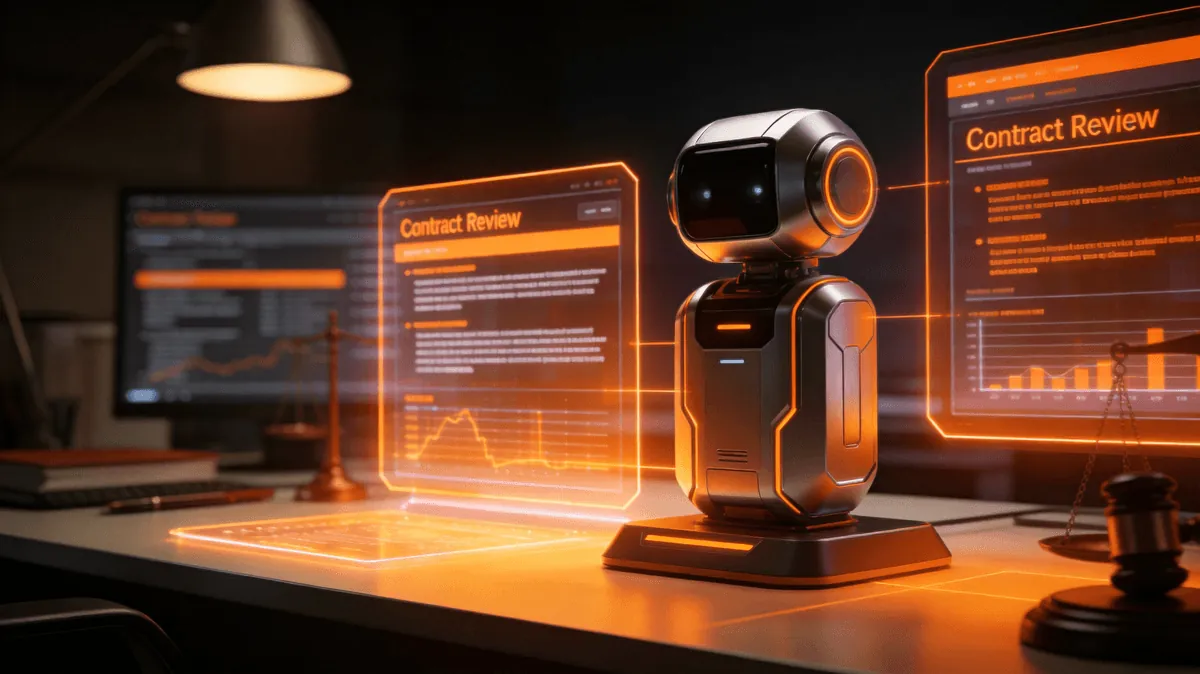
KaiheAIBOX-A1 is an Agent Computer purpose-built for professional AI workloads. Pre-installed with Hermes, KaiheAi's proprietary AI agent framework, it delivers multi-turn reasoning, document understanding, and persistent memory in a locally-executing environment. No cloud dependency. No data egress. No per-seat subscription that scales into budget pain.
For legal teams, Hermes brings three layered capabilities to contract review:
Layer 1 — Parsing and Annotation Hermes reads contracts in their native format — PDF, scanned images, DOCX — and extracts structured clause data. It identifies party names, effective dates, termination conditions, liability caps, indemnity clauses, and governing law provisions. Each clause is tagged with its category and risk level, surfaced in a visual review panel rather than buried in paragraph text.
The parsing layer handles not only standard-language contracts but also negotiated drafts with handwritten annotations, stamp-sealed pages, and multilingual agreements where English and Chinese clauses coexist.
Layer 2 — Standardized Review Against Configurable Rules Hermes applies a configurable review framework — built from your organization's own legal standards, industry best practices, and regulatory requirements — to every contract it processes. When a clause deviates from the standard, Hermes flags it with a severity rating, compares it against the approved alternative, and suggests specific language edits.
Because the review framework is defined once and applied automatically, every contract receives the same quality of scrutiny regardless of who is on leave, who is new, or how many contracts land on the same afternoon.
Layer 3 — Continuous Learning and Portfolio Memory Legal knowledge compounds. Hermes remembers every contract reviewed, every clause flagged, every approved deviation, and every negotiated change. Over time, its review recommendations grow more accurate and more aligned with your organization's risk appetite.
When a new regulatory requirement takes effect, Hermes can retro-scan your active contract portfolio and surface which agreements need amendment — a task that previously required a manual clause-by-clause audit across every document.

A Real Legal Team. A Real 8x Efficiency Gain.
The numbers below come from a technology company's legal department that adopted KaiheAIBOX-A1 for contract review in Q1 2026. The team: 4 legal staff, reviewing an average of 45 contracts per month across supplier agreements, employment contracts, and nondisclosure agreements.
Before Hermes: - Average review time per contract: 3.5 hours - Average oversight omissions per quarter: 23 flagged issues from post-audit reviews (approximately 8% miss rate on critical clauses) - Compliance portfolio scan before regulatory updates: 2–3 days of manual work
After Hermes: - Average review time per contract: 20–30 minutes - Critical clause omission rate: dropped to approximately 2% - Compliance portfolio scan: completed in under 4 hours
The efficiency multiplier is not a marketing estimate. It reflects the elimination of manual reading time, automated annotation, and standardized comparison — all performed by Hermes while the legal team focuses on judgment calls that require human expertise.
The team's lead counsel summarized the change simply: "We used to race the clock. Now we review contracts in the morning and spend the afternoon on the work that actually requires a legal mind."
Why KaiheAIBOX-A1, Not a SaaS Contract Tool?
The market offers dozens of SaaS-based contract review tools. Many are capable. Why invest in an Agent Computer instead?
Data Security — Your Contracts Stay Inside SaaS tools upload your agreements to external servers. For technology companies, financial institutions, and businesses handling M&A activity, that data path is a non-starter. KaiheAIBOX-A1 runs entirely on-premises. Your contracts never leave your network. Your confidential terms, negotiated pricing, and strategic supplier relationships remain under your control — not your vendor's.
Cost That Scales With Your Practice, Not Your Seat Count Most SaaS contract tools charge per-seat or per-document fees that escalate as your legal workload grows. KaiheAIBOX-A1 is a one-time hardware investment with Hermes pre-installed. For legal teams reviewing 200+ contracts annually, the economics shift decisively in favor of the Agent Computer within 18–24 months.
Customization That Reflects Your Standards SaaS tools apply a generic review framework. KaiheAIBOX-A1 lets you configure Hermes with your organization's specific clause library, approved language alternatives, and risk thresholds. The system learns your standards, not a vendor's default ones.
7×24 Availability Contracts arrive on Fridays at 5 PM. Deals close on Sunday evenings. SaaS subscriptions with seat limits create queues. KaiheAIBOX-A1 operates continuously, with no per-session limits, no overtime charges, and no "upgrade your plan" prompts when the workload spikes.
Three Steps to Your First AI-Assisted Contract Review
Transitioning to AI-augmented contract review is not a six-month implementation project. Teams can complete the initial setup in days.
Step 1 — Define Your Review Framework Identify the 10–15 clause categories most critical to your contracts: liability caps, termination rights, data protection obligations, governing law, indemnification, IP assignment, and so on. For each category, note your organization's standard position and the threshold at which a deviation requires escalation. Hermes uses this framework as its review baseline.
Step 2 — Configure and Calibrate Load your standard contract templates into KaiheAIBOX-A1. Let Hermes process three to five sample contracts and review its output against your team's manual annotations. Adjust severity thresholds and approved language alternatives until Hermes aligns with your standards. Most teams reach calibration confidence within one to two review cycles.
Step 3 — Integrate Into Your Workflow Route new contracts through Hermes as the first-pass reviewer. Hermes delivers an annotated draft with flagged deviations and suggested edits. Your legal team reviews the flagged items, approves the final version, and feeds approved deviations back into the framework. Within 30 days, Hermes handles first-pass review autonomously, with your team focused on exception handling and strategic decisions.
Your Legal Team Should Not Be a Bottleneck
Every contract your team cannot review thoroughly is a risk your organization carries — silently, until it surfaces as a dispute, a penalty, or a compliance finding.
KaiheAIBOX-A1 changes the math. With Hermes as an embedded legal intelligence layer, your team reviews more contracts, reviews them faster, and reviews them to a consistent standard that does not degrade under deadline pressure.
The Shenzhen manufacturer that lost 840,000 RMB to two missed renewal clauses? After adopting Hermes, their legal team completed a full portfolio review in a single business day. They found three additional exposure items that manual review had overlooked. The investment in KaiheAIBOX-A1 paid back within the first quarter.
Your legal team has the expertise. They should not be spending it on repetitive reading tasks that a machine can perform to a consistent standard in minutes.
Explore how KaiheAIBOX-A1 can transform your contract review workflow. Contact the KaiheAi team to schedule a personalized demonstration.
KaiAIBox| Agentaibox that lets AI work for you 24/7· User Case
-#KaiheAiBox #AIAgent #AIApplication #DigitalTransformation #AILanding #ArtificialIntelligence