You know that sinking feeling when a service you rely on suddenly shuts down.
You open an app. A notification pops up. "This feature will be discontinued on [date]." Months of configuration, training, and conversation history—gone. Not broken. Not paused. Terminated.
This isn't hypothetical. On July 15, 2026, ByteDance's Doubao and Alibaba's Tongyi Qianwen simultaneously pulled the plug on their agent platforms. Tencent Yuanbao had already done the same on June 30. Every AI persona users had built, every workflow they had configured, every conversation thread they had accumulated—wiped clean overnight.
The question isn't "can this happen?" It's "what happens when this happens to you?"

This is bigger than a feature removal
Some will shrug: "It's just a chatbot. I'll rebuild on another platform."
But consider what you're actually losing. Three months of prompt engineering. Half a year of conversation context. Your client communication preferences. Your content templates. Your automated workflows. All of it—custom-built, finely tuned, deeply integrated into your daily routine—deleted by someone else's decision.
And here's the uncomfortable truth: this won't be the last time.
The immediate trigger was China's new regulation on AI anthropomorphic interaction services, which took effect on July 15. But regulatory winds shift. Today's target is personality-driven agents. Tomorrow's could be content generation. The day after, automated decision-making. As long as your AI lives on someone else's servers, someone else holds the keys.
This isn't paranoia. It's property rights. You built a house on rented land.
Why move AI to local hardware
Bringing your AI from the cloud to your own hardware isn't a technical preference—it's a declaration of ownership.
Three reasons:
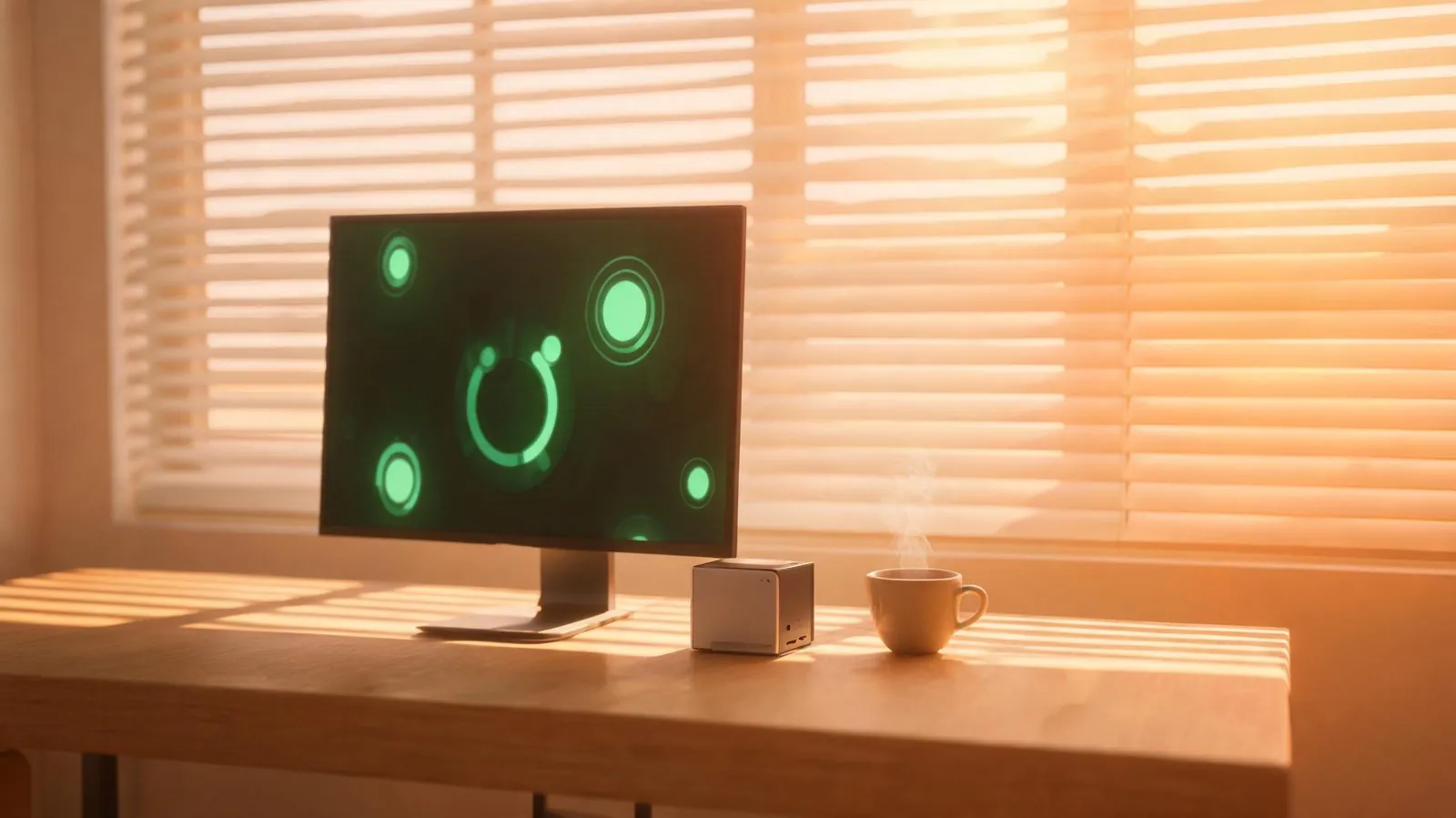
One—your AI, your rules. Deploy a Hermes agent on Kaihe AIBOX, and the data lives on your physical hardware. No remote deletion. No platform notification that erases months of work. You decide when it runs, how long it runs, and what it does.
Two—"shutting down" means nothing to local AI. Cloud AI requires you to be online, device powered on, network connected. Kaihe AIBOX is an independent hardware node. Plug it in, connect to Wi-Fi, and it runs 24/7. You sleep—it compiles tomorrow's briefing. You commute—it handles customer emails. You fly across the ocean—it completes a full analytics pipeline on the ground.
Three—your data belongs to you, not a platform. Cloud AI privacy policies update every few months, getting longer and more opaque each time. Have you read yours lately? Your conversation logs, uploaded files, preference configurations—how are they actually being used? Local deployment means your data sits on your own drive. Delete it if you want. Inspect it if you want. No one else can even access it.
A real case that hits close to home
A friend of mine runs a cross-border e-commerce business. Earlier this year, she built a Doubao agent to handle customer inquiries—product catalog loaded, pricing tables configured, FAQ responses tuned. After five months, the agent had accumulated an entire communication logic system, perfected through thousands of real customer interactions.
On July 15, when Doubao's agents went dark, she was on a business trip abroad. The notification came at 3 AM local time. She rushed to export her data—but Doubao only allowed chat history export. The agent's configuration? The logic trees? The response templates? Gone. Five months of IP, irretrievable.
She rebuilt everything on Kaihe AIBOX running Hermes. When I asked how it felt different, she said: "This time, it runs on my own box. Short of a power outage, nothing can take it away."
Unexpected upsides of going local
People who make the switch often discover that local deployment is actually an improvement:
Faster response. Cloud AI follows a four-step pipeline: your request → upload to cloud → queue for processing → return response. Any step can bottleneck. Local AI runs directly on dedicated hardware. Latency drops from seconds to milliseconds.
No API rate limits. Doubao caps at 60 requests per minute. Qianwen has its own throttling. Local deployment has none of these—it's your hardware, your pace, your throughput.
Predictable costs. Cloud APIs charge per call. Usage grows, bills inflate. Kaihe AIBOX is a one-time hardware purchase. Electricity costs a few dollars a month, especially with off-peak scheduling.
So what should you do?
If your AI usage is light—occasional questions, a quick draft here and there—cloud-based tools are perfectly fine. No need to change.
But if you've invested time building agents, integrating them into your workflow, even depending on them for your business—then moving the critical pieces to local hardware isn't a luxury. It's insurance.
Not replacing cloud AI entirely. Just giving your most important agents a permanent home that no platform policy can evict.
And the migration is simpler than you think. Kaihe AIBOX ships ready to use: plug in, connect to Wi-Fi, deploy your Hermes agent, and you're done. No Linux knowledge required. No programming. Manage everything from your phone via WeChat.
Let cloud AI handle the everyday. Let local AI guard the irreplaceable. That's the practical path forward.
KaiheAIBOX #AIAgent #LocalAI #DataSovereignty #AIBOX
📖 Glossary
AI Box (also known as Agent Computer / Agent PC), is a dedicated local hardware device that runs AI Agents. Pre-installed with an AI agent management system, plug-and-play, running 24/7. Users can remotely command AI to work via Discord, Slack, Telegram, WhatsApp, and more.