📖 Glossary
AI Box (also known as Agent Computer / Agent PC), is a dedicated local hardware device that runs AI Agents. Pre-installed with an AI agent management system, plug-and-play, running 24/7. Users can remotely command AI to work via Discord, Slack, Telegram, WhatsApp, and more.
Summary: Ant Group released Lingguang 2.0 on October 27: the assistant keeps working after you close the chat, because tasks run on a dedicated cloud host. KAIHE AIBOX takes the other road — the same long-running work, executed and remembered on a machine in your home. The difference is where it lives and who owns the machine.
What Lingguang 2.0 actually is
Lingguang launched on November 18, 2025 as Ant Group's multimodal assistant, built around three features: Flash Apps, Vision and Chat. Version 2.0, released October 27, 2026, changes the premise. Instead of answering when asked, it identifies needs, monitors them and follows up.
Cross-session memory, long-horizon scheduling and tool connections carry this. Built-in integrations cover Alipay bills, memberships and travel, plus DingTalk, Feishu, email and Mijia; the open environment adds MCP and CLI. Execution runs on a dedicated cloud host, which is why a task survives after you leave.
KAIHE AIBOX, a dedicated agent computer, serves the same need and moves the location into your home.
Seven dimensions, side by side
| Dimension | Lingguang | KAIHE AIBOX |
|---|---|---|
| Where tasks run | Ant's cloud host | A device in your home |
| Close your phone and laptop | Still running | Still running |
| Network drops | Unavailable | Local files and memory stay; cloud calls wait |
| Memory lives in | A cloud account | A local disk |
| External services | Alipay, DingTalk, Feishu, email, Mijia | Your own accounts, plus local files |
| How you pay | Free download, service on the cloud | Hardware and agent system, once |
| After you stop | Data stays in the account | Machine and files stay with you |
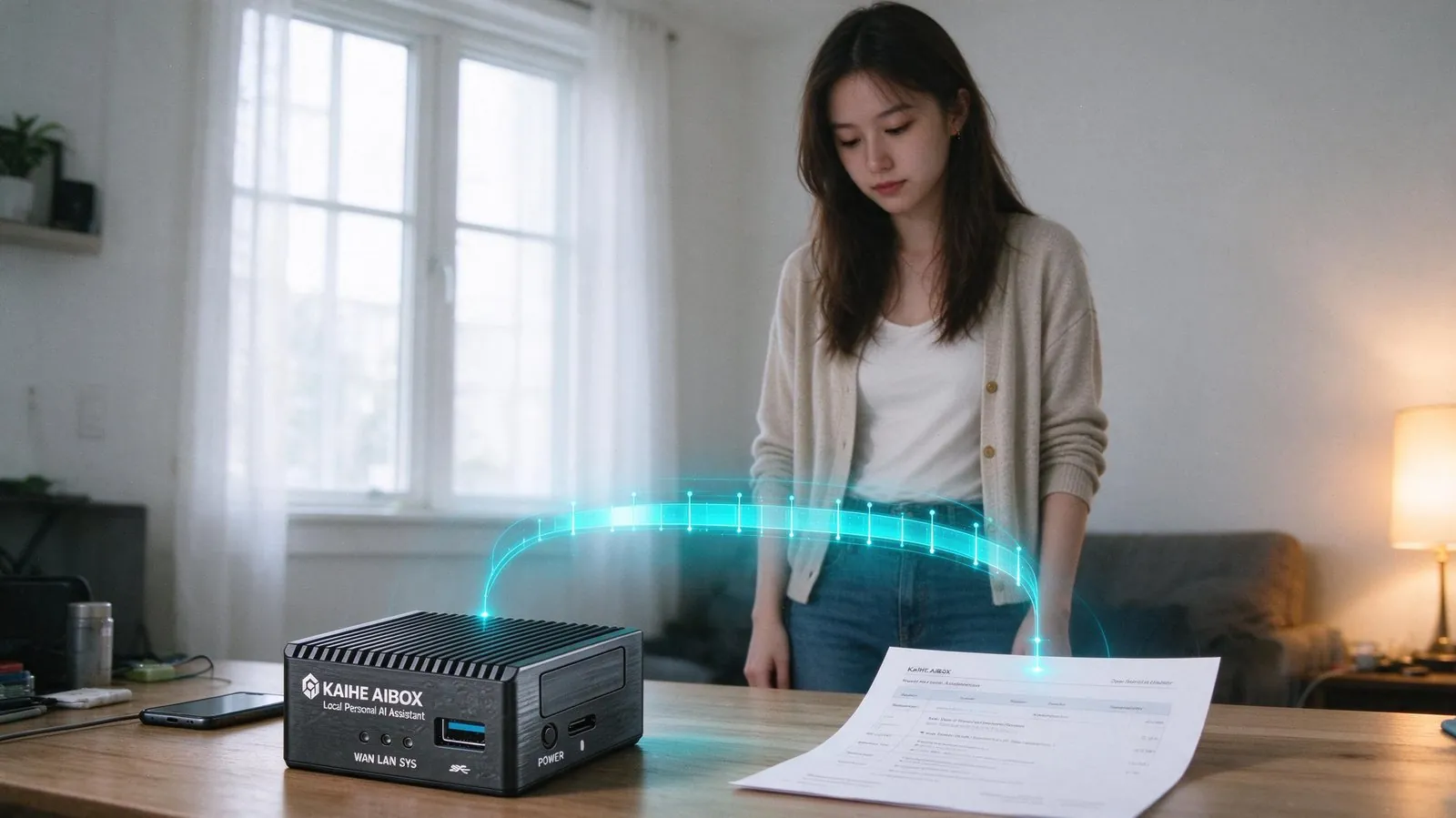
Difference one: memory is an account, or a file on a disk
Lingguang's memory follows the account. Switch phones and the memory comes along, a real advantage. The trade-off: its existence depends on your relationship with the platform. While the account exists the memory works; when it does not, where that memory goes is not your call.
KAIHE AIBOX writes memory as files on its own disk. Formatting rules you corrected, a client's quote template, last week's meeting notes, all of it sits locally, independent of account status and readable without a network.
Change devices without losing anything and the cloud is convenient. Want the material to stay yours permanently and local is steadier.
Difference two: which one stops first, the network or the service
Tasks on Lingguang are safe from you closing your phone, but they depend on connectivity and on the service continuing to operate. Every cloud service shares that premise.
Tasks on KAIHE AIBOX run on the machine itself. Cut the network and local files, memory and finished results remain; only the step that calls a cloud model waits for the connection.
The failure modes differ. One fears a shutdown, the other fears a power cut.
Difference three: who can reach outside services for you
The most concrete part of Lingguang 2.0 is ecosystem access. With authorization it reads Alipay bills and finds forgotten auto-renewals, turns a DingTalk class notice into a to-do list, and watches flight prices. You configure none of it, because Alipay and DingTalk sit behind the product.
KAIHE AIBOX connects through your own accounts. Send a task in WeChat and it works on local spreadsheets, documents, mail and schedules. Outside services need credentials, stored in the local password vault. Flexible, and it asks you to set things up.
One is convenient, the other self-directed. That is the first split between the two routes.
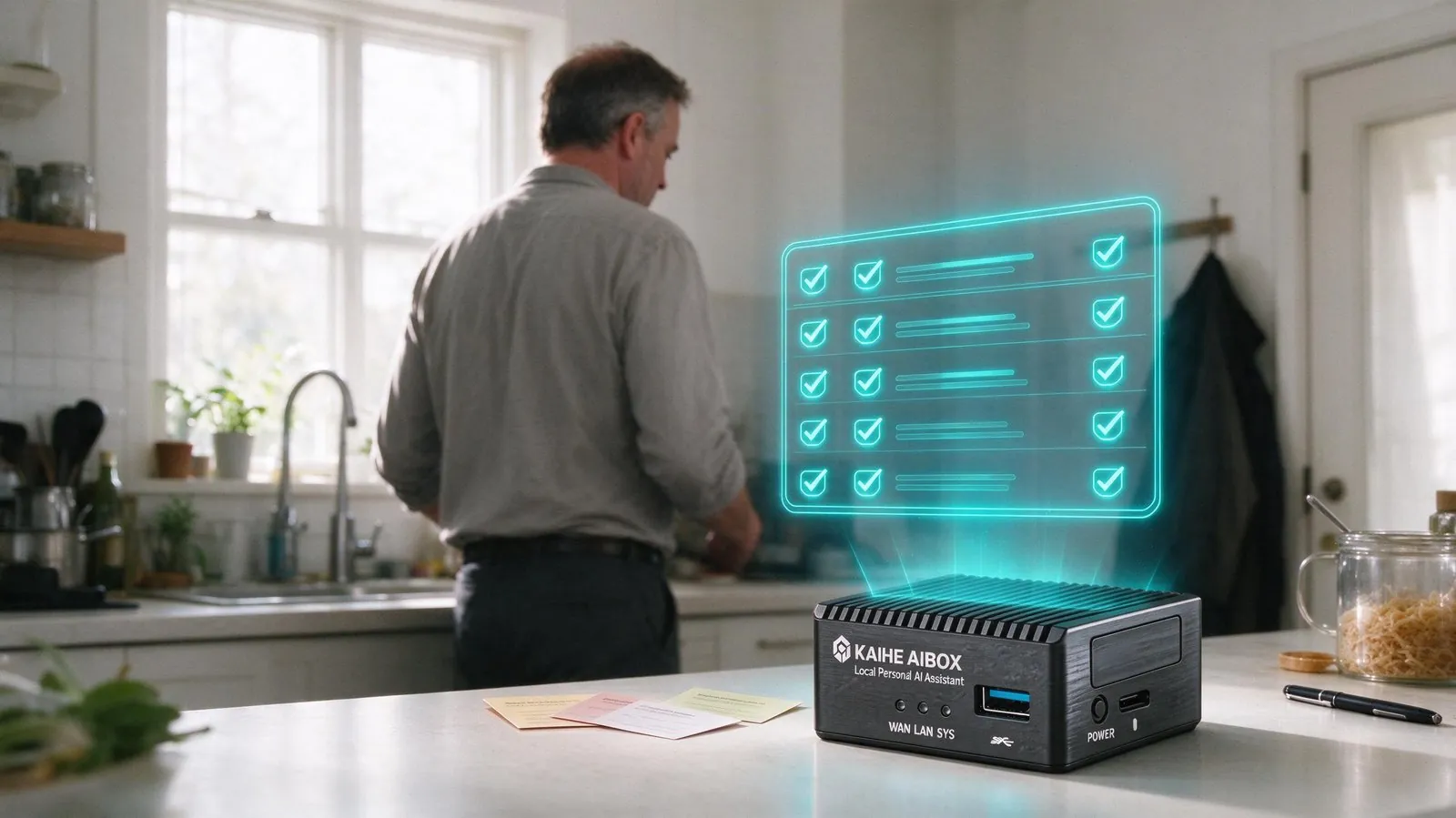
These are not substitutes
For instant questions, quick lookups, or a small tool generated on your phone, Lingguang is faster and lighter: free download, immediate start.
For something that has to happen every day, with material you cannot hand over and no indefinite subscription, you need a machine of your own.
Most people will run both. The phone handles what comes up in the moment; the device on the desk handles what must happen on schedule.
Back to the question
Lingguang does the work on Ant's cloud. KAIHE AIBOX does it on the desk in your home.
The cloud reaches more services, updates faster, asks nothing of you to start. The desk keeps the material, hands you the machine, lets you set the rules.
The difference is not which one is smarter. It is where you want this thing to grow.
Related Reading: - Local personal AI assistant vs chat AI: what changes - Does my AI keep working when my laptop is off - Is there a China alternative to Meta Muse
KAIHE AIBOX #PersonalAI #AgentComputer #LocalAI #Lingguang #AIAssistant
For more information, search [KAIHE AIBOX] or contact: [email protected]
KAIHE AIBOX · 7x24 Personal AI Assistant | Product