📖 Glossary
AI Box (also known as Agent Computer / Agent PC), is a dedicated local hardware device that runs AI Agents. Pre-installed with an AI agent management system, plug-and-play, running 24/7. Users can remotely command AI to work via Discord, Slack, Telegram, WhatsApp, and more.
Summary: In October, researchers used a domain-lookup dataset to surface more than 6,800 public Meta Muse share pages whose titles gave away what was inside: a home purchase budget, a revenue review, a loan application, a staff vacation calendar. None needed a login. KAIHE AIBOX defaults the other way: memory, a private knowledge base and work records live on a device its owner controls.
How 6,800 conversations were found by looking up domain names
In October, the security team Claroc filtered a domain-lookup dataset for Muse share domains.
More than 6,800 came back. Each share address begins with the conversation title, so the title told you what was inside. A home purchase budget. A revenue review for a company's CEO. The amount requested on a loan application. A staff vacation calendar with a dozen names. The researchers opened a few hundred in an ordinary browser, no login.
Every share link carries a random string designed so nobody could guess it. But unguessable and unfindable differ. The first time anyone opens a share, their browser looks up that domain, and lookups land in public indexes. The string meant to stay secret ends up in a searchable list, title attached.
An ID works as a secret only while it stays secret. A hostname never was.
The question is not whether to delete
The reflex is to share less. That is right, and it misses half the picture. Those 6,800 pages were the ones somebody chose to share. Most of what an ordinary person says to an AI is never shared. It sits in a data centre.
You may have described a hesitation about changing jobs, read out numbers from a medical report, or named the floor price on a deal. None of it became a web page. All of it became a profile that understands you better every month. Whose house does that profile live in.
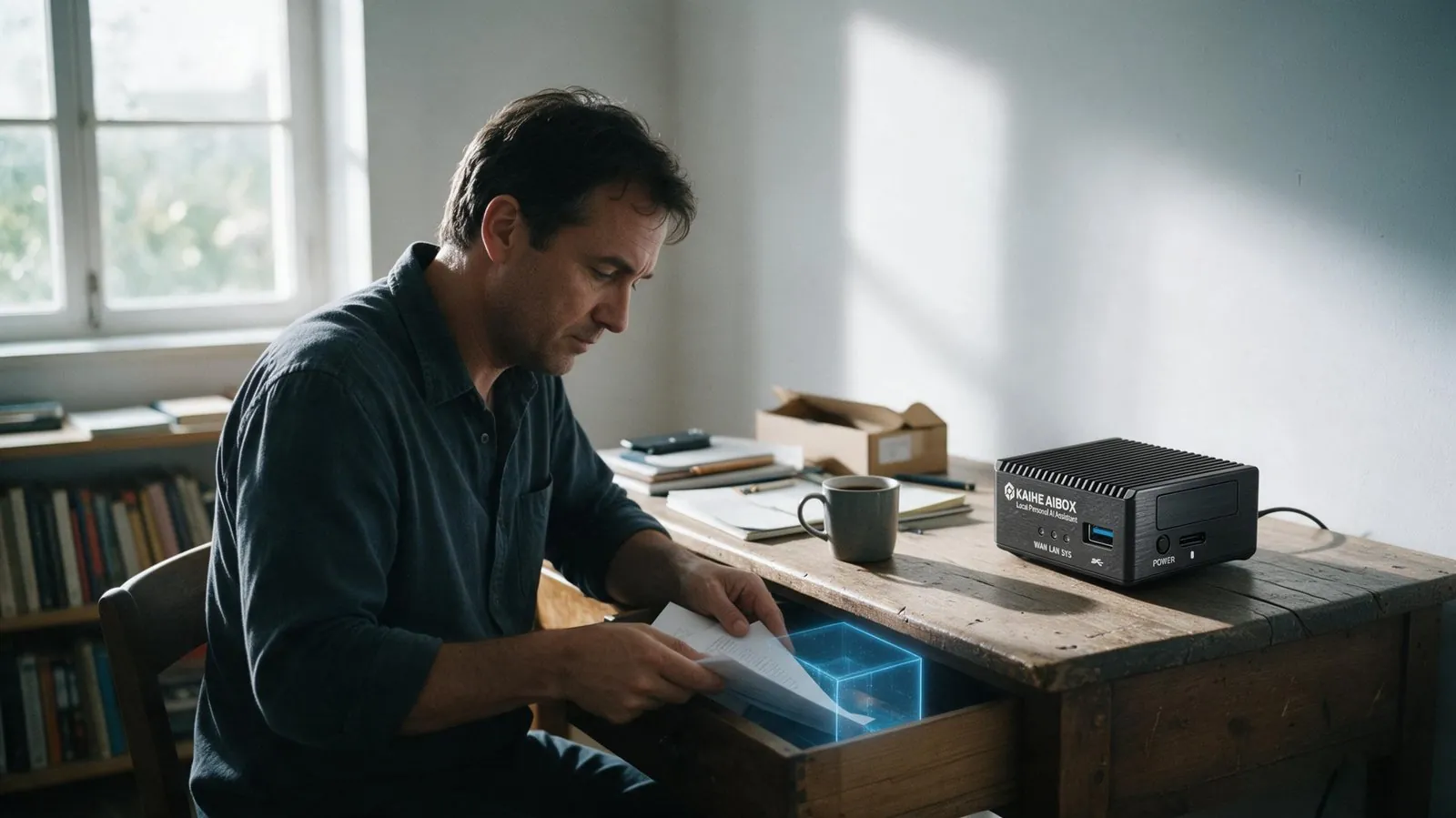
One profile, three different things
Long-term memory. The corrections you made, your industry, the way you phrase things. The more accurately it remembers, the less you re-explain, though another platform means starting over.
A private knowledge base. Contract templates, product documents, household accounts. Already on your computer. You only wanted the assistant to read them.
Work records. Who agreed to what and when, a client's preferences, the reasoning behind a quote. Together they form your memory of a piece of work.
The three have little in common. Cloud products treat them identically: upload, store on the platform side, let the platform decide how it is used, how long it is kept, and whether it can be searched. The switch you get is usually training.
Where the default sits decides everything after it
KAIHE AIBOX, the 铠盒AIBOX device, is a machine that sits at home, about the size of a hardback, always on, and it does not occupy your computer. It does not bolt a privacy toggle onto a cloud assistant. It changes the default: all three live there.
Memory grows on the device and survives new conversations without leaving your home. The knowledge base is read from the files you put there, with no prior upload. Work records accumulate locally. On that profile you shift from user to holder.
Sharing is still possible, and it becomes a decision
Keeping records locally does not mean never sharing. What matters is that sharing becomes something you can size.
What to share. One conclusion can go out without the whole conversation.
Who receives it. One person, or a link anyone can open: different levels of exposure.
How long. Whether a link works indefinitely or expires in hours should be your call, not a permanent default.
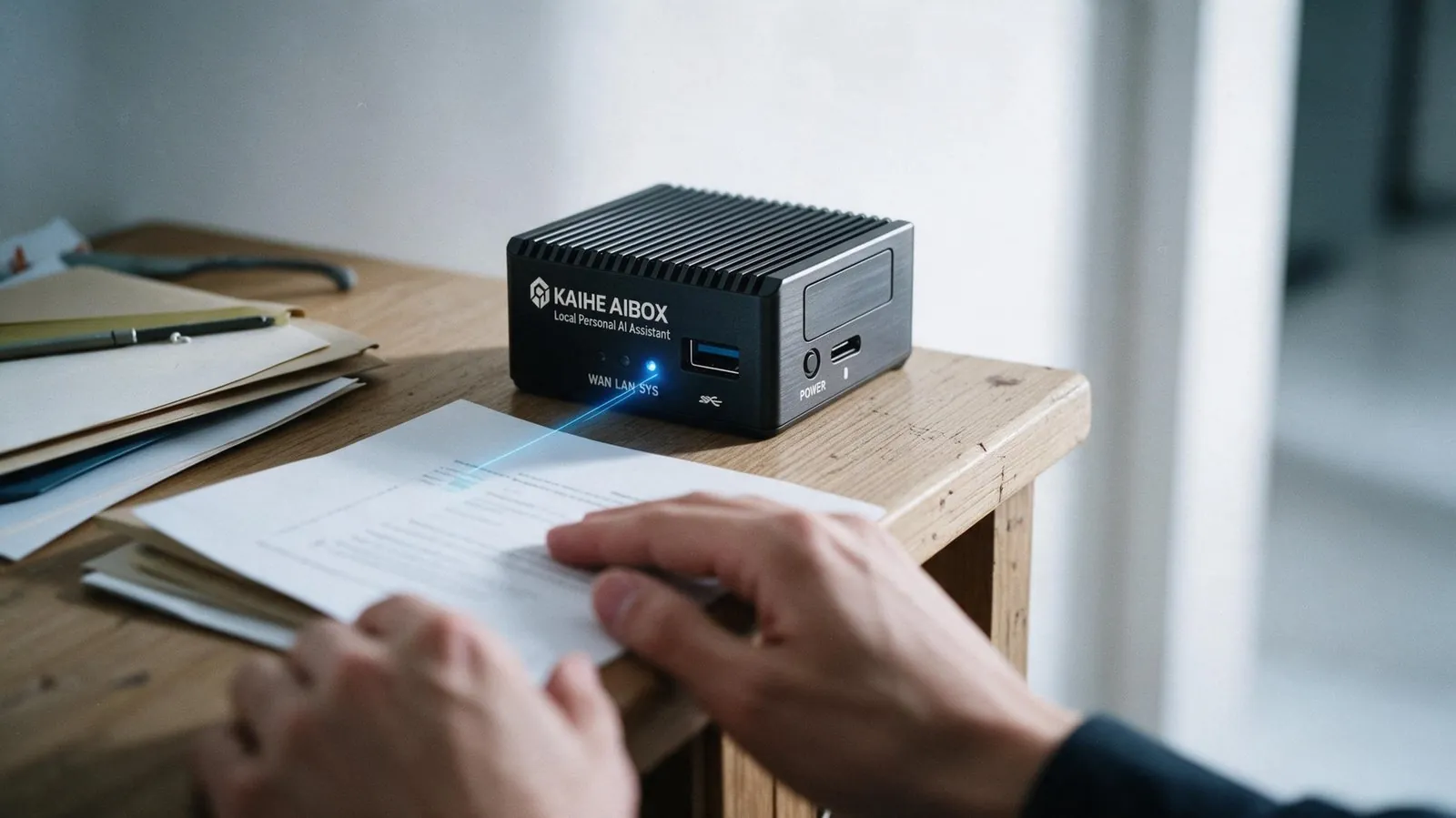
Cloud products collapse these into one switch: share, or stop sharing. The middle ground has no control, so most people skip it.
This is a question about defaults, not technology
Technically, Muse's feature did what it said: random IDs, pages not indexed, requests carried out as documented. The researchers broke nothing. The owners chose to share.
What is worth remembering is something else. When a profile of you lives by default on somebody else's server, your relationship to it is rental. The platform can change rules or shut down, and what you hold is an export window.
KAIHE AIBOX keeps that profile on a device you own, not because the encryption is stronger, but because the boundary sits elsewhere: the material is in your house first.
Three questions worth asking now. Where is the last important thing you told an AI actually stored. When you say you will share less, which material do you mean.
Related Reading: - Who should manage the passwords your AI agent uses? - Why an AI share button can turn a private chat into a public page?
For more information, search [KAIHE AIBOX] or contact: [email protected]
KAIHE AIBOX · 7x24 Personal AI Assistant | Product Center