KAIHE F1: The 126 TOPS Local AI Ultimate Solution
📖 Glossary
AI Box (also known as Agent Computer / Agent PC), is a dedicated local hardware device that runs AI Agents. Pre-installed with an AI agent management system, plug-and-play, running 24/7. Users can remotely command AI to work via Discord, Slack, Telegram, WhatsApp, and more.
AMD Ryzen AI Max+ 395, 128GB RAM, 126 TOPS total compute — the flagship AI workstation that can fine-tune models locally and run 70B-235B LLMs on-premise.
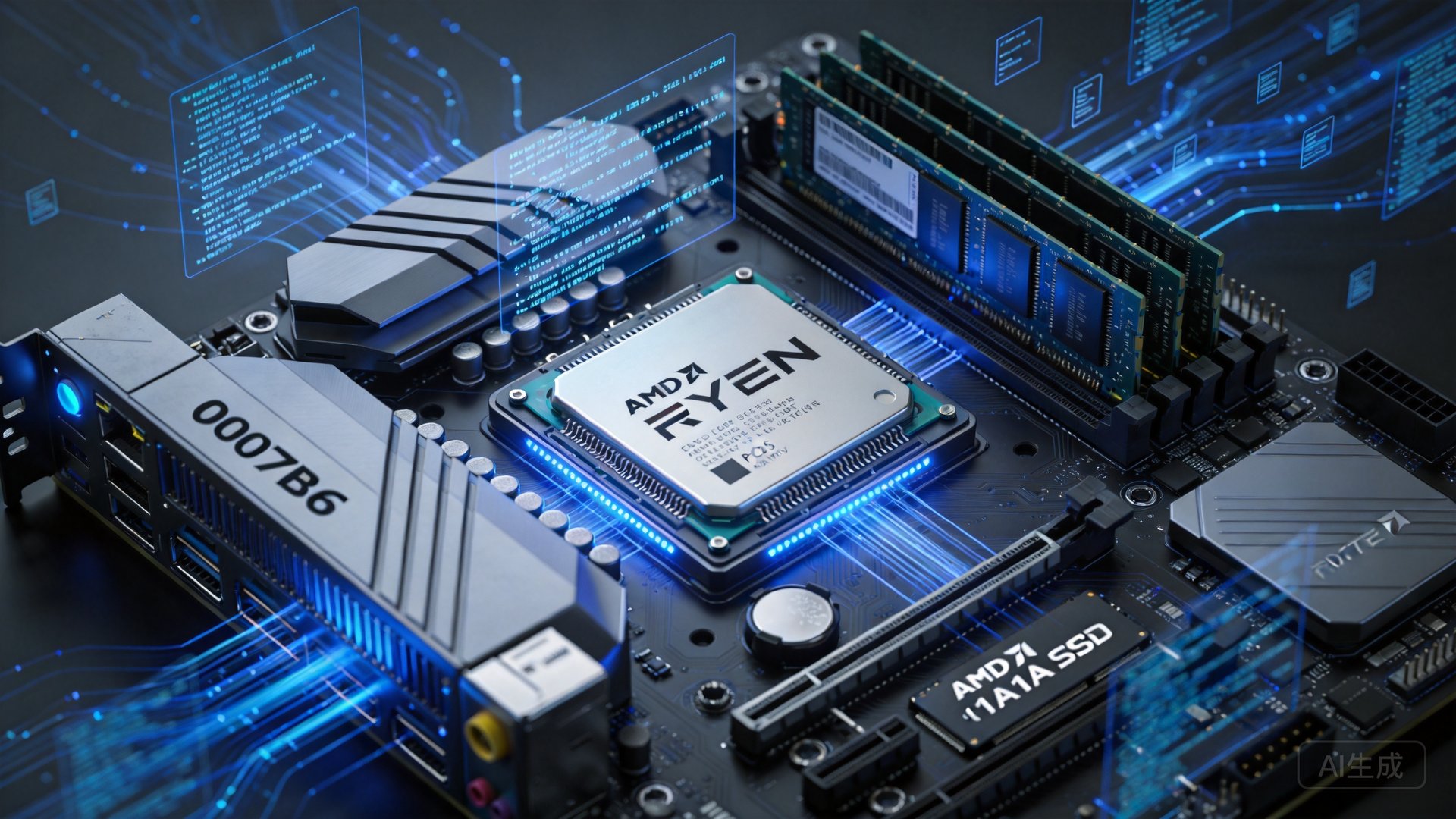
"Peak Local AI" Is Not a Slogan
The AMD Ryzen AI Max+ 395 inside KAIHE F1 isn't a typical laptop-grade processor — it's AMD's flagship AI PC chip: 16 Zen5 cores, 32 threads. The CPU muscle alone handles any conventional workload with headroom to spare.
But F1's real soul is the AI Engine — integrating XDNA 2 NPU + RDNA 3.5 GPU, delivering 126 TOPS total compute. 128GB of LPDDR5X-8000 ultra-high-bandwidth memory solves the "can it run?" question for large models. 2TB NVMe PCIe 4.0 SSD solves the "can it fit?" question.
F1's positioning in one sentence: Unbox it and you have an AI development workstation — no GPU upgrades needed, no cloud server billing.
Core Specifications
| Component | Specification |
|---|---|
| Processor | AMD Ryzen AI Max+ 395 (16C/32T) |
| Total AI Compute | 126 TOPS |
| Model Support | 70B-235B parameter locally |
| Memory | 128GB LPDDR5X-8000 |
| Storage | 2TB NVMe PCIe 4.0 SSD |
| Cooling | Triple-fan active cooling system |
128GB Memory: The "Ticket" to Local LLMs
The first bottleneck for running large models is rarely compute — it's VRAM/memory capacity.
A typical AI PC (32GB RAM) running a 70B model can only rely on INT4 quantization — quality degradation is inevitable. F1's 128GB memory pool changes everything: - 70B models: Run at full precision, no quantization needed - Qwen2.5-72B: Full-precision inference, identical quality to cloud - 235B MoE models: Mixtral 8x22B and similar, run smoothly locally
Plus, LPDDR5X-8000 bandwidth at 8000 MT/s, combined with unified memory architecture (CPU direct access), means model loading and inference speeds far surpass traditional DDR5 setups.
Real "Local Fine-Tuning"
126 TOPS isn't just inference power. It's enough for F1 to fine-tune smaller models locally:
- LoRA fine-tuning Llama-3.2-3B (vertical industry corpora)
- QLoRA fine-tuning Qwen2.5-7B (enterprise proprietary knowledge)
- Full-parameter training MiniCPM-2B and similar lightweight models
Previously, these operations required cloud GPU rentals (tens of yuan per hour). Now F1 sits on your desk, running fine-tuning runs for hours — zero marginal cost.
Extreme Agent Orchestration: OpenClaw's True Stage
Multi-agent orchestration is OpenClaw's core capability. Simple scenarios (two agents chaining) work fine on C1; but complex orchestration — "10 agents collaborating simultaneously, role assignment + task distribution + result aggregation" — demands F1-level compute foundation.
Example: Automated sentiment monitoring system — - Agent A: Real-time social media post scraping - Agent B: Sentiment analysis on each post - Agent C: Deep summarization of negative posts - Agent D: Daily sentiment report generation (with charts) - Agent E: Auto-alert when negative sentiment exceeds threshold
Five agents running in parallel, each calling local LLMs for real-time inference. F1's 126 TOPS + multi-agent architecture let this system run 24/7 without a single cloud dependency.
Buying Guide
F1 is right for: - AI developers: Need local model fine-tuning, experimentation, evaluation — no more per-hour GPU rentals - Enterprise AI infrastructure: Build private LLM services, serve multiple internal departments via API - Data-sensitive industries (healthcare/legal/finance): Models and data must operate in physically isolated environments - Extreme agent enthusiasts: Want to run OpenClaw's most complex orchestration scenarios locally
Bottom line: D1 is the "edge AI workhorse," F1 is the "local AI ceiling" — whether you're doing inference or fine-tuning determines which machine you pick.