Lenovo Puts "Raising Shrimp" Inside Your Computer — and Big Tech Is Already Using the OpenClaw You Hold in Your Hands
📖 Glossary
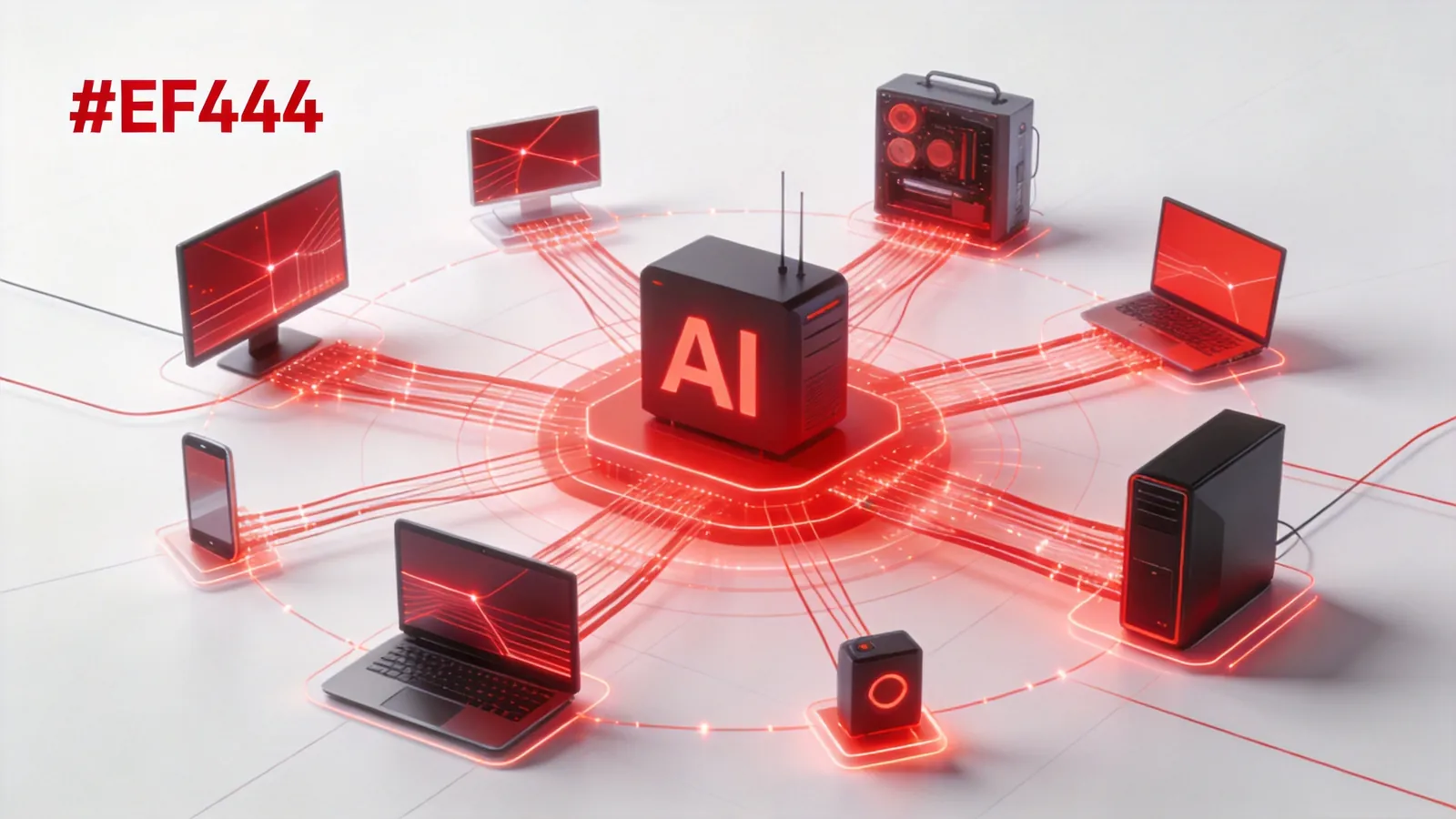
AI Box (also known as Agent Computer / Agent PC), is a dedicated local hardware device that runs AI Agents. Pre-installed with an AI agent management system, plug-and-play, running 24/7. Users can remotely command AI to work via Discord, Slack, Telegram, WhatsApp, and more.
Summary: Lenovo has built Tianxi Claw atop the OpenClaw open-source architecture — the first consumer-grade OpenClaw-native AI assistant from a major PC manufacturer. This is not a case of "big tech jumping on the bandwagon." It is a landmark event marking the transition of the open-source Agent paradigm from the hacker community to the mass market. A PC giant's entry validates the commercial value of the OpenClaw ecosystem, and it means that every ordinary user's computer will soon house a 24/7 intelligent assistant.
Starting with "Raising Shrimp": An Inside Joke from the Open-Source Community
If you have ever moved in AI Agent circles, you have undoubtedly heard the phrase "raising shrimp."
OpenClaw — Open + Claw — was playfully transliterated by the Chinese-speaking community as "kāi zhǎo" (open claw), which then morphed into "yǎng xiā" (raising shrimp). Behind this seemingly whimsical nickname lies an open-source project that is fundamentally reshaping how AI applications work: it enables everyone to run an autonomous AI Agent on their own device, on standby 24/7, helping you process information, execute tasks, and connect services.
In the past, "raising shrimp" was the exclusive hobby of hackers and tinkerers. You needed to configure environments from the command line, write Agent logic, and debug tool chains — the barrier to entry was so high that ordinary people could not even find the door. But now, Lenovo has turned this into a consumer product.
Tianxi Claw: The PC Giant's First Agent Card
In 2025, Lenovo officially launched Tianxi Claw, the world's first consumer-grade AI assistant built on the OpenClaw open-source architecture and released by a major PC manufacturer.
Its core positioning is crystal clear: enable ordinary users to own an AI Agent inside their computer with zero barrier to entry.
No command line, no coding, no need to understand what "Tool Call" or "Function Calling" means. You simply open Tianxi Claw and tell it in natural language what you want done — organize emails, draft reports, look up information, auto-fill forms — and it will execute like an indefatigable digital employee.
From a technical architecture perspective, Tianxi Claw accomplishes several critical things:
First, consumer-grade packaging of Agent capabilities. The OpenClaw open-source architecture provides the core capabilities for Agent execution (tool invocation, memory management, task orchestration), but its raw form is far from user-friendly for ordinary consumers. Tianxi Claw wraps these capabilities into a graphical interface and natural-language interaction, transforming "raising shrimp" from a CLI command into a single sentence in a chat box.
Second, a local-first deployment strategy. Tianxi Claw follows OpenClaw's local-first principle: the Agent's core logic runs on the device, and data never leaves the local machine. This stands in stark contrast to those AI assistants that "send everything to the cloud," and it aligns with the growing user demand for privacy and security.
Third, pre-integrated ecosystem tool chains. The power of OpenClaw lies in its rich tool ecosystem — search engines, file operations, browser automation, email sending and receiving, and more. Tianxi Claw pre-integrates these tools so users can start using them directly without manual configuration.
Why Lenovo? Why Now?
Lenovo's choice of OpenClaw was not accidental. Three underlying logics drive this decision:
Logic One: The PC Industry Needs a New Growth Engine
The global PC market has been sluggish for years. According to IDC data, worldwide PC shipments in 2024 were approximately 260 million units, with year-over-year growth of merely 1%. The so-called "AI PC" had been touted as a savior, but so far, most "AI PCs" merely added a cloud AI portal, making the experience barely distinguishable from a regular PC.
Lenovo needed a genuinely differentiated AI PC experience, and OpenClaw's Agent architecture provided exactly that possibility — it transforms the PC from a "passive tool" into a "proactive assistant." That is what an Agent Computer should be.
Logic Two: The OpenClaw Ecosystem Has Matured Enough for Commercialization
The early OpenClaw was more of a research project; its stability and usability fell short of consumer-grade standards. But after more than two years of community iteration, the core architecture has become remarkably mature:
- Agent runtime: Supports multi-model switching, dynamic tool registration, and automatic error recovery
- Memory system: Short-term conversation memory plus long-term knowledge base; Agents can "remember" user preferences and historical context
- Tool ecosystem: Over 200 community-contributed MCP tools covering search, files, browser, email, and other common scenarios
- Security mechanisms: Sandbox execution, permission control, operation auditing — preventing Agent overreach
The maturation of this infrastructure gives major manufacturers the confidence to build consumer products on top of it.
Logic Three: The Open-Source Agent Approach Has Been Validated
OpenClaw is not the only Agent framework, but it is one of the most active open-source communities. With over 15,000 stars on GitHub, contributors spanning the globe, and new tools and Agent templates published every week, the ecosystem is thriving.
Lenovo's choice of the open-source route rather than building a proprietary architecture in-house reveals an important realization: the value of an Agent lies not in the model itself but in the ecosystem. A closed system's Agent capabilities are limited by its own development resources, whereas an open-source ecosystem's Agent capabilities grow exponentially with the community.
The OpenClaw Ecosystem: From Hacker Circles to the Mass Market
The release of Tianxi Claw marks the OpenClaw ecosystem's entry into a new phase. We can understand its evolution through three stages:
Stage One: Hacker Experimentation Period (2023–2024)
When OpenClaw was first released, its users were primarily developers and AI enthusiasts. They "raised shrimp" from the command line, writing their own tools, debugging Agents, and sharing experiences. The community was small but vibrant, and the core architecture was honed during this phase.
Stage Two: Tool Prosperity Period (2024–2025)
With the standardization of the MCP (Model Context Protocol) tool specification, tool development became modular. Community contributors began producing tools en masse — from weather queries to database operations, from web scraping to image generation. OpenClaw evolved from "can run an Agent" to "can get work done through an Agent."
Stage Three: Consumer-Grade Popularization Period (2025–Present)
The launch of Tianxi Claw is the landmark event. When a major PC manufacturer starts building consumer products based on OpenClaw, it signals that the ecosystem has graduated from "technology experiment" to "commercial infrastructure." More manufacturers will follow — PC, smartphone, and even home appliance companies could all become participants in the OpenClaw ecosystem.
This evolutionary path closely mirrors that of Android: hacker community incubation → ecosystem prosperity → major manufacturer entry → consumer popularization. Android took roughly five years to complete this transition; OpenClaw may accomplish it within three.
What Does This Mean for Ordinary Users?
You might ask: Lenovo making Tianxi Claw — what does that have to do with me?
Quite a lot. Because it is changing the paradigm of AI usage:
From "I ask, you answer" to "I say, you do." Traditional AI chat is conversational — you ask a question, the AI gives an answer. OpenClaw's Agent architecture is task-oriented — you give a goal, and the Agent breaks it into steps, calls tools, and executes to completion. For example, "Organize today's emails, flag the important ones in red, and add meeting invitations to my calendar" — the Agent will automatically complete this entire sequence of operations rather than merely providing textual guidance.
From "available when I need it" to "24/7." OpenClaw Agents can run continuously without requiring you to restart them each time. They can periodically check emails, monitor information changes, and automatically execute tasks when conditions are triggered. This is the core capability of the Agent Computer — not waiting for you to use it, but proactively working on your behalf.
From "one-size-fits-all" to "personalized for everyone." OpenClaw's Agent memory system enables it to learn your preferences and habits. The more you use it, the better it understands you. This is not the kind of personalization where "your data trains a cloud model" — it is the kind where "your Agent serves only you, and your data stays only on your device."
The Commercial Value of Open-Source Agents Gets Reassessed
The emergence of Tianxi Claw is not merely a product-level innovation; it is a reassessment of the commercial value of open-source Agents.
In the past, many investors and enterprises took a wait-and-see attitude toward open-source Agents: the technology was cool, but how do you make money? Tianxi Claw provides one answer — open-source architecture as the foundation, consumer products as the entry point, value-added services as the monetization pathway.
Specifically:
- Foundation layer: The OpenClaw open-source architecture remains free and open, attracting developers and community contributions
- Product layer: Consumer products like Tianxi Claw lower the barrier to entry and expand the user base
- Service layer: Premium Agent templates, enterprise-grade tools, and model inference services form a paid closed loop
This model is highly consistent with the success trajectories of Red Hat (Linux), Android (mobile OS), and Hugging Face (AI models). Open source is not charity — it is the most efficient way to build an ecosystem moat.
The Future of "Raising Shrimp": Every Computer Becomes an Agent Computer
Tianxi Claw is just the beginning. As the OpenClaw ecosystem continues to flourish and more manufacturers join in, we can envision a more distant future:
Every computer will house an AI Agent. It will not be cold, impersonal software but a digital assistant that understands your habits, handles your daily routines, and continuously learns and evolves. It will be online 24/7, able to work without an internet connection, and your data will always remain in your own hands.
This is not science fiction — it is a reality that is unfolding right now. The OpenClaw you hold in your hands, Lenovo's Tianxi Claw, and KaiheAiBox — we are all moving in the same direction: bringing AI down from the cloud pedestal and into everyone's devices, making the Agent Computer accessible to all.
The term "raising shrimp" will soon no longer be just an insider's code word. It will become the daily routine of every computer user — just as no one today considers "browsing the web" to be a specialized technical term.
KaiheAiBox | The Agent Computer for Everyone · OpenClaw Zone Tracker