Can a 300g Mini PC Really Run AI Agents? Deploying OpenClaw on the Lenovo P7 with 190 TOPS
📖 Glossary
AI Box (also known as Agent Computer / Agent PC), is a dedicated local hardware device that runs AI Agents. Pre-installed with an AI agent management system, plug-and-play, running 24/7. Users can remotely command AI to work via Discord, Slack, Telegram, WhatsApp, and more.
Abstract: A palm-sized device weighing just 300 grams packs 190 TOPS of AI compute and the ability to run 122-billion-parameter large language models locally. Lenovo's AI Station P7, powered by the Cixin Agentic SoC P1, enters the ring. We installed OpenClaw and put it through its paces to find out whether ARM-based silicon can genuinely sustain an AI agent workload.
From Desk Accessory to Agent Hub
Picture this: sitting on your desk is a device smaller than your hand, lighter than a bottle of water, and quiet enough to blend into a library. Yet it is simultaneously running three AI agents—one monitoring your inbox, another crunching spreadsheet data, and a third auto-replying to customer inquiries.
This is not science fiction. The Lenovo AI Station P7 crams 190 TOPS of compute into a 300-gram chassis, and OpenClaw transforms it from "a box that runs LLMs" into an agent computer that actually gets work done.
The Hardware Foundation: Cixin P1's ARM Philosophy
At the heart of the P7 lies Cixin Technology's Agentic SoC P1. Twelve ARM cores fabricated on a 6nm process, with a peak clock of 3.2 GHz—specifications that would be unremarkable in a flagship smartphone SoC, but tell a very different story when embedded in a device purpose-built for AI workloads.
The numbers that matter:
- 190 TOPS of AI compute: This figure is not the CPU's contribution—it belongs to the NPU, which handles inference acceleration while the CPU orchestrates scheduling and coordination.
- Up to 80 GB of memory: The hard currency of LLM inference. A 122-billion-parameter model demands substantial memory residency, and the P7 delivers.
- 128K context window: The foundation for processing long documents and sustaining multi-turn conversations without losing context.
- 50 Tokens/s local inference: Benchmarked at roughly 50 tokens per second of generation throughput, translating to smooth conversational and text-processing experiences.
What does 50 tokens per second feel like? Roughly 30–40 English words per second—slightly faster than most people read, which means the model's output pace never becomes a bottleneck.
Deploying OpenClaw: Agent Life on ARM
The P7 ships with a dual-mode design: an Agent Mode running the Tianxi Claw system, and an LLM Mode that exposes a local API key. But as OpenClaw users, the real question is: can you install OpenClaw on it?
The short answer is yes. The longer answer involves a few nuances worth discussing.
Installation experience: OpenClaw's ARM architecture support has matured considerably. The P1 implements the ARM v8 instruction set, and both Node.js and Python offer native ARM64 builds. The installation process is essentially identical to the x86 workflow.
Real-world scenario testing:
| Scenario | Result | Notes |
|---|---|---|
| Automated email processing | ✅ Smooth | Single agent, ~4 GB memory footprint |
| Multi-agent parallel (3 agents) | ✅ Stable | Total memory ~12 GB, inference latency acceptable |
| Long-document summarization (10K+ words) | ✅ Normal | 128K context window shines here |
| 24/7 continuous operation | ✅ No issues | Full-load power under 30 W, minimal heat |
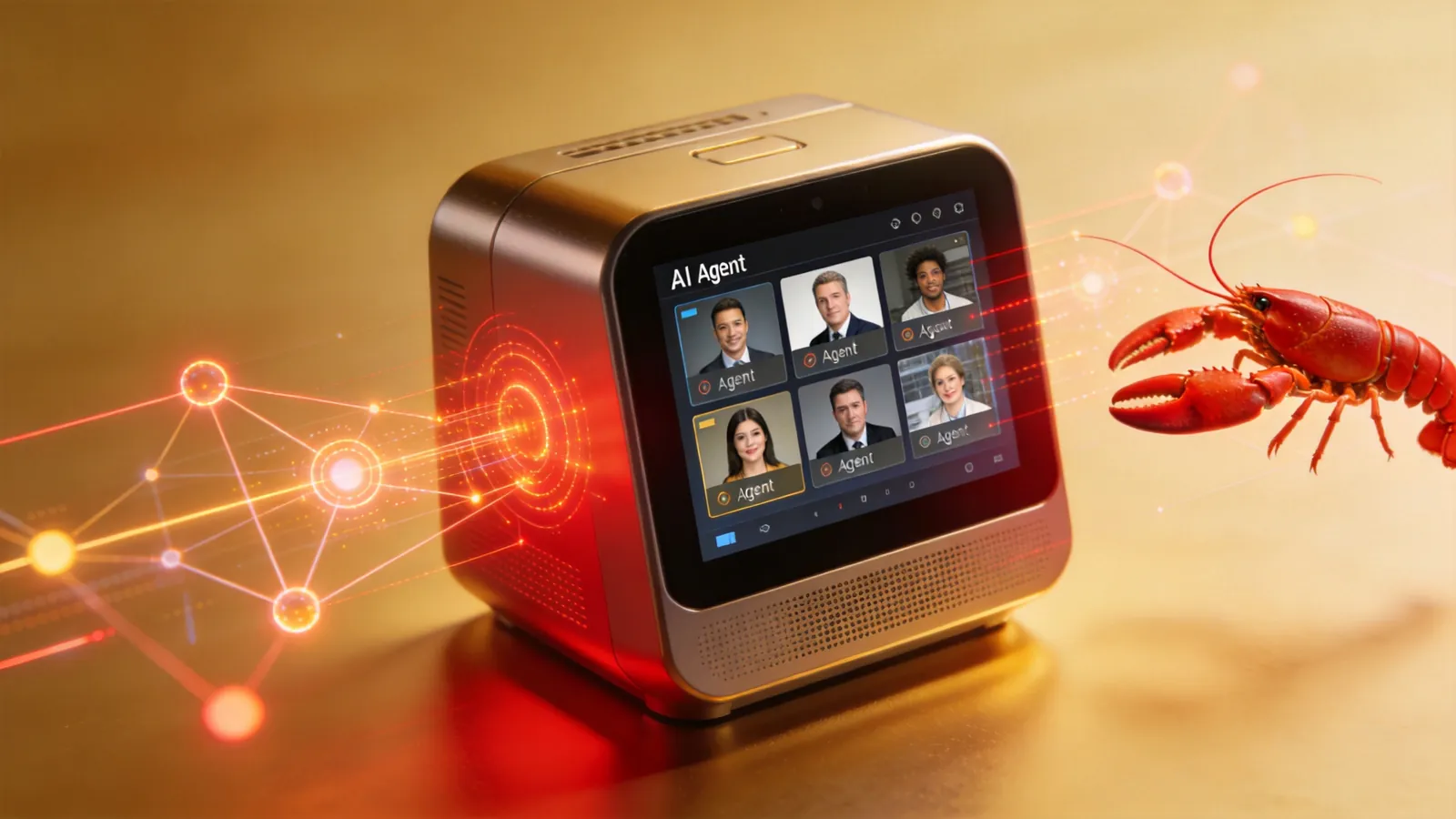
Comparison with KaiheAiBox A1/B1: The KaiheAiBox A1 and B1 similarly employ ARM-based, low-power architectures, positioning themselves as 24/7 agent computers. The P7 differentiates with higher peak compute (190 TOPS versus the A1/B1's balanced power-efficiency approach) and a larger memory ceiling (80 GB), making it better suited for scenarios requiring larger parameter models.
Power and Acoustics: An AI Device That Belongs on Your Desk
Full-load power consumption under 30 watts. Noise below 35 decibels. These two figures are what make the P7 credible as a "desktop AI station."
What does 30 watts mean in practice? A conventional desktop PC idles above 30 watts, while the P7 draws that only at full inference load. At Shanghai electricity rates, running the P7 around the clock costs less than 16 yuan per month—cheaper than most cloud GPU instances charge in an hour.
A noise floor of 35 dB corresponds to a quiet office environment. There is no fan-whine anxiety, no need to tuck the device away in a closet. The P7 can sit on your desk, in your bedroom, even on your nightstand. It will not disturb your life, but it will respond the moment you need it.
When an AI device becomes quiet enough that you forget it exists, it has truly integrated into daily life.
Limitations and Trade-offs: Not a Universal Solution
To be clear-eyed, running OpenClaw on the P7 does come with constraints:
- CPU-heavy tasks lag: Twelve ARM cores cannot match the throughput of a comparably priced x86 processor. Agent workflows involving heavy data preprocessing will feel the gap.
- Ecosystem compatibility: Some x86-only toolchains require translation layers. While Rosetta-like solutions work, they impose performance overhead.
- NPU utilization: OpenClaw's NPU scheduling is still being optimized. Some inference paths still route through the CPU, meaning the full 190 TOPS theoretical ceiling is not yet consistently achievable.
These limitations are shared by the KaiheAiBox A1 and B1—they are a common challenge for ARM-based agent computers. The selection criterion comes down to this: does your agent workflow prioritize peak compute, or sustained stability?
Who Should Run OpenClaw on the P7
Three profiles:
- Local LLM enthusiasts: With 80 GB of memory and 190 TOPS, the P7 is one of very few compact devices capable of running hundred-billion-parameter models.
- Agent developers: A low-power, continuously operable test device at a fraction of the cost of cloud GPU instances, with zero ops overhead.
- Privacy-first users: Data never leaves the device, inference never touches the cloud. The P7 plus OpenClaw constitutes a complete on-device agent solution.
For KaiheAiBox users, the P7 offers a "high-spec" alternative—if your workload demands larger models, longer contexts, and beefier inference throughput, the P7 is an upgrade path worth considering alongside the A1 and B1.
The real insight, however, is broader. The P7 proves that ARM-based agent computers are no longer a compromise. They are a credible category. As OpenClaw continues to optimize for heterogeneous compute—better NPU scheduling, improved ARM-native toolchains—devices like the P7 will only get more capable. The question is no longer "can ARM run agents?" but "how fast will ARM overtake x86 for agent workloads?"
That trajectory is worth watching. And if you are building or deploying AI agents today, it is worth testing on ARM hardware now, before the paradigm shift makes it the default.
KaiheAiBox · OpenClaw Zone