Why a Local Agent Earns Its Place as Your Main Workhorse | KAIHE AIBOX
A piece making the rounds argues that a local agent, not a hosted service, deserves to be the main engine for serious work. I agree with the conclusion in broad strokes. A local setup really does suit long, repetitive jobs where you want to keep a hand on the wheel. But the argument overstates two things: it paints hosted services as too much of a black box, and it makes the local option sound more carefree than it is.
That distinction matters, because it decides where you put the AI assistant you use every day.
One: the local advantage is control, not brains
📖 Glossary
AI Box (also known as Agent Computer / Agent PC), is a dedicated local hardware device that runs AI Agents. Pre-installed with an AI agent management system, plug-and-play, running 24/7. Users can remotely command AI to work via Discord, Slack, Telegram, WhatsApp, and more.
Start with the part that holds up. Three benefits are real.
First, the files are yours. The notes that record facts, the ones that record your preferences, the ones that describe how a task should be done — these are files you can open, edit, and search in full. What the assistant promised you last week is something you can look up, not something you have to take on faith.
Second, you can swap models by task. One model for drafting, another for scraping, a third for checking. If a provider gets flaky, you switch to a backup. The model becomes a replaceable part rather than a fixed relationship.
Third, verification can be written into the workflow. Numbers, dates, and quotes get checked against the source before a step is approved. That turns "I have to watch it" into "the process watches itself."
Taken together, these are not about being smarter. They are about being more obedient, more auditable, and more willing to follow your rules. For someone doing heavy work every day, that matters more than a benchmark score.
Two: hosted services are not a black box either
Here the argument needs a fair hearing. Mature hosted services do have controls: isolated environments, confirmation before sensitive actions, audit logs you can review, approval rules, connector permissions, and network policies.
The controls exist in both cases. The difference is whose hands they sit in.
A local setup keeps the configuration, the code, and the checks in your hands — change anything you like, at the cost of maintaining all of it. A hosted service hands the server, upgrades, and upkeep to the vendor — less work for you, at the cost of not deciding some lower-level things.
That is a trade-off, not a rout. Calling one side fully controlled and the other completely hands-off is inaccurate either way.
Three: the local costs are real

This is the part worth treating seriously, because it is what turns people away.
You have to maintain an environment. Python, API keys, a sandbox, scheduled tasks. Setting them up is a one-time job; fixing them when they break is not. For a regular business user, the barrier to entry is genuine.
The memory is not that clever. Keyword-based retrieval means phrasing has to match. Mention something one way last week and ask about it another way today, and it may not surface — not because it forgot, but because of how lookup works.
Scale brings new questions. Once skills reach the hundreds, whether a short index is enough to match the right one needs long-term data. That is not a rejection; it is a reason not to treat "local" as a synonym for "all-purpose."
Four: the more precise positioning
Put benefits and costs together and the picture sharpens:
A local agent suits people with a stable workflow who are willing to maintain a system. A hosted service suits everyday tasks, quick experiments, and people who do not want the upkeep. The two are not exclusive. Many people combine them — hosted for life's small chores, local for content production, research, and work that needs repeated checking.
One sentence: what a local setup buys you is not "stronger," it is "yours to manage" — and managing it has a price.
Five: the barrier is the part you may not need to carry
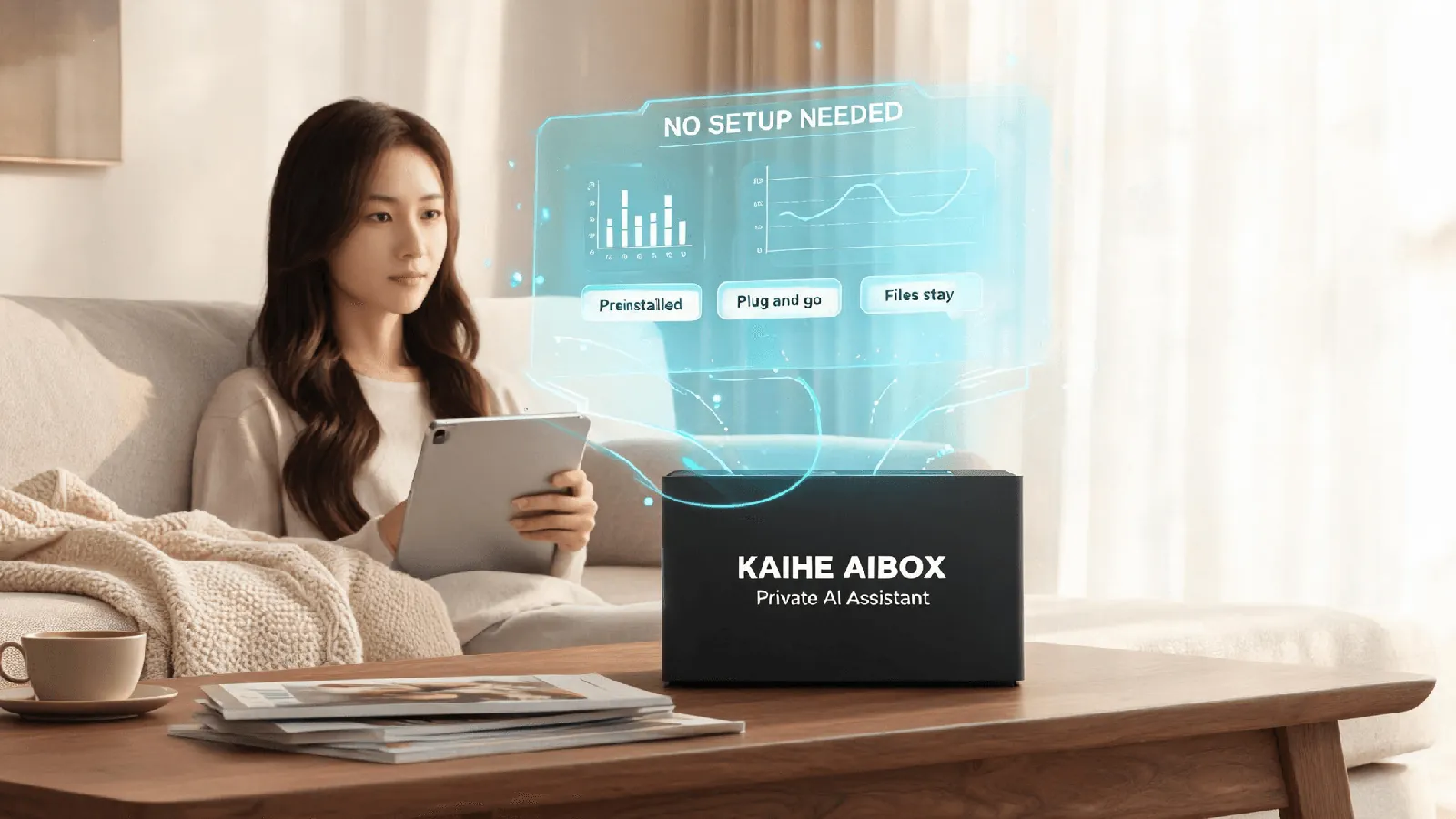
The "you have to maintain an environment" barrier blocks exactly the people who most need control — small teams, solo operators, anyone with a pile of repetitive daily work and no one to look after a machine.
That is the segment KAIHE AIBOX is built to remove. It comes with OpenClaw and Hermes preinstalled. Plug it in, connect it to the network, and it is ready — no environment to build, no keys to configure, no sandbox to assemble, no scheduled tasks to set up. Swapping models by task and writing verification into the workflow still work exactly as described; you simply do not have to build the foundation first.
The boundary is worth stating: inference runs in the cloud, while your files, memory, and call records stay on the machine. The A1 runs agents, not a local large model. What it sells is not more compute — it is lowering the barrier to local control from "you need to understand the stack" to "plug it in and go."
So, back to the opening question. Is a local agent worth making your main workhorse? If you use it every day and answer for the results, yes — but do not let building the environment stand between you and it.