Manus AI: A Comprehensive Analysis of the 2026 Phenomenal General Agent Product
📖 Glossary
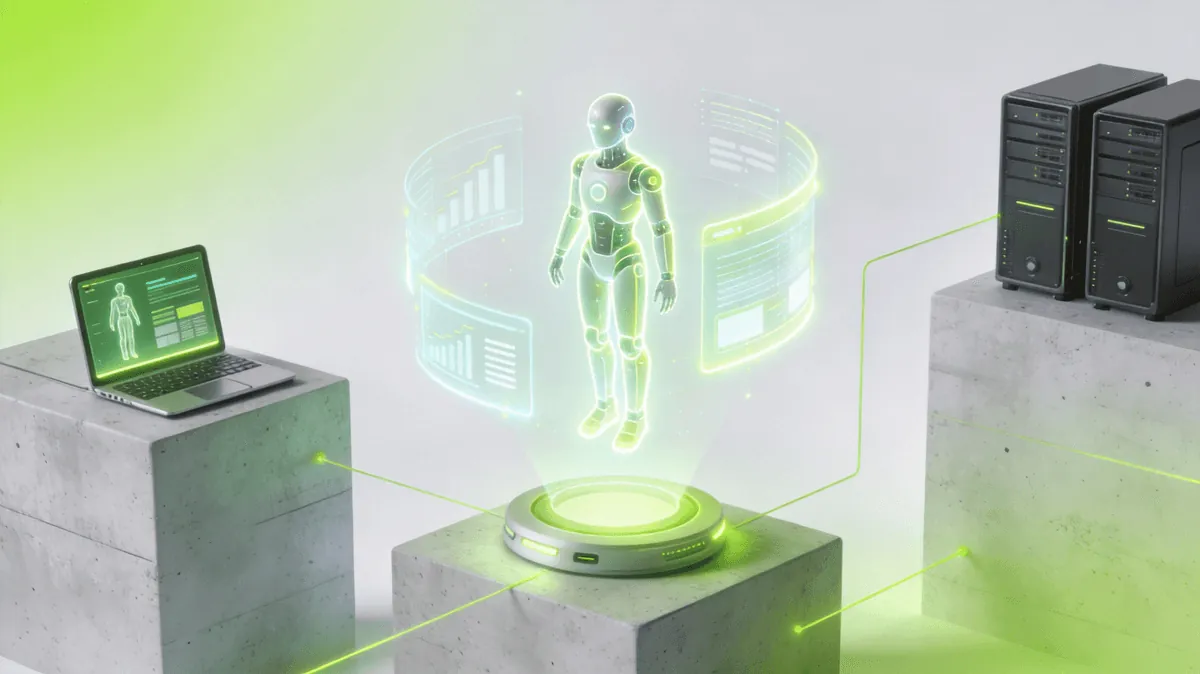
AI Box (also known as Agent Computer / Agent PC), is a dedicated local hardware device that runs AI Agents. Pre-installed with an AI agent management system, plug-and-play, running 24/7. Users can remotely command AI to work via Discord, Slack, Telegram, WhatsApp, and more.
Introduction
The year 2026 has witnessed a revolutionary leap in artificial intelligence with the emergence of Manus AI, a phenomenal general-purpose Agent product that is redefining how humans interact with AI systems. Unlike traditional AI assistants that merely respond to queries, Manus AI represents a paradigm shift—an autonomous agent capable of browsing the web, understanding visual interfaces, executing complex multi-step tasks, and adapting to new challenges without constant human supervision. This comprehensive analysis explores the architecture, capabilities, advantages, and limitations of Manus AI, while also examining the complementary relationship between cloud-based SaaS solutions and local Agent deployments.
What is Manus AI?
Manus AI has rapidly become the talk of the technology world in 2026, earning its status as a "phenomenal" product—not through marketing hype, but through demonstrable capabilities that have captured the imagination of developers, businesses, and everyday users alike. At its core, Manus AI is a general-purpose intelligent agent that bridges the gap between human intent and digital execution.
What sets Manus AI apart is its ability to understand high-level objectives and autonomously figure out the steps needed to achieve them. When a user delegates a task—whether it's conducting comprehensive market research, automating a complex workflow, or managing a multi-platform digital campaign—Manus AI doesn't just assist; it executes. The agent operates with a level of autonomy that feels less like using a tool and more like collaborating with a highly capable digital colleague.
The Multi-Agent Collaborative Architecture
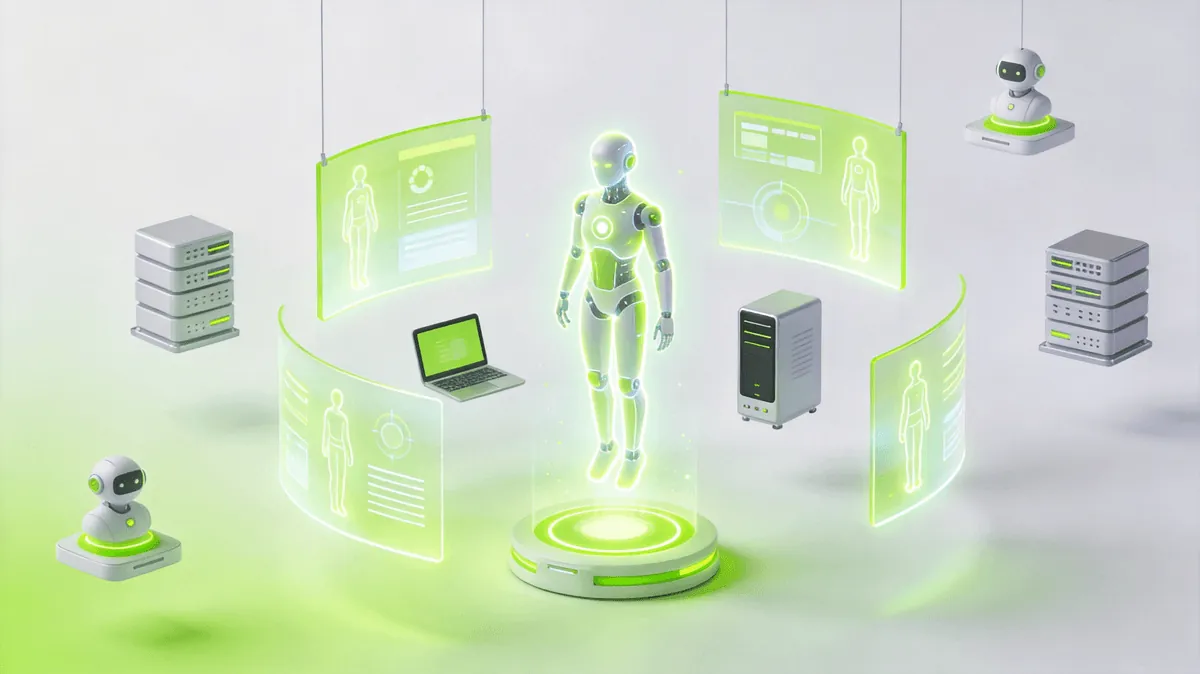
The secret behind Manus AI's remarkable capabilities lies in its sophisticated multi-agent collaborative architecture. Rather than relying on a single monolithic AI model attempting to handle every aspect of task execution, Manus AI employs four specialized agents, each designed with distinct responsibilities and optimized for specific types of operations.
The Planning Agent
The Planning Agent serves as the strategic brain of the operation. When a user submits a task, this agent analyzes the objective, breaks it down into logical components, and constructs a comprehensive execution plan. It considers dependencies between subtasks, identifies potential obstacles, and sequences operations in the most efficient order. The Planning Agent doesn't just create a static roadmap—it continuously refines its plan based on real-time feedback from other agents, demonstrating a dynamic adaptability that mirrors human strategic thinking.
The Browsing Agent
The Browsing Agent is responsible for navigating the digital world. What makes this agent particularly innovative is its approach to web interaction. Unlike traditional web scrapers or automation tools that rely on DOM parsing—analyzing the underlying HTML structure of web pages—the Browsing Agent employs visual understanding to interact with browsers. By "seeing" web pages much as a human user would, it can navigate complex, dynamically-rendered websites, interact with JavaScript-heavy applications, and adapt to changing page layouts without requiring constant updates to its interaction logic.
The Tool Calling Agent
Modern digital work requires orchestrating a vast ecosystem of tools and APIs. The Tool Calling Agent serves as the integration specialist, capable of invoking APIs, running command-line tools, interacting with third-party services, and chaining together disparate systems to accomplish complex objectives. Whether it's querying a database, sending emails via an API, or triggering a CI/CD pipeline, this agent handles the technical orchestration with precision and reliability.
The Code Execution Agent
For tasks that require custom logic, data processing, or algorithmic problem-solving, the Code Execution Agent comes into play. This agent can write, test, and execute code in real-time, creating bespoke solutions for unique challenges. It supports multiple programming languages and can dynamically install dependencies, work with data structures, and produce outputs in various formats. The Code Execution Agent essentially gives Manus AI the ability to "think in code," solving problems that would be impossible through pre-built tools alone.
Orchestration and Collaboration
These four agents don't operate in isolation. Through a sophisticated orchestration layer, they communicate, share context, and coordinate their actions. The Planning Agent might delegate a web research task to the Browsing Agent, which discovers a need for data extraction that requires custom code from the Code Execution Agent, while the Tool Calling Agent simultaneously gathers complementary data from APIs. This seamless collaboration creates a whole that is far greater than the sum of its parts.
AI-Powered Autonomous Browsing: A Visual Revolution
One of the most technically impressive and practically significant features of Manus AI is its approach to web browsing. Traditional web automation tools—such as Selenium, Puppeteer, or even many AI-powered solutions—rely on DOM (Document Object Model) parsing. They analyze the HTML structure of a page, identify elements by their IDs, classes, or XPath selectors, and interact with them programmatically.
This approach has significant limitations. Websites with dynamic content, anti-bot measures, or complex JavaScript frameworks can break DOM-based automation. When a website updates its layout or changes its underlying code, DOM-based tools often fail, requiring manual updates to the automation scripts.
Manus AI takes a fundamentally different approach: visual understanding. By leveraging advanced computer vision and multimodal AI models, the Browsing Agent can "see" a web page as a human would. It recognizes buttons, text fields, navigation elements, and content areas not by parsing HTML tags, but by understanding the visual rendering of the page. This approach offers several profound advantages:
Resilience to Website Changes: When a website updates its design, the visual layout may change, but the functional elements—login buttons, search bars, navigation menus—typically remain visually identifiable. Manus AI's visual understanding adapts naturally to these changes.
Handling Dynamic Content: Modern websites increasingly rely on JavaScript to render content dynamically. DOM parsers often struggle with content that loads asynchronously or changes based on user interactions. Visual understanding allows Manus AI to wait for content to appear and interact with it naturally.
Bypassing Anti-Bot Measures: Many websites employ sophisticated detection mechanisms to identify and block automated agents. Visual interaction, which closely mimics human behavior patterns—including realistic mouse movements, clicking patterns, and timing—can navigate these defenses more effectively.
Accessibility and Inclusion: Visual understanding also means Manus AI can interact with websites that prioritize accessibility, recognizing ARIA labels and other accessibility features that make the web more inclusive.
End-to-End Multi-Step Task Execution
Perhaps the most transformative aspect of Manus AI is its ability to execute complex, multi-step tasks from start to finish with minimal human intervention. This end-to-end capability represents a fundamental shift from traditional AI assistants, which typically require users to break down tasks into discrete, manageable steps and guide the AI through each one.
With Manus AI, users can delegate entire workflows. Consider a scenario where a user needs to conduct competitive analysis: researching competitors' products, extracting pricing data, analyzing customer reviews, synthesizing findings into a report, and delivering the report in a specified format. Traditionally, this would require dozens of discrete interactions with an AI assistant. With Manus AI, the user simply articulates the objective once, and the agent handles the entire workflow autonomously.
This capability is powered by several key technological innovations:
Long-Horizon Planning: Manus AI can maintain context and pursue objectives over extended sequences of actions, remembering what it has done, what it needs to do next, and how earlier actions inform later ones.
Error Recovery and Adaptation: When things don't go as planned—a website is down, an API returns an unexpected response, a CAPTCHA appears—Manus AI can recognize the problem, devise alternative approaches, and continue pursuing its objective rather than failing outright.
Contextual Memory: Throughout a multi-step task, Manus AI maintains a rich understanding of what it has learned, discovered, and accomplished, allowing it to make intelligent decisions that account for the full context of the task.
Human-in-the-Loop Integration: Despite its autonomy, Manus AI recognizes when it needs human input—whether it's a subjective decision, access to protected systems, or clarification of ambiguous instructions. It can pause, request input, and seamlessly resume execution.
Advantages of Manus AI
The capabilities described above translate into several compelling advantages that are driving rapid adoption across industries and use cases.
Truly End-to-End Execution
As emphasized throughout this analysis, the ability to execute complete workflows autonomously is a game-changer. Organizations are using Manus AI to automate processes that previously required multiple human workers or complex orchestrations of different automation tools. The reduction in friction between task conception and task completion is dramatic.
Powerful and Flexible Tool Integration
The Tool Calling Agent's ability to integrate with virtually any system that exposes an API—and even many that don't, through the Browsing Agent's capabilities—means that Manus AI can be deployed across an extraordinary range of use cases. From enterprise software suites to consumer web applications, from legacy systems to cutting-edge platforms, Manus AI can work with the tools organizations already use.
Continuous Learning and Adaptation
Manus AI is not a static system. Through its operations, it builds understanding of user preferences, domain-specific knowledge, and effective strategies for common tasks. This continuous learning allows it to become increasingly effective over time, adapting to the specific needs and contexts of its users. Importantly, this learning happens within the scope of its deployments and doesn't compromise the privacy or security of sensitive information.
Scalability and Parallelism
Because Manus AI is built on a multi-agent architecture, it can scale horizontally. Multiple instances can work on different tasks simultaneously, and within a single complex task, different agents can work on different subtasks in parallel. This scalability makes Manus AI suitable for both individual productivity enhancement and enterprise-scale automation.
Natural Language Interface
Despite its sophisticated capabilities, Manus AI remains accessible through natural language interaction. Users don't need to learn proprietary scripting languages, complex configuration formats, or technical jargon. They simply describe what they want to achieve, and Manus AI figures out how to accomplish it.
Limitations and Challenges
For all its remarkable capabilities, Manus AI is not without limitations. Understanding these challenges is essential for setting appropriate expectations and deploying the technology effectively.
Privacy Considerations
An AI agent that can browse the web, access APIs, and execute code necessarily requires broad access to digital systems and data. This access creates privacy implications. Users must trust Manus AI with sensitive information, and organizations must ensure that deployments comply with data protection regulations such as GDPR, CCPA, and industry-specific requirements. While Manus AI implements various privacy-preserving measures, the fundamental tension between capability and privacy remains an active area of development and governance.
Cost Structure
The computational resources required to run Manus AI—particularly the advanced language models, computer vision systems, and multi-agent orchestration—translate into significant costs. For individual users, subscription pricing may be a barrier. For organizations, the ROI calculation must account for both the direct costs of using Manus AI and the indirect costs of integration, training, and oversight. As with many AI technologies, there is an ongoing dynamic between capabilities and affordability.
Offline Unavailability
As a cloud-native SaaS product, Manus AI requires an active internet connection to function. In environments with unreliable connectivity, in locations with network restrictions, or in scenarios where air-gapped systems are required for security reasons, Manus AI's cloud dependency becomes a significant limitation. This has motivated interest in local Agent deployments, which we will discuss in the following section.
Data Sovereignty
Related to privacy concerns, data sovereignty—the principle that digital data is subject to the laws and governance structures of the country where it is located—presents challenges for cloud-based AI agents. Organizations in regulated industries or jurisdictions with strict data localization requirements may face compliance hurdles when using cloud-based AI services. The data processed by Manus AI, the models used, and the infrastructure hosting the service all factor into data sovereignty considerations.
Reliability and Edge Cases
While Manus AI handles a wide range of tasks with impressive reliability, it is not infallible. Edge cases—unusual websites, unexpected API responses, novel task structures—can sometimes lead to errors, inefficiencies, or incomplete results. Human oversight remains important, particularly for high-stakes tasks. The AI community continues to work on improving robustness, but users should approach Manus AI as a powerful assistant rather than an error-free oracle.
Cloud SaaS vs. Local Agent: The Complementary Relationship
The limitations of cloud-based deployment have spurred interest in local Agent solutions—AI agents that run on local hardware, under local control, without requiring constant cloud connectivity. The Kaihe AIBOX-A1 represents a compelling approach to local Agent deployment, and understanding the relationship between cloud-based Manus AI and local solutions like the AIBOX-A1 reveals an important complementary dynamic.
The Cloud Advantage
Manus AI's cloud SaaS deployment offers several inherent advantages:
- Compute Power: Cloud infrastructure can provide massive parallel compute resources, enabling complex tasks to be executed quickly.
- Model Access: Cloud deployments can leverage the most advanced AI models, which may be too large or resource-intensive to run locally.
- Maintenance and Updates: Cloud-based services can be updated seamlessly, with improvements, security patches, and new features rolling out without user intervention.
- Collaboration and Sharing: Cloud deployments facilitate sharing of agents, workflows, and outputs across teams and organizations.
The Local Advantage
Local Agent deployments like the Kaihe AIBOX-A1 offer a different set of benefits:
- Privacy and Data Sovereignty: By running locally, sensitive data never leaves the user's control, addressing privacy and compliance requirements.
- Offline Operation: Local agents can function without internet connectivity, enabling use in disconnected or air-gapped environments.
- Reduced Latency: Local execution eliminates network latency, which can be significant for tasks requiring many rapid interactions.
- Cost Predictability: While the upfront hardware cost may be significant, local deployment eliminates ongoing subscription fees, providing cost predictability over time.
- Customization and Control: Local deployments can be customized, fine-tuned, and controlled with greater granularity than cloud services.
The Complementary Relationship
Rather than viewing cloud and local deployments as competing approaches, forward-thinking organizations are recognizing their complementarity. A common pattern is to use cloud-based Manus AI for tasks that require massive compute, collaboration, or access to the latest models, while using local agents like the Kaihe AIBOX-A1 for privacy-sensitive tasks, offline scenarios, and latency-critical applications.
Some users even employ hybrid workflows: using a local agent for initial data gathering and preprocessing of sensitive information, then selectively using cloud agents for compute-intensive analysis that doesn't involve raw sensitive data. This layered approach maximizes the benefits of both deployment models while mitigating their respective limitations.
The Kaihe AIBOX-A1, branded as KAIHE AI Box or Agent Computer, represents an important step toward making local Agent deployment accessible and practical. By packaging the necessary hardware, software, and models into an integrated "Agent Computer," it lowers the technical barrier to local AI agent deployment. As the technology matures, we can expect to see increasingly sophisticated local Agent solutions that narrow the capability gap with cloud services while preserving the unique advantages of local deployment.
Future Directions
As we look ahead, several trends and developments seem likely to shape the evolution of Manus AI and the broader general-purpose Agent ecosystem:
Model Efficiency: Advances in model compression, distillation, and optimization will make sophisticated AI capabilities increasingly feasible to run locally, narrowing the capability gap between cloud and local deployments.
Specialized Agents: While general-purpose agents like Manus AI are powerful, we may see increasing development of specialized agents optimized for specific domains—legal work, medical research, software engineering, financial analysis—that incorporate deep domain knowledge and specialized tools.
Agent Marketplaces: As Agent technology matures, we may see the emergence of marketplaces where users can discover, share, and monetize Agent workflows, similar to how app stores revolutionized mobile software distribution.
Regulatory Frameworks: The rapid advancement of AI Agent technology is outpacing regulatory frameworks. We can expect increased attention from policymakers, with new regulations addressing liability, transparency, privacy, and safety in AI Agent deployments.
Human-Agent Collaboration Models: As Agents become more capable, the nature of human work will evolve. Rather than replacing humans, the most successful implementations will likely be those that find optimal collaboration models—leveraging AI for what it does best while preserving meaningful and high-value human contributions.
Conclusion
Manus AI represents a remarkable milestone in the evolution of artificial intelligence—a general-purpose Agent that can autonomously execute complex, multi-step tasks by leveraging a sophisticated multi-agent architecture, visual understanding of web interfaces, and powerful tool integration capabilities. Its end-to-end execution model, continuous learning, and natural language interface make advanced AI capabilities accessible to a broad range of users and use cases.
At the same time, Manus AI's limitations—privacy considerations, cost structures, offline unavailability, and data sovereignty challenges—remind us that this technology is still evolving. The emergence of local Agent solutions like the Kaihe AIBOX-A1 demonstrates that the AI community is actively working to address these limitations, creating a complementary ecosystem of cloud and local deployments that can serve a wide range of needs and constraints.
As we move through 2026 and beyond, the continued development of Manus AI and competing general-purpose Agents will likely be one of the most significant stories in technology. For organizations and individuals willing to engage thoughtfully with this technology—understanding both its remarkable capabilities and its genuine limitations—the opportunities are substantial.
The age of the general-purpose AI Agent is here. Manus AI has shown us what is possible. The question now is not whether AI agents will transform how we work, but how quickly, how broadly, and with what consequences we will integrate them into our digital lives.
KaiAIBox | Agentaibox that lets AI work for you 24/7 · AI Agent
-
ManusAI #GeneralAgent #AIAgent #KaiheAiBox