MCP Protocol: The "USB Standard" of AI Agents Has Arrived — Is Your Agent Ready?
📖 Glossary
AI Box (also known as Agent Computer / Agent PC), is a dedicated local hardware device that runs AI Agents. Pre-installed with an AI agent management system, plug-and-play, running 24/7. Users can remotely command AI to work via Discord, Slack, Telegram, WhatsApp, and more.
In November 2024, Anthropic quietly unveiled a technology that could reshape the AI landscape: MCP (Model Context Protocol). Six months later, it has evolved from a concept into the most critical connectivity standard in the AI agent ecosystem. If you're still integrating AI tools through traditional APIs, this article might save you a massive refactoring bill down the road.
What USB Changed, MCP Is Changing Now
Think back to the world before USB: keyboards used PS/2 ports, mice used serial ports, printers used parallel ports, scanners used SCSI—every peripheral had its own connector, and plugging into the wrong one could fry your hardware. USB didn't just mean "fewer cables to carry." It made "plug and play" a reality, triggering an explosion in the entire peripheral ecosystem.
Today's AI agents face exactly the same fragmentation.
Every large model, every tool, every data source has its own API format. Want ChatGPT to read your local files? Write an adapter. Want Claude to access your calendar? Write another one. Want Gemini to query your database? Yet another. With every additional combination, the development effort grows exponentially.
What MCP does is turn this into "plug and play."
What Problem Does MCP Actually Solve?
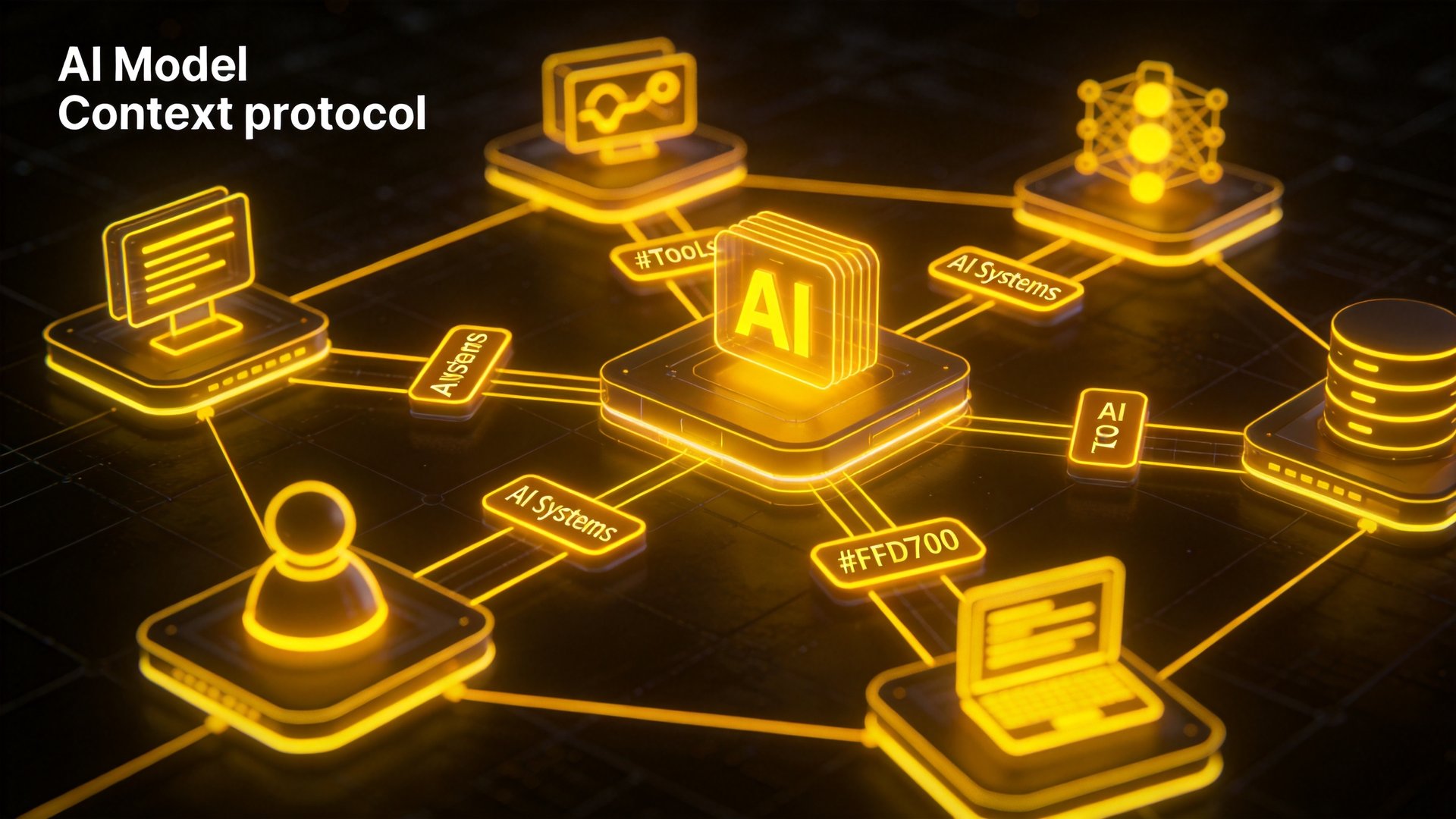
Put simply, MCP defines a standardized "AI-to-tool" communication protocol. It consists of three core components:
Host: The environment running the AI agent—such as OpenClaw or Claude Desktop. Think of this as the "computer" itself.
Client: The connector inside the Host responsible for communicating with external tools. Like a USB controller inside a computer.
Server: The side that exposes tool capabilities—file systems, databases, APIs, browsers, even smart home devices. This is the "USB drive."
The key insight: any tool implementing the MCP Server specification can be called by any agent implementing the MCP Client specification, with zero additional development.
What This Means for You
For users of OpenClaw or Kaihe devices, the maturation of MCP means one thing: saved time.
Previously, building a workflow like "automatically collect industry news → AI analysis → generate weekly report" required configuring scrapers, writing data-cleaning scripts, debugging API integrations, and handling various format exceptions. Even for a skilled developer, that's half a day to a full day's work.
With MCP: find three off-the-shelf MCP Servers (web scraping, data analysis, document generation), configure the connections in OpenClaw, then describe your requirements in natural language. Ten minutes, done.
Kaihe's Unique Position in the MCP Ecosystem
This is precisely where local AI computers like Kaihe shine.
While MCP standardizes connections, the "execution environment" after connection remains critical. Cloud-based agents face latency, privacy, and network dependency challenges—your files are local, your database is local, but if the agent runs in the cloud, data has to travel back and forth.
Kaihe, as a locally deployed AI computer, is naturally positioned as the "ideal MCP host": all MCP Servers run on-device, data never leaves the machine, latency is lower, and privacy is stronger. You can build a complete MCP workflow on Kaihe covering "data collection → AI analysis → content generation → auto-publishing," all running locally.
When to Get Onboard
The MCP ecosystem is on the verge of explosion. As of May 2026, the community has contributed over 500 open-source MCP Servers, covering everything from Google Drive to PostgreSQL, Slack to GitHub. Two trends deserve your attention:
Trend 1: MCP is moving beyond developer circles. Early MCP Servers required programming skills to deploy, but agent frameworks like OpenClaw now offer graphical MCP configuration interfaces. The barrier to "connecting a tool" has dropped from "write code" to "fill in a form."
Trend 2: Hardware adaptation is accelerating. More and more edge computing devices are gaining native MCP Server support. Kaihe A1 comes with OpenClaw pre-installed and MCP Client capabilities built in, meaning true out-of-the-box readiness—plug in the network cable, and you're connected to all your tools.
A Practical Recommendation
If you haven't paid attention to MCP yet, now is the best time to get started. You don't need to master the protocol details—that's for developers. You just need to know this: when everyone uses the same standard to connect AI and tools, the earliest adopters reap the greatest ecosystem dividends.
It's like being the first person in 2000 to figure out how to use a USB printer while everyone else was still wrestling with parallel ports—hours saved, repeatedly.
Tags: OpenClaw, Kaihe, MCP Protocol, AI Agent, Local LLM, Private AI